Seokbinggo, Explained: How Joseon Stored Winter Ice — and Who the Law Let Have It
Theme: Status & Class
From the research behind Pause the Drama.
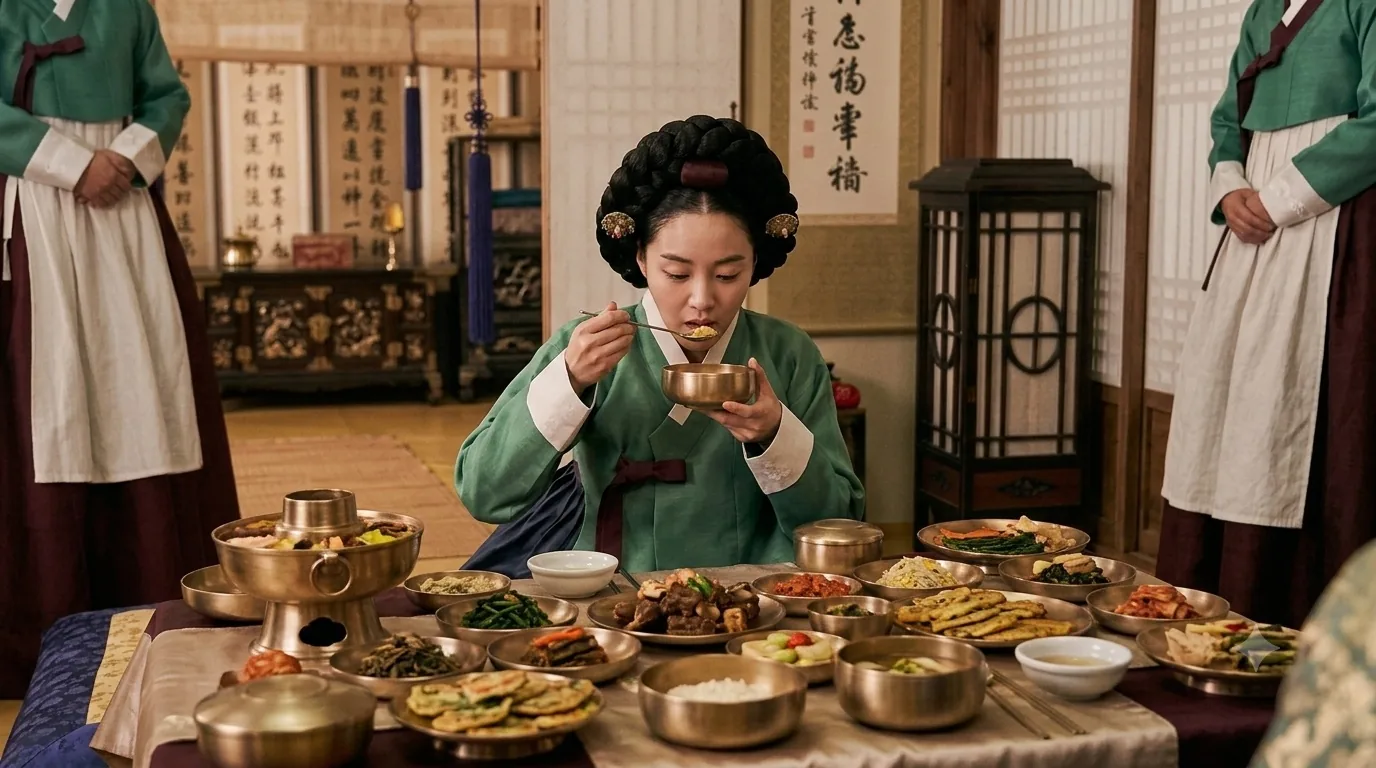
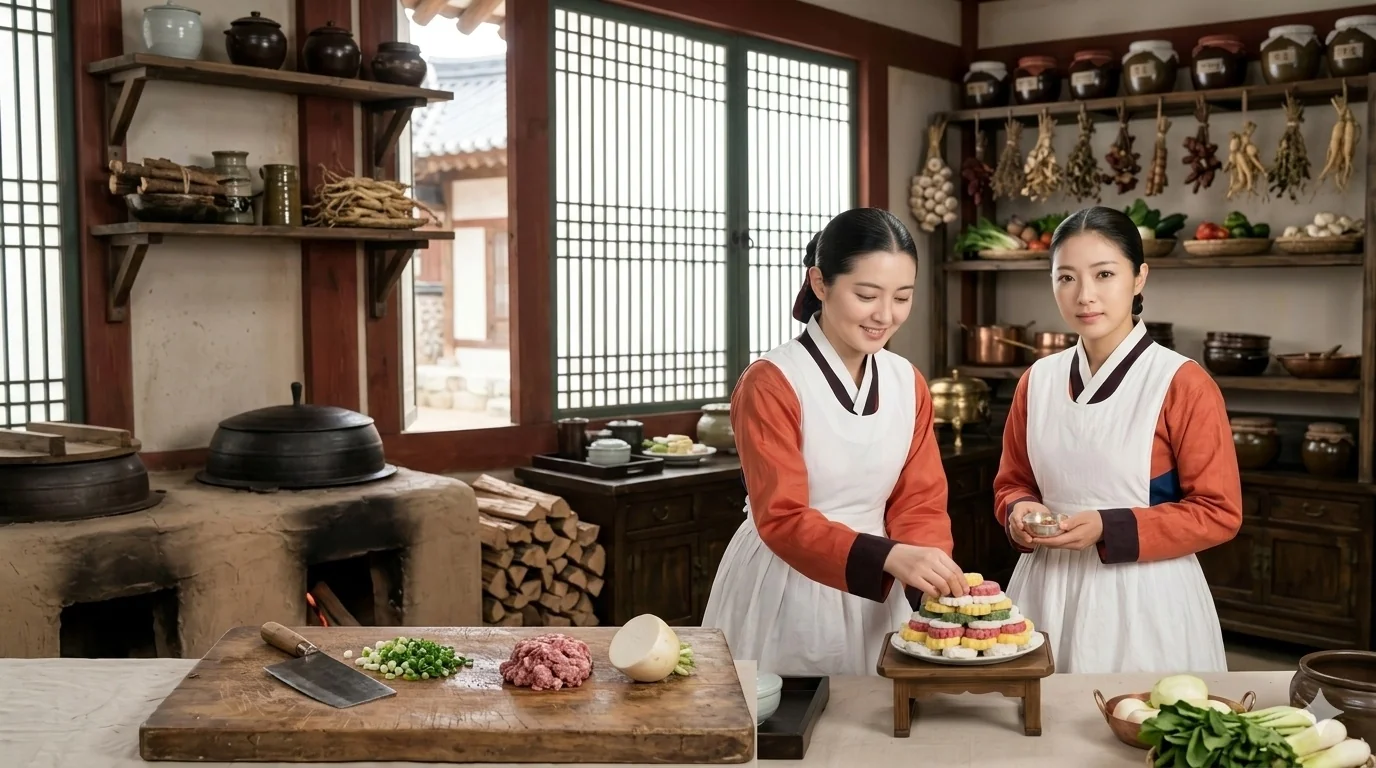
Summer scenes in a palace-kitchen sageuk keep reaching for the same prop. Fish and meat resting on ice. Shaved ice floating in a bowl of hwachae going out to the king. Dae Jang Geum does it; so does Bon Appétit, Your Majesty. It reads as set dressing.
It was not. Ice was something Joseon’s highest law code took the trouble to write rules about — and the list of who received it is stranger than “the rich and powerful.”
Quick answer: Joseon cut ice from the frozen Han in winter, stored it in state ice houses, and distributed it in summer. The 『경국대전』 named as recipients not only government offices, royal kin and senior officials, but also elderly officials holding no post, patients at the Hwarinseo, and prisoners held by the Uigeumbu and Jeonoksŏ.
Binggo and seokbinggo are not the same thing
Binggo (빙고, 氷庫) is the general term — an ice store, and the office that ran it. Seokbinggo (석빙고, 石氷庫) is specifically the stone kind.
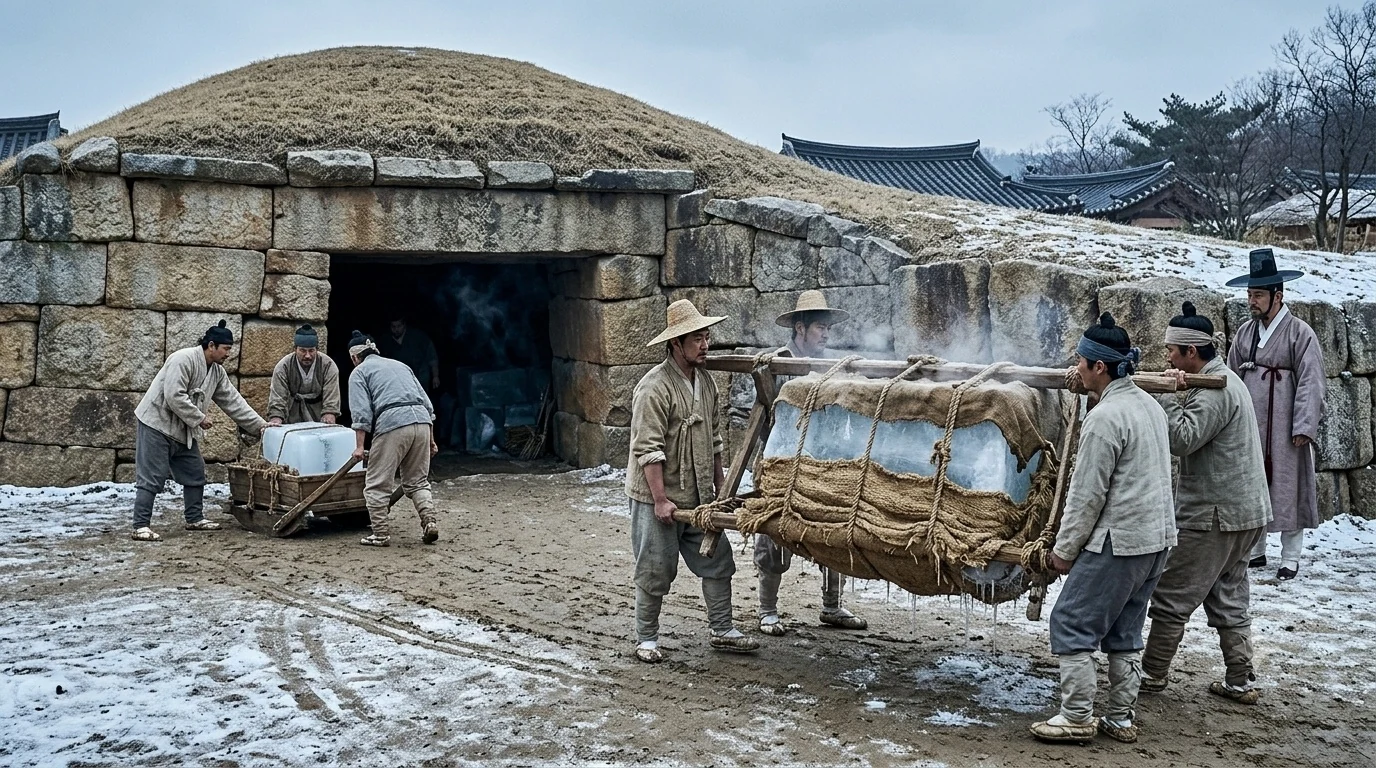
The distinction matters because the buildings are different. Seoul’s Dongbinggo and Seobinggo on the Han, the great state stores, are known from the records to have been timber structures. The vaulted stone ice houses people photograph today — Gyeongju, Andong, Cheongdo, Changnyeong, Hyeonpung, Yeongsan, with one recorded at Haeju — are provincial and mostly eighteenth-century. Gyeongju’s was built in stone in 1738 and moved to its present site in 1741; the two stages often get merged into one date.
Nor was any of it a Joseon invention. The 『삼국유사』 records an ice store under the Silla king Norye; the 『삼국사기』 has Jijeung in 505 ordering ice to be stored; Goryeo recorded distributions too. Records of storing and sharing out winter ice run through several dynasties, and Joseon organised the practice into its own offices and wrote it into its own law code.
Cutting and keeping
In deep winter, when the Han froze hard, crews cut the ice free, hauled it to the stores and packed it. Materials recorded for the work include timber, rice straw, pine boughs and reeds. The surviving stone ice houses show the principle: half-buried, drainage channels to take meltwater out, ventilation openings, and a vaulted stone roof — cold air pooling, water leaving.
Joseon built ice stores on the Han in 1396, four years after the founding. The stores had different jobs: Dongbinggo held ice mainly for state rites and offerings, Seobinggo for the royal table, banquets, various offices and distribution to officials; inside the palace there was also a Naebinggo. The figure quoted for scale — 134,974 jeong — is the volume set for Seobinggo to hold, and jeong (丁) counts blocks of ice.
The court held a rite before opening the stores in spring. Ice then went out to different destinations over different periods, so “opened in spring, shut in autumn” is too flat.
Joseon gave ice to prisoners too
Here is the part worth reading slowly. The 『경국대전』 provision on distributing ice names, in the sixth lunar month:
- the various government offices
- royal kin, and civil and military dangsanggwan
- dangsanggwan of the Naesibu
- officials aged seventy and over holding no active duty post
- the sick at the Hwarinseo, the state office for treating the ill
- prisoners of the Uigeumbu and the Jeonoksŏ
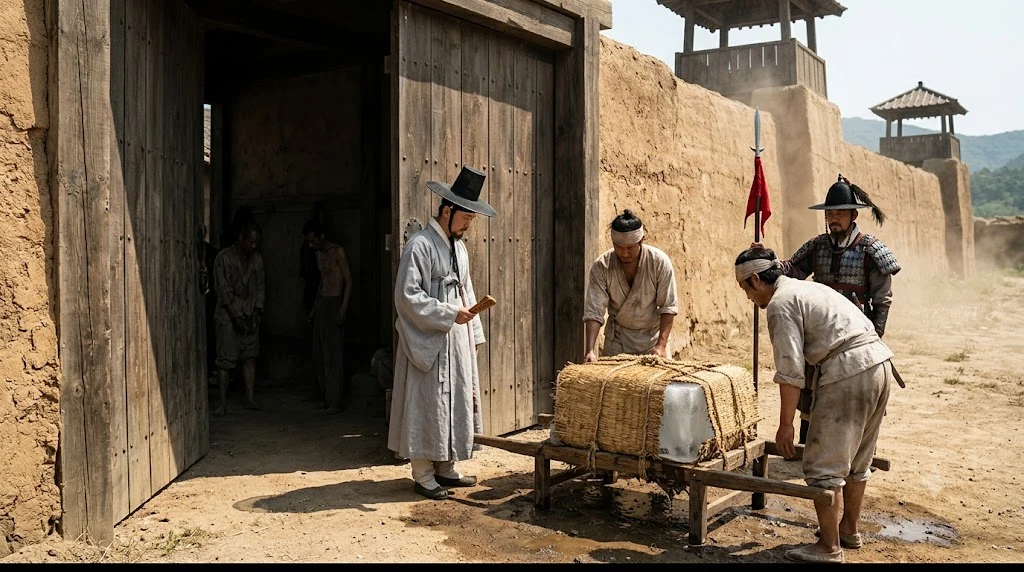
Two things about that list.
Dangsanggwan is narrower than it looks. It does not mean “third rank and above” flatly; it means the upper grade of the third rank and above. A man could hold the third rank — a civil tonghun daebu, a military eomo janggun — and still fall below the line. The cut was real and it was fine.
And the list is not a ladder. The code names categories of recipient; it does not order them by rank, and you could not rank offices, royal kin, old men, the sick and prisoners against each other anyway. Distribution followed a mix of rank and office, institution, age and need. The code gives no table of quantities by rank either — how much you got varied with period, post, office and purpose.
What the clause does show is the shape of the state’s attention. In one provision: the ministries it ran on, the kin it honoured, the elders it owed courtesy, the sick it treated — and the people in its jails, whom it had decided should not simply be left to die in the heat. It is the same administrative habit visible in the fire office Joseon built after the capital burned: a problem turned into an office, a roster and a clause. The statute does not explain itself, so reading that last item as relief against deaths in custody is interpretation. But it is the natural reading, and it is the most interesting line in the text.
So when a court cook in a drama reaches for ice, she is not dipping into a private luxury chest. She is using part of an institutional allocation that began as a legal and administrative decision — the same machinery that decided who tasted the king’s food and who was allowed to treat his body.
The tally — and the ice the state did not control
To draw ice you needed a token: the bingpae (빙패, 氷牌), attested in late-Joseon regulations on issuing ice.
It was an administrative marker tied to the issue of ice — not a general identity document like the hopae. Special grants of ice by the king are also a different thing from the routine seasonal distribution the offices handled; collapsing the two into “you needed a tally the king had personally bestowed” overstates it. Palace halls and the royal kitchen, meanwhile, drew from the stores by institution and purpose, not by an individual presenting a tally.
And not all ice in Joseon was the state’s. Private ice-storage operators and an ice trade existed too. Ice was eaten, floated in hwachae, used to keep perishable food and for medicine — and to control the temperature of the indigo dyeing process.
What Sejong would not discuss
In the eleventh month of 1438, the Saganwon submitted a long memorial to Sejong. Most of it is about lectures, provincial governors and appointments. The last item is about ice, and it joins the two halves of this story in a single paragraph:
The resentment of the common people is sharpest in cold and heat. When the state stores ice it customarily conscripts the households of the capital region; this year it has also conscripted the households of Chungcheong and Gangwon provinces. People from near and far take their own provisions and set out on the road, and wait many days for the ice to freeze hard, so that hunger and cold press on them and their suffering could not be greater. Storing ice is meant to harmonise yin and yang and call down concord — but is it right to make the people resentful in the bitterest weather first? We ask that from now the amount of ice distributed be reduced, and the bays of the ice house cut, so that households are not conscripted.
Read what they are actually proposing. Not better conditions for the workers — less ice. They had worked out that the summer distribution and the winter conscription were the same problem seen from two ends, and they were willing to give up the first to relieve the second.
Sejong took up the memorial item by item. Several he approved; several he sent to the State Council to debate. On the ice he talked around it — the old practice, he said, had given ice for the aged, the sick and for funerals, whereas the distribution of his day reached only funerals of officials of the second rank and above; and one ice store on the Han could hardly be what harmonised yin and yang across three thousand li of country. Then, on the proposal itself: let this item not be discussed for now.
That is the sentence. The men who cut the ice had been described to the king in some detail, by his own censors, and the answer was that the matter would not be taken up.
The poem
The other witness is not a chronicle. It is a poem — literature, not folklore, and worth naming precisely: 「착빙행(鑿氷行)」, “Song of Cutting Ice”, by Kim Chang-hyeop (1651–1708), in volume 1 of his collected works, the 『농암집』.
It opens on the frozen Han: crowds out on the river with axes, thinly dressed and poorly shod, hauling ice day and night to the stores. Then it cuts. Deep summer, a high hall, white hands bringing out clear ice, gentlemen forgetting the heat. And it closes:
君不見 道傍暍死民 多是江中鑿氷人 Do you not see — those who have collapsed and died of the heat by the roadside: most of them are the men who cut ice on the river.
多是 is “most are,” not a headcount, and this is a poet laying one group over another to make an accusation rather than an administrative finding. The barefoot detail belongs to Kim Chang-hyeop’s picture of those labourers.
Kim lost his father, Kim Su-hang, in the political purge of 1689 and afterwards kept his distance from office. That is his biography; whether it is why he wrote this poem is not something the sources establish.
Joseon was not the only one
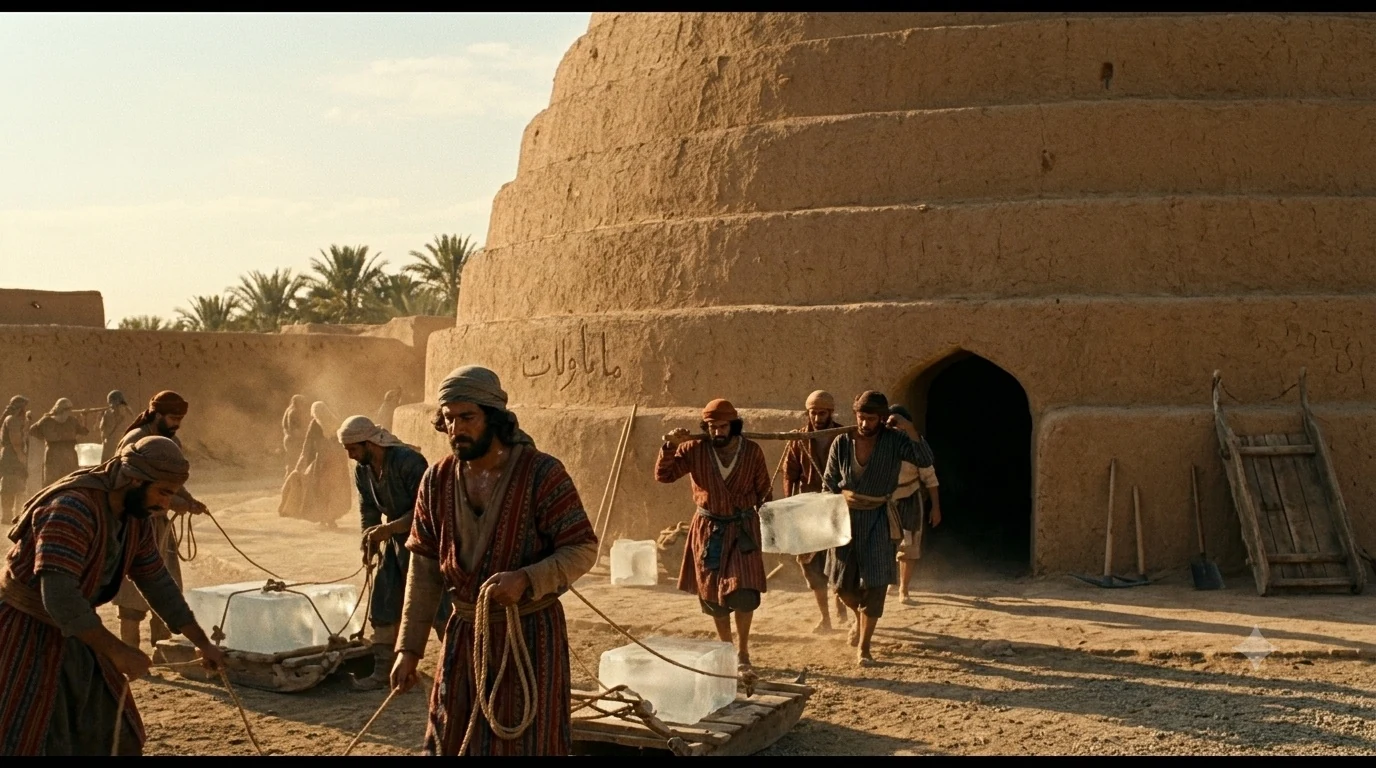
Other societies kept winter ice for summer, and the differences are instructive. Japan’s himuro supplied the court under a code of court procedure; some Persian yakhchāl went further and produced ice in shallow basins on clear winter nights. Where the three really diverge is not the engineering but how the ice was administered — and in whose law that was written down.
→ The full comparison: seokbinggo, yakhchāl and himuro
Drama vs. the record
| What the modern frame assumes | What the record shows |
|---|---|
| Ice was a luxury for the powerful | The 『경국대전』 clause also names the sick at the Hwarinseo and prisoners of the Uigeumbu and Jeonoksŏ |
| Ice went out from the top down, by rank | The code lists categories of recipient. It sets no descending order and gives no table of quantities by rank |
| Dangsanggwan means the third rank and above | It means the upper grade of the third rank and above. A third-rank official could still be below the line |
| The seokbinggo you visit is the Joseon ice system | Seoul’s Dongbinggo and Seobinggo were timber. The surviving stone houses are provincial and mostly eighteenth-century |
| Gyeongju’s ice house was rebuilt in stone in 1741 | Built in stone in 1738; moved to its present site in 1741 |
| All ice in Joseon was state-controlled | Private ice-storage operators and an ice trade existed alongside the state system |
| The tally was effectively an ID card | An administrative marker tied to the issue of ice — not a general identity document |
| Nobody at the time questioned the cost | In 1438 the Saganwon asked the king to distribute less ice so that fewer households would be conscripted to cut it |
In short: Joseon stored winter ice as a state operation and distributed it in summer under a clause of the 『경국대전』 naming offices, royal kin, senior officials, the aged without post, the sick and prisoners; the surviving stone ice houses are later provincial buildings rather than the capital’s timber stores; and in 1438 the censors asked Sejong to cut the distribution to spare the households conscripted to cut the ice, and he set the request aside.
Key terms. Binggo (빙고 氷庫) — an ice store, and the office that ran it. Seokbinggo (석빙고 石氷庫) — the stone type. Jangbing (장빙 藏氷) — storing the winter ice. Beolbing (벌빙 伐氷) — cutting it. Banbing (반빙 頒氷) — distributing it in summer. Bingpae (빙패 氷牌) — the tally issued with ice. Dangsanggwan (당상관) — senior officials, the upper grade of the third rank and above. Hwarinseo (활인서) — the state office treating the sick. Jeonoksŏ (전옥서) — the prison office. Saganwon (사간원) — the Office of Censors.
Back to the drama
So return to the summer kitchen, and the ice in the bowl.
It came from a state store, drawn by an office on a schedule, from a stock a law code had already decided how to divide. Before that it came off a frozen river, cut by people who had walked in from two provinces away with their own food and waited days for the work — and whose case had been put to a king, who declined to hear it.
Kim Chang-hyeop put both halves in one poem. Television has so far put only one of them on screen.
Frequently asked questions
Did Joseon prisoners really receive ice? Yes. The Gyeongguk daejeon clause on distributing summer ice names prisoners held by the Uigeumbu and the Jeonoksŏ among the recipients, alongside government offices, royal kin and senior officials. The statute does not state its reasoning, so reading it as relief against deaths in custody is interpretation — but the recipients themselves are in the text.
Who received ice in Joseon Korea? The law names the various government offices, royal kin, dangsanggwan — senior officials, meaning the upper grade of the third rank and above — officials aged seventy and over who held no active duty post, the sick at the Hwarinseo, and prisoners of the Uigeumbu and Jeonoksŏ. It is a list of categories, not a ranking, and the code gives no table of quantities by rank.
Was all ice in Joseon controlled by the state? No. Private ice-storage operators and an ice trade existed alongside the state system. The precise claim is narrower: among state-managed ice, the portion issued to individual officials was tied to office-holding qualification.
Is the Gyeongju ice house from the Silla period? No. Ice storage in Korea goes back at least to Silla, but the stone ice house standing in Gyeongju today is a Joseon structure: built in stone in 1738, and moved to its present site in 1741. Those are two stages, often merged into one date.
Is “Chakbinghaeng” a real poem? Yes, and it is literature rather than folklore. 「착빙행(鑿氷行)」 is by the late-Joseon scholar-official Kim Chang-hyeop (1651–1708) and appears in volume 1 of his collected works, the 『농암집』. It sets the winter ice-cutting labour against the summer enjoyment of that same ice.
Sources & further reading
- 『경국대전』 예전 반빙조 — the distribution clause and its list of recipients.
- 『세종실록』 83권, 세종 20년(1438) 11월 23일 2번째 기사 — the Saganwon memorial on ice-cutting conscription and the request to reduce the distribution, with Sejong’s reply.
- 김창협, 「착빙행(鑿氷行)」, 『농암집』 권1.
- 『삼국사기』 신라본기 지증왕 6년(505) 11월; 『삼국유사』 기이 노례왕조; 『고려사』 문종 3년(1049).
- 『이원조례』 — on the issue of the bingpae.
- Encyclopedia of Korean Culture — 「빙고」, 「석빙고」, 「동빙고」, 「얼음」, 「당상관」, 「김창협」, 「장빙업자」.
- Korea Heritage Service — 「조선의 냉장고 석빙고의 과학」; National Heritage Portal entries for the surviving ice houses.
- National Institute of Korean History, 우리역사넷 — 「석빙고」.
This article was researched and written by K-Drama History. Source: Seokbinggo, Explained: How Joseon Stored Winter Ice — and Who the Law Let Have It — K-Drama History