How Korea's Seokbinggo Compares with Persia's Yakhchāl and Japan's Himuro
Theme: Knowledge & Science
From the research behind Pause the Drama.
Keeping ice through a summer is a problem with only a few physical answers. Put it below ground. Wrap it in something that does not conduct heat. Give the meltwater somewhere to go. Do not open the door more than you must.
Across very different settings, three societies arrived at recognisably similar buildings — and then diverged on a question the buildings cannot answer: who the ice was actually for.
This piece is a companion to the post on Joseon’s ice houses and the law that divided their contents. Here we set that system beside Persia’s yakhchāl and Japan’s himuro.
Quick answer: All three kept ice by the same physics — mass, insulation, drainage, minimal opening. What differs is upstream and downstream. Upstream, Persia faced a different physical problem: some yakhchāl made ice on clear winter nights, where Korea and Japan harvested what winter gave them. Downstream, Japan and Korea both regulated who received court ice — but Japan’s rules sit in a court procedural code, while Joseon’s sit in the dynasty’s general law code and reach as far as prisoners in jail.
Persia: making ice under clear winter skies
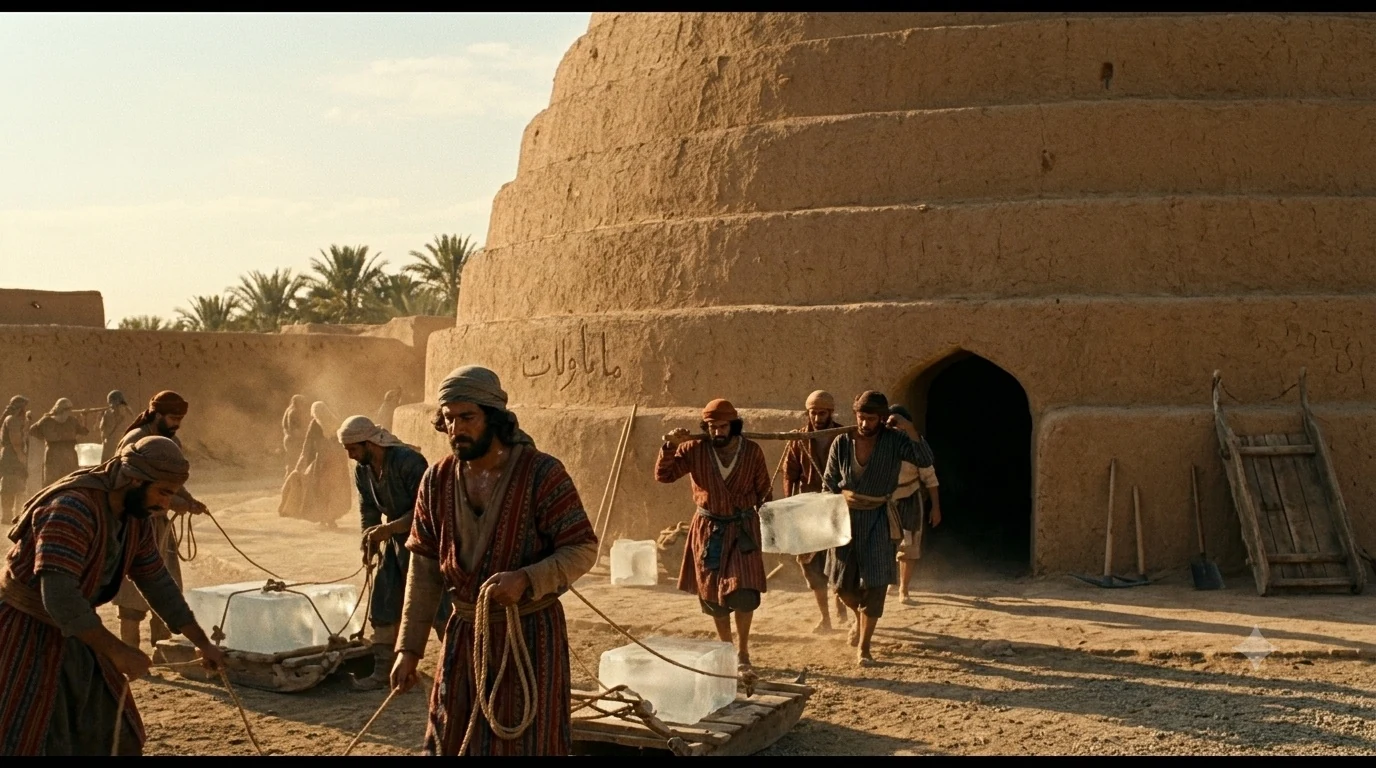
The yakhchāl is the one people picture — a tall conical dome of mud brick rising out of flat ground. That image is real but partial, and worth handling carefully.
According to the Encyclopaedia Iranica’s account of yakhchāl, these were structures for obtaining and keeping ice, and they did not all work the same way. Some made ice on site: water was run into shallow basins, and on clear, dry winter nights the water lost heat to the open sky fast enough to freeze even when the air did not stay below freezing all day. Others stored natural ice brought in from colder places. The ice then went into a chamber below ground behind walls thick enough that summer heat took a long time to arrive.
That first mode is the genuinely distinctive thing. Korea and Japan were solving storage. Parts of Iran were also solving production — obtaining ice in a climate that would not reliably hand over a frozen river.
Who ran them varied too. Where the qanāt feeding an ice house belonged to a religious endowment, the ice house was often a co-operative venture; elsewhere individual businessmen and landowners operated them. And Iranica records village celebrations both when the yakhchāl was filled in winter and when it was opened for distribution in summer — a rhythm that will sound familiar when we get to Joseon, which also marked the spring opening of its stores with a rite.
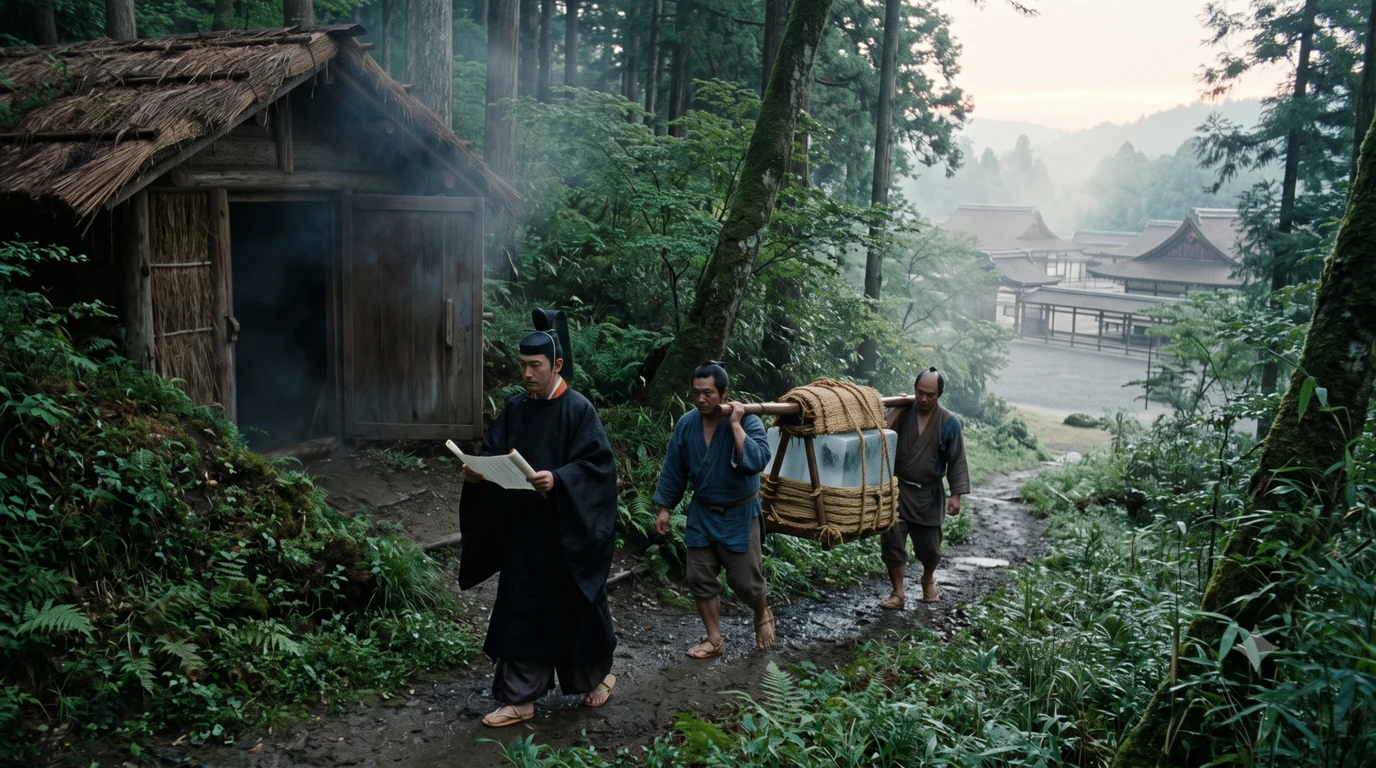
Japan: himuro, and ice presented to the court
Japan stored winter ice in himuro (氷室) and presented it to the court in summer, a practice recorded from the Nara period. By the Heian era it was written down: the 『연희식(延喜式)』, the tenth-century code of court procedure, regulates the ice houses under the Shusuishi (主水司), the palace water office.
Two details are worth getting right, because both are commonly mangled.
The code covers ice houses across Yamashiro, Yamato, Kawachi, Ōmi and Tanba — twenty-one in total. Some are counted in halves, so this is an administrative tally rather than twenty-one free-standing buildings in the modern sense. (The number “ten” that circulates in English-language accounts is the count for Yamashiro alone.)
And the regulations set out different recipients and different quantities according to court status and office. That is not the same as a rule that ice was handed down the hierarchy in descending order. The code assigns allocations; it does not prescribe a queue.
Korea: the clause that reaches into the jails
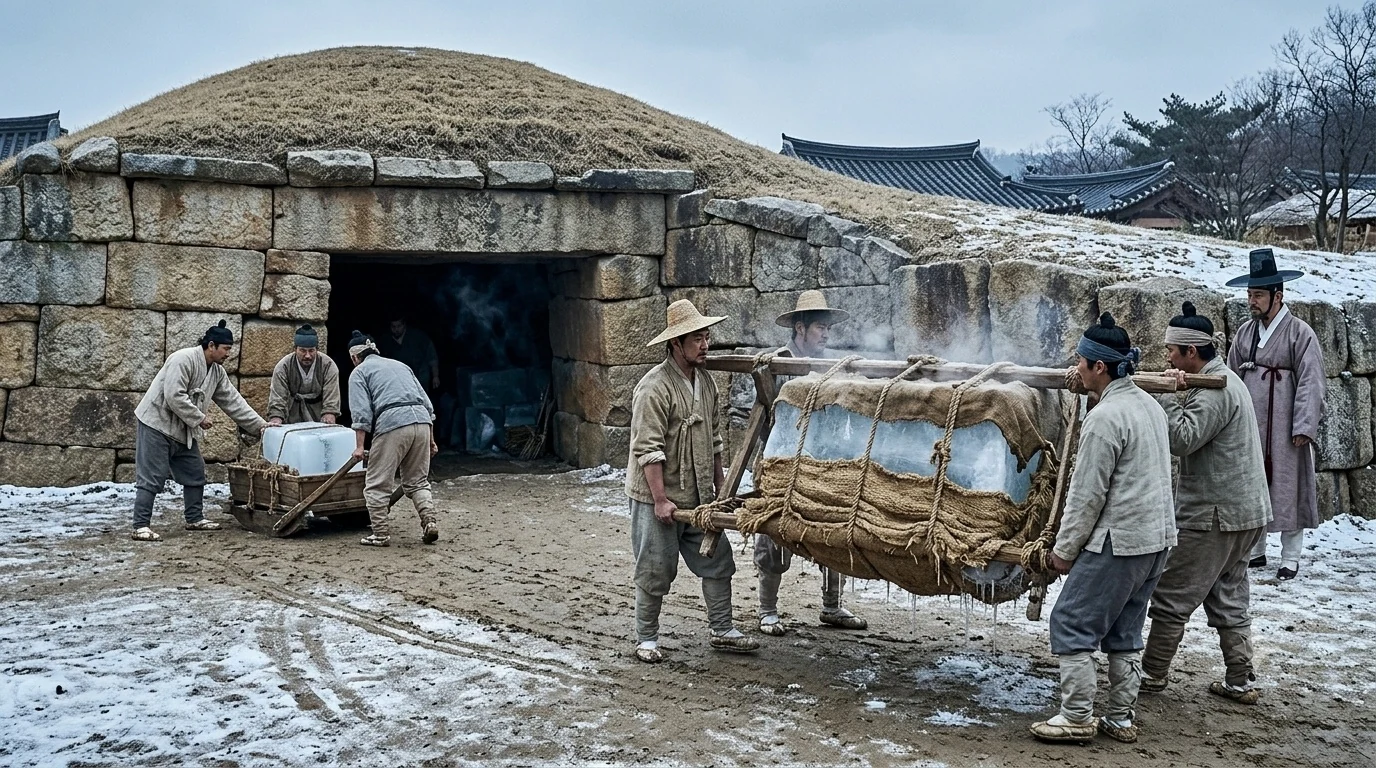
Joseon cut ice from the frozen Han, stored it in state ice houses, and distributed it in summer under a clause of the 『경국대전』. The recipients named there are the various government offices, royal kin, senior officials of the upper third rank and above, officials aged seventy and over holding no active post, the sick at the Hwarinseo, and prisoners of the Uigeumbu and Jeonoksŏ.
The distinctive item is the last one. Whatever else Joseon’s ice regulation is, it is a document in which relief for people in custody appears in the same clause as honours for the powerful.
It is also worth saying what the Korean system was not. Private ice-storage operators and an ice trade existed alongside the state stores, so “in Joseon, ice was not bought but received” overstates it. The accurate claim is narrower: among state-managed ice, what went to an individual official tracked his office-holding qualification.
The difference is where the rule lives
Set the two Asian systems side by side and the engineering is not the interesting part. Both harvest winter ice, both insulate it, both regulate its distribution by status. The difference is the kind of document doing the regulating, and how far its reach extends.
The 『연희식』 is a code of court procedure. Its ice rules organise the palace establishment: which office maintains the stores, what goes to whom within the court, in what quantity.
The 『경국대전』 is the dynasty’s general law code — the same body of law that governs land, office, punishment and rite. Its ice clause therefore sits alongside the machinery of the state as a whole, and it names categories of recipient that are not court insiders at all: the sick under state care, and prisoners.
That is a difference of scope, not of sophistication. But it is the difference that shows up when you ask what the ice was understood to be. In one document it is a court perquisite being allocated. In the other it is a state resource being divided, with a portion set aside for people the state was holding.
A caution about dates
These systems are usually compared as though they were neighbours looking over a fence. They were not contemporaries.
The 『연희식』 was compiled in the tenth century. The 『경국대전』 was completed in the late fifteenth. Between the two documents lies roughly five and a half centuries — more time than separates the 『경국대전』 from us. Korea’s own ice records run back much further, to Silla and Goryeo, but the specific texts being compared here are far apart in time, and any similarity between them is a similarity between two court cultures at very different moments, not evidence of exchange.
And Rome, briefly
Rome is the usual fourth example, and it belongs in a different column. In elite Roman consumption, snow and ice were brought in, traded as goods and used to chill drinks — a fashion moralists complained about. That describes the top of Roman society. It is not evidence that ice was generally purchasable by anyone with money, and it is not a state distribution system at all.
Which is precisely why it is useful here: Rome shows that “ice as a commodity” and “ice as an administered resource” are genuinely different arrangements, not stages of one development.
Compared
| Persia (yakhchāl) | Japan (himuro) | Korea (binggo / seokbinggo) | |
|---|---|---|---|
| Getting the ice | Some made it, using clear-night cooling in shallow basins; some stored natural ice | Harvested from winter | Cut from the frozen Han and other waters |
| Keeping it | Very thick walls, underground chamber | Ice house, insulated store | Varied by place and period: the capital’s major state stores were timber; surviving provincial seokbinggo are stone. Both relied on insulation (timber, straw, pine boughs, reeds), drainage and limited access |
| Where the rule is written | — | 『연희식』, a code of court procedure | 『경국대전』, the dynasty’s general law code |
| Who receives it | — | Court recipients, with quantities differing by status and office | Offices, royal kin, senior officials, the aged without post, the sick, prisoners |
| Order of distribution | — | Allocations set; no prescribed order | Categories listed; no descending order, no table of amounts by rank |
| A market as well? | Yes — co-operative ventures where the qanāt was endowment-owned, and ice houses run by individual businessmen and landowners | Not examined here | Yes — private ice-storage operators and an ice trade alongside the state system |
In short: Persia’s ice structures answer a production problem that Korea and Japan did not have, while Japan and Korea both regulated the distribution of court ice by status; the sharpest difference between those two is that Japan’s rules govern the court establishment from within a procedural code, whereas Joseon’s sit in the general law code and name the sick and prisoners among the recipients.
Key terms. Yakhchāl (یخچال) — Iranian structure for obtaining and storing ice. Himuro (氷室) — Japanese ice house. Shusuishi (主水司) — the Heian palace water office that administered them. Engishiki (延喜式 · 연희식) — the tenth-century Japanese code of court procedure. Binggo (빙고 氷庫) — Korean ice store and the office running it. Seokbinggo (석빙고 石氷庫) — the stone type. Banbing (반빙 頒氷) — the Joseon summer distribution of ice. Gyeongguk daejeon (경국대전) — the Joseon general law code.
Back to the kitchen
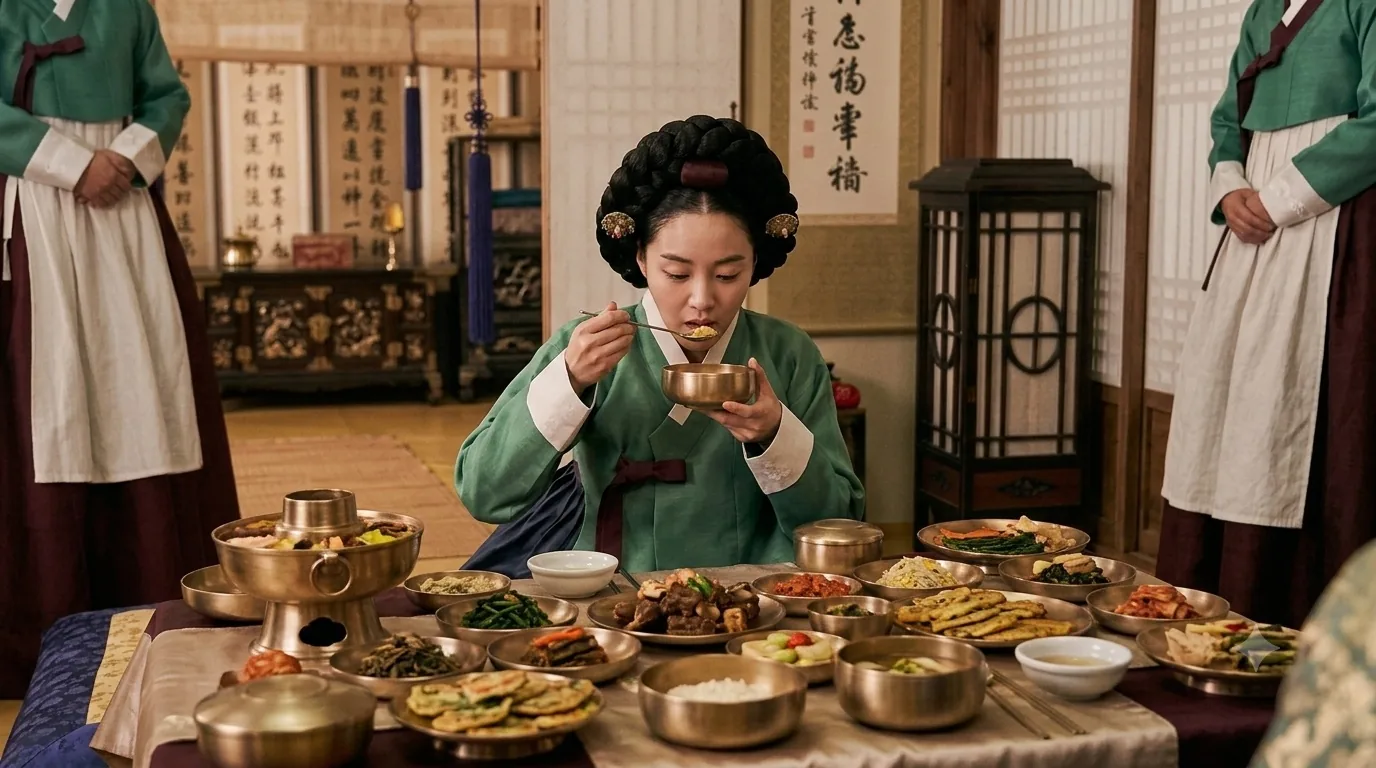
A court kitchen using stored ice to cool a summer drink would not have seemed strange in Heian Kyoto, or in parts of Iran. What differed was the system behind the bowl.
What would not have looked the same is the paperwork. In Kyoto the ice came out of a court office’s allocation. In Hanyang it came out of a clause in the law of the realm, one that had already set some of that ice aside for people in prison.
For the Korean system in detail — the cutting, the tally, and the 1438 memorial in which the censors asked the king to distribute less ice so that fewer households would be conscripted to cut it — see the main post.
Frequently asked questions
What is a yakhchāl? A traditional Iranian ice structure. Some yakhchāl used the cooling of clear winter nights to freeze water in shallow basins, and some stored natural ice brought from elsewhere; the ice was then kept behind very thick walls in an underground chamber. Not all of them took the form of the large mud-brick dome that dominates photographs.
Did Japan and Korea distribute ice the same way? Not quite. Both had court regulations governing ice, and in both the recipients and amounts varied by status and office. But the Japanese regulations set out allocations without prescribing an order of distribution, and they operate within the court establishment, whereas Joseon’s clause sits in the dynasty’s general law code and extends to patients and prisoners.
Which was the most advanced technology? That is the wrong axis. The Persian structures answer a harder physical problem — obtaining ice in a hot, dry climate — while the Korean and Japanese ones store ice a cold winter provides for free. Passive cooling and heavy insulation are common to all three; how the ice was obtained, and how the buildings were made, differ.
Were the Japanese and Korean systems contemporaries? No, and it matters. The 『연희식』 was compiled in the tenth century; the 『경국대전』 was completed in the late fifteenth. Comparing the two documents is comparing court practice roughly five and a half centuries apart, not two neighbouring systems of the same moment.
Could you buy ice in the ancient world? In elite Roman consumption, snow and ice were brought in, traded and used to chill drinks — a fashion contemporaries mocked. That describes the top of Roman society rather than a market in which anyone with money could readily buy ice.
Sources & further reading
- Encyclopaedia Iranica — 「YAḴČĀL」, on how these structures obtained and kept ice.
- 『연희식(延喜式)』 권40 주수사(主水司) — the court ice houses across Yamashiro, Yamato, Kawachi, Ōmi and Tanba, and the allocations by court status and office.
- 『경국대전』 예전 반빙조 — the Joseon distribution clause and its recipients.
- 『세종실록』 83권, 세종 20년(1438) 11월 23일 2번째 기사 — the Saganwon memorial on ice-cutting conscription.
- Encyclopedia of Korean Culture — 「빙고」, 「석빙고」, 「동빙고」.
- The Metropolitan Museum of Art, “The Roman Banquet”; Seneca, Naturales Quaestiones.
This article was researched and written by K-Drama History. Source: How Korea's Seokbinggo Compares with Persia's Yakhchāl and Japan's Himuro — K-Drama History