Undercover Miss Hong, Explained: How Joseon Korea Proved You Were Who You Said You Were
Theme: Status & Class
From the research behind Pause the Drama.
The woman at the center of Undercover Miss Hong is Miss Hong — just not the Hong her employers think she is.
In tvN’s 2026 drama, Hong Geum-bo is a thirty-something financial regulator who goes into a brokerage under suspicion — not with a warrant, but with a new name, a new age, and an entry-level job. She becomes Hong Jang-mi, twenty years old, the most junior person in the room. The tension of the series is the obvious one: a newly arrived CEO turns out to be a former lover, colleagues start working it out, and the false identity begins coming apart from several directions at once.
A whole plot rests on a premise worth stopping at — that a person can be a different person if the paperwork says so.
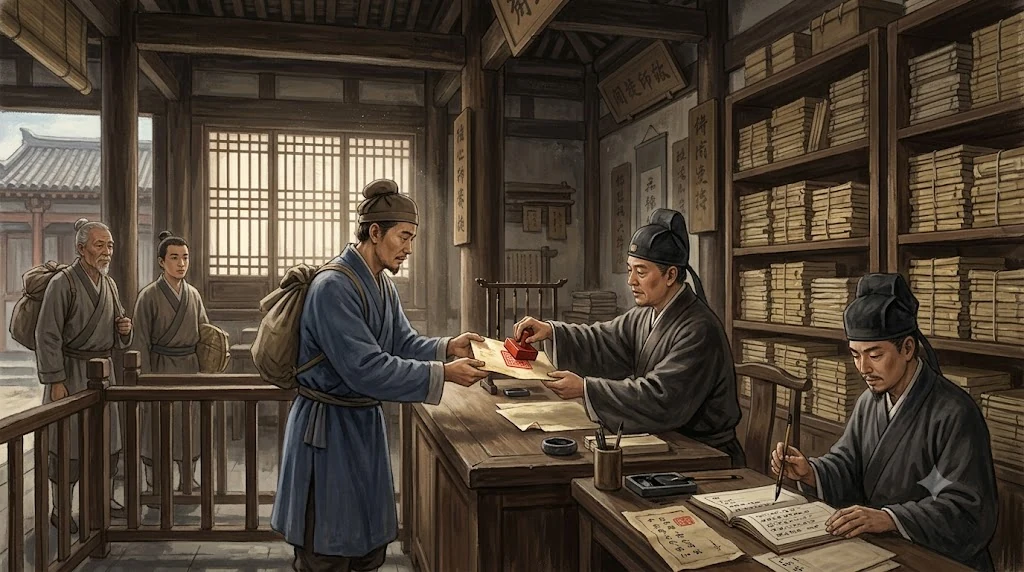
Joseon spent more than two and a half centuries introducing that impossibility, abandoning it, and trying again. After 1675 it finally made the system continuous — but never made it work. The instrument was the hopae (호패), a personal tag every man was supposed to carry — wood for most, ivory or horn for some officials, and even paper during one later phase. It is usually described in English as an identity card. It was one — but not a citizen-facing credential. Its central job was to make adult men legible to the state, for residence, status, labour and military service, and that emphasis explains why people spent so much effort escaping it.
Quick answer: Joseon’s answer was the hopae (號牌) — a small tag, usually wood, carried by men from the age of sixteen, recording rank, name, residence or physical details according to period and status, with its material graded by social standing. English accounts routinely call it “the Joseon ID card,” and the comparison is not wrong, but it points the wrong way. A modern ID does serve the state too — for administration, taxation, policing and welfare. The difference is the balance: a modern card is weighted toward proving your entitlements, while the hopae was weighted toward attaching a real body to a name on a register so that military service, labour duty and tax could follow. That is also why it kept collapsing. Introduced, abandoned, and reintroduced across more than two and a half centuries, the hopae system ran into the plain fact that for most Koreans, being counted cost money. Joseon’s identity fraud was rarely vanity. It was usually escape.
Let’s unpack it.
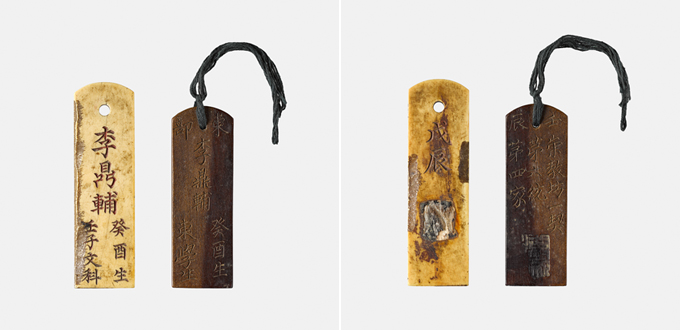
Two tags, one man, thirty-six years apart — the wooden hopae Yi Jeong-bo (1693–1766) carried at twenty as a student, and the ivory one issued when he reached the second rank at fifty-six. Front and back of each. Ivory front reads 李鼎輔 癸酉生 壬子文科: his name, his birth year, and the year he passed the civil examination.
Image: 이정보의 나무 및 상아 호패, National Museum of Korea (accession 신수1653). Used under KOGL Type 3 — Attribution, No Derivatives; reproduced unaltered.
What was a hopae, actually?
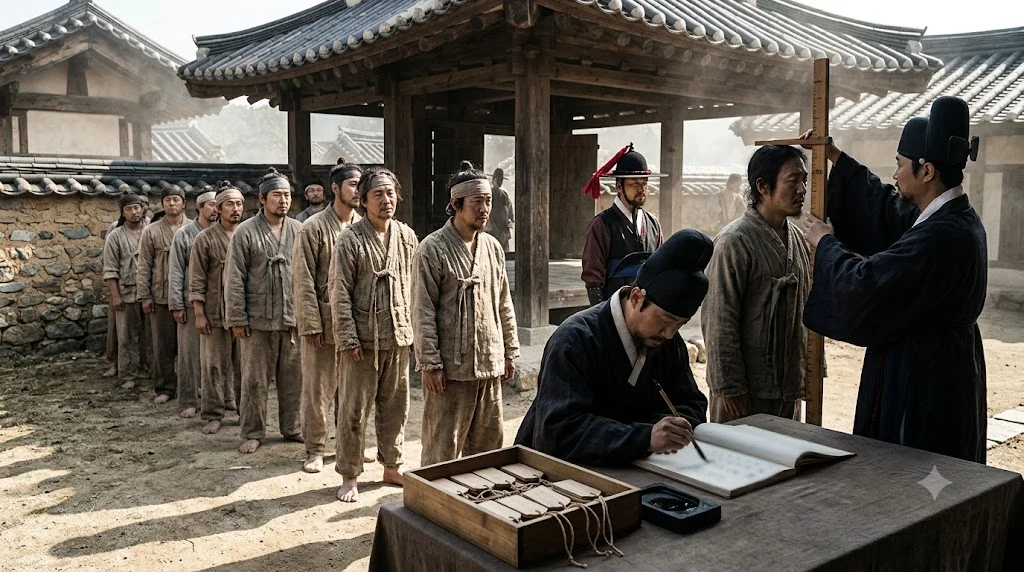
A hopae was a tag — small enough to hang from a belt or tuck into a sash — issued to men aged sixteen and above, and carried by them. It ran the whole length of society: royal kinsmen, officials, commoners, and the enslaved all carried one. Its stated purposes were 호구 파악 (grasping the household population), 유민 방지 (preventing vagrancy and drift), and 역의 조달 (securing the supply of labour and military service) (Encyclopedia of Korean Culture, 호패).
Read that list again, because it is the whole argument of this article in three phrases. Not one of them is about the individual. Count them, keep them from wandering off, get the labour out of them.
What was written on the tag varied by period and by who was carrying it. For high officials — those of the third rank and above — the tag recorded official rank. For men further down, it recorded 성명·주소·얼굴색·수염유무: name, address, complexion, and whether or not the man had a beard.
That last pair of items is worth sitting with. In a world without photographs, the tag had to carry a description — a rough physical signature that a checkpoint official could match against the face in front of him. Complexion and facial hair are what you can verify in three seconds at a gate, in bad light, without asking a question. It is a startlingly practical piece of design, and also a confession of the system’s limits: you can shave.
The material of the tag was itself information. Sources describe a graded hierarchy — ivory (아패) for the highest ranks, horn (각패) below that, then boxwood (황양목), then birch (자작목), and plain miscellaneous wood (잡목) for commoners and the enslaved.
The 1413 regulations are more supple than that ladder suggests, and the details are worth having. Each grade came with a substitute material — officials of the second rank and above used ivory but could use horn instead, and were to carry the ivory tag only when attending at the palace; the fourth rank and above used horn, substituting boxwood; and so on down. The rule on movement between grades ran one way: those above may use what belongs to those below, but those below may not use what belongs to those above. So the material marked a ceiling, not a fixed badge.
What was written on them differed too, and in a direction that complicates the “portable index entry” reading. The National Museum of Korea, presenting the pair of tags above, notes that ivory and horn tags omit the residence that a wooden tag carries, and give the holder’s examination year instead — which is why the museum reads them less as a residence document than as something closer to a civil servant’s pass. Yi Jeong-bo’s own two tags show it plainly: the wooden one names his ward, his neighbourhood unit and his house; the ivory one does not say where he lived at all. Under the reinforced system of Injo’s reign, the tags were organized into a small number of standard types along the same lines: ivory, horn, boxwood, and plain wood (우리역사넷, 호패법의 강화).
So before anyone read a character on your tag, the tag had already spoken. It told a magistrate’s runner what kind of person he was dealing with. A modern ID card is deliberately identical for everyone; the uniformity is the point. The hopae was the opposite. It was a status object that happened to also carry your name.
Why did Joseon keep starting the hopae system over?
Here is where most English-language accounts go wrong, usually by picking a single year and calling it “the introduction of the hopae.”
The idea did not start with Joseon. The Encyclopedia traces it to the end of Goryeo: in 1391, on a petition from the Dopyeonguisasa, military conscripts were made to wear a tag — an arrangement adapted from Yuan practice. Joseon inherited a device and then spent centuries failing to make it stick.
The Encyclopedia dates the first Joseon framework to the ninth month of 1413 (Taejong 13), when the court accepted a proposal from the former Innyeongbu magistrate Hwang Sa-hu (黃士厚), drew up the hopae samok (號牌事目) — the hopae regulations — and put them into effect. The Veritable Records carry it as the fourth of six entries for that day: 의정부 제안대로 호패법을 정하다, “the hopae law is settled as the State Council proposed.”
You will also find 1407 cited, in the Encyclopedia’s own article on household registration (Encyclopedia of Korean Culture, 호적). The two are not rival founding dates. The earlier record shows the court considering a hopae measure; the 1413 entry is where the detailed nationwide regulations — materials, inscriptions, deadlines, penalties — were formally settled. Later reigns then revived and redesigned the thing repeatedly. Discussion, legislation and enforcement simply do not share a year.
And then it kept arriving. The standard list of implementations runs 1413 (Taejong 13), 1459 (Sejo 5), 1610 (Gwanghaegun 2), 1626 (Injo 4), and 1675 (Sukjong 1). Up to Injo’s reign, each round was abolished not long after it began and could not be sustained; only from Sukjong’s reign was the system operated continuously.
Put the abolitions next to the implementations and one number falls out that says more than any of them. Between 1413 and 1675 — some two hundred and sixty years — the hopae system was actually in operation for eighteen.
The National Institute of Korean History’s account adds detail that does not line up neatly with that list, and I am going to leave the seam showing rather than sew it shut. It describes a major reinforcement under Injo in 1625 — a framework of thirty-five articles covering men aged fifteen and above, classified by status, with four standard tag types, a dedicated Hopaecheong (號牌廳) office to administer it, reissue on a fixed cycle, and death for forgery. It records that roughly 2.26 million men were entered on the registers within a single year. And it records that the whole apparatus was abandoned in the disruption of the Jeongmyo invasion of 1627.
Note two things. The age threshold there is fifteen, where the Encyclopedia’s general account says sixteen — the rules changed between rounds, and collapsing them into one number would be a small lie. And the sequence 1625-reinforcement, 1626-implementation, 1627-collapse is not a contradiction so much as a warning: a “hopae law” could be drafted in one year, enforced the next, and dead the year after. Which is exactly the pattern.
Why the pattern? The answer is not administrative incompetence.
Why would anyone refuse a piece of wood with their name on it?
Because of what came attached to it.
Every adult commoner male in Joseon owed the state yeok (役) — service. In practice that meant military registration and labour duty, or, increasingly over the dynasty, cloth paid in lieu of it. The obligation attached to a person, and the state could only attach it to a person it could find. So the register was not a neutral record. It was a bill.
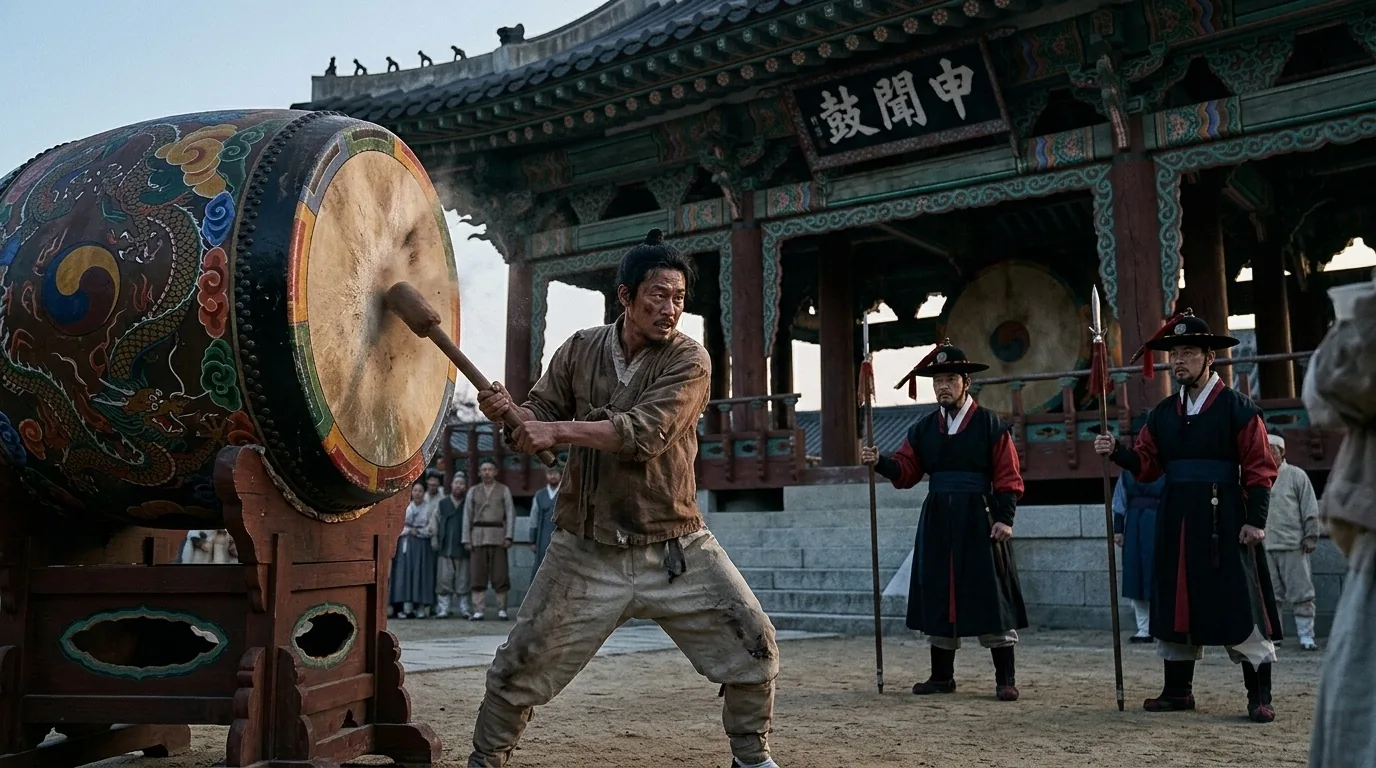
The Encyclopedia is blunt about the consequence: the hopae system could not be sustained because of resistance from the commoners who bore the state’s burdens, who saw carrying a tag as adding to what they owed, and who responded by attaching themselves as dependants to powerful households — trading personal freedom for invisibility. The Sejong Sillok is cited to the effect that hopae recipients amounted to one or two tenths of the total population. (You will sometimes see this rendered as “1–2% of the population.” That is a mistranslation of 할, a tenth. The figure is one to two tenths.)
Read that carefully, because it is easy to convert wrongly — and English accounts routinely do. The figure is a share of the whole population, and the ordinary eligibility pool was adult men, not everyone. Women and children were not issued the ordinary tag at all. So this cannot be turned into “one or two eligible men in ten,” and the ninety-percent failure rate you sometimes see quoted does not follow from it. What it does indicate is coverage well short of complete.
What the number does show is a system falling well short of the universality it claimed. And the Seongjong Sillok adds a second figure that is easy to confuse with the first: of those who did receive a tag, only one or two tenths were commoners actually bearing state service. Two different denominators, the same discouraging shape — and the people missing from the ledger were not criminals. They had correctly worked out that appearing in it was the expensive option.
The methods of disappearing were mundane. You could simply move — which is precisely why “preventing vagrancy” sat in the system’s stated purpose list, and why Joseon paired the hopae with the ogajaktong (오가작통) system, which grouped households into units of five under a headman with collective responsibility for reporting who was there. That system’s own listed functions include preventing theft, correcting local morals, restraining drift, and preventing omissions from the household register (Encyclopedia of Korean Culture, 오가작통). When a state has to make your neighbours responsible for reporting your existence, it is telling you how well the tag alone worked.
You could also move out of the state’s reach by attaching yourself to a powerful household — registered as a private dependant or as a slave, whether by genuine surrender of status or by fraudulent entry. The records do not reduce that to one clean route, and it is worth not flattening: some of it was real loss of freedom, some of it was paperwork. You could flee. And by the later dynasty, if you had money, you could buy your way out of the category altogether.
Where was the actual ledger — and how did the tag connect to it?
The hopae was never the record. It was the pointer to the record.
The record was the hojeok (戶籍), the household register, revised on the singnyeon (式年) cycle — every three years. The process began with the head of household submitting a hogu-danja (호구단자), a written statement of his household’s circumstances, to the authorities; the government kept one copy and, after verification, returned one to the householder (Encyclopedia of Korean Culture, 호구단자). From the compiled registers, a householder could request a junhogu (준호구), an official extract certifying his household — used to confirm family relationships or ownership of enslaved people (Encyclopedia of Korean Culture, 준호구).
What went into these documents was far more than a name. The register recorded the household head’s name, age, rank and status; his sajo (四祖), the four-ancestor formula covering father, grandfather, great-grandfather and maternal grandfather; his wife’s name, age, origin and her own four ancestors; children and resident relatives with their relationship to the head; and the enslaved people of the household, with their lineage (Encyclopedia of Korean Culture, 호적; 우리역사넷, 호적).
That structure explains a great deal. Joseon identity was not an individual fact; it was a position in a lineage, recorded through your ancestors and your household. Faking it was therefore harder than inventing a name — you had to invent a family — and the highest-value forgery in Joseon was never the tag. It was the genealogy.
Note the three-year cycle, too. Between compilations the ledger drifted out of date by definition: men died, men turned sixteen, households moved. The hopae was the state’s attempt to make identity continuous in that gap — a piece of the register carried on your body between revisions. Seen that way it is not an ID card at all. It is a portable index entry.
What happened if you forged one, borrowed one, or had none?
The penalties are where the state’s real priorities show.
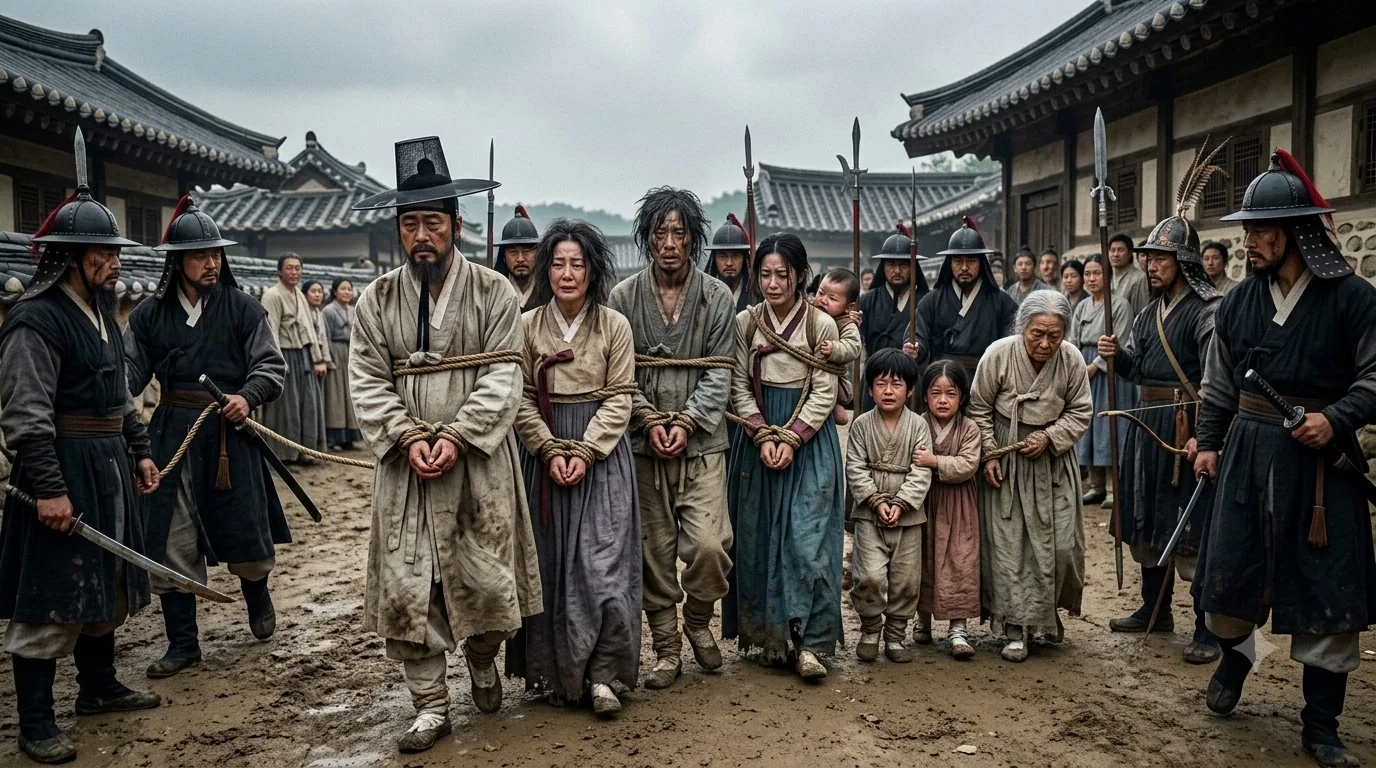
The Encyclopedia of Korean Culture records the 1413 scale plainly, and the striking thing is not where it starts but how wide it is. For a forger (위조자): death, with his wife and children made hereditary slaves. And for missing the issuing deadline — simply failing to come and be registered — the same: death, wife and children enslaved (Encyclopedia of Korean Culture, 호패). Not being counted was punished like counterfeiting the count.
Below that the penalties graduate. Those who borrowed or lent a tag had their punishment reduced by two degrees — measured, in the Veritable Records, against the penalty for failing to receive a tag, not against the forger’s; those who drifted from their registered place, by one degree; and losing a tag brought a beating and a reissue. The reinforced Injo-era framework likewise carried execution for forgery.
Resist the urge to read one tidy ladder here, because the scale moved sharply between rounds. Under the 1413 rules, missing the deadline to register was itself capital, and borrowing or lending was reduced two degrees from that. The 1459 regulations set beatings — fifty strokes for going without a tag or losing it, eighty for borrowing or lending. The Injo-era framework pushed the other way, making forgery, using another man’s tag and carrying none at all all liable to death. What is constant is not the tariff but the target: whatever else changed, the state was protecting the register.
That gradient is not about the wood. A state that executes forgers and enslaves their children is not protecting a piece of joinery — it is protecting the integrity of the count. If tags could be manufactured, the register became fiction, and if the register became fiction, so did the tax rolls and the military rolls. The hopae had to be unforgeable for the same reason a currency does.
And yet the severity is also evidence of failure. You do not impose escalating capital penalties on a problem that isn’t happening. The law is a photograph of the behaviour it was written against.
One thing worth saying, because it cuts against the modern instinct: a state that cannot count cannot distribute famine relief, cannot know which districts are collapsing, cannot tell a fraudulent tax assessment from an honest one. The tragedy of the hopae is not that counting is evil. It is that in Joseon the count arrived attached to a bill, and so the people being counted learned to treat the census as a predator.
Who was allowed to lie about who they were?
Almost no one — with one conspicuous exception, and one enormous loophole.
The exception was the state itself. Joseon operated an entire office built on concealed identity: the amhaengeosa (암행어사), the secret royal inspector, appointed in secret by the king and sent into the provinces in disguise precisely so that local magistrates would not know who he was until he revealed himself. Everything the hopae system existed to prevent — a man moving through the country as someone he was not — was, in his case, official policy, complete with a bronze tablet that functioned as his credential the moment he chose to stop hiding. It is the sharpest illustration available that Joseon’s problem was never disguise as such. It was unauthorized disguise. (We’ve written about how that office actually worked, and about the Korean history’s most famous inspector who never officially held the title, in a full piece on the amhaengeosa — this paragraph is only the identity angle.)
The loophole was money, and it opened wide in the later dynasty.
Faced with war damage, famine and empty granaries, the state adopted napsok (納粟) policies: in emergencies, it offered specified privileges in exchange for a set quantity of grain or cash. What could be bought included release from base status for the enslaved, removal of restrictions on the sons of concubines, exemption from military and clerical service, and the grant of rank or office (Encyclopedia of Korean Culture, 납속책).
The instrument that certified these grants was the gongmyeongcheop (空名帖) — literally the “blank-name certificate,” an official appointment document issued with the recipient’s name left empty, to be filled in later. The name tells you everything — though the document itself was not an identity tag. It was an appointment or exemption paper, through which rank, exemption from service or a change of legal status could be bought. So here was the state that executed men for forging identity tags, issuing blank-name documents through which status itself could be purchased. (Many of the offices so granted were nominal rather than real posts, and did not automatically pass to descendants.) (Encyclopedia of Korean Culture, 공명첩; 우리역사넷, 공명첩).
Issued in excess and at times sold under pressure, the gongmyeongcheop became a recognized abuse and a genuine threat to the status order it was issued by. And alongside it ran the private market: the purchase and fabrication of entries in jokbo (족보), lineage genealogies — the documents that, as we saw, actually constituted identity in the register. If your identity was your ancestors, then buying ancestors was the real forgery, and unlike a wooden tag it left no splinters.
The result, by the eighteenth and nineteenth centuries, was a status system hollowed out from both ends: from below by families purchasing their way upward, from above by a treasury that had discovered status could be monetized. The men still carrying plain-wood tags and paying the military cloth were, increasingly, simply those who had not managed to buy out.
Which is the point. Miss Hong fakes her identity downward, into a junior role, to investigate. A Joseon commoner who faked his identity was almost always faking upward or outward — into exemption, into a lineage, into invisibility — and he was doing it because the alternative was a bill he could not pay.
| In Undercover Miss Hong | What the Joseon record shows |
|---|---|
| Identity is a set of documents that can be swapped | Identity was a position in a lineage recorded across household registers — you’d have to forge a family, not a name |
| The disguise is a professional tactic, freely chosen | Joseon identity fraud was overwhelmingly defensive: escaping military service, labour duty and tax |
| An ID proves who you are, for your benefit | The hopae existed so the state could attach service obligations to a body — a bill, not a credential |
| A false ID is a discrete, low-stakes crime | Forging a hopae carried death, with the forger’s wife and children made hereditary slaves — and so, in 1413, did simply missing the deadline to register |
| A national ID system, once built, runs | Between 1413 and 1675 the hopae was in operation for about eighteen years out of two hundred and sixty |
| Identity systems basically work | Sejong-era records put hopae recipients at one or two tenths of the total population; the system was abandoned and restarted across four reigns, and ran continuously only after 1675 |
In short: the drama treats a false identity as a tool for getting into a system; Joseon’s forgers were almost always trying to get out of one.
Key terms. Hopae (號牌) — the identifying tag carried by Joseon men from age sixteen (fifteen under some rounds of the law), its material graded by status. Hopae samok (號牌事目) — the regulations governing the system, first drawn up in 1413. Hojeok (호적) — the household register, recompiled every three years on the singnyeon cycle. Hogu-danja (호구단자) — the household statement submitted by the head of household at each compilation. Junhogu (준호구) — an official extract from the register, issued on request. Sajo (四祖) — the four-ancestor formula (father, grandfather, great-grandfather, maternal grandfather) by which a person was placed in the record. Ogajaktong (오가작통) — the grouping of households into units of five with collective responsibility, including for omissions from the register. Gongmyeongcheop (空名帖) — the “blank-name certificate,” an official document issued with the recipient’s name left empty, granted in exchange for grain or cash. Yeok (役) — the service obligation, military or corvée, that made being counted expensive.
Korea was not alone
Joseon was not unusual in wanting to connect people, households and obligations. Ming China combined household registers with collective-responsibility groupings and travel permits; Tokugawa Japan tied population registration to certification by a Buddhist temple. Joseon’s own ogajaktong — households bound into units of five with shared liability — is visibly a cousin of the Chinese arrangement, so this is a family of solutions rather than three unrelated inventions.
What was distinctive in Joseon was the combination: a tag carried on the body, tied to a household register organised by lineage. Which is why a Joseon forger’s real target was never the tag.
→ The full comparison: hopae, luyin and the temple register
Coming up next
One undercover regulator in a 2026 office drama, and we’ve ended up at a wooden tag recording a man’s beard, a register listing his four ancestors, and a certificate sold by the state with the name left blank. The gap between Miss Hong’s fake employee badge and a Joseon commoner’s plain-wood hopae is not really a gap in technology. It’s a gap in who the document is for.
In the next essay, we’ll take another K-drama scene that looks like pure invention — and trace the real Korean history sitting underneath it.
Frequently asked questions
What was a hopae in Joseon Korea? A hopae (號牌) was a small tag issued to men from the age of sixteen, carried on the person, recording identifying details. It ran from the royal house down through officials, commoners and the enslaved. It is often translated as an identity card, and that is close enough for a first pass — but its purpose was narrower than a modern ID. The state was not trying to help you prove who you were. It was trying to count you, so that labour service and taxes could be attached to your name.
When was the hopae system introduced? There is no single clean date, and you should be suspicious of any account that gives you one. The Encyclopedia of Korean Culture dates the first regulations, the hopae samok, to 1413 under King Taejong, and the Veritable Records carry it as the fourth of six entries for that day, ‘의정부 제안대로 호패법을 정하다.’ The same encyclopedia’s article on household registration refers to a hopae measure in 1407, but the two are not rival founding dates: the earlier record shows the court considering the measure, while 1413 is where the detailed regulations were settled. Later reigns then restarted the system repeatedly — 1459, 1610, 1626 and 1675 are the dates usually listed.
Why did the hopae system keep failing? Because being registered was expensive. A counted man was a man the state could assign to military or labour service and tax accordingly, so ordinary people had a direct financial interest in not appearing in the records — by staying uncounted, moving, or attaching themselves as dependants to powerful households. The Sejong Sillok is cited to the effect that hopae recipients amounted to one or two tenths of the total population — a share of everyone, not of the adult men who were actually eligible, so it cannot be read as “one in ten eligible men.” The system did not fail because the technology was poor. It failed because the people it counted did not want to be counted.
Could you tell someone’s status from their hopae? To a degree, yes — the material was graded. Sources describe ivory for the highest officials, horn for those below them, then boxwood, then birch, then plain miscellaneous wood for commoners and the enslaved. The 1413 regulations also set substitute materials for each grade and allowed those above to use what belonged to those below but not the reverse, so the material marked a ceiling rather than a fixed badge. Under the Injo-era reinforcement the National Institute of Korean History describes four standard tag types along the same lines.
What was the punishment for forging a hopae? Severe, and deliberately so. The Encyclopedia of Korean Culture records the penalty for a forger as death, with his wife and children made hereditary slaves — and, in the 1413 rules, the same for simply missing the deadline to register. Borrowing or lending a tag was reduced by two degrees, measured against the penalty for failing to receive a tag rather than against the forger’s. That scale tells you what the state thought was at stake. Forging a hopae was not treated as paperwork fraud. It was treated as an attack on the register itself.
Sources & further reading
This piece was written from the historical script and fact-check of 사뚱샘의 역사방 (SaDDungSam). Key sources are cited inline above. For broader reading:
- The hopae itself. Encyclopedia of Korean Culture (한국민족문화대백과사전), 호패 — the material grades, the inscribed details, the penalty scale, and the Sejong Sillok figure on how few people actually received one.
- The primary record. Taejong Sillok, 13th year, 9th month, 1st day: 의정부 제안대로 호패법을 정하다, the fourth of six entries for that day, establishing the hopae law. Also the National Institute of Korean History’s account of 호패법의 강화, covering the Injo-era reinforcement, the Hopaecheong, and the system’s collapse in the Jeongmyo invasion.
- The register behind the tag. Encyclopedia of Korean Culture, 호적, 호구단자, 준호구 · 우리역사넷, 호적 — the three-year cycle, the four-ancestor formula, and what a household actually had to declare.
- Buying your way out. Encyclopedia of Korean Culture, 납속책 and 공명첩 · 우리역사넷, 공명첩 — how emergency finance turned status itself into a purchasable good.
- The neighbours as enforcement. Encyclopedia of Korean Culture, 오가작통.
- The comparative picture. Encyclopædia Britannica, “Lijia” and “Baojia” · ChinaKnowledge.de, “huangce 黃冊” · Encyclopædia Britannica, “Tokugawa period”.
A note on dates. This article deliberately does not give a single founding year for the hopae system. That is not because the sources are in conflict but because discussion, legislation and enforcement fell in different years — 1407 records the court considering the measure, 1413 settles the regulations, and the National Institute of Korean History dates the Injo-era reinforcement to 1625 where the standard implementation list gives 1626, the year wearing actually began. Likewise the age threshold appears as sixteen in general accounts and fifteen in the Injo framework. These are different records of a law that was written, abandoned and rewritten across four reigns, and flattening them into one tidy timeline would misrepresent what actually happened.
Thanks for reading — see you in the next one.
This article was researched and written by K-Drama History. Source: Undercover Miss Hong, Explained: How Joseon Korea Proved You Were Who You Said You Were — K-Drama History