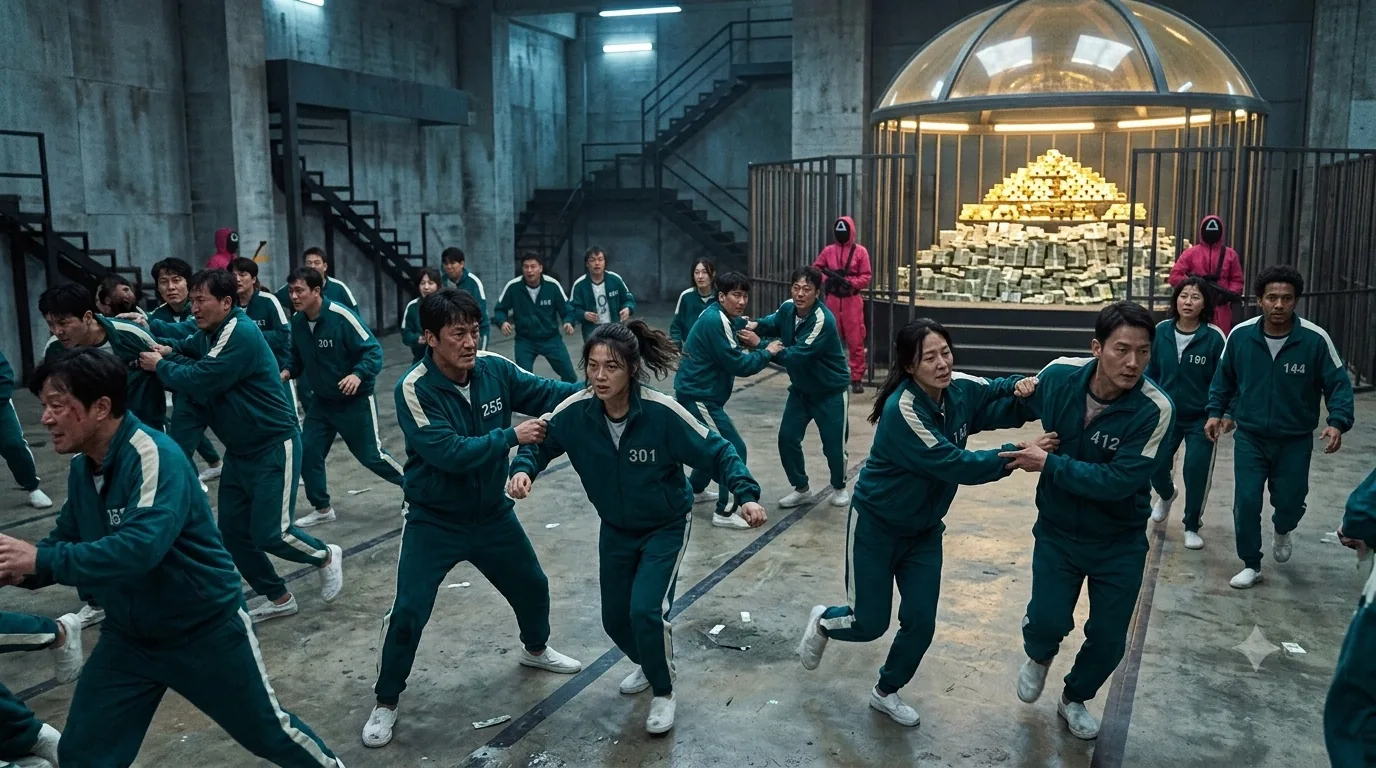
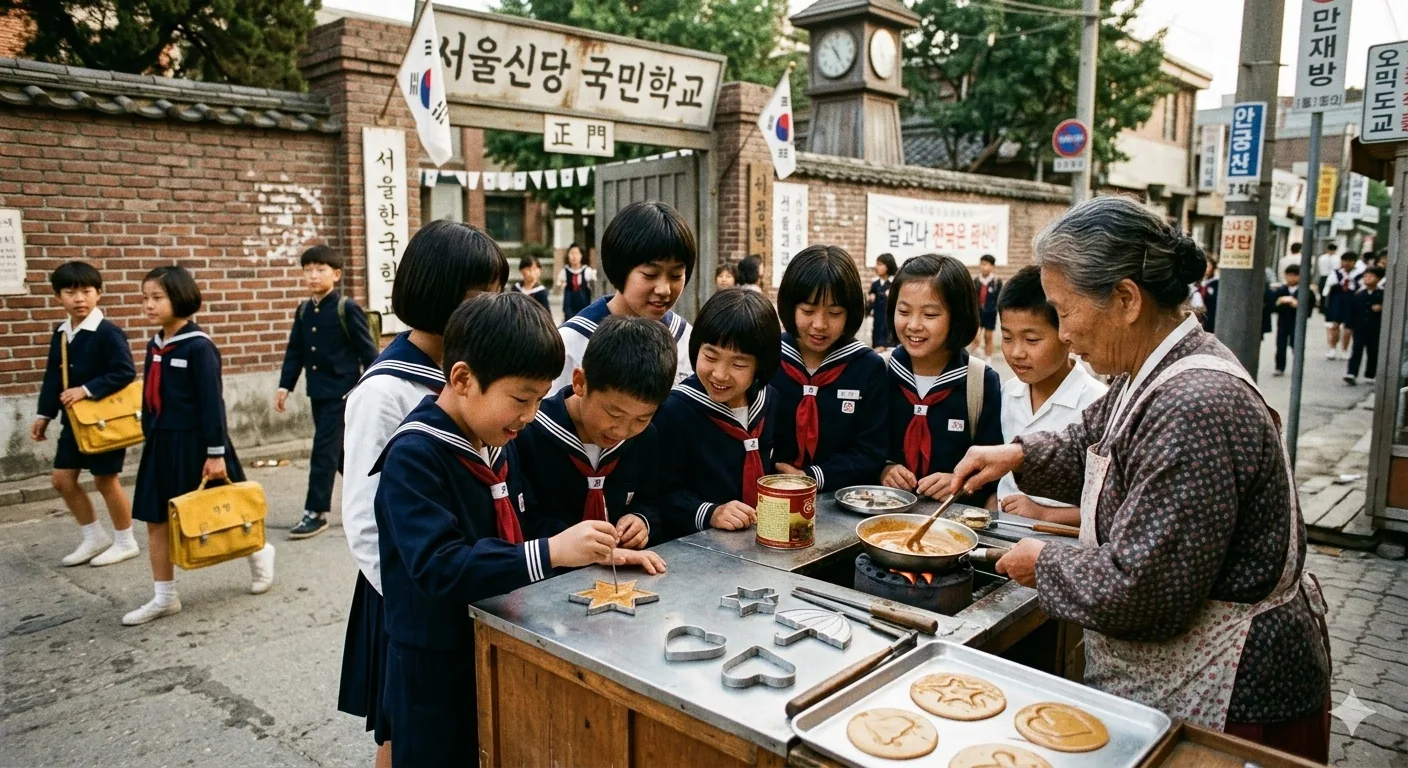
Why Revenge Feels Like Justice in The Glory: Korea's School Violence Crisis, Explained
Theme: Modern Korea
From the research behind Pause the Drama.
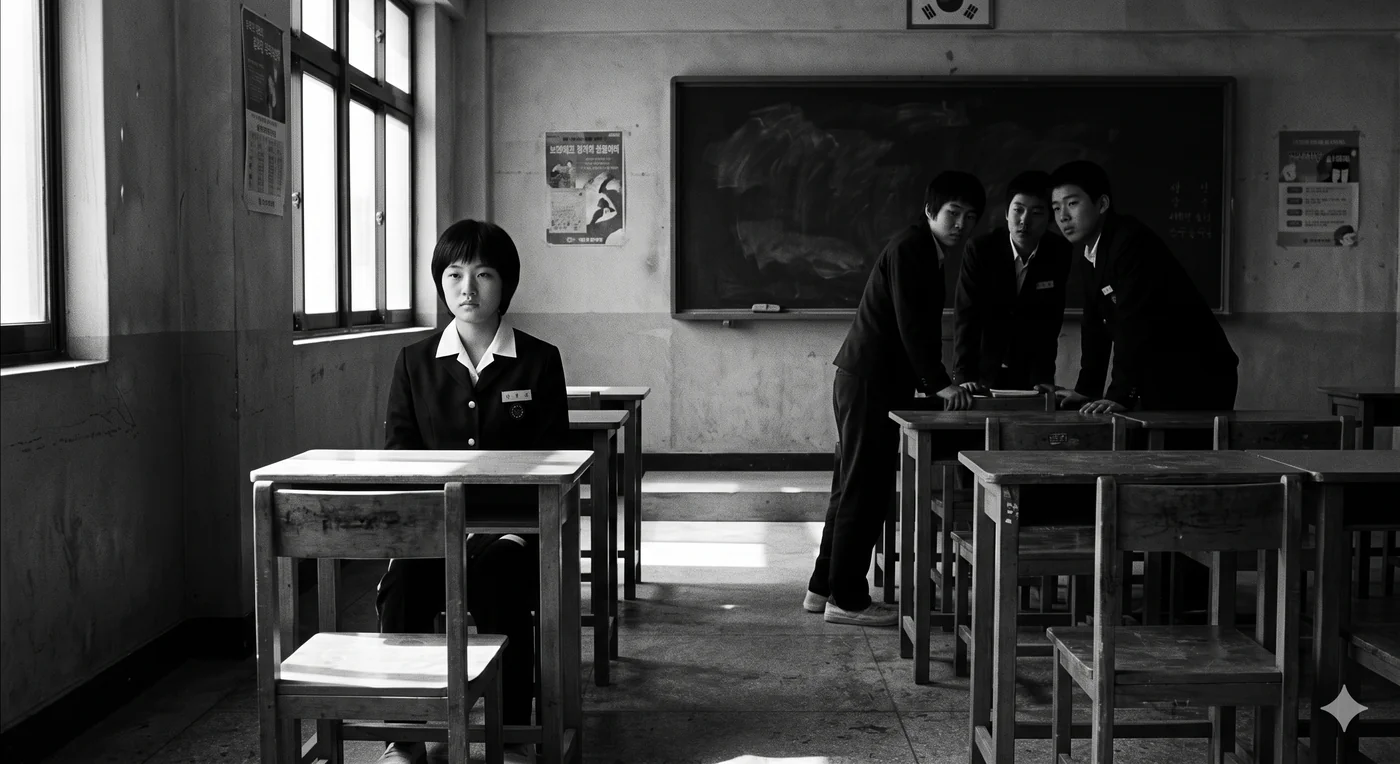
In The Glory (더 글로리), the horror begins in the first minutes: high-school student Moon Dong-eun watches, without expression, as her classmates press a scorching curling iron against her forearm. She does not scream. Revenge has already started — aimed sixteen years into the future.
Netflix’s two-part series climbed to #1 on the platform’s non-English TV chart — Part 1 reaching the top in its second week after its December 2022 release, and Part 2 on its release in March 2023 — and the global response it generated was not only about the craft of the storytelling. Viewers far outside Korea recognized something in the drama’s foundational premise: the perpetrators are doing fine. The school didn’t stop them. The law didn’t reach them. They grew up, got good jobs, married well, and forgot. Moon Dong-eun did not.
To understand why that premise hits so hard — and why the response to it takes the specific Korean shape it does — you have to understand how school violence has actually been handled in Korea, what “face culture” does to victims who consider speaking out, and why a single line on a school record can frighten a powerful family.
Quick answer: The Glory makes private revenge feel like justice because Korea’s official system formally hears almost every victim — yet often fails to deliver consequences that match the harm. The School Violence Prevention Act (enacted in 2004, significantly strengthened around 2011–2012) created formal adjudication committees, but the problem isn’t silence: a 2022 Ministry of Education survey found that around 90% of school-violence victims did tell someone or report it. The gap that fuels the drama is what happens after — reporting so often fails to produce consequences proportional to the harm, especially when the perpetrator’s family has wealth, social standing, and lawyers. Moon Dong-eun’s sixteen-year private plan feels heroic because official justice is available in name but not in result: a fantasy of perfect accountability that resonated far beyond Korea because distrust of institutions is not a Korea-only condition.
Let’s unpack the history.
Is the school violence in The Glory realistic or exaggerated?
The drama’s violence — repeated burns, assaults, sexual humiliation, and then decades of social impunity for every attacker — is a compressed and intensified fictional account. The most important correction first: Korea’s most common forms of school violence are verbal abuse, ostracism, and cyberbullying. Physical assault is real but proportionally less frequent. No single incident maps onto The Glory’s storyline. But the drama’s scaffolding connects to documented patterns.
School violence entered Korea’s national policy agenda meaningfully around 2004, when surveys gave statistical shape to what many had experienced privately: perpetrators who held dominant social positions within school hierarchies, and victims whose disclosure was structurally discouraged. The School Violence Prevention and Countermeasures Act (학교폭력예방법) was enacted that same year (Act No. 7119, promulgated January 2004; full text at the National Law Information Center) — a point worth stating plainly, because the law is often mis-remembered as a 2012 creation.
A turning point came at the end of 2011, with the death of a middle-school student in Daegu, widely attributed to prolonged bullying. It was not the sole cause of any single statute, but it was one of the most prominent of a cluster of student deaths in this period that pushed school violence onto the national agenda. In the years around 2011–2012, the government rolled out a comprehensive set of school-violence countermeasures and the existing law was significantly strengthened — establishing mandatory school-level School Violence Response Committees (학폭위) and specifying the range of disciplinary measures available. The law itself, to be precise, dates to 2004; 2011–2012 is when it was sharpened, not born.
The gap between law and outcome, however, proved stubborn. Even with formal committee proceedings, wealthy families retained legal counsel to contest or soften rulings. The period for which a bullying penalty remained on a school record was limited — and the exact duration became one of the most politically contested provisions of the law, revisited multiple times into the 2020s. And crucially, the problem was never mainly one of silence: by 2022, the Korean Ministry of Education’s annual School Violence Survey found that around 90% of students who experienced violence did tell someone — a family member, a teacher, or a formal channel. The disturbing part is not that victims stay quiet. It’s that telling so often changes so little. That is the real-world engine behind Moon Dong-eun’s choice: not a victim too afraid to speak, but a system that hears and does not deliver.
Why does revenge feel like justice in The Glory?
Korea’s answer to this question starts with two deeply embedded social forces: chemyeon (체면), roughly “face,” and the structural weight of social hierarchy.
When a victim accuses a bully, the accusation does not only concern the bully. It implicates the bully’s family — which may carry social capital or professional standing worth protecting. It threatens the school’s reputation and its administration’s record. And it risks social stigma landing on the accuser, not just the accused. In Korean social logic, “making trouble” — even when the trouble is entirely justified — can mark the person who raises the complaint as the disruptive force in a situation where everyone else wants peace restored quietly.
This triple pressure — perpetrator-family power, institutional reputation interests, accuser-side stigma — is not unique to Korea. But its specific configuration, combined with the way hierarchical social networks operate in Korean schools and communities, produces an environment in which Moon Dong-eun’s calculation is internally coherent: the official system will not deliver justice proportional to the harm, so an alternative must be constructed.
This is not a claim that Koreans approve of private revenge in real life. The drama’s emotional force comes from a narrower idea: when formal justice looks procedurally available but proves practically weak, revenge becomes a fantasy of accountability — a story people respond to, not a social endorsement they act on.
Moon Dong-eun’s method — no violence, no illegality as such, just information deployed with precision to collapse the social and romantic structures that protect her abusers — is not a moral endorsement from the drama’s writers either. It’s a thought experiment about what a person of extraordinary discipline and patience could do if official channels had truly failed her. The emotional release that produces is what drove viewership across regions with no cultural connection to Korea: the catharsis is not Korean, it is human.
Why do Korean parents fear school-violence records?
One of the most foreign-feeling elements of The Glory, for an international viewer, is the sheer weight of a school record. Why would a wealthy family hire lawyers over a single disciplinary entry? The answer is that a Korean student record (학교생활기록부) is not a simple attendance sheet or report card. It documents grades, attendance, school activities, behavioral notes, and disciplinary measures — and for high-school students it can connect directly to college admissions, which in Korea is bound up with family expectations, class mobility, and social reputation.
That is why a school-violence measure recorded there is not just “getting in trouble at school.” It can follow a student into the admissions process, and so perpetrators and their parents sometimes pursue administrative appeals, lawsuits, and legal representation to reduce or erase the entry. The fight is less about the punishment itself than about the record — about who gets to delete their past and who has to carry it.
This became sharper with recent policy change. Following the government’s 2023 comprehensive school-violence countermeasures, from the 2026 admissions cycle (Korean Council for University Education framework) school-violence disciplinary measures began to be reflected across college admissions more broadly than before — not only in record-based tracks but extending to other admission types as well. Previously, whether and how to weigh them varied by university. The specific method — point deductions, qualitative review, eligibility limits — still varies from one university to another, and a single record does not mechanically decide a life. But the direction is unmistakable: in Korea, a record is reputation, and reputation is opportunity.
This is exactly what the attackers in The Glory fear. They dread the collapse of their social success, careers, marriages, and children’s futures more than they dread any single punishment. Korean school violence, seen this way, is never only a “school problem” — it sits at the intersection of the school record, the college-admissions race, and a family’s social and economic resources. That intersection is what makes the drama’s rage legible.
Drama vs. real history — what does The Glory actually get right?
| In The Glory | In real Korea |
|---|---|
| Perpetrators live comfortably for sixteen years after the abuse | Even when victims report — and most do — penalties are often limited; enforcement and record timelines have been contested for years |
| School and parents close ranks to protect the attacker | Wealthy families retaining legal counsel to soften 학폭위 rulings is a documented pattern |
| The attackers fear exposure more than punishment | A school-violence record can affect college admissions (more broadly from the 2026 cycle), so families litigate to erase it |
| Violence includes burns, assault, and sexual humiliation across years | Most common forms in Korea are verbal abuse, ostracism, and cyberbullying; severe physical violence is proportionally rarer |
| Private, years-long plan achieves what courts could not | Most of Moon Dong-eun’s actual methods would be civilly or criminally actionable in Korean law |
The drama compresses and intensifies real patterns, but its foundational claim — that institutional channels often fail victims in ways that correlate with the perpetrator’s social and economic power — is documented, not invented.
Key terms. School Violence Prevention and Countermeasures Act (학교폭력예방법) — enacted 2004, significantly strengthened around 2011–2012, repeatedly amended on record-keeping timelines into the 2020s. Hakpokwi (학폭위, School Violence Response Committee) — the school-level adjudication body; jurisdiction and practical enforcement remain topics of ongoing legal debate. Student record (학교생활기록부, 생기부) — the official cumulative school record that can feed college admissions, which is why a disciplinary entry carries unusual weight. Chemyeon (체면) — “face”; the social weight attached to reputation and hierarchy that makes accusation itself costly for a victim in some social configurations.
Comparing approaches to school justice: Korea, Japan, and the West
Moon Dong-eun’s solution is a specifically Korean shape of a universal problem. How different societies structure the space between a bullied student and formal accountability reveals a great deal about what each society values — and what it fears.
Korea — an adversarial, disciplinary system. The 학폭위 machinery exists and processes significant caseloads. A school-violence case is deliberated by a committee, disciplinary measures are imposed on the offending student, and those measures can be contested through administrative trials and lawsuits. That structure is exactly why parents and lawyers are so often drawn in — the process runs on penalties and appeals. The problem documented by researchers is not the absence of law but the translation of law into outcome.
Japan — investigating “serious situations.” Japan’s school bullying problem, known as ijime (いじめ), tends toward collective ostracism and silent exclusion rather than overt physical assault, and victim silence is socially reinforced in ways that parallel Korea. But Japan is not without law: its 2013 Act on the Promotion of Measures to Prevent Bullying (MEXT, official English text) built a different machinery. Rather than centering on disciplinary measures and appeals, it focuses on “serious situations” (jūdai jitai) — a suicide attempt, serious physical or psychological harm, prolonged absence — which trigger an investigative body to establish the facts and prevent recurrence. Parents and lawyers can be involved in Japan too, but the center of gravity is fact-finding and prevention, not disciplinary litigation. The honest comparison is adversarial-disciplinary (Korea) versus investigative (Japan) — not “legal versus no legal.”
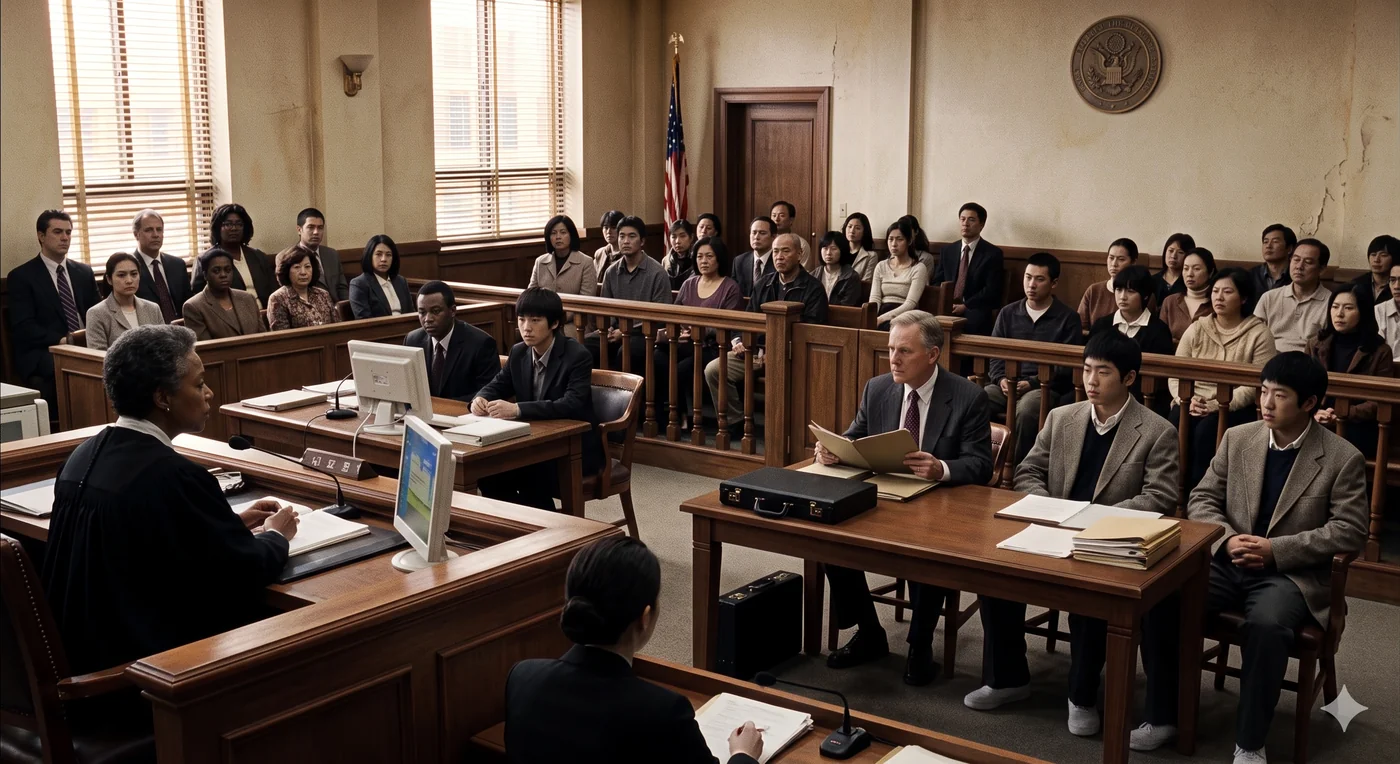
United States — zero tolerance and the courtroom template. In the US, school bullying became a national policy focus after the 1999 Columbine High School shooting, which catalyzed a wave of zero-tolerance policies and state anti-bullying laws (StopBullying.gov). American legal culture also offers victims richer channels for external redress: civil suits, criminal charges for assault, and federal civil-rights claims in certain circumstances (where bullying overlaps with discriminatory harassment). The narrative form that justice takes in American popular culture is revealing — it tends toward the courtroom drama, the lawsuit that vindicates the plaintiff within official systems. The Glory’s model, in which a victim bypasses official channels entirely and achieves justice alone, is emotionally legible to American audiences but culturally unusual as a heroic template in their own storytelling tradition.
Germany and Northern Europe — restorative justice, unevenly. Some Northern European systems have developed restorative justice further than most — structured processes in which the person harmed and the person responsible meet, with facilitation, to address what happened and negotiate repair. But the picture is uneven, and grouping these countries together flattens real differences: Finland and Norway have relatively systematic restorative frameworks; Denmark and Sweden are more limited and fragmented; Iceland’s use is minimal. Even Germany, often cited here, developed its restorative tradition more around offender rehabilitation, probation, and victim-offender mediation than inside schools specifically. Where restorative practice does reach schools, private revenge is normatively rejected — but “Europe does this and Korea doesn’t” would be too clean a story.
Coming up next
A curling iron, sixteen years of silence, and a question that crossed every timezone Netflix reaches: why does the official system keep losing? We’ve traced that question from Korea’s School Violence Prevention Act through face culture, the weight of the school record, and comparisons with Japan’s ijime law, America’s zero-tolerance era, and Europe’s uneven restorative practice.
In the next essay, we move into a hospital — and ask how a country that built universal healthcare in barely more than a decade ended up with doctors seeing over a hundred patients a day.
Thanks for reading — see you in the next one.
Frequently asked questions
What is The Glory about? The Glory (더 글로리, 2022–2023, Netflix) is a two-part K-drama about Moon Dong-eun, who endures savage bullying in high school — including repeated burns from a hot curling iron — and then spends over a decade engineering the systematic downfall of every person who harmed her. The series became one of Netflix’s most-watched non-English dramas and sparked global conversation about school violence, class privilege, and private justice.
Is the bullying in The Glory based on real events? No single incident was adapted directly, but the drama’s framework reflects documented realities: perpetrators who face limited consequences, wealthy families leveraging legal counsel in 학폭위 proceedings, and a justice gap survivors recognize. The unsettling part is not that Korean victims stay silent — a 2022 Ministry of Education survey found that around 90% of victimized students did tell someone or report it — but that reporting so often fails to produce consequences proportional to the harm.
Was The Glory based on a real curling-iron bullying case? Not on one specific documented case. The curling-iron torture scene dramatizes real fears and reported patterns of severe school violence, but the drama compresses many social realities into a single fictional revenge story rather than retelling a single incident.
Is Moon Dong-eun’s revenge plan legally possible in Korea? Most of what she does — deploying accurate information to destroy social and professional standing, engineering internal betrayals — occupies legally grey territory or would expose her to civil defamation claims under Korean law. The drama privileges emotional justice over legal realism. A real victim who replicated her methods would face civil and potentially criminal liability even if the underlying facts she used were true.
Why didn’t Moon Dong-eun simply sue her bullies? The drama’s point is not that legal channels don’t exist — they do. It’s that formal or school-based procedures can feel too slow, too weak, or too vulnerable to social power, especially when the other side has money and lawyers. Her years-long private plan is a fantasy of exact accountability, not a realistic legal strategy; in reality, several of her methods would carry civil or criminal liability.
What is Korea’s School Violence Prevention Act? The School Violence Prevention and Countermeasures Act was first enacted in 2004 — it is not a 2012 creation. Around 2011–2012, in a period marked by widely reported student deaths, it was significantly strengthened alongside a government-wide set of countermeasures, and it has been amended repeatedly since, especially on how long a bullying penalty stays on a student’s record. It established School Violence Response Committees (학폭위) and defined covered forms of violence.
Why did The Glory become such a global hit? Because its premise travels. The assumption that official channels failed — and that a perpetrator’s social connections insulate them from consequences — resonated with viewers far outside Korea. Moon Dong-eun’s sixteen-year plan offers perfectly calibrated accountability that no court can provide. The emotional engine is not Korea-specific: it is the universal frustration of watching perpetrators thrive while victims carry the cost.
What is ijime, and how does Japanese school bullying compare to Korea’s? Ijime (いじめ) is the Japanese term for school bullying, typically collective exclusion and silent ostracism rather than overt physical violence. Both countries have laws — Korea’s School Violence Prevention Act and Japan’s 2013 Act on the Promotion of Measures to Prevent Bullying. The difference is structural: Korea’s system centers on disciplinary measures against the offender and the administrative appeals that follow (drawing in parents and lawyers), while Japan’s centers on investigating “serious situations” — a suicide attempt, severe harm, prolonged absence — to establish facts and prevent recurrence. Not “legal versus no legal,” but adversarial-disciplinary versus investigative.
How does Korea’s approach to school bullying compare with the US? The US has formal bullying laws and expanded legal redress channels built partly in response to the late-1990s policy wave after Columbine. The American cultural template for justice-seeking tends toward official systems — the lawsuit that vindicates, the prosecution that punishes. The Glory’s model — bypassing official channels entirely and winning alone — is narratively resonant but culturally unusual as a heroic arc in most American storytelling.
Why is a Korean school record (학생부) such a big deal in The Glory? A Korean student record (학교생활기록부) is not just a report card — it documents grades, attendance, activities, and disciplinary measures, and for high-schoolers it can feed into college admissions. A school-violence penalty recorded there can affect a student’s path, which is why some perpetrators and their families pursue administrative appeals and lawsuits to reduce or remove it. From the 2026 admissions cycle, school-violence measures are reflected in college admissions more broadly than before — though the specific method varies by university, and a single record does not mechanically decide a future.
Does Korea’s social hierarchy affect how school bullying cases are handled? Yes, and this is one of the drama’s most documented real-world connections. A perpetrator’s family wealth, school standing, and social network can affect whether administrators intervene seriously, whether legal representation softens a ruling, and whether witnesses cooperate. Face culture (체면) can make raising a complaint socially costly for the accuser — a structural dynamic the drama depicts with uncomfortable accuracy.
Sources & further reading
This piece was written from the historical script and fact-check of 사뚱샘의 역사방 (SaDDungSam). Primary and official sources are linked inline beside the claims they support:
- School Violence Prevention and Countermeasures Act (Act No. 7119; enacted 2004, strengthened 2011–2012) — National Law Information Center (국가법령정보센터).
- 2022 School Violence Survey (reporting rate ~90%) — Korean Ministry of Education.
- 2026 reflection of school-violence measures in college admissions — Korean Council for University Education (한국대학교육협의회).
- Japan’s Act on the Promotion of Measures to Prevent Bullying (2013) and “serious situations” — MEXT, official English text.
- US bullying policy, zero tolerance, and the post-Columbine context — StopBullying.gov.
- The Glory’s Netflix chart performance — Yonhap News Agency.
Further reading for the comparative sections: the Korea Legislative Research Institute’s legislative evaluation of the School Violence Prevention Act; the Nordic Council of Ministers’ reports on restorative justice and practice in the Nordic region and the European Forum for Restorative Justice; and academic work in Korean sociology on face culture (체면) and the social cost of accusation.
Thanks for reading — see you in the next one.
This article was researched and written by K-Drama History. Source: Why Revenge Feels Like Justice in The Glory: Korea's School Violence Crisis, Explained — K-Drama History