Was Reply 1988's Alley Community Real? Yeontan, the Seoul Olympics, and Korea's Compressed Modernization
Theme: Modern Korea
From the research behind Pause the Drama.
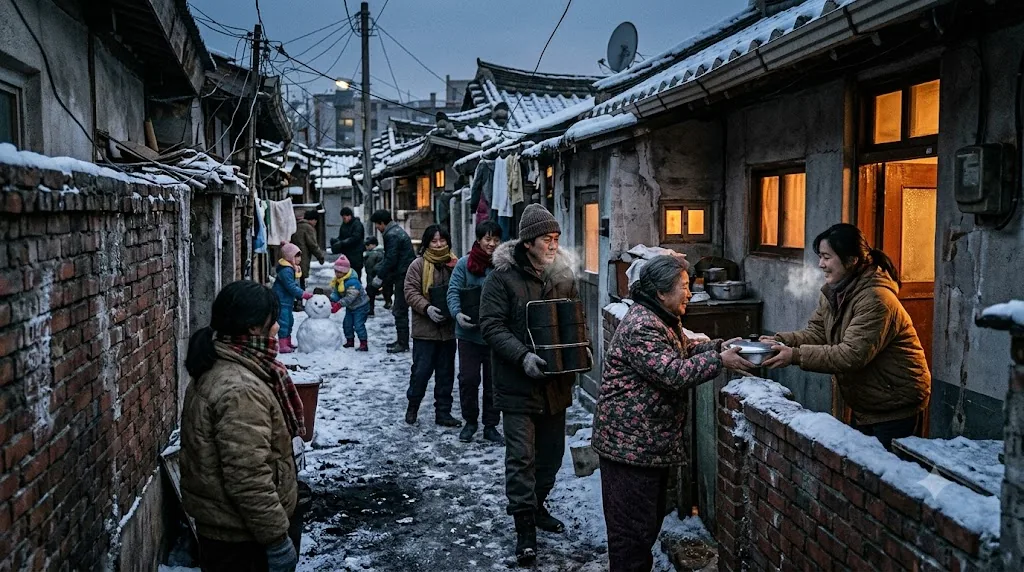
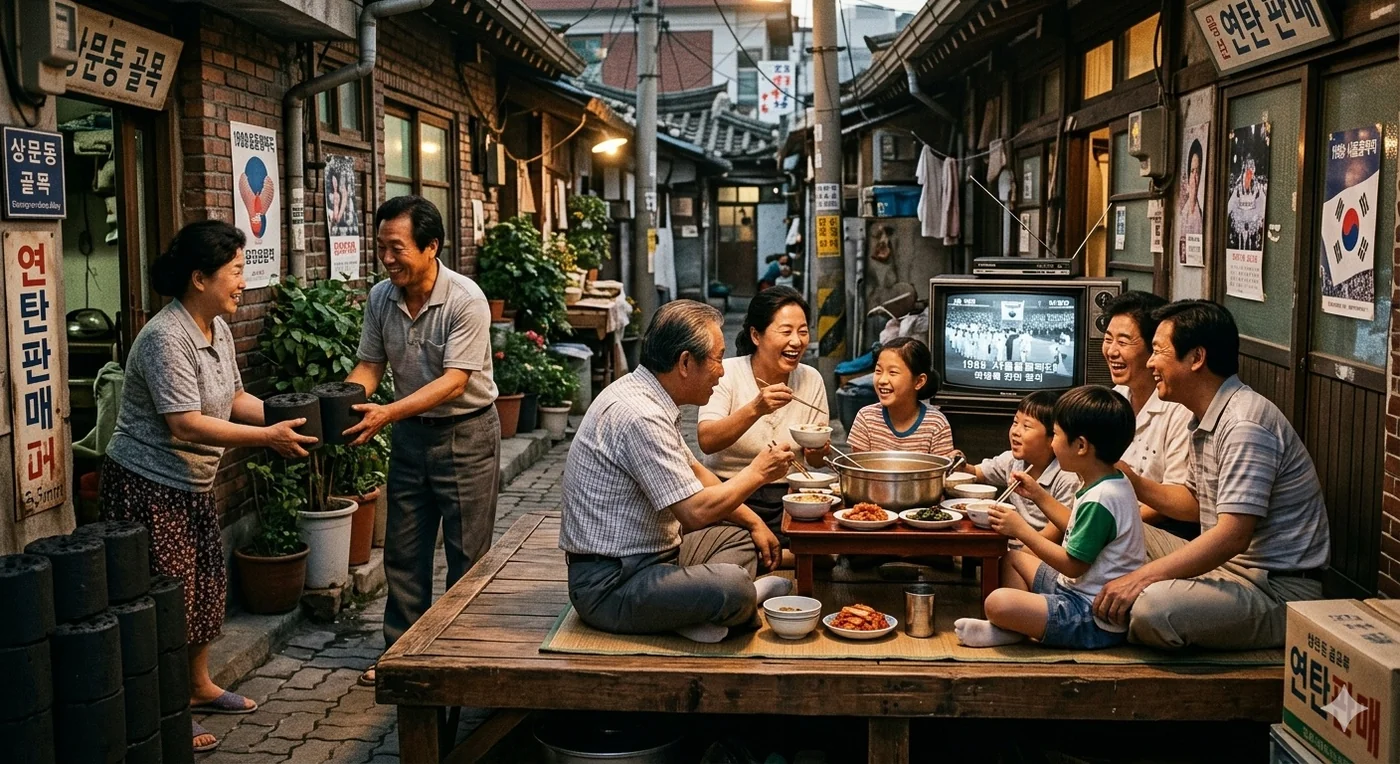
In Reply 1988 (응답하라 1988), the most quietly devastating scene isn’t a romantic confession. It’s a neighbor appearing at the door with two extra charcoal briquettes because she heard through the wall that the family next door had run out. No announcement, no debt recorded. Just two briquettes handed over in the dark.
That image anchors the entire drama: the alleyway of Ssangmun-dong, Dobong district, Seoul, 1988. Five families share a single lane of low-slung single-story houses — a world of communal meal tables, rotating childcare, and the opening ceremony of the Seoul Olympics flickering on a television. But is this a faithful picture, or nostalgia painted in warmer colors than the original? And what does the era’s history reveal that the drama leaves out?
Quick answer: The alley community of Reply 1988 is not pure invention. In low-income and aspiring-middle-class Seoul neighborhoods of the 1980s, neighbor-to-neighbor sharing — charcoal briquettes, meals, childcare — was a functional survival strategy in the absence of a welfare state. The drama sits inside a real historical moment: Korea’s compressed modernization, the 30-year sprint from rice-paddy poverty to industrialized economy that took the West a century and a half. By 1988, per capita GDP had risen from roughly $79 in 1960 to about $4,888 (World Bank, current USD) — a trajectory the Olympics put on the world stage at exactly the moment a democracy movement was completing the country’s political transformation. The warmth the drama captures is real. So is the edge it softens.
Let’s trace the layers.
Were the alley communities of 1980s Seoul real, or is Reply 1988 romanticizing them?
The drama is set in the kind of neighborhood that still existed in Seoul’s outer rings in 1988 — dense clusters of single-story tiled-roof houses in Dobong, Nowon, and Yeongdeungpo districts, where urban migration had deposited two decades of new arrivals from the countryside. In these neighborhoods, sharing was not sentiment; it was logistics.
The fuel at the center of that logistics was yeontan (연탄), the compressed coal briquette. Through the mid-to-late 1980s — before city gas and oil boilers spread widely — yeontan remained a major heating and cooking fuel in many Korean households, especially in lower-income and older urban housing. It was cheap, widely available, and dangerous: carbon-monoxide poisoning from improperly ventilated briquettes killed people every year. Managing that danger required cooperation — neighbors watching for smoke, sharing fire to relight a dead stove, lending spare stock, reminding each other to ventilate before sleep. The physical structure of the alley, where houses shared walls and the gap between front doors could be measured in steps, made that cooperation both possible and necessary.
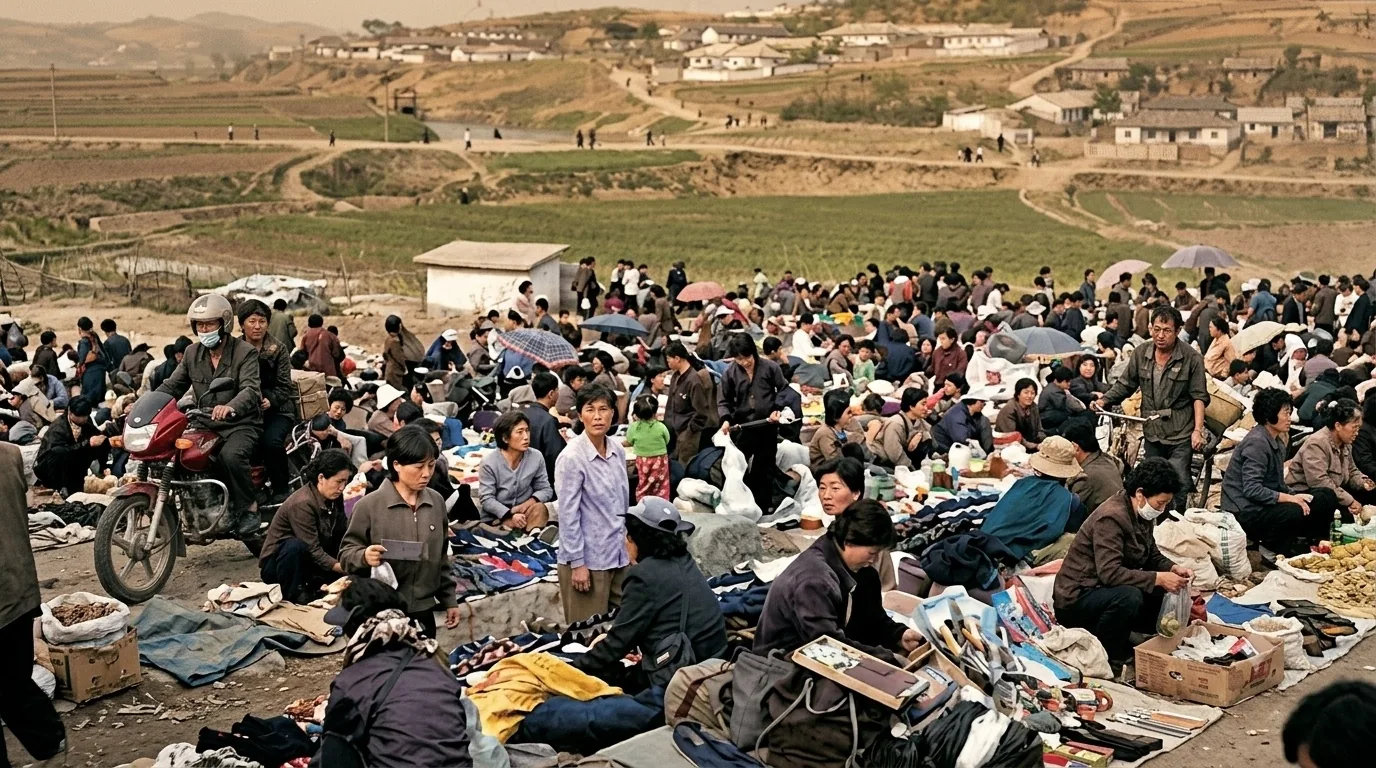
By 1988, the households in those neighborhoods stood at a transitional moment. Many had recently acquired a television, a refrigerator, and a washing machine for the first time. Per capita GDP had climbed from around $79 in 1960 to about $4,888 by 1988 (World Bank, current USD) — a roughly 62-fold increase in nominal current-dollar terms over 28 years (the figure rose from $3,658 in 1987 to $5,989 by 1989). In lived experience, that meant consumer goods, housing forms, and family expectations transforming within a single generation. Economists call this trajectory compressed modernization (압축성장): the agricultural-to-industrial-to-service-economy transition that took Western Europe and North America 100 to 150 years, Korea accomplished in roughly 30. The drama’s domestic details — the family upgrading from a radio to a color television, the vague prospect of piped natural gas replacing the briquette stack — are the household-scale micro-history of that macro-shift.
What the drama gently omits: even within the alley, the transition was uneven. Not all five families were moving at the same speed, and the very informality of the mutual-support network reflected the absence of public infrastructure — no reliable social insurance, no universal healthcare yet for many, no state energy subsidy — that would have made the neighbor-with-two-briquettes redundant.
What was the 1988 Seoul Olympics, and why did it matter beyond the medals?
For the families in Ssangmun-dong, the opening ceremony was a television event. For Korea’s government, the 1988 Seoul Olympics was something more precise: an internationally witnessed certification that the country had crossed from “developing nation” to “newly industrialized economy” — what the Olympic movement itself later called Korea “opening up to the world.”
The infrastructure built to host the Games reshaped Seoul. The development of the Gangnam district accelerated. Subway lines 2, 3, and 4 were completed. The Olympic Expressway was constructed along the Han River. That investment remade the city’s spatial logic — and it came with a cost the drama doesn’t show. The urban renewal and city-beautification drive of the period involved forced relocations of low-income residents. The clearest Olympic-linked case is Sanggye-dong, whose shantytown residents were evicted partly because the area sat along the Olympic torch route — a three-year struggle documented in Kim Dong-won’s landmark film Sanggye-dong Olympics. Other demolition conflicts of the era, such as Mok-dong, belong more to the broader 1980s Seoul redevelopment wave than directly to Olympic venue preparation — Mok-dong’s own main stadium was completed in 1989, after the Games, while the Olympics centered on Jamsil and Olympic Park.
The Olympics also carried a political charge that no previous Korean government could have claimed: the Games opened just over a year after the June 1987 Democracy Movement, which forced constitutional revision and the restoration of direct presidential elections — ratified by referendum that October with 93% in favor. The country had achieved two transitions almost simultaneously — economic arrival and democratic transition — and the Olympics staged both for the world. Reply 1988 shows the Seoul that survived inside the alley; Olympic redevelopment shows the Seoul that was being cleared outside it.
A common oversimplification to correct: 1988 is remembered as “the prosperous years.” But as of that opening ceremony, a significant share of Seoul’s outer-ring households still cooked and heated with yeontan and carried heavy rental burdens. “Middle-class formation” doesn’t mean everyone became middle class at once; it means the aspiration became collectively visible and the pathways to reach it became, for the first time, plausibly navigable.
Drama vs. real history — how much does Reply 1988 soften the picture?
| In Reply 1988 | In real Korea |
|---|---|
| Five families share meals, briquettes, childcare without keeping score | Neighbor-to-neighbor mutual aid was real, driven by the absence of public welfare infrastructure |
| The alley feels insulated from national events | The Olympic-era renewal directly displaced low-income residents from areas like Sanggye-dong along the torch route |
| The transition from poverty is cheerful and incremental | Compressed modernization was disruptive — rural-to-urban migration, sudden lifestyle shifts, deep inequality between neighborhoods |
| Yeontan sharing is cozy | Carbon-monoxide poisoning from yeontan killed people every year — the cooperation around it was practical, not purely warm |
| 1988 is a golden year | It was also the start of a property-cycle and structural fragility that would surface in the 1997 financial crisis |
Key terms. Compressed modernization (압축성장) — Korea’s approximately 30-year transition from agrarian to industrial to service economy, a process that took Western economies 100–150 years. Yeontan (연탄) — the compressed coal briquette that powered Korean households through the 1980s; its management was the practical glue of alley communities. June 1987 Democracy Movement (6월 민주항쟁) — the popular uprising that forced constitutional revision and direct presidential elections, just over a year before the Olympics. Three Lows Boom (3저 호황) — the simultaneous low in oil prices, interest rates, and the dollar in the mid-1980s that turbocharged Korea’s export-led growth around 1988. Dure (두레) — the traditional Korean rural communal labor-sharing system; its mutual-aid sensibility, rather than its institutional form, is what some scholars see loosely reorganized into the urban alley communities of the 1980s.
How did Korean alley culture compare to postwar America, Europe, and Japan?
The alley community of Ssangmun-dong looks distinctive against almost any global comparison — but the differences in why each country’s neighborhood culture took the shape it did are the revealing part.
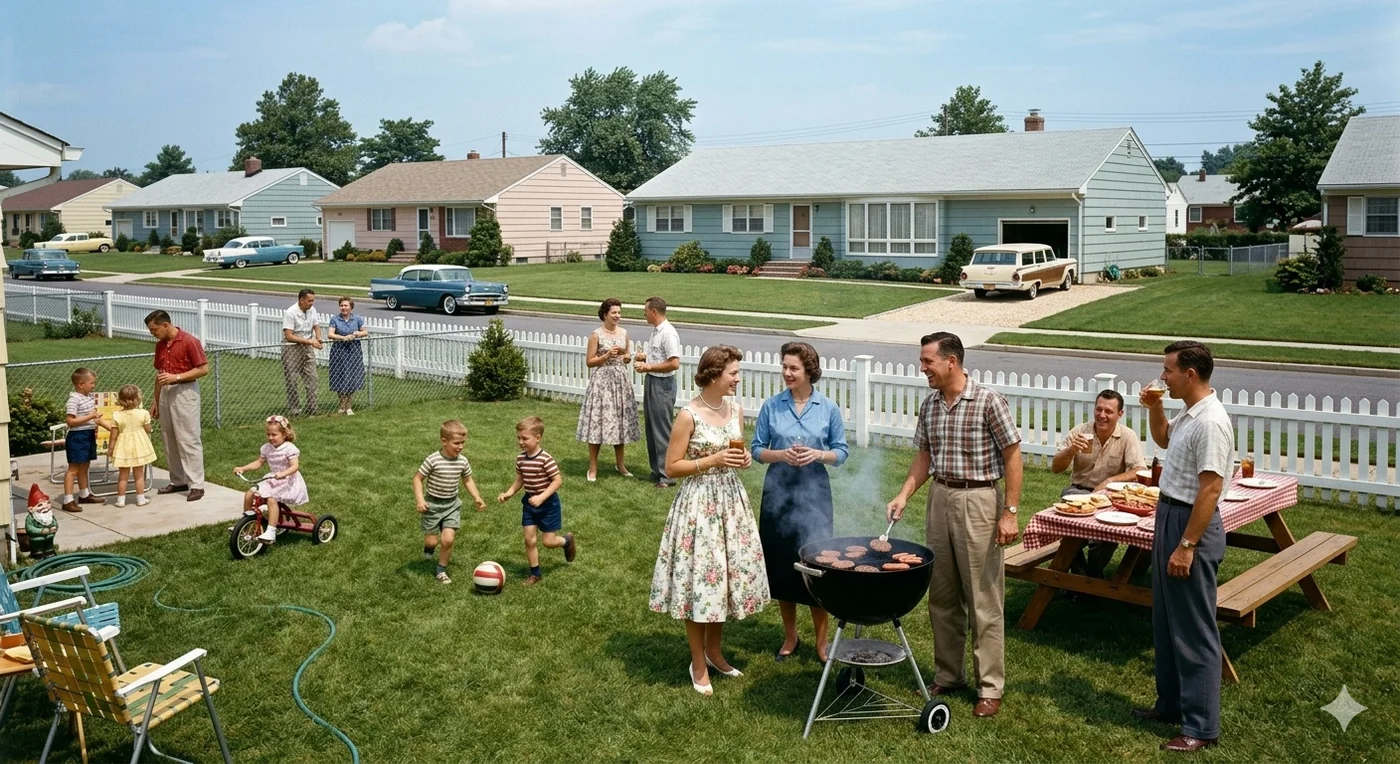
United States — prosperity through privatization. The postwar baby-boom generation (born 1946–1964) grew up in a suburbanization wave — larger lots, private automobiles, and growing physical distance from neighbors. American suburban “community” in the 1950s and ’60s existed at the scale of backyard barbecues and greetings over fences. High-growth prosperity expressed itself through individual consumption, not shared resource pools. The welfare gap that made yeontan-sharing functional in Seoul was, in America, partly filled by postwar labor agreements, FHA mortgages, and the GI Bill — incompletely and unequally, but through different channels.
Western Europe (United Kingdom and France) — the welfare state replaces informal solidarity. Postwar Europe built welfare states that took over functions Korean neighbors were still performing for each other in the 1980s: national health systems, social housing, subsidized energy. A British or French family in 1988 did not need to knock on a neighbor’s door for coal because the state had (imperfectly but substantially) covered heating access. Community solidarity existed but operated through different mechanisms — trade unions, civic associations, parish networks — rather than through shared briquette management.
Japan — the same road, 20 years earlier. Japan’s postwar high-growth era (1955–1973) involved a compressed urbanization closely parallel to Korea’s, but roughly two decades ahead. The danchi (団地) public housing estate culture that emerged during Japan’s growth years created a new urban sociability — neighbors in identical apartments building horizontal communities. But the formalization of danchi life gradually thinned the intense interdependence of older alley-style neighborhoods. Japanese 1960s-and-’70s nostalgia dramas serve a cultural function nearly identical to Reply 1988 — mourning a solidarity that economic success rendered unnecessary.
What made Korea’s alley communities distinctive was their timing: they emerged in the space between rural tradition and formal welfare state, in neighborhoods where the state had not yet arrived to fill the gap. By the mid-1990s — as piped natural gas replaced yeontan, as apartment complexes replaced alley neighborhoods, and as social services expanded — the conditions that produced Ssangmun-dong’s front-door borrowing were gone.
Coming up next
A single alleyway in 1988 Seoul — and we’ve traveled from the yeontan stack at a neighbor’s door to the physics of compressed modernization, to the Seoul Olympics’ double meaning, to the welfare-state comparisons that explain why Ssangmun-dong’s community looked like nothing in suburban Ohio or postwar Croydon. That’s the gift of a drama that trusts domestic detail: one shared briquette carries three decades of history.
In the next essay, we move from the alley to the palace — to Joseon’s royal kitchen and the extraordinary institution that allowed a court cook to become the king’s physician.
Thanks for reading — see you in the next one.
Frequently asked questions
What is Reply 1988 about? Reply 1988 (2015–2016, tvN) is a coming-of-age drama set in Seoul’s Ssangmun-dong alleyway in 1988. It follows five families whose lives are woven together through shared meals, charcoal briquettes, and mutual childcare. Its real subject is the texture of ordinary Korean life during the country’s compressed modernization — the moment a generation stood at the threshold between poverty and aspiring middle-class comfort.
What is “compressed modernization” in Korea? Compressed modernization (압축성장) refers to Korea’s roughly 30-year transition from agrarian to industrial to service economy — a shift Western Europe took 100–150 years to complete. Per capita GDP rose from roughly $79 in 1960 to about $4,888 by 1988 (World Bank, current USD). The drama’s domestic details — radio to color television, yeontan to piped gas — are the household-scale micro-history of that macro-transformation.
Were the alley communities of Reply 1988 real? In essence, yes. In low-income and emerging-middle-class Seoul neighborhoods of the 1980s — in Dobong, Nowon, and Yeongdeungpo districts — neighbor-to-neighbor resource sharing was a practical survival strategy in the absence of a welfare state. Yeontan management required cooperation; the physical proximity of alley houses made that cooperation unavoidable. The drama romanticizes the warmth, but not the underlying logic.
What role did charcoal briquettes (yeontan) play in 1980s Korea? Yeontan was the dominant household energy source in urban Korea through the mid-to-late 1980s, before city gas and oil boilers spread widely. Carbon-monoxide poisoning was a serious hazard that killed people every year. The coordination required to use yeontan safely — sharing fire, lending spare stock, reminding each other to ventilate — was one concrete reason alley neighbors maintained close functional bonds.
What was the significance of the 1988 Seoul Olympics beyond sports? The Games served as Korea’s public declaration of newly-industrialized-economy status. Infrastructure built for the Olympics reshaped Seoul: Gangnam development, completion of subway lines 2, 3, and 4, the Olympic Expressway. The Games also carried political weight: they opened just over a year after the June 1987 Democracy Movement that restored direct presidential elections, marking simultaneous economic and democratic arrival.
Did the 1988 Seoul Olympics have a dark side? Yes. Urban renewal and city-beautification around the Games involved forced relocations of low-income residents. The clearest Olympic-linked case is Sanggye-dong, whose residents were evicted partly because their shantytown lay along the Olympic torch route — documented in Kim Dong-won’s film Sanggye-dong Olympics. Other demolitions of the era, such as Mok-dong, belong more to the broader 1980s redevelopment wave than directly to Olympic venue prep. The drama’s Ssangmun-dong is the side of Seoul that was not bulldozed.
How did Korea’s GDP grow so fast between 1960 and 1988? Korea’s growth combined state direction of credit toward export industries, a highly educated workforce (product of the post-liberation education drive), Cold War geopolitical support, the “three lows” boom of the mid-1980s (low oil, low interest rates, weak dollar), and the structural advantage of late industrialization — adopting proven technologies rather than inventing them.
How did Korean alley community culture compare with postwar America, Europe, and Japan? Sharply different in structure. Postwar US prosperity expressed itself through suburbanization and individual consumption. Western European welfare states took over functions Korean neighbors still performed for each other in the 1980s. Japan went through a parallel compressed urbanization roughly 20 years earlier, its danchi apartment culture gradually thinning the intense solidarity of older alley neighborhoods. Korea’s alley communities were distinctive for occupying the gap between rural mutual-aid traditions and a welfare state that hadn’t yet arrived.
Was Reply 1988 historically accurate? Broadly, yes. The drama compresses and warms the texture of 1980s Seoul alley life, but its core details — yeontan heating, shared meals, crowded low-rise neighborhoods, television-centered Olympic memory, and rising middle-class aspiration — are historically grounded. What it softens is the harder edge: uneven progress within the same alley, and the forced evictions happening elsewhere in the city.
What is yeontan in Reply 1988? Yeontan (연탄) is a Korean coal briquette — a black cylinder pierced with air holes — used for cooking and heating, typically burned in an ondol (underfloor heating) system. It was cheap and common in older and lower-income housing through the late 1980s, but dangerous: poor ventilation could let carbon monoxide seep in, causing poisoning. That shared risk is part of why alley neighbors stayed so closely coordinated.
Why does Reply 1988 feel nostalgic to Koreans? It recalls a short transitional moment when poverty had not fully disappeared, prosperity was becoming visible, and neighbors still depended on each other — before apartment complexes, city gas, private cars, and stronger public systems made that daily interdependence unnecessary. The warmth is real; so is the awareness that the conditions producing it were temporary.
Sources & further reading
This piece was written from the historical script and fact-check of 사뚱샘의 역사방 (SaDDungSam), with primary and official sources linked inline beside the claims they support:
- Korea’s per capita GDP trajectory ($79 in 1960 → ~$4,888 in 1988) — World Bank Open Data, GDP per capita (current US$), Korea, Rep.; the compressed-modernization framework follows Eckert, Carter J. et al., Korea Old and New: A History (Harvard University Press) and KDI development-history materials.
- Yeontan as dominant household fuel through the mid-to-late 1980s — Statistics Korea (KOSIS) Population and Housing Census, heating-fuel items, and the Korea Energy Economics Institute Yearbook of Energy Statistics, household-sector final energy consumption. (Household-share figures depend on whether one counts households or energy volume; this piece states the qualitative dominance rather than a single contested percentage.)
- 1988 Seoul Olympics significance and infrastructure — International Olympic Committee, Seoul 1988 legacy; Encyclopædia Britannica, “Seoul 1988 Summer Olympics.”
- Olympic-era evictions (Sanggye-dong) — The Heinous Olympification of Seoul, The New Republic; Kim Dong-won, documentary Sanggye-dong Olympics (1988). Mok-dong’s redevelopment is treated here as part of the broader 1980s Seoul renewal wave rather than direct Olympic venue prep.
- June 1987 Democracy Movement and constitutional revision — Library of Congress, South Korean Democratization Movement research guide (June Uprising).
- Comparative neighborhood culture (US suburbanization, European welfare states, Japanese danchi) — standard scholarly literature on postwar urbanization. The reading of dure (두레) as a mutual-aid sensibility loosely reorganized in the urban alley — rather than a direct institutional ancestor — follows Korean folklore and urban-history scholarship (e.g., Joo Kang-hyeon, The Dure of Korea).
Thanks for reading — see you in the next one.
This article was researched and written by K-Drama History. Source: Was Reply 1988's Alley Community Real? Yeontan, the Seoul Olympics, and Korea's Compressed Modernization — K-Drama History