Queen Seondeok, Explained: How Silla Put a Woman on the Throne in the Seventh Century
Theme: Women’s Lives
From the research behind Pause the Drama.
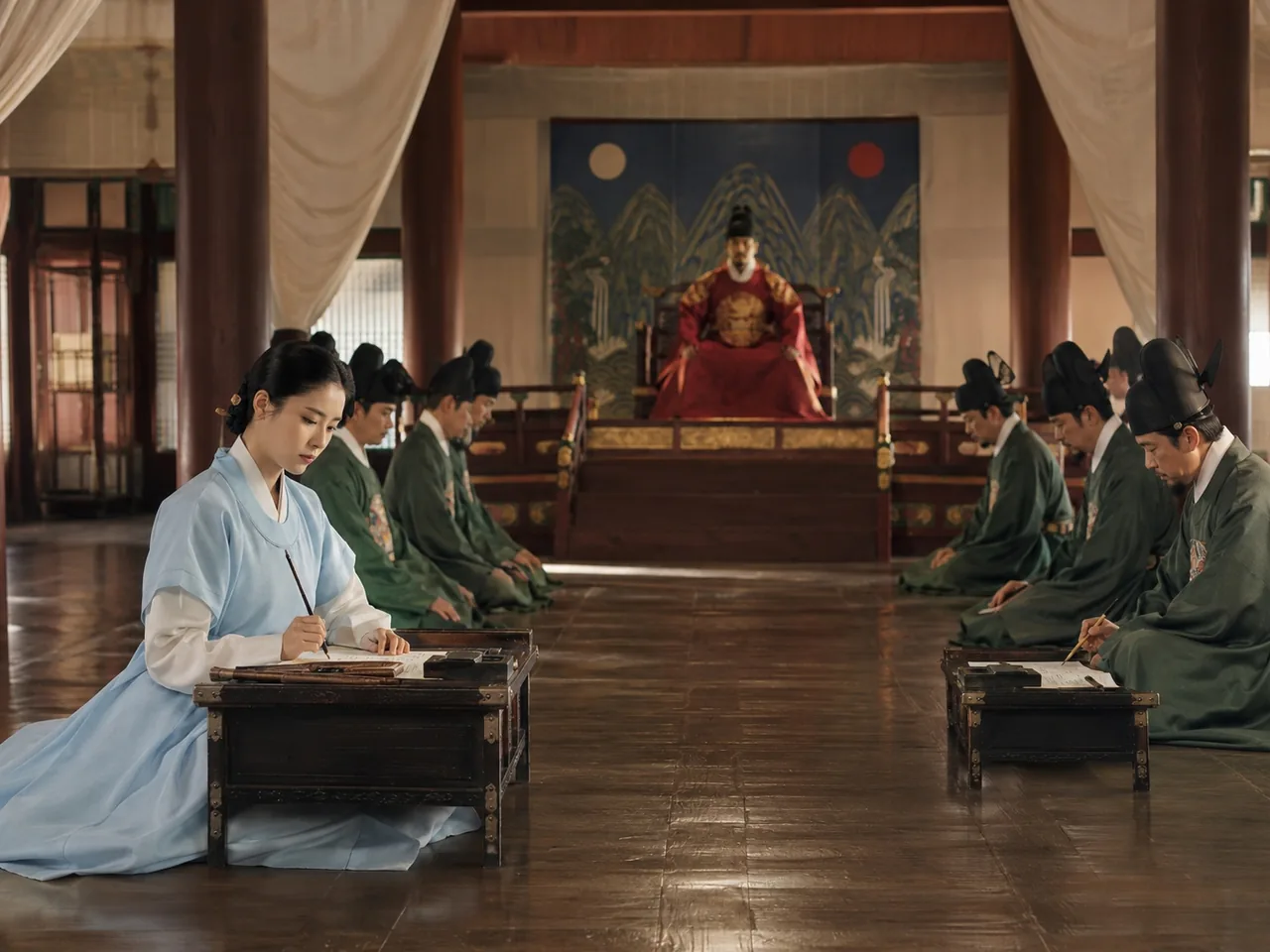
If you’ve watched MBC’s The Great Queen Seondeok (선덕여왕) — the 62-episode 2009 epic that made “Mishil” a household name in Korea — you know its shape. Deokman, a princess abandoned at birth, returns to Silla, locks wills with the magnificent villainess Mishil, and with Kim Yu-sin and Kim Chun-chu at her side finally takes the throne. The coronation plays as a triumph of one woman’s ability over a wall of aristocratic men.
The real history is less romantic and considerably stranger. Silla did not crown Deokman because it believed in women’s advancement. It crowned her because of the most exclusive blood-ranking system in Korean history — the same system that walled everyone else out.
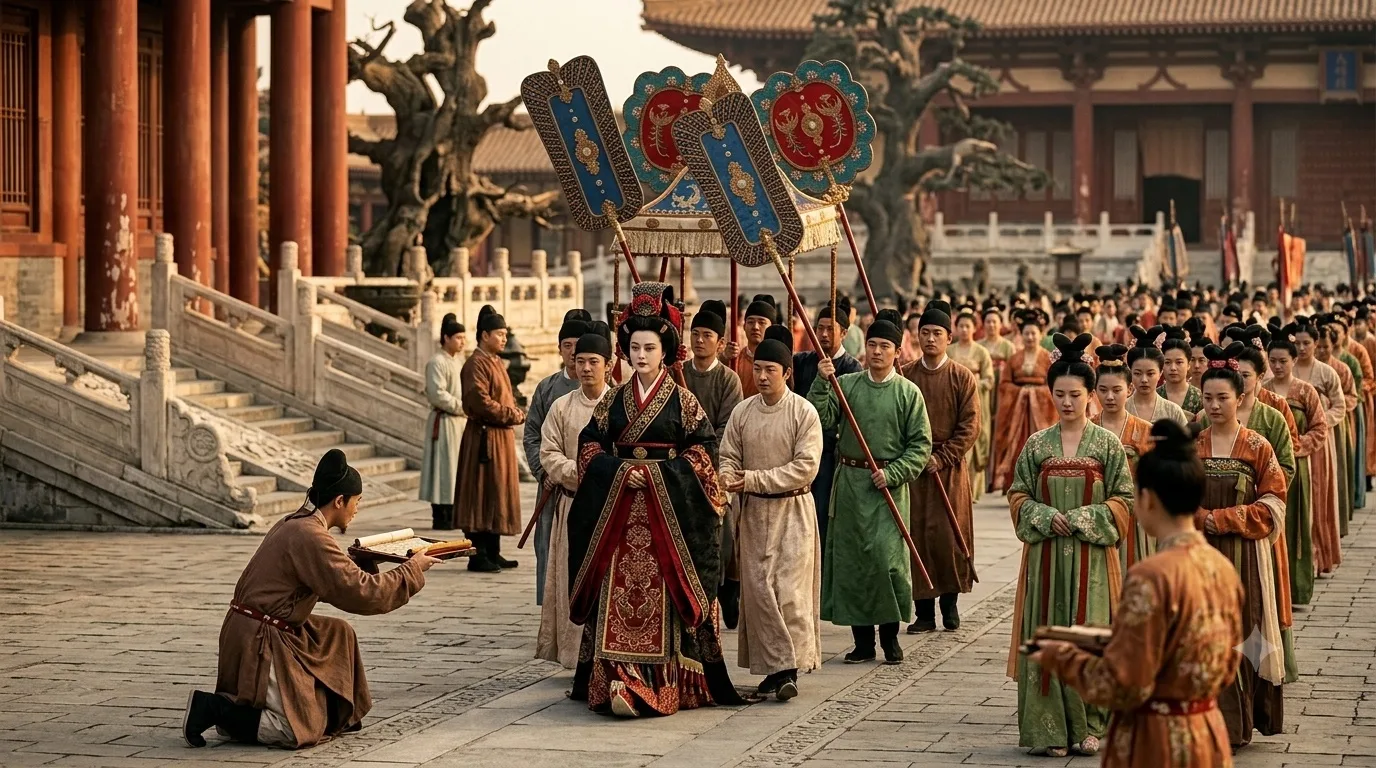
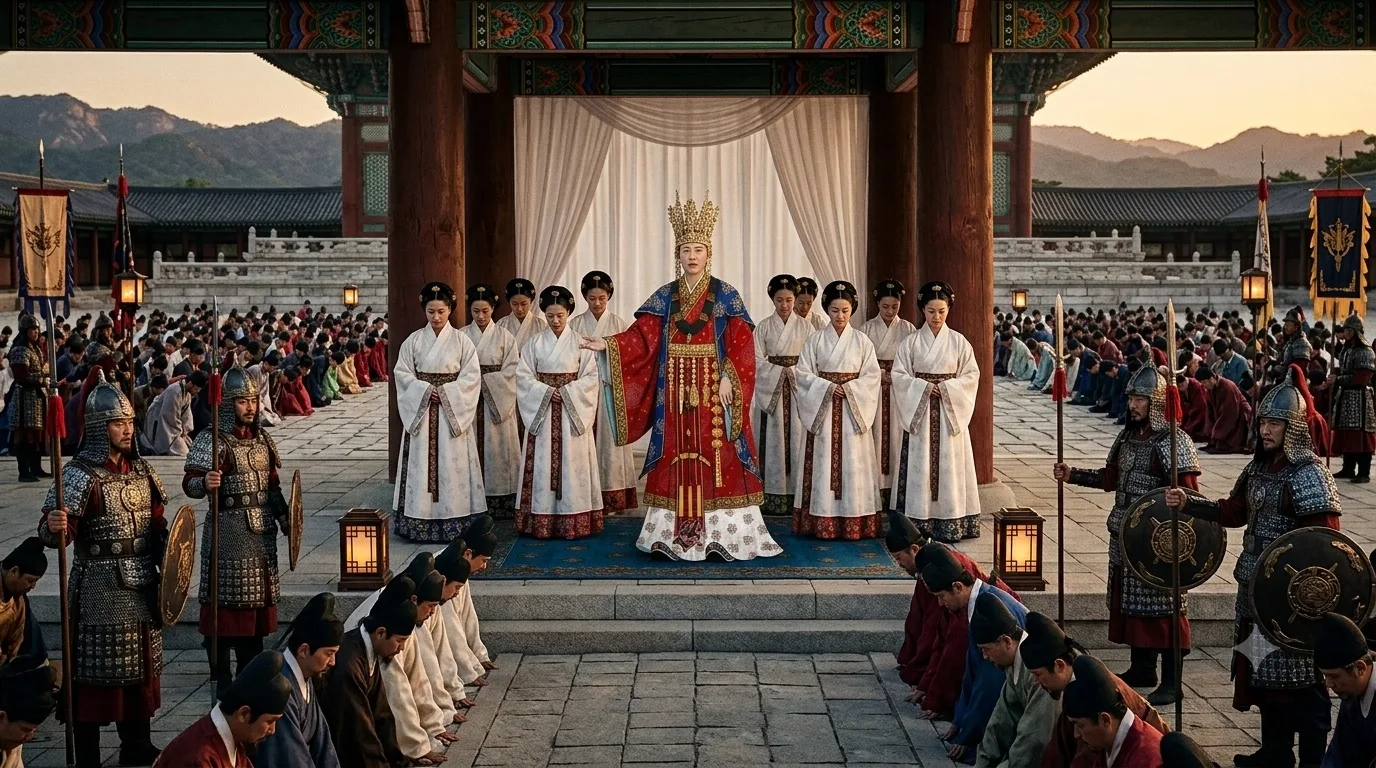 The scene the sources actually support: not a woman defeating the aristocracy, but the aristocracy raising a woman whose blood outranked theirs. (AI illustration)
Quick answer: Queen Seondeok — personal name Deokman, daughter of King Jinpyeong — was enthroned in 632 as Silla’s twenty-seventh monarch and the first securely attested female ruler in Korean history. The Samguk Sagi says “the people of the state” raised her to the throne when her father died without a son; the Samguk Yusa explains that the seonggol (“hallowed bone”) male line had run out. No written succession law survives, but historians read her accession this way: in Silla’s bone-rank order, her standing as the direct royal daughter of a seonggol king appears to have outweighed her sex. She then ruled in her own name from 632 until her death in 647 — sixteen regnal years in the traditional count — through invasions, temple-building, diplomacy with Tang China, and finally a rebellion raised under the banner that a woman could not govern. Mishil, her drama nemesis, is not securely attested in the core sources.
Why did Silla crown a princess?
Deokman was the daughter of King Jinpyeong, who died in 632 without a son. The Samguk Sagi records that the gugin (국인, “people of the state”) then raised her to the throne and honored her with the title Seongjo Hwanggo (Korean History Database). Who exactly the “people of the state” were is debated — but an accession without the consent of the royal house and the highest aristocracy is hard to imagine, so the phrase likely points to an elite political consensus, not anything resembling a popular vote.
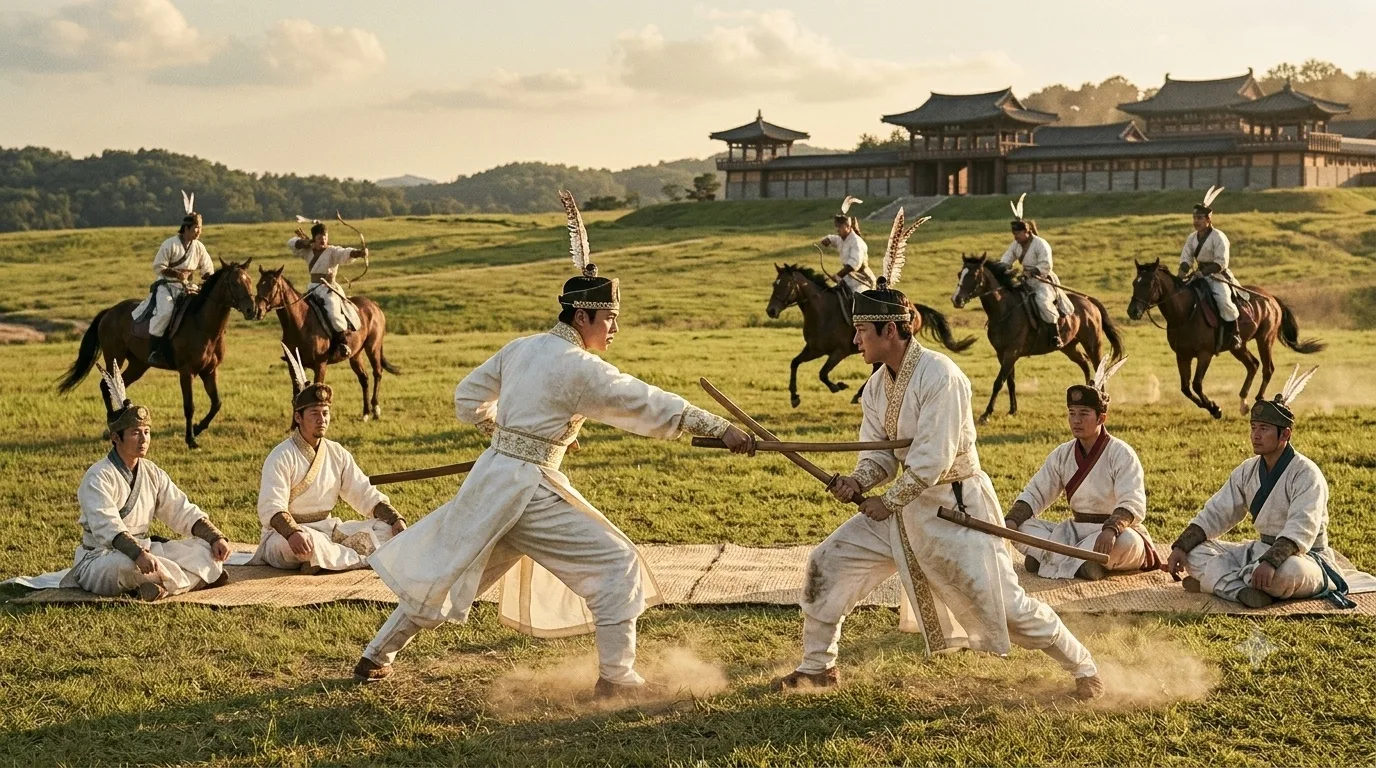
The Samguk Yusa gives the sharper reason: the seonggol (성골, “hallowed bone”) men had run out. Seonggol was the summit of Silla’s bone-rank system — the hereditary grading of the capital’s royal and aristocratic lineages that decided office, marriage and display (Encyclopedia of Korean Culture, 골품제도; we’ve unpacked the whole system in our Hwarang essay).
Here is the precision that matters. No written statute survives saying “a seonggol woman outranks all jingol men” — the historians’ formulation is more careful: Deokman’s position as Jinpyeong’s direct royal daughter, combined with the seonggol idea, appears to have worked as a stronger claim than the claims of true-bone male aristocrats. Her accession is not evidence that Silla was egalitarian. It is evidence of the opposite: a society so committed to ranked blood that, at the top of the ladder, lineage could outweigh even gender. Silla did not choose Deokman because she was a woman. It chose her because, within its own blood hierarchy, her position as the king’s direct royal daughter appears to have carried the strongest legitimate claim available.
Did Queen Seondeok rule in her own right?
The distinction international readers will recognize is queen consort versus queen regnant, and Seondeok was emphatically the latter. She was no regent minding the throne for a husband or son. She issued commands in her own name, dispatched envoys, set war policy, personnel and religious policy. The sources even style her with titles built on the word for king — Seondeok-wang, Seondeok-yeodaewang. The person on the throne was a woman; the throne itself was the same one.
That did not make the question of her sex disappear. According to the Samguk Sagi, Tang Taizong told a Silla envoy that neighboring states treated Silla lightly because it was ruled by a woman — even floating the idea of sending a Tang prince to govern it, an offer Silla did not take up. And in her final year, that sentiment came home with an army attached.
What did she actually face? A reign of crisis
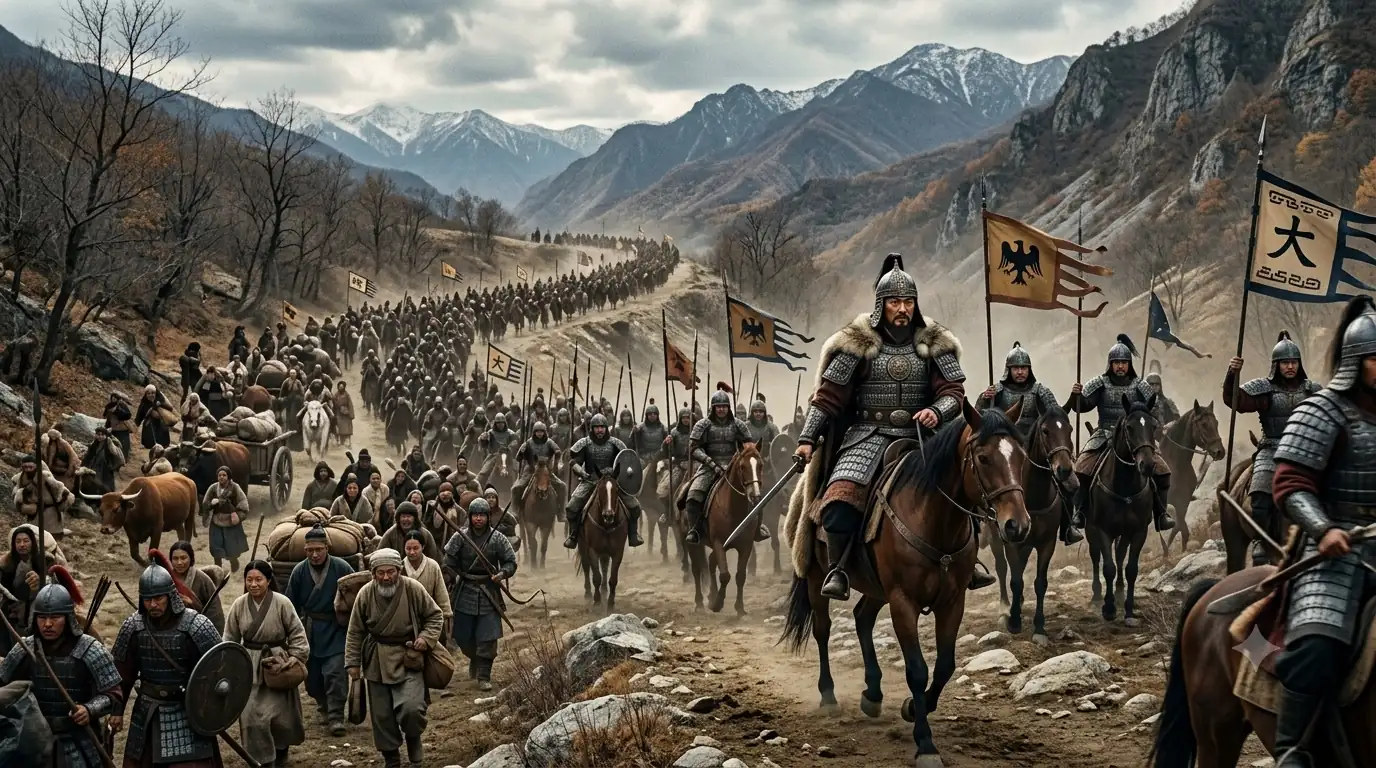
The kingdom Seondeok inherited was under siege. Baekje and Goguryeo attacked repeatedly through her reign; in 642 the key western fortress of Daeya-seong fell to Baekje, and Silla’s corridor to Tang China came under threat. Seondeok sent Kim Chun-chu to Goguryeo to seek help — a famous near-fatal embassy — and sent envoys to Tang requesting military support. This diplomacy did not instantly rescue Silla, and the eventual destruction of Baekje and Goguryeo belongs to her successors. But the direction — the Chun-chu–Yu-sin partnership, the deepening Tang alignment — took shape in her reign, and it formed part of the political and diplomatic foundation her successors later acted on.
At home she governed like a monarch shoring up both people and heaven. In 632 she sent officials to relieve the poor, and in 633 remitted a year’s taxes in the provinces; she founded Bunhwangsa temple in 634 and saw Yeongmyosa completed in 635; recalled the monk Jajang from Tang study to strengthen the Buddhist establishment and royal authority; and in 645 raised the nine-story wooden pagoda of Hwangnyongsa — a colossus later tradition explains as a protective symbol against foreign enemies (the Samguk Yusa, quoting the Dongdo seongnipgi, frames it so; whether that was the founding intent in 645 or a later reading cannot be confirmed).
And then there is Cheomseongdae — the bottle-shaped stone tower still standing in Gyeongju’s royal-capital core near Wolseong, generally dated to her reign and widely described as the oldest surviving astronomical observatory in Asia (Korea Heritage Service). Watching the sky was state business — it read the harvest, the omens, and the legitimacy of the ruler all at once. Interpretations of the tower’s exact function differ (observatory, ritual platform, symbolic monument), and there is no basis for the image of the queen designing it or stargazing from it herself. But a structure for reading heaven, raised in a female sovereign’s capital, is exactly the kind of fact the drama never needed to invent.
Did Deokman and Mishil really fight?
Here is the answer that surprises the drama’s fans most: Mishil is not securely attested in the core historical sources. She appears nowhere in the Samguk Sagi or Samguk Yusa. Her lavish story — the generations-spanning seductress-kingmaker — depends on the Hwarang Segi manuscripts made public in 1989 and 1995. Kim Dae-mun’s original Silla-era Hwarang Segi is lost (only fragments are quoted in later works); whether the modern manuscripts, associated with the collector Bak Chang-hwa, are a genuine transcription of it or a twentieth-century fabrication remains an open scholarly dispute. A drama may freely build on that material. A history essay cannot present Mishil as Queen Seondeok’s documented rival.
The rest of the fiction ledger: the drama’s twin-birth plot, Deokman’s abandonment and desert childhood, and the portrayal of the historical Princess Cheonmyeong as her separated twin — all invented. Bidam really existed and really rebelled, but his backstory as Mishil’s son and his love for the queen are not historically attested. Kim Yu-sin, Kim Chun-chu and Alcheon are real, and the drama borrows their names and era for a grand political fable. The genuinely historical tension was never one woman versus one magnificent villainess — it was the structural competition among the seonggol succession problem, the interests of various true-bone aristocratic groups, and the rising Chun-chu–Yu-sin alliance (who were themselves true-bone aristocrats, not outsiders).
Bidam’s rebellion: did female rule fail?
In 647, the chief minister Bidam and Yeomjong rose in revolt. The justification the Samguk Sagi conveys: “a female ruler cannot govern well” (Encyclopedia of Korean Culture, 비담의 난). Whether that sentence was a formal proclamation or the recorded gist of the rebels’ cause, we cannot say — and misogyny alone is too thin an explanation for the revolt, which tangled together the succession (another woman, Jindeok, stood next in line), aristocratic rivalries, and a kingdom at war.
Queen Seondeok died on the eighth day of the first lunar month of 647, while the rebellion was still in progress. The sources record the date and not the cause; later historians have proposed illness, while other theories connect her death to the revolt — the surviving early sources do not settle it. Then came the ending no screenwriter would dare invent as irony: Queen Jindeok succeeded her, and forces led by Kim Yu-sin crushed the rebellion. Bidam’s faction raised the claim that a woman could not govern — and Silla, immediately after defeating the revolt, put another woman on the throne.
Did she really see the future? The three prophecies
The Samguk Yusa preserves the Jigi Samsa (지기삼사) — “three things known in advance.” Seeing a peony painting without butterflies, she predicted the flower would have no scent. Told that frogs were croaking in winter at the Jade Gate Pond of Yeongmyosa, she read the omen and sent Alcheon and Piltan to search Yeogeun Valley, where Baekje troops lay hidden. And she foretold the day of her own death and the place of her burial.
Read these as evidence of clairvoyance and you’ve missed what they are. The Samguk Yusa was compiled roughly six centuries after her reign, and the prophecy tales carry the signature of legitimation legend — the later tradition’s way of insisting that the first female sovereign was no accident of genealogy but a ruler of uncanny wisdom, certified by heaven. A queen attacked for her sex in life was issued, posthumously, an extra credential: foresight. The stories say less about what Seondeok knew than about what later generations needed her to have known.
How unusual was she? Bōrān and Wu Zetian
 The other road to a throne: Wu Zetian declared a new dynasty. Seondeok inherited an old one. (AI illustration)
Seondeok was not the world’s first female sovereign, and the comparisons sharpen what was distinctive about Silla’s case.
Sasanian Persia — the near-contemporary. Around 630, amid dynastic chaos and a rapid turnover of failed male monarchs, Bōrān, daughter of Khosrow II, took the Sasanian throne (Encyclopaedia Iranica). The two accessions share one feature worth stating carefully: in both, a dynasty in crisis reached for the high legitimacy of a royal daughter’s bloodline. The succession structures themselves were not the same — Silla’s seonggol idea has no Persian equivalent — but the pattern rhymes: these were victories of pedigree under pressure, not of gender equality.
Tang China — the opposite road. Wu Zetian — the only woman in Chinese history formally to assume the title of emperor and establish her own dynasty — followed a very different route (Origins, Ohio State University). She rose from consort to empress and regent, and then in 690 broke the existing order, proclaiming her own Zhou dynasty with herself as emperor. Seondeok, by contrast, did not overturn Silla’s succession order; she was raised by that order as the legitimate heir of the existing royal line, and ruled by preserving the very blood-rank system that had crowned her. Queen Seondeok was not Korea’s Wu Zetian. She became king inside Silla’s rules — and governed by keeping them.
Watch it again
Watch the coronation scene again with the record in mind. The drama gives Deokman a self-made throne: secret birth overcome, villainess defeated, merit rewarded. The history gives her something less flattering and more interesting — a throne opened by one of the most restrictive hereditary status systems in Korean history, and then a reign-long test that blood alone could not pass. War, diplomacy, temple and tower, an aristocracy watching for weakness, and at the end a rebellion flying her sex as its flag.
The real meaning of Queen Seondeok is not only that Silla’s hereditary order could place a woman on the throne. It is that she governed — that from 632 to 647 the state handed a woman its wars, its diplomacy, its people’s livelihood — and that when a revolt insisted a woman could not rule, Silla’s answer was to enthrone the next one.
In the next essay, we’ll take another K-drama scene that looks like pure fiction — and trace the real Korean history hiding underneath it.
Frequently asked questions
Is Queen Seondeok based on a true story? Its spine is real, its flesh mostly invented. Queen Seondeok, Kim Yu-sin, Kim Chun-chu, Bidam and Alcheon are historical figures. But Deokman’s twin birth and abandonment, her desert childhood, her duel with Mishil, and Bidam’s love story are the drama’s creation — and Mishil herself does not appear in the core historical sources.
Was Queen Seondeok really Korea’s first female ruler? Yes. Enthroned in 632 as Silla’s twenty-seventh monarch, she is the first securely attested female sovereign in Korean history. She was followed by Queen Jindeok immediately after her, and later by Queen Jinseong in Unified Silla — three reigning queens, all in Silla.
Why did Silla crown a woman? Not out of egalitarianism. The Samguk Sagi records that when King Jinpyeong died without a son, “the people of the state” raised Deokman to the throne; the Samguk Yusa explains that the seonggol male line had run out. No written succession statute survives, so historians describe it as an interpretation: her standing as Jinpyeong’s direct royal daughter, combined with the seonggol idea, appears to have counted for more than her sex.
Was Mishil a real person? Not verifiably. She appears in neither the Samguk Sagi nor the Samguk Yusa. Her elaborate story comes from the Hwarang Segi manuscripts made public in 1989 and 1995 — Kim Dae-mun’s original Silla-era work is lost, and the modern manuscripts’ authenticity is still debated. Treat the drama’s Mishil as a character, not a documented rival.
What is Cheomseongdae, and did Queen Seondeok build it? Cheomseongdae is the stone tower in Gyeongju, widely described as the oldest surviving astronomical observatory in Asia and generally dated to Queen Seondeok’s reign. Whether it functioned strictly as an observatory is debated — ritual and symbolic readings also exist — and there is no basis for saying the queen designed it or observed stars herself.
How did Queen Seondeok die? She died on the eighth day of the first lunar month of 647, while Bidam’s rebellion was underway. The sources record only the date, not the cause; later historians have proposed illness, while other theories connect her death to the revolt, and the surviving early sources do not settle it. Queen Jindeok succeeded her, and forces led by Kim Yu-sin crushed the rebellion.
Was Queen Seondeok a queen consort or a ruling queen? A ruling queen — a sovereign in her own right, not the wife or mother of a king acting on his behalf. She succeeded King Jinpyeong in 632 as Silla’s twenty-seventh monarch, issued commands and set policy in her own name, and was eventually followed by another reigning woman, Queen Jindeok.
Did Bidam really rebel because Queen Seondeok was a woman? The Samguk Sagi records the rebels’ stated claim that a woman could not govern well, so gender was an explicit part of their justification. But historians also connect the revolt to aristocratic rivalry, the wartime crisis, and the prospect that another woman — Jindeok — stood next in the succession. The stated banner and the full causes are not the same thing.
Sources & further reading
This piece was written from the historical script and fact-check of 사뚱샘의 역사방 (SaDDungSam). Where the record supports interpretation rather than statute — above all the seonggol logic of her accession — this article says so; and it keeps the Samguk Yusa’s prophecy tales labeled as what they are, a tradition compiled six centuries later.
- The primary record — Samguk Sagi, Annals of Silla (reign of Seondeok) and the Biography of Kim Yu-sin; Samguk Yusa, “Wangnyeok” and “Seondeok-wang jigi samsa.” (Korean History Database)
- Bidam’s rebellion (647). (Encyclopedia of Korean Culture)
- The bone-rank system — the structure that made her accession possible. (Encyclopedia of Korean Culture · our companion essay on Hwarang and bone rank)
- Cheomseongdae — the National Treasure listing. (Korea Heritage Service)
- The comparisons — Bōrān of Sasanian Persia and Wu Zetian of Tang China. (Encyclopaedia Iranica · Origins, OSU)
Thanks for reading — see you in the next one.
This article was researched and written by K-Drama History. Source: Queen Seondeok, Explained: How Silla Put a Woman on the Throne in the Seventh Century — K-Drama History