Why Did Korea Send Miners and Nurses to West Germany? Ode to My Father, Explained
Theme: Modern Korea
From the research behind Pause the Drama.
A younger brother is admitted to Seoul National University. It should be the happiest news in the house, and it is a catastrophe, because there is no money for the fees. A friend turns up with a recruitment notice: West Germany is hiring miners. There is a physical examination and an interview, and then Deok-su is on a plane.
The film plays this as one man’s decision — an older brother going underground so a younger one can go to university.
That decision was real. What the film does not show is what it was attached to: a three-year labour contract, one of thousands, in a programme that would send thousands of Koreans to West Germany.
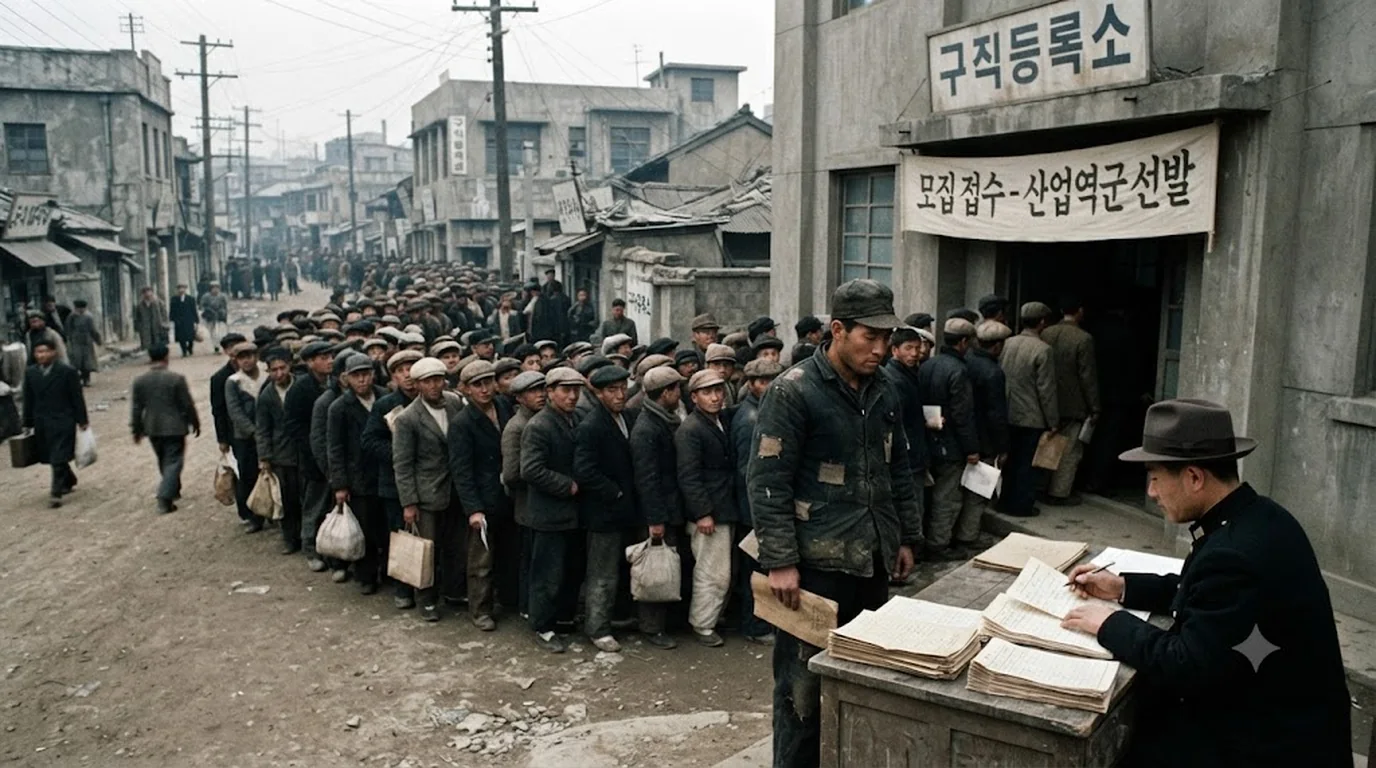 Some 46,000 people applied for 500 places. (AI illustration)
Quick answer: Korea sent miners and nursing staff to West Germany because unemployment at home met a labour shortage there. The film follows a miner; most of the people who went were nurses — Korea’s Truth and Reconciliation Commission counts 11,057 nursing staff (1960–1976) against 7,936 miners (1963–1977). The best-known part of the story is not true: the commission examined the belief that the workers’ wages secured a German loan and found it false, since the credits ran on Hermes export-credit cover with the KfW as lender (commission summary). And when the contracts ended, about 60 per cent stayed in Germany or moved on to a third country in Europe or North America — which is the part the film never follows.
Let’s unpack it.
What the recruitment actually was
The physical examination and the interview Deok-su goes through have a documented original. The Encyclopedia of Korean Culture records that in 1963 some 46,000 people applied for 500 mining places — close to a hundred applicants for each job. The contract ran three years, at an income of around 600 marks a month, about 160 dollars at the time.
The same entry describes the arrangement as a temporary-employment scheme agreed on 16 December 1963 between Korea’s Office of Labour Affairs and the German mining association. The stated purpose in the document was to improve Korean miners’ technical knowledge for the benefit of Korean industry. The encyclopaedia is blunt that this was not really what was happening: it was a German shortage of mine labour meeting a Korean shortage of jobs and foreign currency.
That detail matters for how the story gets told in English. This was not, on the face of the document, a government-to-government export of people; the counterparties named are a Korean labour office and a German industry association. Other accounts describe it as an intergovernmental agreement. We flag the discrepancy rather than resolve it.
The totals differ too, and we do not merge them. The encyclopaedia gives 7,900-odd miners for 1963–1980. The Truth and Reconciliation Commission gives 7,936 for 1963–1977. Both the period and the number move, which suggests the two are counting on different bases.
The nurses outnumbered the miners
In the film Deok-su meets Yeong-ja, a Korean nurse, in Germany. It looks like a romance device. Statistically it is the other way round: she is closer to the centre of this history than he is.
The Encyclopedia of Korean Culture’s entry on nursing staff records that Korean nurses were already going to Germany in the late 1950s, through Christian mission and other private channels. The large state-organised despatch began in 1966, arranged through Lee Su-gil, a Korean physician then at Mainz, with the Korea Overseas Development Corporation handling recruitment from that point. The entry gives about 10,226 sent over 1966–1976. The commission gives 11,057 over 1960–1976.
Either way the conclusion holds: the majority of Koreans who went to West Germany under these programmes were women doing nursing work. The film’s centre is a coal mine. The centre of the actual migration was a hospital.
It also means the programme did not have a single origin. Miners were despatched by the state into a policy of relieving unemployment and earning currency. Nursing migration had already started, smaller and privately, before any of that.
Underground
The strongest sequence in the film is the mine accident: Deok-su trapped, his workmates dragging him out.
The background is not exaggerated. The encyclopaedia notes that many of the applicants had no mining experience — that is the encyclopaedia’s word, and we keep it rather than upgrading it to “most” — and that they suffered injuries and lasting after-effects. There was short language and job training, in Korea and after arrival; what is documented is not men dropped blind into a shaft, but men sent into unfamiliar language and unfamiliar work at depth after brief preparation. Accidents in that setting were a condition, not an exception.
Figures for the dead circulate. An account citing a chronology published by a Korean association in Germany reports more than a hundred deaths among miners, nurses and technical workers between 1963 and the late 1970s, including deaths by suicide as well as accidents at work. We could not open that source, so the number appears here as reported and is not stated as a total.
Were the workers’ wages collateral for a German loan?
Here is the part that surprises Korean readers as much as foreign ones.
For decades this history has been summarised in Korea in a single sentence: a poor country wanted to borrow money, had nothing to pledge, and so pledged the wages of its miners and nurses.
In 2008 the Truth and Reconciliation Commission examined that claim and found it untrue.
The chronology on its own is suggestive. Korea and West Germany signed a protocol on economic and technical cooperation in December 1961 — a package described in the scholarly literature as a long-term development loan of 75 million marks plus export-related credit and guarantee cover of a further 75 million, up to 150 million in total. The mining arrangement came two years later.
But the chronology is not the strongest objection, and it is worth being precise about why. Korean nurses were already working in Germany in the late 1950s, so it is not literally true that no Korean wages existed to pledge. The decisive point is the financing structure, and it is in the commission’s own summary: Hermes, the German export-credit insurer, provided the guarantee, and the Kreditanstalt für Wiederaufbau (KfW) supplied the funds (commission summary). The workers’ wages were not the security for these credits. A 2013 study by Lee Young-jo and Lee Ok-nam sets out that structure in more detail.
And yet the story survived, and still does. This article does not try to settle why. It only notes that a claim can be false and still do work: it placed a generation’s labour inside the national story.
How much did the miners and nurses send home?
The commission put remittances from the miners and nurses at about US$101.53 million over 1965–1975. For the three years it itemises, they came to 1.6, 1.9 and 1.8 per cent of total exports in 1965, 1966 and 1967.
Those figures do not support the stronger shorthand — that this was “the seed money that built the country.” The numbers are a fact; the shorthand is an evaluation, and it is the evaluation the numbers do not carry. It is also not the whole of what the commission said. The same decision described the contribution as substantial, on the ground that this was foreign exchange earned at a 100 per cent rate — meaning no cost of imported raw materials or components had to be deducted from it, as it would from export earnings.
Both statements belong to the same document and we do not choose between them. Nor do we stretch the second one: a 100 per cent earning rate is an accounting fact about imported inputs. It says nothing about what the work cost the people who did it.
One more limit: those percentages are for 1965, 1966 and 1967. They are not a statement about the whole span of the programme.
Korea was not first, and the list is not tidy
West Germany had been recruiting abroad since 1955, when it concluded a bilateral recruitment agreement (Anwerbeabkommen) with Italy. Spain and Greece followed in 1960, Turkey in 1961, Morocco on 21 May 1963, Portugal in 1964, Tunisia in 1965.
Korea does not sit inside that list, and that is the point. What Korea signed in December 1963 was the temporary-employment arrangement between its Office of Labour Affairs and the German mining association — a different legal instrument from the state-to-state agreements above. The comparison is still worth making; the categories should not be merged.
Korean accounts sometimes describe the 1963 arrangement as Germany’s first recruitment agreement outside Europe. On those dates, Morocco precedes it by seven months. This article does not use “first.”
The narrower claim — that Korea was West Germany’s only East Asian partner — we also decline to make. German-language research records 436 Japanese miners working in the Ruhr between 1957 and 1965, selected through a German–Japanese government programme (Kataoka et al., Japanische Bergleute im Ruhrgebiet, 2012, as reported in later German scholarship). Whether that was the same kind of arrangement is unclear, and unclear cuts both ways: it does not prove Korea was not unique, but it means we cannot say that it was.
It is worth adding that these agreements were not one legal thing. Intergovernmental recruitment treaties, the Moroccan programme, and a Korean labour office’s temporary-employment scheme with a German industry association share a purpose but not a form.
There is one more oddity. German overviews of the recruitment era often list the Mediterranean partners and leave Korea out. Reading that as Germany forgot Korea is interpretation. What we can say is that the lists differ.
How many stayed in Germany after their contracts ended?
In the film, Deok-su is injured, hospitalised, and sent home when his permit runs out. Then he leaves again for Vietnam, to pay for his sister’s wedding. The story keeps returning to Korea.
The record points somewhere else. The commission’s summary states it directly: about 60 per cent of the miners and nursing staff either stayed in Germany or moved on to a third country in Europe or North America, becoming a foundation of the Korean communities abroad (commission summary).
Other figures circulate — around 40 per cent of the men staying in Germany with a further 20 per cent going to North America, or about 30 per cent staying. These are not rival estimates of the same quantity. The commission’s 60 per cent combines staying in Germany with onward migration; a 30 per cent figure counts only the first, and the 40-plus-20 split is limited to the men. Different denominators, different categories.
What is clearer is that staying was not the plan. The design was rotation: three years, then replacement. West German policy at the time did not assume settlement. In 1977–1978, Korean nursing staff, supported by the Catholic relief organisation Caritas, ran petitions, public hearings and protest meetings, asking for an indefinite work permit after five years’ service and indefinite residence after eight. Those figures are what they asked for, not a confirmed permit standard. What is recorded is that the German government withdrew its repatriation plan, and that long-term residence widened afterwards.
So the neat version — the state organised the departure, the workers organised the settlement — is too clean. Recruitment involved German hospital and mining associations and Korean church networks as well as government bodies; settlement involved German labour demand, residence policy, civic support and family formation as well as the campaigners. What can be said is that institutions arranged the going, and that the campaigners did a great deal to widen the staying.
The film also leaves out the darker overlap with politics at home. In the 1967 East Berlin case, some Koreans in West Germany became subjects of investigation. This article does not judge that affair; it notes only that these lives were not sealed off from Korean politics.
Drama vs. real history — what Ode to My Father shows
| In the film | The record |
|---|---|
| A man volunteers for the mines to pay a sibling’s tuition | The situation is documented, including the scale of competition: some 46,000 applicants for 500 places in 1963 |
| The German chapter is a story about miners | Nursing staff outnumbered miners by roughly 2,000–3,000 people, depending on which figures you use |
| A romance between a Korean miner and a Korean nurse abroad | Marriages between the two groups in Germany were a documented pattern |
| Korea’s sacrifice is what secured German money | The commission found the wage-collateral belief untrue; the loan ran on Hermes cover and KfW funds |
| The contract ends and he comes home | A large share did not. The commission puts it at about 60 per cent staying in Germany or moving on to a third country |
Key terms. Padok (파독) — literally “despatched to Germany”; the standard Korean term for these programmes. Anwerbeabkommen — the German recruitment agreements, concluded with Italy (1955) onward. Gastarbeiter — “guest worker,” the West German term, which assumed rotation rather than settlement. Truth and Reconciliation Commission — the Korean state body whose 2008 decision is the main statistical source used here. Hermes cover / KfW — the German export-credit guarantee scheme and state development bank through which the 1960s credits actually ran.
Three other countries, and Korea
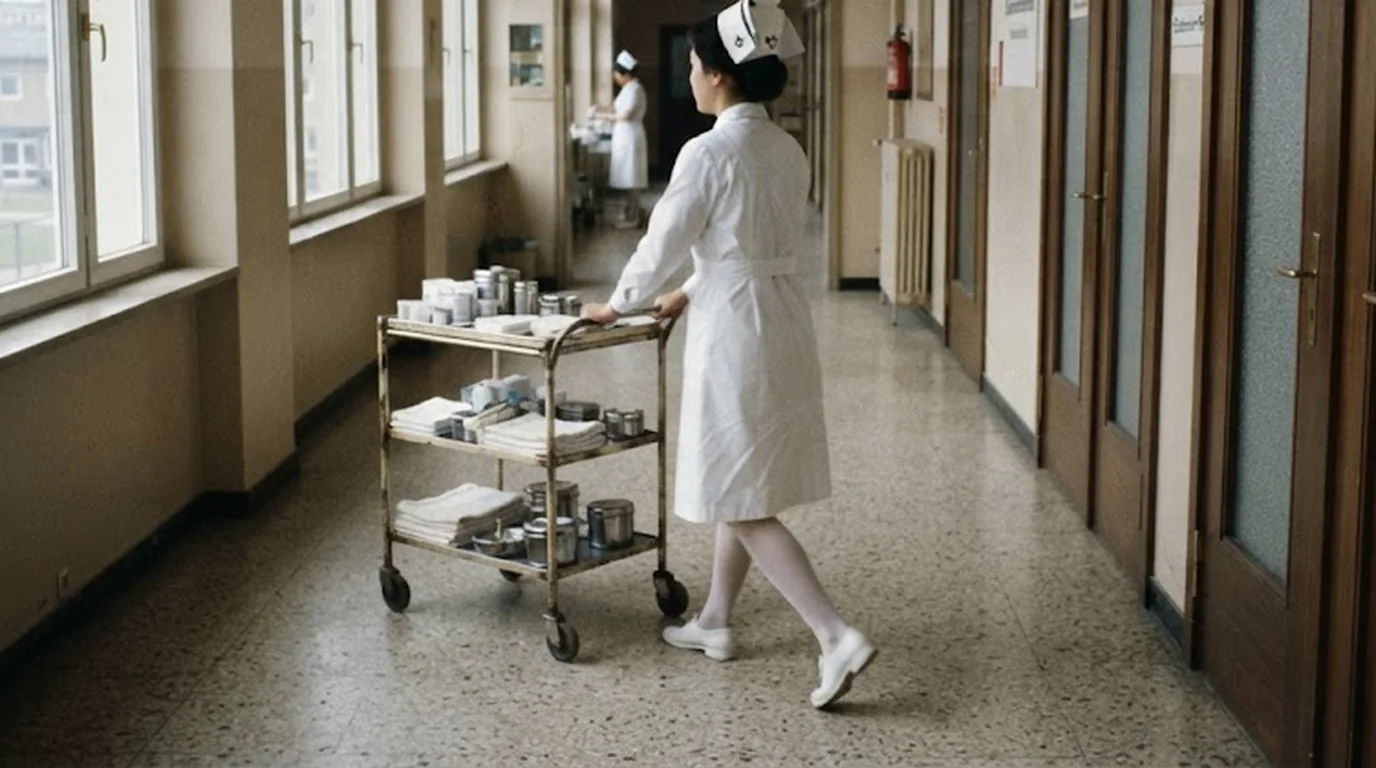 The centre of this migration was not a mine. (AI illustration)
Italy, 1955. The first of the agreements. Southern unemployment met northern labour shortage — structurally the same fit as Korea’s. The difference is geography: Italy was inside Europe, the journey home was ordinary, and returning was not an exceptional act.
Turkey, 1961. Turkish workers became West Germany’s largest migrant labour group and formed a large, permanent community. But the popular shorthand — they were called guest workers and none of them left — flattens what happened. The German Federal Agency for Civic Education records roughly 867,000 entries and about 500,000 returns between 1961 and 1973. Early circulation and return were real; the long settlement came later, through family reunification and re-entry. The line often attributed to Max Frisch — that a country asked for labour and human beings came — captures the era, and we give the sense of it without quoting it, because we could not confirm the source.
The Philippines, 1974. Presidential Decree No. 442 put overseas employment inside the legal system, and Article 22 made remitting a share of foreign earnings mandatory. The contrast with Korea is sharp. In Korea the belief that remittance was compulsory is widespread, but the commission’s own material records cases of workers who sent nothing home. The Philippines wrote it into law; Korea kept it as a story.
Korea, 1963–1977, and after. Korea ended the programme in 1977. A generation later it changed sides: since the Employment Permit System came in from 2004, Korea has been a country that receives workers from across Asia. A Korean audience watching this film today is not standing where Deok-su stood. It is standing roughly where West Germany stood.
Back to the film
At the end, an old Deok-su talks to a photograph of his father. He says his life was hard, and that he is glad it was him and not his children who had to live it.
The records leave something a little different. They leave 46,000 application forms for 500 jobs; two sets of totals that will not reconcile; a national story that a state commission examined and found untrue; and a majority who did not come back.
The despatch did earn foreign currency, and the commission judged that contribution substantial. But its longer legacy was also human — settlement, families and communities that outlasted the three-year contracts. The Korean communities in Germany, and the paths that ran on from there to North America, start in those contracts. Ode to My Father tells the first half of that very well. The second half is still off-screen.
Coming up next
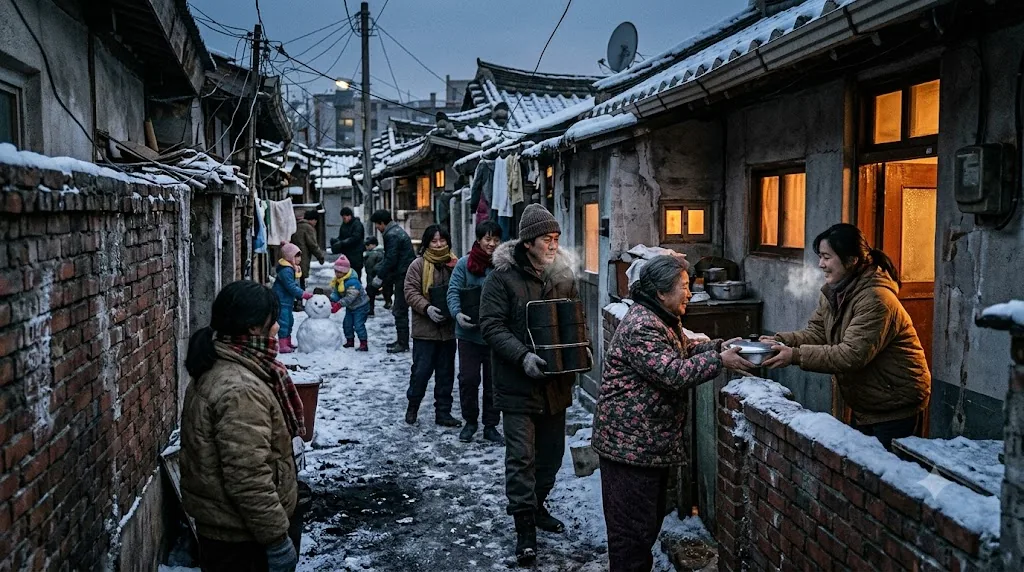
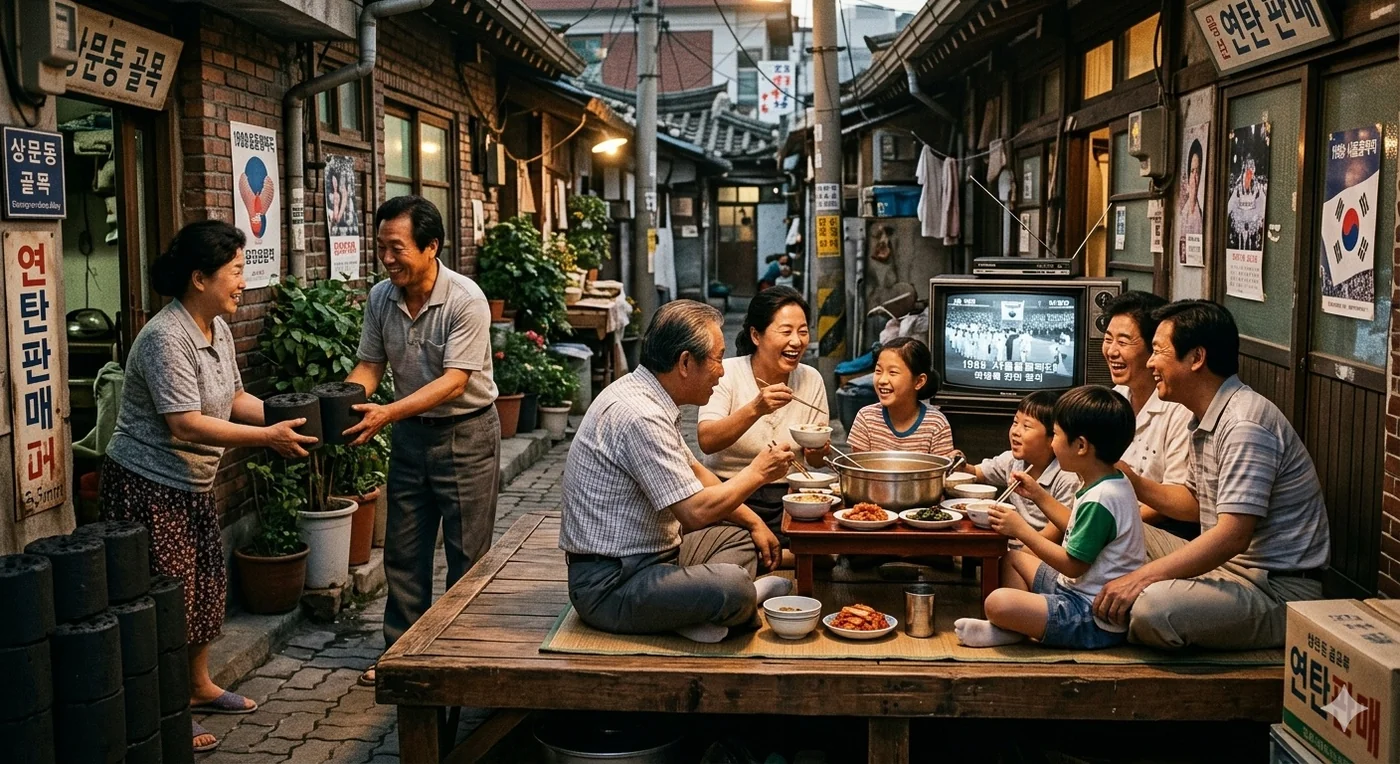
If this period interests you, two companion pieces stay in the same decades from the other side of the sea: the alley communities and the coal briquette that heated the Korea these workers were sending money back to, and the Korea of Reply 1988, a few years after the last despatch.
Frequently asked questions
Is the West Germany story in Ode to My Father true? The character is invented; the situation is documented. Korea sent miners from 1963 and nursing staff through state channels from 1966, on roughly three-year contracts. Some 46,000 people applied for 500 mining places in 1963.
Were the miners’ and nurses’ wages really collateral for a German loan? No. The Truth and Reconciliation Commission examined the claim in 2008 and found it untrue. The 1961 protocol predates the mining arrangement, and the credits ran on German export-credit guarantees and KfW funds rather than on anyone’s pay.
Were there more miners or more nurses? More nursing staff. About 10,226 (1966–1976) or 11,057 (1960–1976) against 7,900-odd or 7,936 miners, depending on the source. The periods differ, so the figures are not combined.
How much did the remittances matter? About US$101.53 million over 1965–1975, equal to 1.6, 1.9 and 1.8 per cent of total exports in 1965–67. The commission also called the contribution substantial, because no imported-input cost was deducted from it.
Was Korea the first non-European country West Germany recruited from? Not on these dates. The German–Moroccan agreement was concluded on 21 May 1963, seven months earlier.
Did they come home? A large share did not. The commission puts it at about 60 per cent staying in Germany or moving on to a third country. Lower figures in circulation count only those who stayed in Germany, or cover the men only.
Sources & further reading
- Recruitment, wages and totals for the miners — Encyclopedia of Korean Culture, ‘Miners sent to Germany’ (E0068929): some 46,000 applicants for 500 places in 1963; around 600 marks a month; the arrangement of 16 December 1963 between Korea’s Office of Labour Affairs and the German mining association; 7,900-odd over 1963–1980. Consulted directly.
- The nursing migration — Encyclopedia of Korean Culture, ‘Nurses sent to Germany’ (E0068928): private and church channels from the late 1950s; state-organised despatch from 1966 via Lee Su-gil and the Korea Overseas Development Corporation; about 10,226 over 1966–1976. Consulted directly.
- The statistics and the collateral finding — Truth and Reconciliation Commission, decision of 5 August 2008. 7,936 miners (1963–1977) and 11,057 nursing staff (1960–1976); remittances of about US$101.53 million (1965–1975) at 1.6, 1.9 and 1.8 per cent of total exports in 1965–67; the wage-collateral belief found untrue; the 100 per cent earning-rate description. Commission summary page, consulted directly.
- Why the collateral story fails on structure, not only on dates — Lee Young-jo and Lee Ok-nam, Korean Journal of Political and Diplomatic History 34:2 (2013), DOI 10.18206/kapdh.34.2.201302.171: Hermes cover and KfW funds; the 1961 protocol as 75 million marks of long-term development lending plus 75 million of export-related credit and guarantee cover.
- The 1977–78 residence campaign — National Institute of Korean History, Korean History Database, History of Koreans in Europe: Caritas-supported petitions, hearings and protests; five- and eight-year thresholds as demands; withdrawal of the repatriation plan.
- The German recruitment sequence — Landeshauptstadt Düsseldorf on the German–Moroccan agreement of 21 May 1963 (consulted directly); German Federal Agency for Civic Education (bpb) for the sequence of the formal bilateral agreements and the 1961–1973 Turkish entry and return figures; Kataoka et al., Japanische Bergleute im Ruhrgebiet (2012), reported in later German scholarship, for the 436 Japanese miners in the Ruhr between 1957 and 1965.
- Nursing duties — Jung Yong-Suk, ‘Beyond the Bifurcated Myth: The Medical Migration of Female Korean Nurses to West Germany in the 1970s’, Korean Journal of Medical History 27:2 (2018), 225–266. 🛑 The often-quoted line about cleaning and washing bodies comes from a National Archives of Korea explanatory feature, Meeting the Republic of Korea through records — overseas labour despatch, which is a later signed commentary, gives the first nursing group as 28 rather than 128, and carries remittance figures that conflict with the commission’s. It is a different page from the archive’s subject description ‘Nurses and miners sent to Germany’ (id=000273), and is not treated here as a contemporary record.
- The film — Korean Film Council (KoBiz): 126 minutes, released 17 December 2014, 14,269,712 admissions. Korean Film Archive (KMDb): 131 minutes. Both consulted directly; the running-time discrepancy is stated rather than resolved.
- What we could not check. Primary material for this subject does exist — the National Archives lists contemporary administrative files such as the 1964 report on the plan to send workers to West Germany (BA0084400) — but most of it was not collated for this article. The encyclopaedia entries and archive subject pages used here are institutional secondary sources. Also unverified: the arrival date and size of the first nursing group (128 on 31 January 1966), the specific attachment of Lee Su-gil to a paediatric department at Mainz, current estimates of former nursing staff still in Germany, the death toll, the 1963 newspaper report about applicants rubbing coal dust on their hands, and the account of the 1964 Hamborn colliery visit at which a presidential speech is said to have broken down. Each is given above as reported, not as fact.
This article was researched and written by K-Drama History. Source: Why Did Korea Send Miners and Nurses to West Germany? Ode to My Father, Explained — K-Drama History