Love in the Moonlight, Explained: Joseon's Court Eunuchs Left Behind a Family Tree With 777 Names
Theme: Status & Class
From the research behind Pause the Drama.
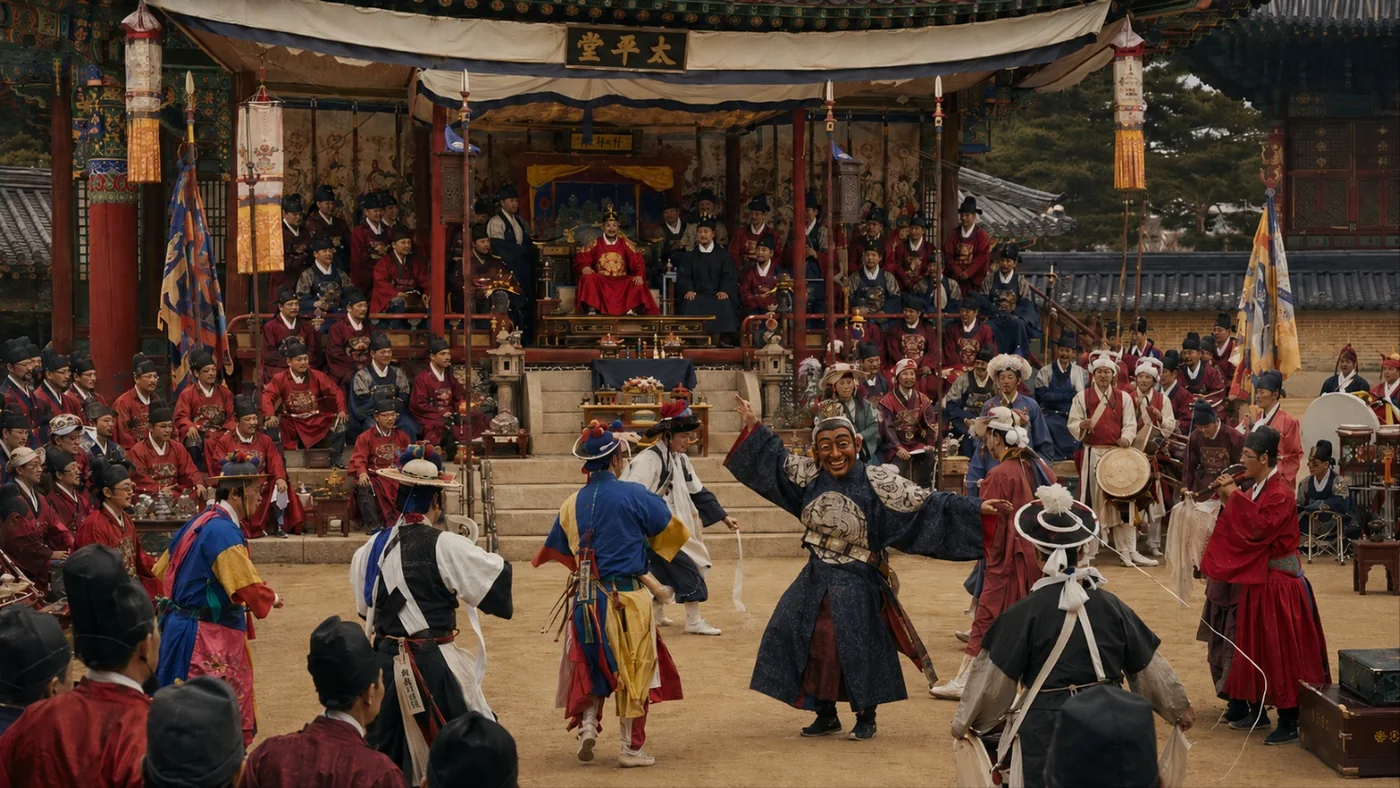
If you’ve watched Love in the Moonlight (구르미 그린 달빛) — the 2016 coming-of-age romance that made international stars of Park Bo-gum and Kim Yoo-jung — you know the setup. Hong Ra-on has spent her whole life disguised as a man. Deep in debt, she’s sold into the royal palace as a naesi (내시), a court eunuch, and assigned to Crown Prince Yi Yeong’s household. He has no idea the “eunuch” he’s falling for is a woman.
For that disguise to land, you have to picture a real Joseon eunuch as a kind of blank — a man defined by what was taken from him, with no name to carry and nobody waiting at home.
Here is what the record actually left behind: a genealogy book, compiled in 1805, listing 777 eunuchs — their ancestral seats, their birth and death dates, where they were buried, and the ancestral seats of their wives.
Quick answer: Real Joseon naesi were castrated men who staffed a formal government bureau, the Naesibu (內侍府), with a rank ladder running from junior second down to junior ninth. They also married, kept households outside the palace, and adopted sons to continue the family line — and an 1805 genealogy, the Yangsegyebo, records 777 of them across its recorded lineages and generations. That fact quietly demolishes the theory most people carry about eunuchs everywhere: that courts trusted them because they had no family and therefore nothing to want. Check that theory anywhere — China, the Ottoman court, Byzantium — and it falls apart.
Let’s unpack it.
What was a naesi, really?
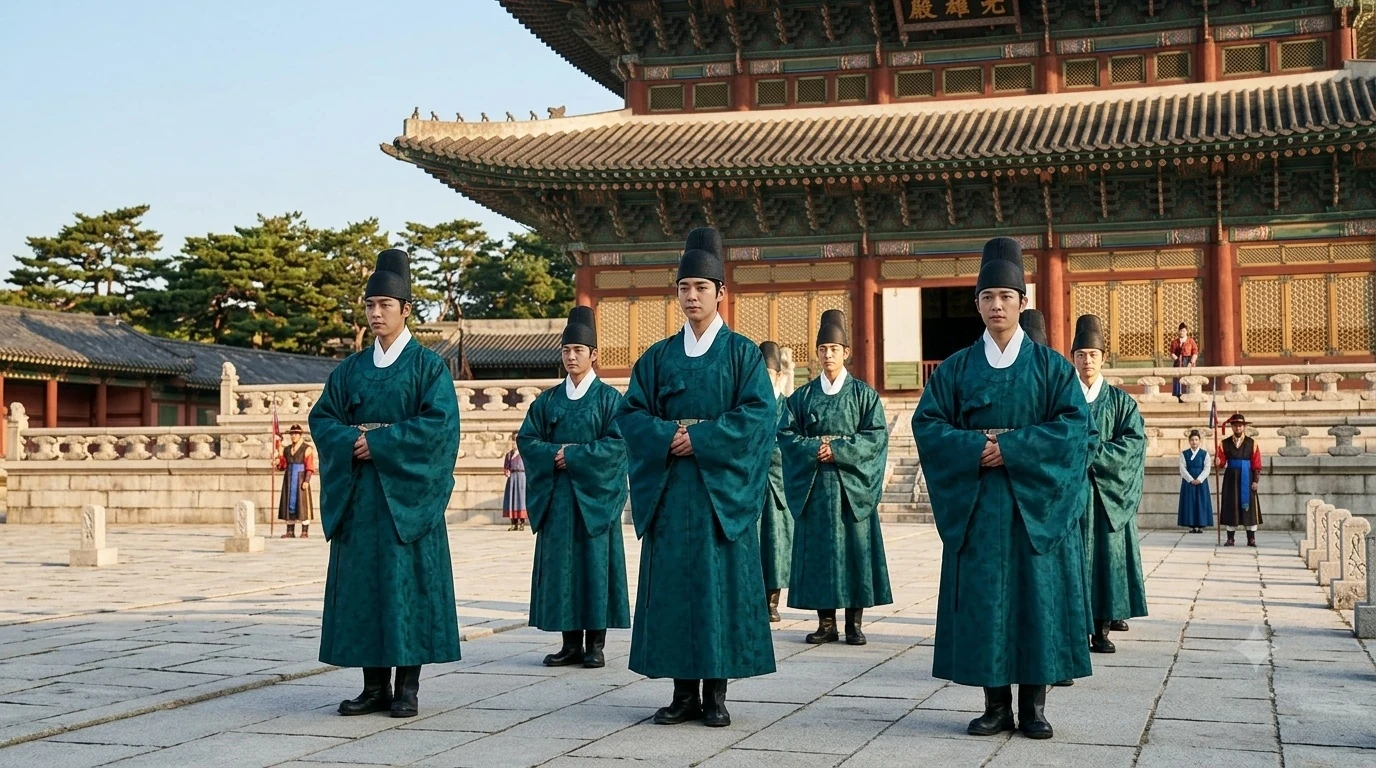
A castrated man employed in one of the most tightly regulated jobs in Joseon: personal service to the king inside the palace. The men who held the post were organized into the Naesibu (內侍府), a bureau with its own rank ladder and a legal headcount of 140 (Encyclopedia of Korean Culture, “내시”).
The Gyeongguk daejeon, Joseon’s foundational law code, names the posts from the top down: Sangseon (尙膳, junior second rank), who oversaw the king’s meals and the bureau itself, then Sangon, Sangda, Sangyak, Sangjeon, Sangchaek, Sangho, Sangtang, Sangse, Sangchok, Sanghwe, Sangseol, Sangje, Sangmun, Sanggyeong, and finally Sangwon (尙苑) at junior ninth. Sixteen titles, one ladder, from the official who oversaw the king’s meals down to the bottom of the ninth rank. Their duties, as the record describes them collectively, were to relay the king’s commands, supervise his food, keep the palace clean, and guard its gates.
It was a formal rank ladder, though not quite an ordinary bureaucratic career. The bureau had fifty-nine funded posts, and its legal complement of 140 men rotated through them — an arrangement Joseon called a chaeajik (체아직), a post you held by turns rather than by tenure (우리역사넷, “내시가 하는 일”). Either way, it was a structure with rungs and a headcount — which is precisely the texture Love in the Moonlight has no time to show you.
Castration was the non-negotiable qualification. Some appointees were described in the records as unable to father children from birth, or as having been injured by accident. But the Encyclopedia of Korean Culture says something starker too: there were many who castrated themselves and then applied (Encyclopedia of Korean Culture, “내시”). It’s tempting to file that under career strategy. Don’t. Read it against what Joseon was for a poor man locked out of every other ladder by birth — and against the fact that the surgery itself could kill you, and that survivors carried its social mark for life. For most of them it was very likely a bargain struck near the bottom of the social order, not an opportunity seized from the top.
So Joseon eunuchs got married?
Yes — and they kept the paperwork.
Naesi married and kept households outside the palace walls (National Institute of Korean History, “내시들은 어떻게 살았을까”). Since they could not father children, they adopted sons to continue the line. And here the arrangement gets genuinely strange: the adopted son kept his birth surname. He did not take his adoptive father’s. So a naesi household could contain a father and a son with two entirely different family names — a lineage held together by law and money rather than blood or even nomenclature, which Confucian-minded contemporaries found irregular enough to complain about in writing.
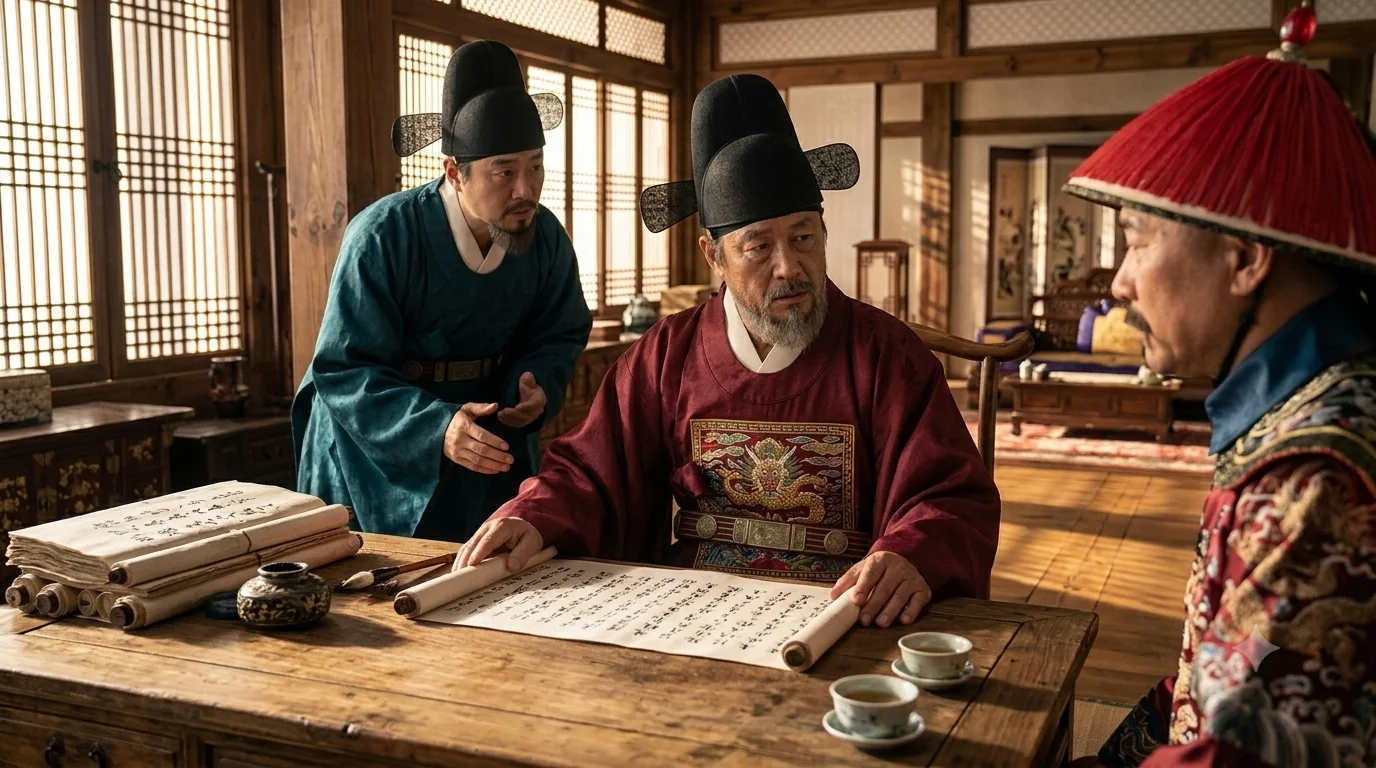
These weren’t loose, undocumented arrangements. Naesi households kept genealogies, and one survives. The Yangsegyebo (養世系譜, “genealogy of the adoptive generations”), compiled in 1805 by Yi Yun-muk, records 777 naesi — courtesy names, ancestral seats, birth and death dates, grave locations, and the ancestral seats of their wives (Encyclopedia of Korean Culture, “내시”).
Sit with that document for a second. It is a family tree for men who could not have families, maintained carefully enough to note where each wife’s line came from. Every entry is a small argument against the idea that a eunuch was a person with nothing to pass on.
| In Love in the Moonlight | In real Joseon history |
|---|---|
| Hong Ra-on hides being a woman among the palace naesi | Castration was the legal qualification for the post. No comparable case has been identified in the standard historical references consulted here |
| “Eunuch” works as a costume — an identity with no life attached | Naesi held ranked posts on a sixteen-title ladder with a legal headcount of 140, and went home to households outside the palace |
| The drama never shows a naesi’s family | Naesi married and adopted sons, who kept their birth surnames. The 1805 Yangsegyebo records 777 of them, wives’ ancestral seats included |
| Eunuchs are the palace’s harmless background | Under Yeonsangun, the eunuch Kim Ja-won controlled access to the king so completely that yangban had to flatter him to get promoted |
Did any naesi actually have power?
As an institution, the Naesibu was held down on purpose. The law code kept it out of the regular senior-official listings, filing the bureau among the miscellaneous offices instead — a deliberate placement, given that eunuchs had grown politically dangerous at the end of the preceding Goryeo dynasty (Encyclopedia of Korean Culture, “상선”). Korean public histories add the cultural half of the answer: Joseon was a Confucian society run by scholar-officials who regarded eunuchs very dimly, and that hostility is a large part of why nothing like China’s eunuch takeovers ever took root here (우리역사넷, “내시가 하는 일”).
But hold two things apart, because they are different claims. The bureau never hardened into an independent political bloc the way China’s eunuch establishment did. That is not the same as saying it had no institutional leverage — it had one enormous piece of it, and individual eunuchs could turn that leverage into something formidable. One of them has a name.
The leverage sat in a post called the sŭngjŏnsaek (승전색): the eunuch who received the king’s orders and passed them on. Notice what that means structurally. A royal secretary handed the command to the sŭngjŏnsaek, and the sŭngjŏnsaek handed it to the king — and contemporaries knew perfectly well that a message can change shape in the handing over. The National Institute of Korean History says so outright: because orders were relayed this way, there was a possibility the original intent would be distorted (우리역사넷). The man in the middle of a king’s words is never only a messenger. Under Yeonsangun, that post was held by Kim Ja-won (金子猿), and the National Institute of Korean History describes his standing without hedging: his authority was so great that even a high-born yangban could not get promoted without flattering him (우리역사넷).
Read that next to the drama. Hong Ra-on’s disguise depends on a eunuch being someone nobody looks at twice. For a stretch of Yeonsangun’s reign, the most consequential man in the room — the one every aristocrat in the kingdom had to get past — was wearing exactly that uniform.
Key terms. Naesi (내시, 內侍) — a castrated palace official; Joseon’s term for a court eunuch. Naesibu (내시부, 內侍府) — the government bureau organizing the naesi, legal headcount 140. Sangseon (상선, 尙膳) — its chief officer, junior second rank, in charge of the king’s meals. Sŭngjŏnsaek (승전색) — the eunuch who received and relayed the king’s commands. Yangsegyebo (양세계보, 養世系譜) — the 1805 genealogy recording 777 naesi.
The theory that eunuchs were safe because they had nothing
Here is the idea nearly everyone carries into this subject, usually without noticing: courts used castrated men in high-trust roles because a eunuch has no sons, no line, no stake — nothing to build for and nothing to steal for. He is safe because he is empty.
It is a tidy theory. It fails almost everywhere you test it.
China — the power came from the emperor, not from the emptiness. Ming eunuch Wei Zhongxian (1568–1627) is the case everyone imports by default. He began as a palace servant, attached himself to the wet nurse of the future Tianqi Emperor, and by the mid-1620s was running the state while the emperor did carpentry, purging hundreds of officials before his fall (Britannica, “Wei Zhongxian”). But look at where the power actually came from: the emperor’s personal trust, his alliance with Madame Ke, command of the secret police, and control over the flow of imperial orders. Not a single one of those is “he had no family.” And Chinese eunuchs did have families — wives, adopted sons, living ties to the kin they were born to. The stereotype is doing work the evidence doesn’t support.
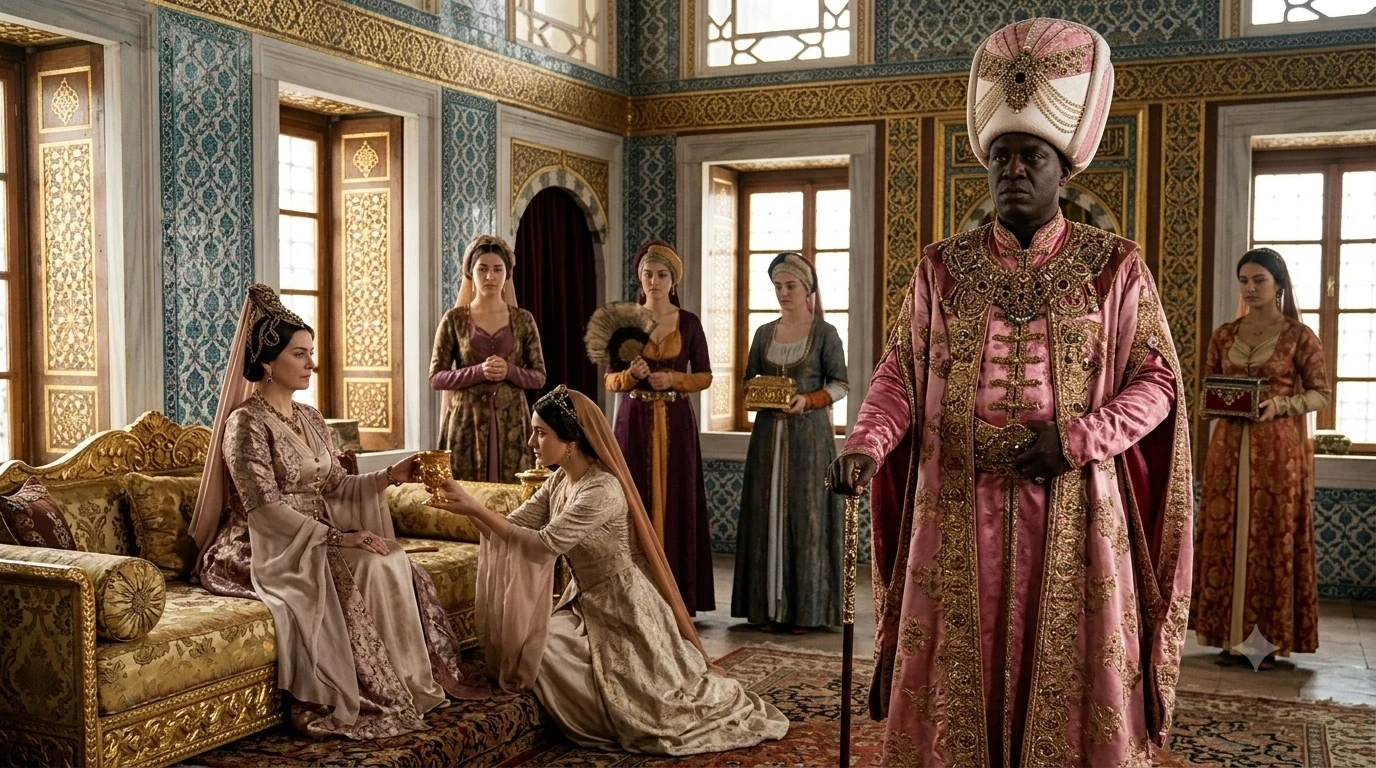
The Ottoman court — outsiders who stopped being outsiders. The imperial harem was guarded by a corps of castrated men led by the kizlar agha, the Chief Black Eunuch, an office formally created in 1588 and, in the hands of its strongest holders, rivalling the grand vizier himself (Jane Hathaway, “The Chief Eunuch of the Ottoman Harem”). The recruiting logic looks like the theory in action: bring in enslaved foreigners from East Africa, men with no clan or local base to fall back on. But that condition described the day they arrived, not the decades after. Chief eunuchs went on to build political, financial, and religious networks stretching from Istanbul to Cairo to Medina — supervising enormous endowments, shaping provincial affairs. Strip a man of his ties and hand him an office, and he builds new ties. That is what people do.
Byzantium — no sons, and a brother on the throne anyway. Constantinople ran a parallel court hierarchy of eunuch officials; the praepositus sacri cubiculi often decided who reached the emperor at all (Britannica, “eunuch”). The theory here was explicit: a man with no legitimate children can never convert his office into a dynasty. Then consider John the Orphanotrophos, a eunuch official of the eleventh century, who had no sons whatsoever and simply used his brother instead — manoeuvring him onto the throne as Michael IV and running the empire through him. A eunuch can’t found a bloodline. He can absolutely have a family with ambitions.
The odd one out. Europe’s castrati are the exception that clarifies the rule, because they weren’t court officials at all. Boys were castrated to keep a soprano or contralto voice into adulthood — for church choirs that excluded women, and later for the opera stage, where the best of them became genuine celebrities (Britannica, “castrato”). No palace duties, no proximity to power, no bureau. It is the one place on this list where the surgery was about a sound rather than a state.
So where does that leave Joseon? Not as the one court that solved eunuch power, and not as the one that domesticated it — we have no law or royal order announcing that families were handed out as leashes, and it would be inventing history to say so. What Joseon has is something better than a theory. It has evidence. Every other court leaves you arguing about whether its eunuchs really were the empty men the doctrine claimed. Joseon left a book with 777 names in it, wives’ lineages included, and settled the question.
Coming up next
One disguised heroine turns out to be a doorway into a sixteen-rung civil-service ladder, a genealogy of 777 men who couldn’t have children, a Ming emperor who preferred carpentry to governing, an East African slave who rivalled the Ottoman grand vizier, and a Byzantine official who put his own brother on the throne. That’s the quiet gift of a good historical drama: even its funniest disguise is standing on real, documented ground.
In the next essay, we’ll take another K-drama scene that looks like pure fiction — and trace the real Korean history hiding underneath it.
Frequently asked questions
Is Love in the Moonlight based on a true story? Mostly no — Hong Ra-on’s disguise and the romance are invented, adapted from a web novel. But it isn’t pure fantasy either: Crown Prince Yi Yeong is modeled on the real late-Joseon Crown Prince Hyomyeong, and the court hierarchy and the Naesibu eunuch bureau around him are historically grounded.
What was a naesi (내시), and were all Joseon eunuchs castrated? Naesi were the castrated men who staffed the Naesibu (內侍府), relaying the king’s commands, supervising his food, and guarding the palace gates. Castration was a hard requirement. Some appointees are described in the records as unable to father children from birth or as injured by accident — but the Encyclopedia of Korean Culture also says plainly that many castrated themselves and then applied, which is best read against Joseon’s poverty and rigid status system rather than as a career choice.
Did Joseon eunuchs really get married and have children? Yes, and they documented it. Naesi married, kept households outside the palace, and adopted sons — who kept their birth surname, so a household could hold a father and son with different family names. The receipts survive: the Yangsegyebo, compiled in 1805 by Yi Yun-muk, records 777 naesi across its lineages, with their ancestral seats, dates, graves, and even their wives’ ancestral seats.
Did Joseon eunuchs have real political power? As an enduring independent political bloc, generally no — the law code kept the Naesibu out of the regular senior-official listings, and Joseon’s scholar-official society viewed eunuchs dimly enough that nothing like China’s eunuch takeovers took hold. But the bureau controlled access to the king and the relay of his commands, and contemporaries knew an order could be distorted in the handing over. Under Yeonsangun the sŭngjŏnsaek Kim Ja-won became so formidable that even high-born yangban could not get promoted without flattering him.
Weren’t eunuchs trusted everywhere because they had no family? That’s the famous theory, and it doesn’t survive contact with the evidence. Chinese eunuchs took wives, adopted sons, and kept ties to their birth families. Ottoman chief eunuchs arrived as enslaved foreigners with no local base and built political and financial networks once in office. In Byzantium, John the Orphanotrophos had no sons and still put his own brother on the throne as Michael IV.
Could a real woman have secretly posed as a eunuch like Hong Ra-on? No documented case has been identified in the standard references consulted for this article — which is a statement about what has been found, not proof of impossibility. One episode is often misread as evidence: in the fifth lunar month of 1504 an inspection caught a serving eunuch who had not been fully castrated. That’s a man who slipped through, not a woman.
Sources & further reading
This piece was written from the historical script and fact-check of 사뚱샘의 역사방 (SaDDungSam), with the load-bearing claims checked against the primary Korean reference works. For broader reading:
- The naesi institution, the Naesibu ladder, and the 1805 Yangsegyebo genealogy. Encyclopedia of Korean Culture, “내시” (encykorea.aks.ac.kr)
- The Sangseon post and the Naesibu’s deliberately restrained legal status. Encyclopedia of Korean Culture, “상선” (encykorea.aks.ac.kr); “내시부” (encykorea.aks.ac.kr)
- What eunuchs actually did, and Kim Ja-won under Yeonsangun. National Institute of Korean History, “내시가 하는 일” (contents.history.go.kr); “내시와 환관” (contents.history.go.kr)
- Marriage, adoption, and daily life of naesi households. National Institute of Korean History, “내시들은 어떻게 살았을까” (contents.history.go.kr)
- Wei Zhongxian and the late-Ming court. Encyclopædia Britannica (britannica.com)
- The Ottoman Chief Black Eunuch of the imperial harem. Jane Hathaway, Ohio State University Department of History (history.osu.edu)
- Byzantine court eunuchs and the chief chamberlain. Encyclopædia Britannica, “eunuch” (britannica.com)
- Castrati. Encyclopædia Britannica, “castrato” (britannica.com)
Thanks for reading — see you in the next one.
This article was researched and written by K-Drama History. Source: Love in the Moonlight, Explained: Joseon's Court Eunuchs Left Behind a Family Tree With 777 Names — K-Drama History