Why Did Joseon Koreans Believe a King's Grave Could Change Dynasties? Geomancy, Physiognomy, and the Politics of Fate, Explained
Theme: Belief, Death & the Uncanny
From the research behind Pause the Drama.
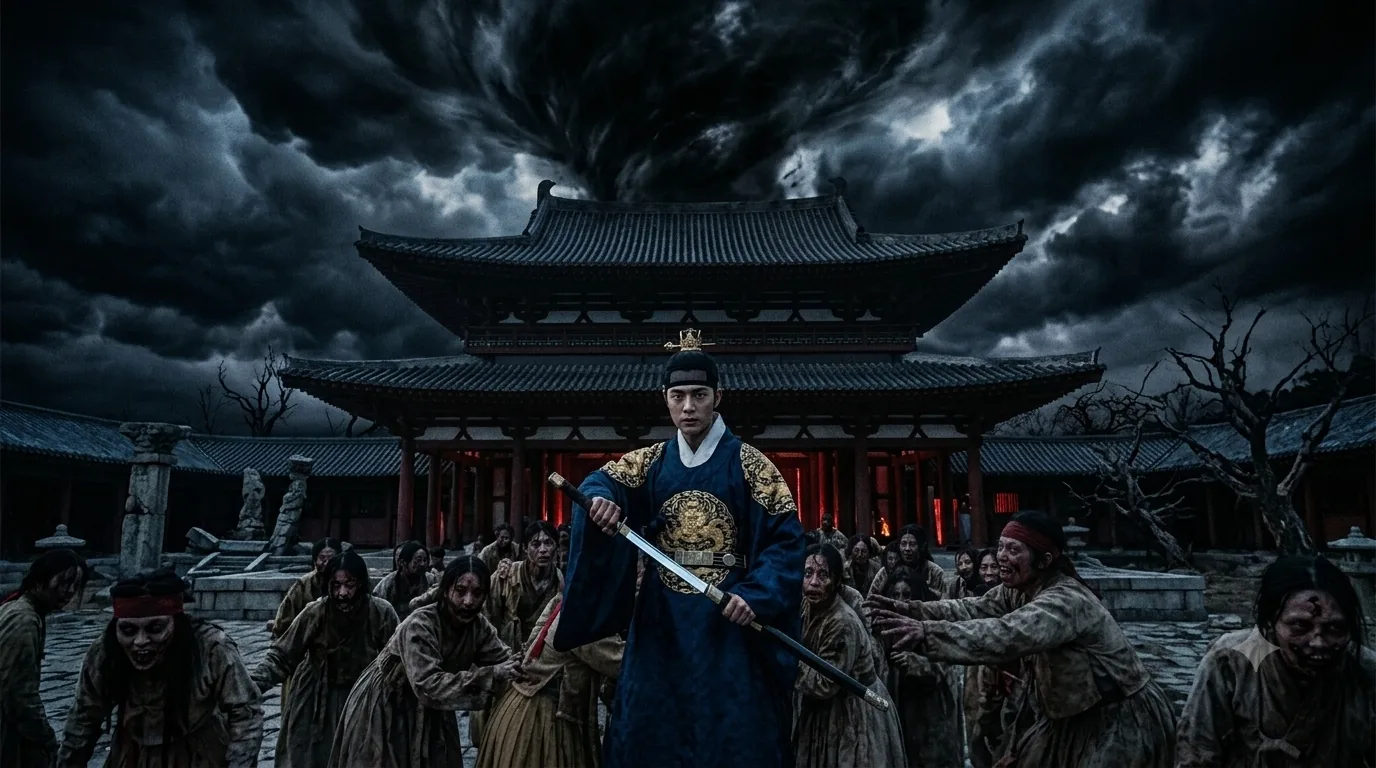
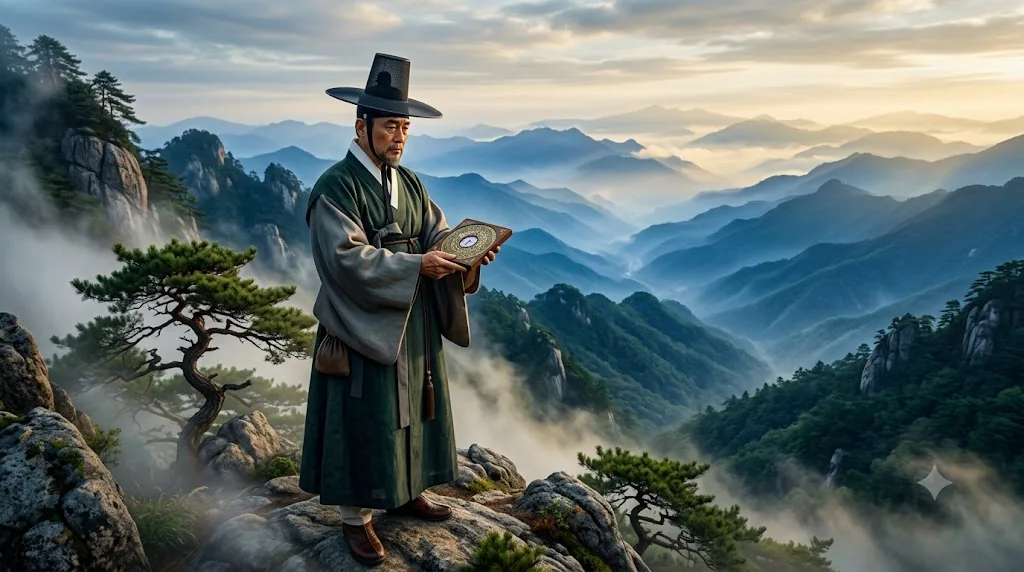
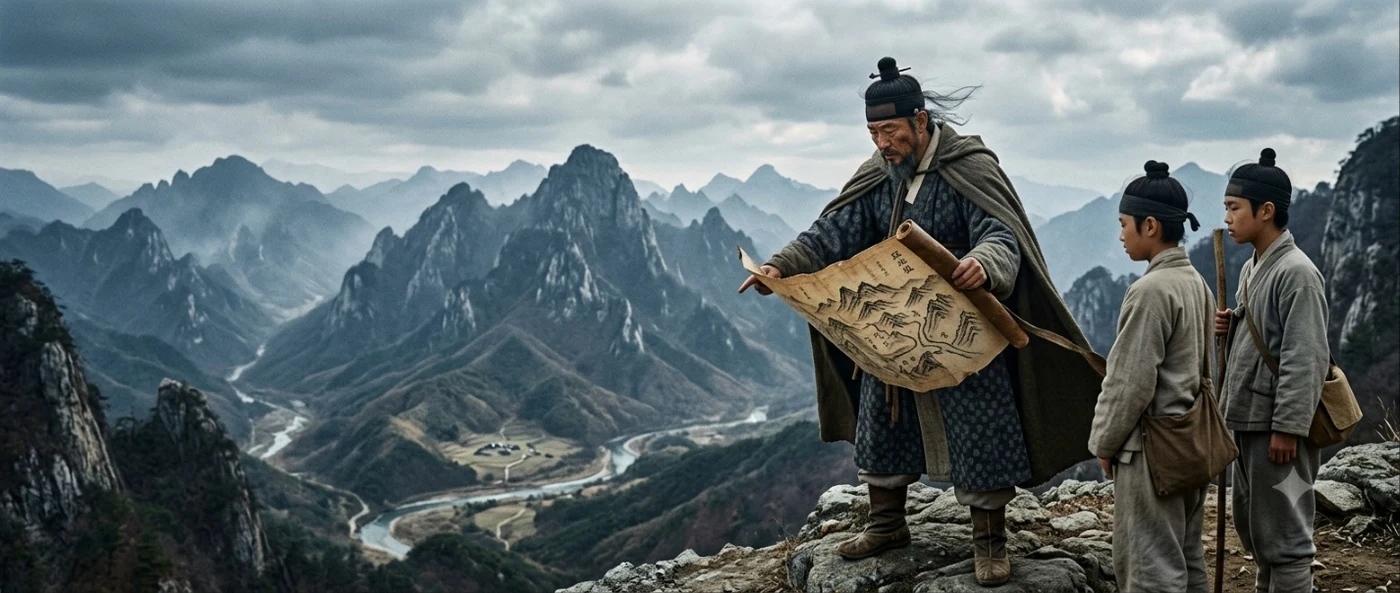
In The Face Reader (관상, 2013), the physiognomist Nae-gyeong studies Prince Suyang’s face and reads something that stops him cold: eyes that will not be governed. In Myeongdang (명당, 2018), a brilliant geomancer traces mountain ridges and water flows across a map, knowing that the right grave site can lift a family to power — and the wrong one can end a dynasty. Both films ask the same unsettling question: did Joseon Korea really believe that the shape of a man’s face, or the angle of a hillside grave, could determine the arc of history?
The answer is: yes — especially for geomancy, tomb siting, and the calendrical timing of state ritual, which Joseon built into formal institutions with real legal consequences. Physiognomy was culturally powerful too, but as we’ll see, the films exaggerate its official reach.
Quick answer: Geomancy (pungsu jiri) was not a fringe superstition in Joseon Korea — it was a state-administered discipline, while physiognomy (gwansang) was a widely practiced and culturally influential art. The Goryeo founder enshrined geomancy in national policy; Joseon’s Gwansanggam — the Bureau of Astronomy (觀象監), whose remit was the heavens, the calendar, and the land, not face-reading — assigned officials to assess palace and tomb orientations; and grave-site disputes, including the illegal practice of tujang (secretly burying a relative on another family’s auspicious land), generated dozens of lawsuits recorded in the royal annals. The films dramatize the political stakes of these beliefs, but the beliefs themselves were real, consequential, and surprisingly long-lived.
Was Korean geomancy a state ideology or just folk belief?
Far more than folk belief. Goryeo’s founding king, Wang Geon (태조), wrote his political testament — the Hunyo Sipjo (Ten Injunctions) — as a guide for future rulers, and geomantic reasoning appears in it explicitly and more than once. Article 5 singles out Seogyeong (present-day Pyongyang), declaring that “the virtue of its waters flows in harmony — the root of our nation’s land-veins,” an unambiguous pungsu-and-prophecy argument for where royal attention should flow. It is not the only such clause: Article 2 endorses the monk Doseon’s practice of siting temples by the favorable-and-adverse (順逆) flow of mountains and water, and Article 8 reads the terrain south of the Chaeryeong pass and beyond the Gongju River as geographically “contrary” (National Institute of Korean History, Woori History Net). Woven through these injunctions is the logic of bibo — landscape-compensation, in which human construction (pagodas, embankments, temples) corrects a natural weakness in the terrain. This wasn’t mysticism at the margins of governance; it was written into the founding charter of a dynasty.
When Joseon replaced Goryeo in 1392, the new capital had to be chosen. The decision to move from Gaeseong to Hanyang (present-day Seoul) was not made on a whim. The architects of the new dynasty — the scholar-general Jeong Do-jeon and the Buddhist monk Muhak — spent months surveying mountain formations and water courses before settling on the site. Gyeongbok Palace was oriented according to the same principles, its back toward Bugaksan, its face toward Namsan, the Cheonggyecheon stream running through the city as the required water element.
The institutional form of these ideas was the Gwansanggam, the Bureau of Astronomy and Geomancy. Its officials were assigned to determine the jwahyang — the sitting direction — of major royal constructions: the royal shrine (Jongmyo), the palace, and every royal tomb. Within the bureau, the myeonggwahak (命課學) division handled the selection of auspicious dates and hours — fixing when royal ceremonies such as a crown prince’s investiture, a royal wedding, or a coming-of-age rite should be held (Encyclopedia of Korean Culture). It is worth being precise here, because the dramas blur exactly this line: the bureau set the timing of these rites, but choosing the crown prince himself belonged to the order of dynastic succession and political judgment — not to the diviners. A face-reader or geomancer deciding who becomes king is the films’ fantasy, inflating a real but narrower institutional role.
Was the Gwansanggam a face-reading bureau?
No — and this is the single most common confusion for readers coming to these films in English. The names look almost identical in romanization, but they point to different ideas. The Gwansanggam (觀象監) was Joseon’s bureau for astronomy, calendrical calculation, geomancy, weather observation, water clocks, and auspicious timing; its 象 means the phenomena of heaven and earth. Gwansang (觀相), physiognomy, was the art of reading character and fate from the face; its 相 means countenance. They share a syllable and a cinematic aura, but historically they should not be collapsed into a single institution. Face-reading in Joseon was real and influential — but it circulated as a scholarly and popular art, not as a ranked government office.
What made a grave site powerful enough to fight over?
The key concept is eum-taek pungsu — yin-house geomancy, the belief that an ancestor’s burial location directly shapes the fortune of living descendants. A perfectly situated grave — positioned where mountain energy converges and water gathers without dispersing — was thought to channel ji-gi (earth energy) toward the lineage buried there.
This belief had a sharp political edge. If a favorable grave could raise a family, controlling who got buried in the best sites was a form of power. The illegal practice of tujang (偸葬) — covertly burying a relative on another family’s prime land — generated persistent conflict recorded in the Joseon wangjo sillok across multiple reigns. These were not quiet private disputes; they could involve physical removal of coffins, armed confrontations, and petitions to the royal court.
The most famous historical example comes from the very end of the Joseon period. Heungseon Daewongun’s political rise — and the eventual accession of his son as King Gojong in 1863 — was popularly connected at the time to his reburial of his father, Prince Namyeongun, at an auspicious site in Deoksan, South Chungcheong. The tomb was first relocated in 1845 and given its final interment on the 18th day of the third lunar month of 1846 (the twelfth year of King Heonjong). The more colorful details — that Heungseon burned down a temple, Gayasa, and bribed monks to clear the “king-making” ground — survive mainly in Maecheon yarok and later folklore, and are best read as legend rather than settled record. What is documented is the reburial itself, and its violent sequel: in 1868 (the fifth year of King Gojong), the German merchant Ernst Oppert attempted to rob the tomb (Digital Yesan Cultural Encyclopedia), hoping to hold the regent’s father’s remains as leverage over the Joseon court. To Koreans this was no ordinary grave-robbing — it was an assault on the dynasty’s very geomantic root. Whether or not the geomantic logic was ever causal, contemporaries believed it was — which is itself the historical point.
A correction worth making: Korean geomancy is sometimes flattened into “Chinese-derived superstition” — and neither half of that phrase is quite right. Classical Chinese theory genuinely supplied the vocabulary and frameworks; geomancy entered the peninsula from China and was spread in the late Silla period by the monk Doseon and his followers. But Korean practice then developed its own emphasis — especially bibo and the politics of the grave — in response to the peninsula’s terrain and its lineage-centered social order. The bibo concept — compensating for landscape deficiencies through construction — has only faint analogues in classical Chinese texts like the Zangjing (Book of Burial), traditionally attributed to Guo Pu (c. 276–324 CE) — though that attribution is shaky. The Siku Quanshu catalogue notes that Guo Pu’s own biography records no such work, and the Zangshu surfaces clearly in the bibliographic record only as late as the History of Song, which is why many scholars treat it as a later compilation issued under Guo Pu’s name rather than a text he wrote in the fourth century. Korean pungsu developed its own theoretical vocabulary suited to a peninsula of steep mountain ridges, deep valleys, and short rivers — a geography quite different from the North China Plain where many Chinese geomantic frameworks evolved.
Drama vs. real history — how much do the films exaggerate?
| In Myeongdang / The Face Reader | In real Joseon |
|---|---|
| A single geomancer’s map determines dynastic fate | State bureau officials formally assessed all major royal sites |
| Powerful families scheme to seize the best grave sites | Tujang disputes appear in dozens of royal annals entries across multiple reigns |
| A face-reader glimpses a prince’s future in his eyes | Physiognomy was a widely practiced art — but not a division of the state astronomy bureau |
| The stakes are life and death | Grave-site conflicts generated lawsuits, armed confrontations, and royal petitions |
| The protagonist is a lone outsider against the system | In practice, geomancy was an institutional profession with ranked government officials |
Both films compress and dramatize, but the institutional reality they rest on is well-documented.
Key terms. Pungsu jiri (풍수지리) — Korea’s tradition of geomancy, analyzing mountain-water configurations to identify auspicious locations. Eum-taek (음택) — yin-house geomancy, focused on burial sites and their effect on living descendants. Tujang (투장) — the illegal practice of secretly burying a relative on another family’s auspicious land to steal its earth energy. Gwansanggam (관상감/觀象監) — Joseon’s Bureau of Astronomy, responsible for astronomy, the calendar, geomancy, weather, and auspicious-date selection. Despite the romanization, it did not administer face-reading; its 象 means celestial and natural phenomena, not the human face (相). Bibo (비보) — landscape-compensation: correcting natural weaknesses in terrain through constructed features, a distinctly Korean geomantic concept. Gwansang (관상) — physiognomy; reading character and fate from facial features, grounded in the philosophy of gi and the five elements.
How does Korea’s tradition of reading fate through land and faces compare with the rest of the world?
Korea — the trinity of pungsu, gwansang, and saju. Korean fate-reading operated on three interlocking registers: the land (geomancy), the face (physiognomy), and the birth moment (saju, or four-pillar fortune-telling). Geomancy and calendrical date-selection were institutionalized through the state’s Gwansanggam; physiognomy, though culturally influential, remained a practiced art rather than a formal bureau division. What most distinguishes the Korean tradition is the political weight of eum-taek geomancy — the idea that a single grave could determine not just a family’s fortune but a dynasty’s legitimacy.
China — the origin and the divergence. China is the source of the classical geomantic framework. The Zangjing, traditionally attributed to Guo Pu, laid out the theory of shengqi (vital energy) that both traditions share. But Chinese practice placed comparatively greater emphasis on yang-house feng shui — the orientation of homes and cities for the living — alongside imperial tomb selection. The Korean emphasis on eum-taek as the dominant political register is a divergence from, not a copy of, the Chinese model.
India — Vastu Shastra and the architecture of the cosmos. India’s analogous tradition is Vastu Shastra, a system of spatial orientation aligning buildings with cosmic energy through cardinal directions and proportions. Like bibo thought, Vastu is embedded in temple and palace construction — applied institutionally to Hindu and Buddhist sacred architecture. Its focus is overwhelmingly on spaces for the living, not the dead. The burial-site politics that gave Korean geomancy its sharpest political edge have no real parallel in Vastu.
The West — astrology in court, phrenology in science class. Medieval Europe’s closest equivalent to court geomancy was judicial astrology, in which royal advisers formally charted the stars’ influence on political events and military campaigns. More structurally comparable to Korean physiognomy is phrenology: the 19th-century European and American claim that the shape of the skull reveals personality and intelligence. It is tempting to say phrenology was “taught as science,” but that overstates it. Phrenology never became an official scientific subject — it circulated as popular science, spread through public lectures, mail-order books, and private “practical phrenology” courses. The Fowler brothers built a commercial empire around it from the 1830s, and their American Phrenological Journal ran from 1838 until 1911 (University of Pennsylvania). Its core premises lost scientific credibility by the mid-19th century and it is classed today as pseudoscience, even as its popular, commercial form lingered into the early 20th century. Crucially, phrenology was weaponized for racial hierarchy in ways that Korean gwansang was not — making the political valence of these two “face-reading” traditions very different even where their surface methods look similar.
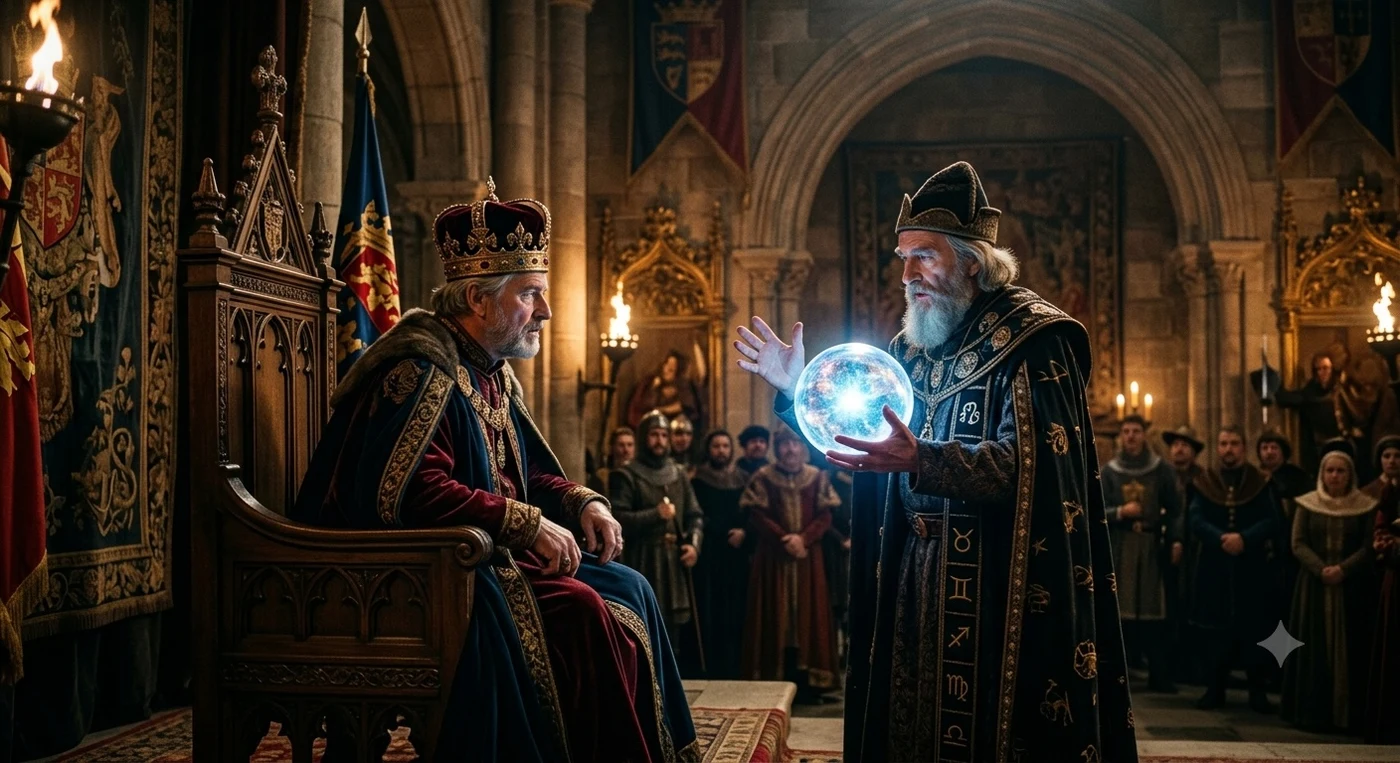
Coming up next
A geomancer with a map and a face-reader with a glance — and behind them, a state bureau that treated both as official science. The dramas exaggerate the personal stakes; the historical record shows the institutional ones were real enough. A king’s choice of burial ground was a political act, a grave-robbing was a power move, and a physiognomist’s verdict on a prince’s eyes could circle through court gossip in ways that mattered.
Next, we jump back four centuries to medieval Goryeo — where a general in his seventies dams a river, waits for an empire’s cavalry to cross, and then releases the water.
Thanks for reading — see you in the next one.
Frequently asked questions
What is Myeongdang about? Myeongdang (2018, Lotte Entertainment) is a Korean historical film about Park Jae-sang, a brilliant geomancer drawn into a deadly power struggle over royal grave sites in late Joseon. Its premise rests on the real belief that burying an ancestor at an auspicious location — a myeongdang, or “famous ground” — shaped the fortune of descendants for generations.
What is The Face Reader about? The Face Reader (관상, 2013, CJ Entertainment) follows Nae-gyeong, a gifted physiognomist entangled in the political violence of the Gyeyujeongnan coup of 1453, in which Prince Suyang seized the throne. Its premise: a trained face-reader could predict a man’s political destiny from the quality of his gaze alone.
Was geomancy actually used in Korean state affairs? Yes, formally and institutionally. The Goryeo founder Wang Geon enshrined geomantic principles in his Hunyo Sipjo. Joseon maintained the Gwansanggam to assess orientations for royal palaces, shrines, and tombs. Grave-site disputes appear in dozens of entries across the royal annals.
What is tujang, and why was it politically dangerous? Tujang (偸葬) was the illegal practice of secretly burying a relative on another family’s auspicious land to absorb its earth energy. The belief that this could redirect dynastic fortune made tujang a political act — and the resulting disputes filled court records across multiple Joseon reigns.
Is Korean feng shui the same as Chinese feng shui? Related but distinct. Korean pungsu jiri developed its own vocabulary for the peninsula’s mountainous terrain. The bibo concept — compensating for landscape weaknesses through construction — has only faint parallels in classical Chinese texts. Scholars increasingly treat Korean geomancy as an indigenous theoretical system.
Are Korean physiognomy and Western phrenology the same thing? They both attempt to read character from physical appearance, but their foundations differ entirely. Phrenology measured skull contours as physical data. Korean gwansang was grounded in the philosophy of gi (vital energy) and the five elements. Phrenology was also explicitly weaponized for racial hierarchy; Korean physiognomy was used for individual and dynastic fate-reading within a single cultural framework.
Is geomancy still practiced in South Korea today? Yes. Commercial geomancy consulting covers grave sites, home purchases, and apartment selections in modern South Korea. Presidential ancestors’ burial sites have been reported on in the national press. The bibo concept’s ecological dimension has attracted renewed international attention through Korean wellness culture.
How accurate are the films Myeongdang and The Face Reader historically? Both compress and dramatize. The core institutional reality — state-administered geomancy, physiognomy as a practiced discipline, grave-site conflicts as political events — is well-documented in the annals. The Gyeyujeongnan setting of The Face Reader is historically grounded; the palace intrigues of Myeongdang draw on documented Joseon-era patterns of burial-site politics.
Sources & further reading
This piece was written from the historical script and fact-check of 사뚱샘의 역사방 (SaDDungSam), drawing on primary records and established scholarship:
- Goryeo geomancy as state policy (Hunyo Sipjo) — National Institute of Korean History, Woori History Net — “Taejo’s Ten Injunctions” (Article 5 on Seogyeong’s water-virtue and land-veins; Articles 2 and 8 on Doseon’s temple-siting and the terrain south of Chaeryeong); Encyclopedia of Korean Culture entries on pungsu jiri and bibo.
- Joseon’s Gwansanggam and its divinatory functions — Encyclopedia of Korean Culture — Gwansanggam (觀象監: astronomy, geography, calendar, and divination — not face-reading); Encyclopedia of Korean Culture — Myeonggwahak (命課學); Joseon wangjo sillok entries on the bureau’s role in the timing of royal ceremonies.
- Tujang litigation and political geomancy — Joseon wangjo sillok (Royal Annals of the Joseon Dynasty), multiple reigns; Encyclopedia of Korean Culture entry on tujang and eum-taek pungsu.
- Prince Namyeongun’s tomb and the 1868 Oppert affair — Digital Yesan Cultural Encyclopedia — “Oppert’s attempted robbery of Prince Namyeongun’s tomb”; Encyclopedia of Korean Culture — the Oppert incident (E0038589). The Gayasa arson and “king-making ground” details derive from Maecheon yarok and later folklore.
- Chinese geomantic origins — the Zangjing — Traditionally attributed to Guo Pu (c. 276–324 CE); the Siku Quanshu catalogue and the History of Song bibliographic record suggest a later, pseudonymous compilation.
- Phrenology in Western history — University of Pennsylvania, “The Bumpy Story of the Phrenological Fowlers” (the Fowler brothers from the 1830s; the American Phrenological Journal, 1838–1911).
- India’s Vastu Shastra — Encyclopaedia Britannica entry on Vastu Shastra; comparative scholarship on Hindu temple construction principles.
- Korean geomancy in international scholarly context — Journal of Korean Studies and related peer-reviewed scholarship on bibo and indigenous Korean geomantic theory.
Thanks for reading — see you in the next one.
This article was researched and written by K-Drama History. Source: Why Did Joseon Koreans Believe a King's Grave Could Change Dynasties? Geomancy, Physiognomy, and the Politics of Fate, Explained — K-Drama History