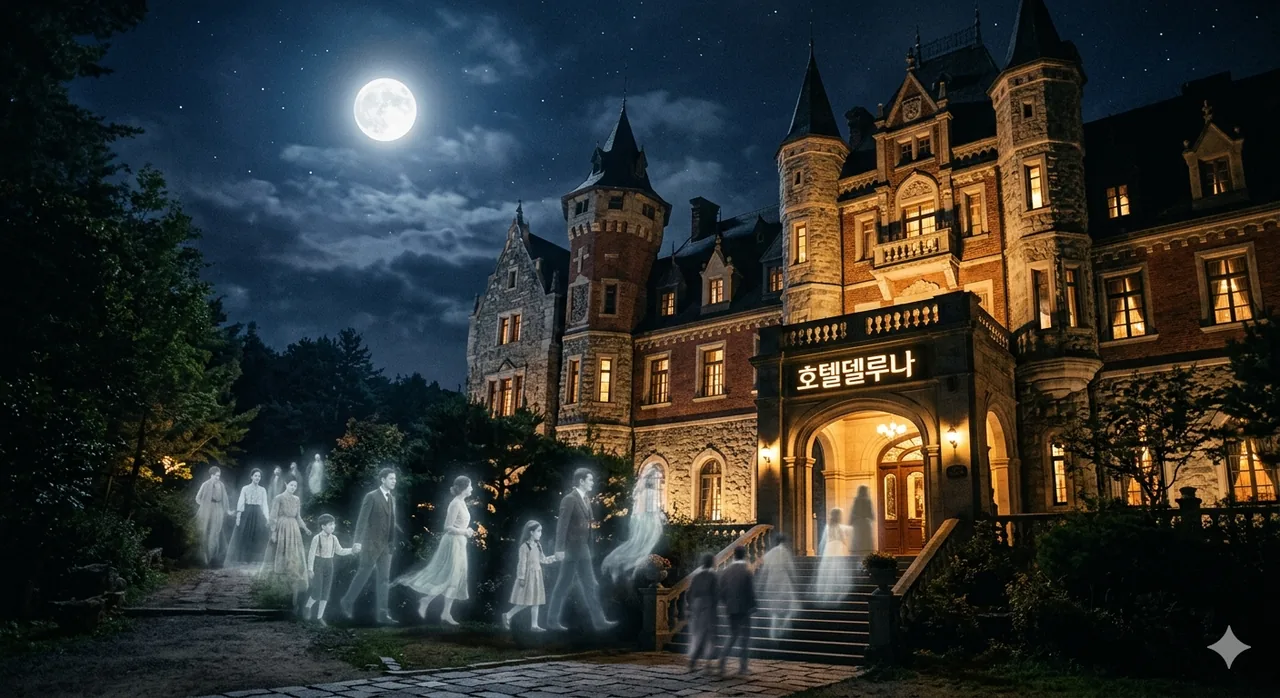
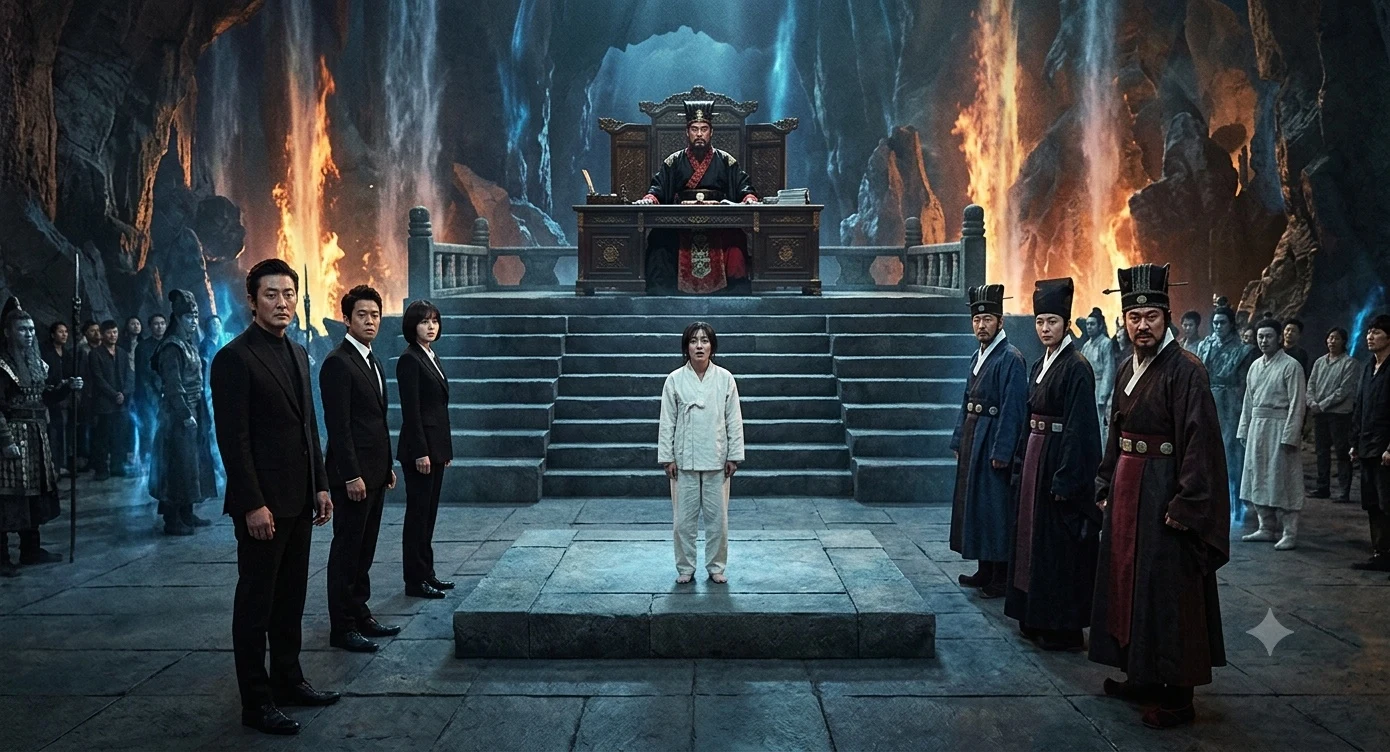
Netflix's The Moon Embracing the Sun, Explained: Why a Confucian Kingdom Still Needed Its Shamans
Theme: Belief, Death & the Uncanny
From the research behind Pause the Drama.
If you’ve watched the 2012 K-drama The Moon Embracing the Sun (해를 품은 달) — a sweeping palace romance set in a fictional Joseon — you remember the strangeness of its world. A young noblewoman, Heo Yeon-u, loses her memory and re-emerges as a shaman named Wol, “Moon.” Curses cling to the royal family. Illness is read as the work of unseen forces. And a court shaman walks the corridors of the palace as if she belongs there.
To a viewer raised on the idea of Joseon as a stern, rational, Confucian state, this should feel like a contradiction. Wasn’t this the kingdom that branded shamanism a vulgar superstition? Here’s what the drama never pauses to explain: the shaman in the palace isn’t a fantasy flourish. She’s a historical fact the official record spent five centuries trying, and failing, to erase.
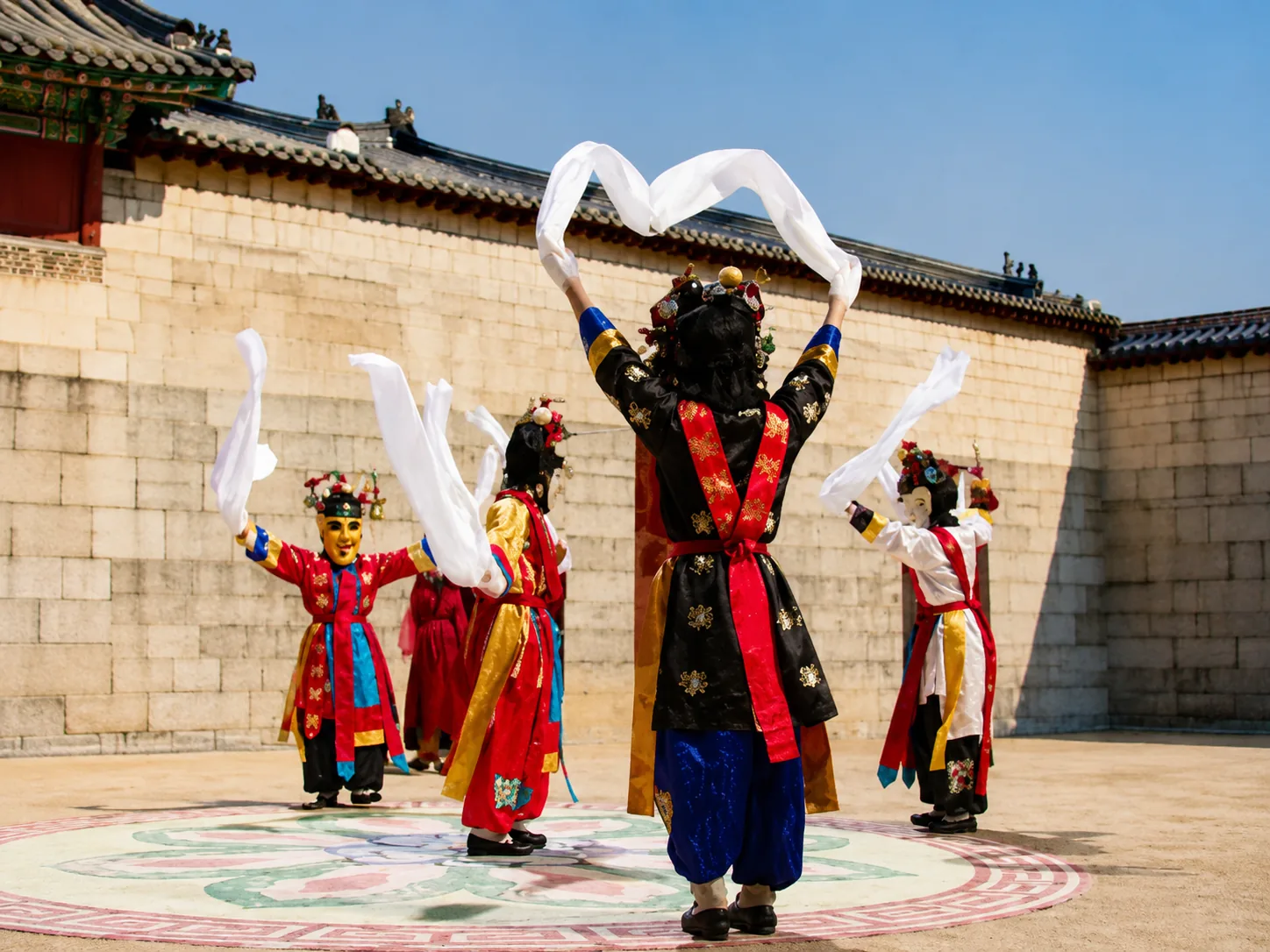
Quick answer: Netflix’s The Moon Embracing the Sun places a court shaman at the heart of a Confucian palace — and that’s historically accurate. Korean shamanism (musok) predates Confucianism by thousands of years, and Joseon’s official ideology left illness, fear, and grief entirely unaddressed. The women the state excluded from formal worship became the mudang’s clients and practitioners. For five centuries, the kingdom officially despised its shamans and quietly kept reaching for them.
Let’s unpack it.
Wait — wasn’t Joseon a strictly Confucian state?
It was. That’s exactly what makes the shaman so interesting.
When the Joseon dynasty was founded in 1392, its architects chose Neo-Confucianism as the official state ideology — a rigorous, rationalist philosophy of social order, ancestor ritual, and proper hierarchy. Within this worldview, the mudang (무당, shaman) was an embarrassment. Confucian scholars branded shamanic practice an obscene and superstitious thing, fit only for the ignorant. The state acted on that contempt: mudang were pushed to the very bottom of the social ladder, into the cheonmin (천민) outcast class, and a special tax was levied on them — a shaman tax that survived all the way to 1895.
So the official answer to “was Joseon Confucian?” is an emphatic yes. Which raises the real puzzle the drama hands you: if the state despised shamans this much, why was there still a shaman in the palace at all?
So why couldn’t a Confucian kingdom get rid of its shamans?
Because shamanism was there first — and because Confucianism, for all its grandeur, left certain human needs completely unmet.
Korean shamanism, musok (무속), is the peninsula’s indigenous spiritual tradition, far older than Confucianism, Buddhism, or Christianity. Scholars generally trace its roots back into the Bronze Age, a thousand years or more before Confucius was even born — and far longer before Neo-Confucianism arrived as a governing philosophy. By the time Joseon’s scholar-officials decided to call it superstition, musok had already been woven into Korean life for millennia. You do not legislate away something that old with a tax.
But age alone isn’t the whole answer. The deeper reason is that Confucianism and shamanism were never actually competing for the same job. Confucianism told you how to be a good son, a loyal subject, a proper ancestor. It was a philosophy of order. What it offered almost nothing of was comfort in the face of the irrational — sudden illness, a child’s fever, a barren marriage, a death, a curse, a terror in the night. Confucian ritual honored the dead; it did not heal the sick or expel the unseen. That entire emotional and spiritual territory — the part of life that can’t be governed — was left wide open. And into it stepped the mudang, with her gut (굿): a healing ritual of music, dance, and trance meant to summon spirits to cure illness and restore fortune.
In other words, the official ideology and the old faith divided the world between them. Confucianism took the daylight of social order; shamanism kept the night of fear, sickness, and grief. That is why the kingdom could revile its shamans and still, quietly, need them.
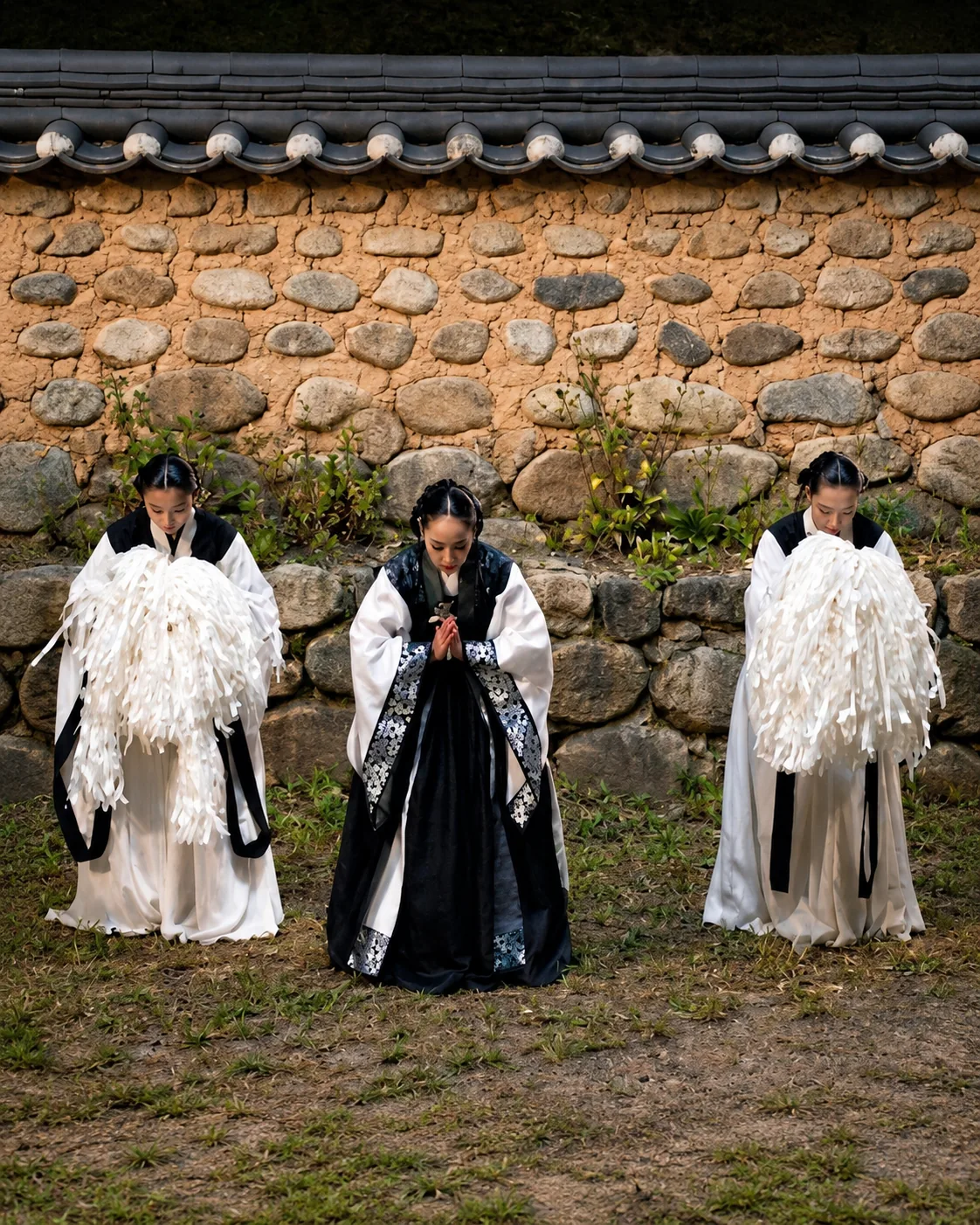
Whose faith was it, really? Women’s.
Here is the part that reframes the whole drama: in Joseon, shamanism became, above all, the religion of women.
Neo-Confucianism enforced a strict separation of the sexes that extended even into worship. Men found their spiritual life inside the Confucian system — they performed the ancestral rites, studied the classics, ran the rituals. But those same rites largely excluded women. Shut out of the official spiritual world, women turned to the one that would have them. The mudang were overwhelmingly women; their clients were overwhelmingly women; the household spirits they tended were the concerns of women — children, health, childbirth, the home. Confucian scholars even sneered that musok was “emotional” and “feminine,” as if that settled the matter. It did not. It simply marked shamanism as the spiritual channel for half the population the official order had ignored.
This is why a heroine like Wol carries more weight than a costume. The court shaman sits at the intersection of two facts the Confucian state found inconvenient: she is a woman, and she holds spiritual power — in a system built to deny her both.
The misunderstanding: “suppressed” did not mean “gone”
It’s tempting to read “the state suppressed shamanism” as “shamanism disappeared from the halls of power.” That’s the neat story — and it’s wrong.
The truth is far stranger: the Joseon state suppressed and used shamans at the same time. Even as officials taxed and demeaned the mudang, the court called on them in moments of crisis. When drought threatened the harvest, shamans were summoned for rain rituals. When epidemic or mysterious illness struck, their healing rites were not so easily refused. And behind the formal Confucian façade of the inner palace, royal women kept their own shamans — quietly, against the disapproval of the scholar-officials, but persistently. The most famous late example is Queen Min (Empress Myeongseong, 1851–1895), who is widely reported to have kept shamans as trusted advisers in the palace — a vivid sign that even at the dynasty’s highest level, the old faith never left. (Scholars debate the precise extent of court patronage, since the official records that condemn shamanism are exactly the records least likely to admit relying on it.)
So The Moon Embracing the Sun isn’t bending history when it places a shaman near the throne. It’s dramatizing one of Joseon’s most genuine contradictions: a state that wrote shamanism out of its philosophy, and then kept reaching for it in the dark.
| In The Moon Embracing the Sun | In real Joseon history |
|---|---|
| A noblewoman re-emerges as the court shaman Wol | Mudang existed at court; royal women kept shamans despite official disapproval |
| Curses and spirit illness afflict the royal family | Court crises — drought, epidemic, mysterious illness — prompted shamanic rites even under Confucian rule |
| The shaman is a woman of spiritual power | Mudang were overwhelmingly women; shamanism became the primary faith of those excluded from Confucian worship |
| The state tolerates a shaman inside the palace | Joseon officially taxed and demoted shamans yet kept summoning them — the shaman tax survived until 1895 |
| The old faith persists beneath the official order | Musok predated Confucianism by millennia; no law, tax, or condemnation ever ended it |
Key terms. Musok (무속) — Korea’s indigenous shamanic tradition, rooted in the Bronze Age, thousands of years older than Confucianism. Mudang (무당) — a shaman, overwhelmingly female in Joseon, who mediated between the living and the spirit world. Gut (굿) — the mudang’s core healing ritual: music, dance, and trance used to summon spirits and restore the sick to fortune. Cheonmin (천민) — the outcast class at the very bottom of Joseon’s social hierarchy, where mudang were officially placed.
Shadow faiths around the world — same problem, very different answers
Step back, and a fascinating pattern appears. Almost every great civilization built an official order — and almost every one of them had an older, unofficial world of spirits and magic underneath it. What differs, dramatically, is what each one did about it. Here is where Korea’s story sharpens against its neighbors and against the West.
China — absorb and outrank. Imperial China made Confucianism its state doctrine, yet teemed beneath it with the wu (巫) — shaman-healers and mediums who dealt in exorcism and talismanic cures — and with a vast world of folk religion. Organized Daoism rose partly by taking over the wu’s work: healing, exorcism, ritual protection, dressed in a more literate, institutional form. The result was less eradication than layering and competition — Confucianism for the state, Daoism and folk religion for the spirits, all coexisting. The instinct was to absorb the magic, not to burn it.
Japan — institutionalize it. Japan went furthest of all toward official magic. Its imperial court ran a literal government bureau of diviners, the Onmyōryō (陰陽寮) — the office of Onmyōdō (陰陽道), the “way of yin and yang” — patterned after Chinese practice and attested as early as 675, well before the Taihō Code of 701 codified the wider administrative system. Astrology, divination, and calendar regulation sat inside the court as a salaried office. Alongside it ran Shinto (神道), the indigenous faith of spirits (kami), with its own folk traditions of shamanic healing and spirit possession. Far from suppressing its unseen world, the Japanese court put it on the payroll.
The West — and here the path splits. Europe is the great contrast. It, too, had its high magic and its low: royal courts kept astrologers as respected advisers, and monarchs from France to England consulted the stars about war and succession. But Europe also did something East Asia broadly did not. Where Korea, China, and Japan tended to tax, tolerate, layer, or absorb their folk practitioners, early-modern Europe, in the grip of the witch trials (roughly the 15th–18th centuries), turned to extermination — prosecuting and executing tens of thousands, overwhelmingly women, for trafficking with the devil. The very same era could honor an astrologer at court and burn a village healer at the stake; elite magic was tolerated while folk magic was hunted. The contrast with Joseon is stark. Korea’s mudang were despised, taxed, and pushed to the bottom of society — but they were not, as a system, hunted to death. They were demoted, and they survived.
That single difference echoes through everything. In the Western imagination, the woman with uncanny power becomes the witch — to be feared and destroyed. In the Korean one, she becomes the mudang — to be looked down on, relied upon, and, centuries later, made the tragic heroine of a hit drama. Look again at Wol moving through that palace, and you’re not watching a fantasy. You’re watching the long survival of an old faith that the official world could never quite kill — and, in much of Europe, would have killed outright.
Coming up next
One court shaman — and we’ve traveled from Bronze Age ritual to a Confucian state’s contempt, to the spiritual world of Joseon’s women, to a queen’s secret advisers, to a Japanese bureau of diviners and a European witch trial. That’s the quiet gift of a good historical drama: a single character is a doorway. Next time, we’ll open another one.
In the next essay, we’ll take another K-drama scene that looks like pure fiction — and trace the real Korean history hiding underneath it.
Frequently asked questions
Is The Moon Embracing the Sun based on a true story? No. Its plot and characters — including the shaman Wol — are fictional, set in an unnamed, semi-fictional Joseon. But the world it draws on is real: Joseon’s Confucian state ideology, the low status of shamans, and the persistence of court shamanism despite official disapproval are all historically grounded.
If Joseon was Confucian, why were there shamans at all? Because Korean shamanism (musok) is far older than Confucianism — reaching back to the Bronze Age — and because Confucian ritual didn’t address illness, fear, grief, or the irrational. Shamans filled that gap, especially for women, who were largely excluded from official Confucian worship. The state suppressed shamans socially but still called on them in crises.
Were shamans mostly women in Joseon? Yes, predominantly. Confucianism excluded women from its formal rituals, so shamanism became, in effect, the religion of women — both as practitioners (mudang) and as clients. Confucian scholars dismissed it as “emotional” and “feminine,” which says more about who it served than about what it was.
Sources & further reading
This piece was written from the historical script and fact-check of 사뚱샘의 역사방 (SaDDungSam), drawing on Korea’s own primary records and standard reference works:
- Musok (무속) — Korean shamanism — the indigenous faith, its Bronze Age roots, the mudang’s role, and the gut healing ritual. (Encyclopedia of Korean Culture / 한국민족문화대백과)
- Shamanism in Ancient Korea — shamans among early community leaders, the mudang as female practitioners, and their persistence through history. (World History Encyclopedia)
- Joseon Dynasty — Neo-Confucianism as state ideology; the official condemnation of shamanic practice by Confucian scholars. (Encyclopædia Britannica)
- Min, queen of Korea (Empress Myeongseong) — the late-Joseon queen whose court kept shamanic advisers; her assassination in 1895. (Encyclopædia Britannica)
- On-myō-ryō (陰陽寮) — Japan’s Bureau of Yin-Yang Diviners, patterned after Chinese practice and attested as early as 675, institutionalizing divination as a salaried government office. (Encyclopædia Britannica)
- Early modern witch trials — Europe’s 15th–18th century persecution of accused witches, overwhelmingly women, executed for folk magic while court astrologers remained honored. (Encyclopædia Britannica)
Thanks for reading — see you in the next one.
This article was researched and written by K-Drama History. Source: Netflix's The Moon Embracing the Sun, Explained: Why a Confucian Kingdom Still Needed Its Shamans — K-Drama History