Netflix's The King's Affection, Explained: Why a Joseon Prince Punched a Ming Envoy Over a Haircut
Theme: Confucian Life & Ritual
From the research behind Pause the Drama.
If you’ve watched the globally beloved 2021 K-drama The King’s Affection (연모) — a romance set in Korea’s Joseon dynasty — one scene tends to stick with you. A Ming Chinese envoy, cold and arrogant, cuts off the hair of a loyal Joseon court lady, Madam Kim, as a humiliation. Moments later, the young royal Yi Hwi snaps and throws a punch straight at the envoy’s face. Many Korean viewers cheered.
It’s a deeply satisfying moment. But here’s what the drama never pauses to tell its international viewers: that punch was almost unthinkably dangerous — and the reason everyone cheered anyway is a 2,000-year-old idea about your own hair.
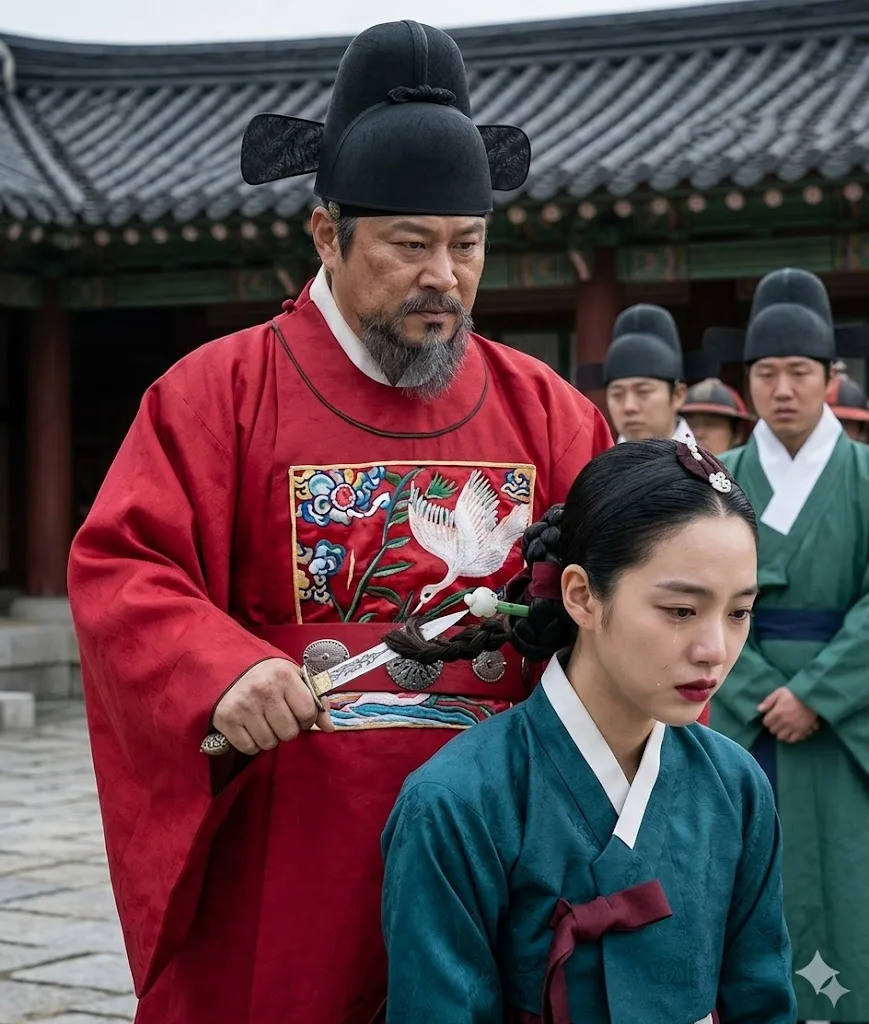 The humiliation that sets everything off — a forced hair-cutting in the Joseon court. (AI illustration)
Quick answer: In The King’s Affection, the hair-cutting scene is shocking because Joseon Korea treated hair as a gift from one’s parents. Rooted in Confucian filial piety (hyo), forcibly cutting someone’s hair wasn’t just personal humiliation — it was an attack on family honor. And because the offender is a Ming envoy, protected by Joseon’s delicate “sadae” diplomacy with China, striking him back is breathtakingly dangerous.
Let’s unpack it.
How dangerous was that punch, really?
Hitting that envoy wasn’t just an assault — it was the kind of act that could trigger a serious diplomatic crisis, and in the worst case hand Ming a pretext for military pressure.
At the time, Joseon Korea maintained a relationship with Ming China (1368–1644) called sadae (事大) — more on that loaded word in a moment. In practice, it meant Ming was formally acknowledged as the senior power in the regional order, and its envoys were received with enormous ceremony. Striking one wasn’t a tavern brawl; it was a direct affront to the “great country” — the kind of incident that could hand a powerful empire a perfect pretext for war. So when a member of Joseon’s royal house punches a Ming envoy on screen, a Korean viewer feels two things at once: the thrill of revenge — and a knot in the stomach.
Which raises the real question: if it was that dangerous, why does the scene feel so right?
So why did Koreans cheer? It comes down to one idea about hair.
Because in Confucian Korea, forcibly cutting someone’s hair wasn’t a minor insult — it was an attack on their parents.
Humiliation by hair-cutting exists in many cultures. But Joseon’s particular fury came from filial piety (효, hyo) — the Confucian devotion to one’s parents that took deeper root in Korea than almost anywhere else in East Asia. The classic text, the Classic of Filial Piety (孝經, Xiaojing), opens with a line every educated Korean once knew by heart (Chinese Text Project):
身體髮膚 受之父母 — “Our body, hair, and skin are all received from our parents.”
The logic follows cleanly: your body, down to a single strand of hair, is not really yours. It is a gift from your parents, to be kept safe. To damage it carelessly was to shame them — an act of profound un-filial disgrace. So when that envoy cut Madam Kim’s hair, he wasn’t merely humiliating her. By this worldview, he was defiling a gift from her mother and father. That is why Yi Hwi — and the audience — burns.
Here’s the single scene decoded:
| Drama scene | Historical meaning |
|---|---|
| A Ming envoy cuts Madam Kim’s hair | Forced hair-cutting was a deep public humiliation |
| Yi Hwi punches the envoy | Personal revenge collides with international diplomacy |
| The court officials panic | A Ming envoy embodied a powerful regional order |
| Korean viewers cheer | The act violated Confucian filial piety and family honor |
| The scene feels intensely political | Hair was tied to identity, rank, duty — and sovereignty |
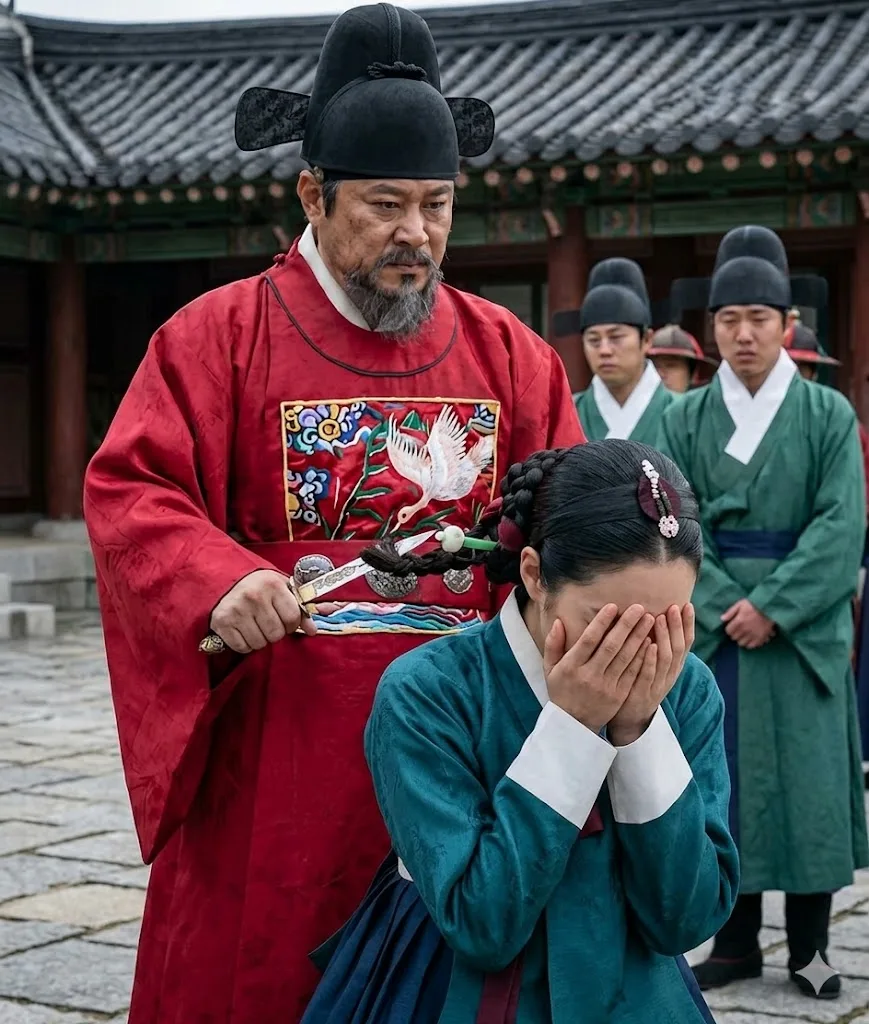 To cut someone’s hair was to defile a gift from their parents — a profound disgrace. (AI illustration)
This wasn’t just drama — Koreans really did die over their hair
The idea was so powerful it left hard marks in real history.
In 1895, near the end of the dynasty, a pro-Japanese cabinet — installed under violent pressure from Japan — enforced the Short Hair Edict (단발령), ordering Korean men to cut off their traditional topknots (Encyclopedia of Korean Culture / 한국민족문화대백과 · National Institute of Korean History / 우리역사넷). The country erupted. Many took up arms as “righteous armies” (의병, uibyeong); some, unable to bear cutting the hair their parents had given them, took their own lives rather than comply. One protest cry from the era became famous: “You may cut off my head, but you can never cut my hair.” People died over a haircut — and once you understand hyo, you understand exactly why.
Hold on — “sadae”? Was Korea a colony of China?
No — Joseon was not a Chinese colony. It kept its own king, its own laws, army, and administration — full internal sovereignty — while taking part in a hierarchical diplomatic order centered on Ming China. “Sadae” was that diplomatic etiquette, not subjugation — and it’s one of the most misunderstood ideas in all of historical K-drama.
The word sadae (事大) literally reads “serving the great.” To a modern ear that sounds alarming — “serving”? Was Korea a vassal? A colony? It was not. Joseon had its own king, its own army, its own laws, its own written script, and decided every matter within its borders. Ming did not run Joseon’s internal affairs.
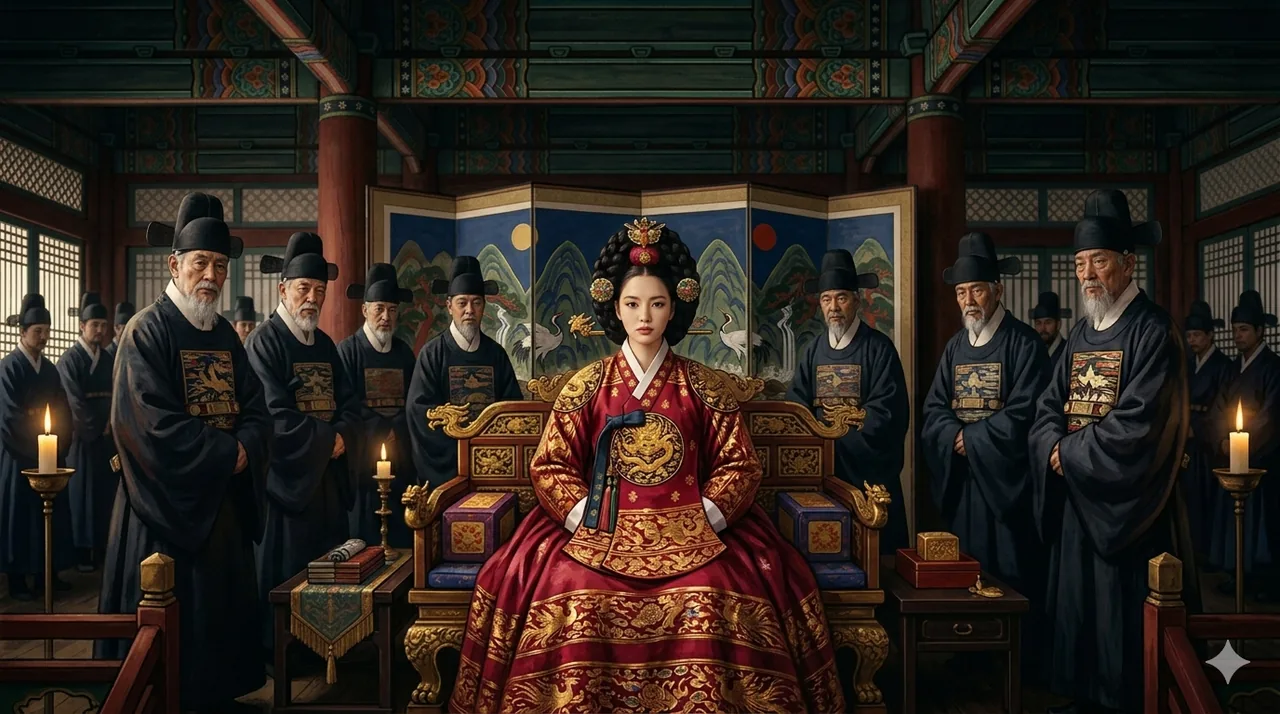
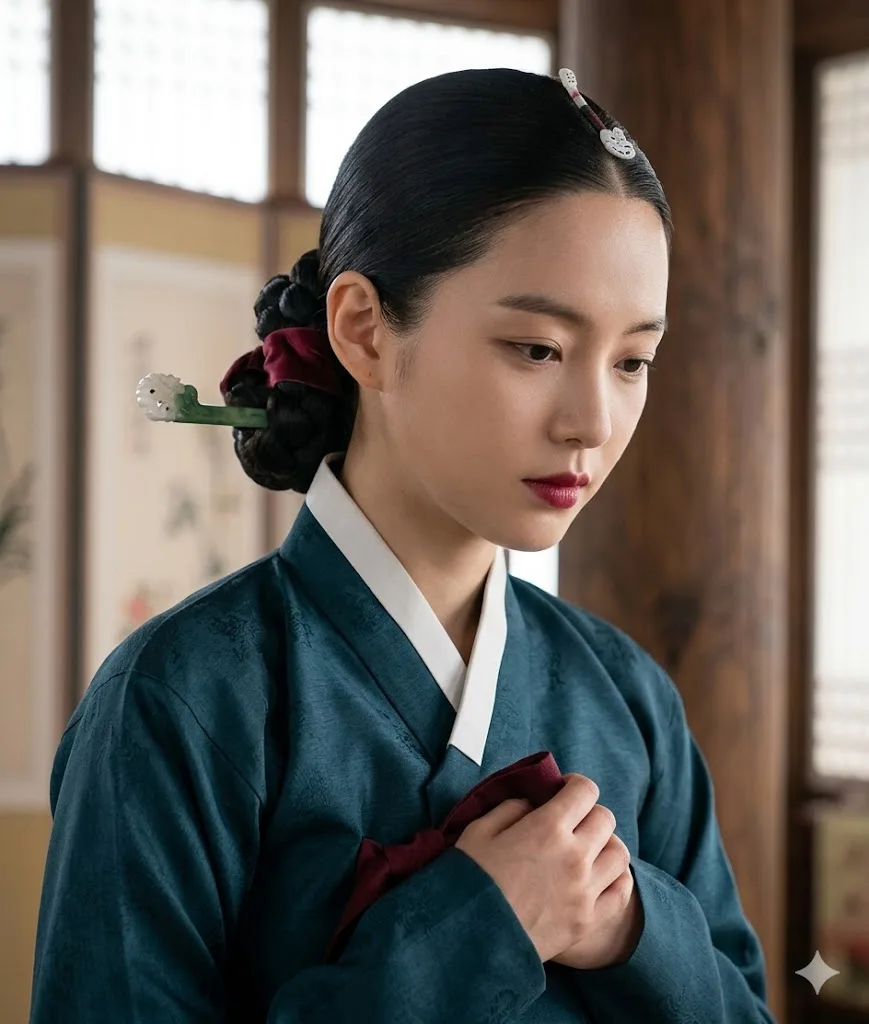 A court matron’s cheopji hairstyle. In Joseon, your hair marked your rank and identity — which is exactly why cutting it off was such a violation. (AI illustration)
So what was it? Think of it as the etiquette of an international order. East Asia shared a single framework — all under heaven (天下) — with the largest, strongest state, China, at its center. The surrounding countries acknowledged China as a kind of “big brother” and periodically sent envoys bearing gifts. This was tribute (조공).
Here’s the part that surprises people: tribute wasn’t a loss. When Joseon sent gifts to Ming, Ming sent back more valuable gifts in return — a practice called hoesa (回賜). In practice, the tribute system was a channel for trade and cultural exchange; Joseon used it to import advanced goods and books (Academy of Korean Studies, Korea100 — “The Tribute System: Understanding East Asian Diplomacy”). Formally it was “the courtesy of a junior”; practically, both sides came out ahead. It was clever diplomacy, not surrender.
If you want a Western parallel: it’s a little like how small kingdoms in medieval Europe formally recognized the authority of the Holy Roman Emperor or the Pope while still governing themselves completely. Acknowledging an authority is not the same as becoming a slave to it.
And that is why the punch is so breathtaking. Yi Hwi didn’t just strike a man — he broke the rules of a carefully built international order, handing Ming a ready-made grievance: “the rude country that abandoned propriety.” That is the kind of excuse wars are built on. The scene thrills and unsettles at the very same time.
Key terms. Hyo (효) — Confucian filial piety, devotion to one’s parents; the root of why hair mattered. Sadae (사대, 事大) — “serving the great,” Joseon’s hierarchical-but-sovereign diplomacy toward Ming China. Tribute (조공) — ceremonial gift exchange within that order, which in practice worked as mutually profitable trade. Danballyeong (단발령) — the 1895 Short Hair Edict ordering men to cut their topknots, which sparked armed resistance.
Cutting hair around the world — same act, very different meanings
Strangely enough, forced hair-cutting appears across East Asia and the West — but what it meant shifted from place to place.
China — the Queue Order. When Ming fell and the Manchu-led Qing dynasty (1636–1912) rose, the Qing imposed the Queue Order (변발령), forcing Han Chinese men to shave most of the head and braid the rest in Manchu style. To the Han, this was no mere change of hairstyle — it was an assault on identity and pride, and many resisted at the cost of their lives (Katie Page, “A Brief Discussion of the Queue in Imperial China,” Manchester Historian, 2022). The same Confucian filial piety, joined by loyalty (충) to the fallen dynasty, fueled the resistance.
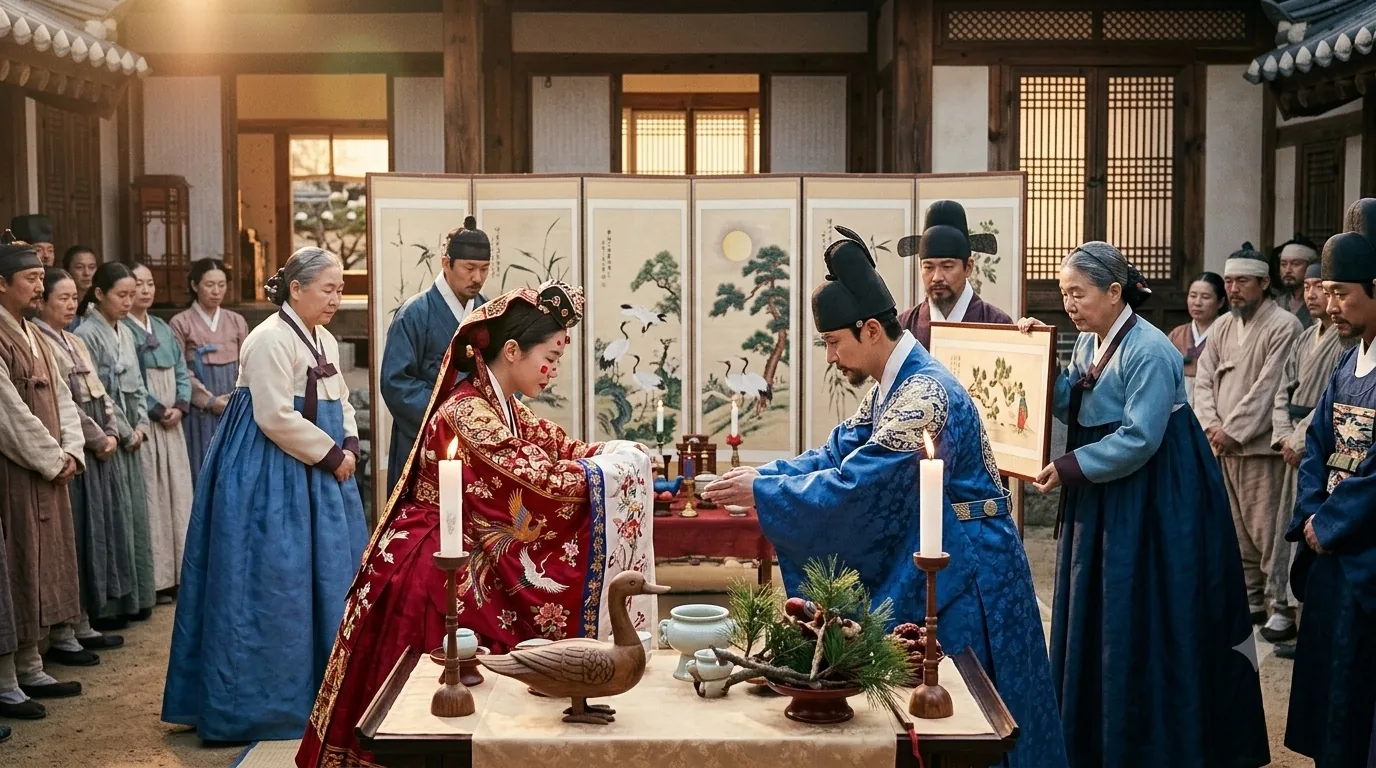
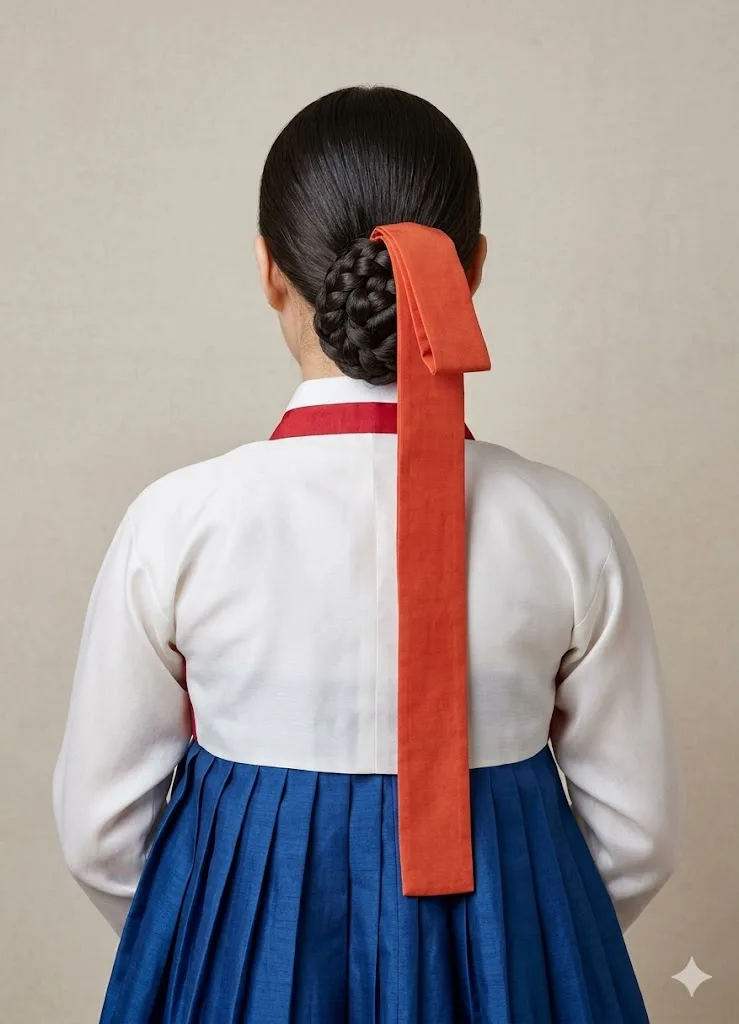 A court lady’s saeang hairstyle. Where Qing China forced the queue on Han men, Joseon held onto its own traditions of hair. (AI illustration)
Japan — the samurai’s honor. After the Meiji Restoration of 1868, Japan rapidly dismantled its old warrior culture to build a modern, Western-style state. In 1871, the danpatsurei edict permitted men to cut their topknots for Western haircuts; in 1876, even wearing the sword — the samurai’s very emblem — was banned by the Haitō Edict (KCP International, “The Abolishment of the Samurai Class”). But in Japan the wound was less about filial piety than about the honor of the samurai: the hairstyle and the sword were the warrior’s status and pride.
The West — Samson, and the mark of the traitor. The West has its own hair legend: the biblical hero Samson, whose god-given strength lived in his hair — until his lover Delilah cut it and he was captured in an instant (Judges 16; Encyclopaedia Britannica, “Samson”). If East Asia had “body and hair received from our parents,” the West had Samson. Yet in actual Western history, hair-cutting is most infamous as a tool of punishment and public shame. After World War II, French women accused of collaborating with Nazi Germany were dragged into public squares and forcibly shaved — branded before the crowd as traitors (Imperial War Museums, “Les Tondues and the Liberation of France”).
Same act — cutting hair — and yet: to one person it was the symbol of filial duty; to another, loyalty and identity; to another, a warrior’s honor; to another, god-given strength; and to another, an indelible mark of shame. Look closely at that single scene in The King’s Affection, and you begin to see the grain of history running clear across the world.
Coming up next
One punch — and we’ve traveled from a Joseon court to a Confucian classic, to men dying over topknots in 1895, to the tribute halls of Ming China, to a French town square in 1945. That’s the quiet gift of a good historical drama: a single scene is a doorway.
In the next essay, we’ll take another K-drama scene that looks like pure fiction — and trace the real Korean history hiding underneath it.
Frequently asked questions
Is The King’s Affection based on a true story? No. Its characters and plot are fictional, set against the real backdrop of Korea’s Joseon dynasty (1392–1910). The customs it shows — court ranks, Confucian values, the tributary relationship with Ming China — are historically grounded, even though Yi Hwi and the specific events are invented.
Why was cutting hair such a big deal in Joseon Korea? Confucian filial piety (효, hyo) taught that your body and hair are a gift from your parents — captured in the line “身體髮膚 受之父母” (“our body, hair, and skin are received from our parents”). Damaging them shamed your parents, so a forced haircut was an attack on family honor, not merely a personal insult.
What does “sadae” mean — was Korea a colony of China? No. Sadae (事大, “serving the great”) was diplomatic etiquette within a hierarchical regional order, not subjugation. Joseon kept its own king, laws, army, and internal sovereignty while formally honoring Ming China as the senior power and exchanging tribute — which functioned, in practice, as mutually profitable trade.
Further reading
This piece was written from the historical script and fact-check of 사뚱샘의 역사방 (SaDDungSam). Key sources are cited inline above. For broader reading:
- Sadae & the Ming tributary order (조공) — a scholarly reassessment of whether Joseon was a vassal or a sovereign partner. (Korea Journal / KCI — “Was Joseon a Model or an Exception?”)
- The Eulmi Righteous Army (을미의병, 1895–96) — the armed resistance triggered by the Short Hair Edict. (National Institute of Korean History / 우리역사넷)
Thanks for reading — see you in the next one.
This article was researched and written by K-Drama History. Source: Netflix's The King's Affection, Explained: Why a Joseon Prince Punched a Ming Envoy Over a Haircut — K-Drama History