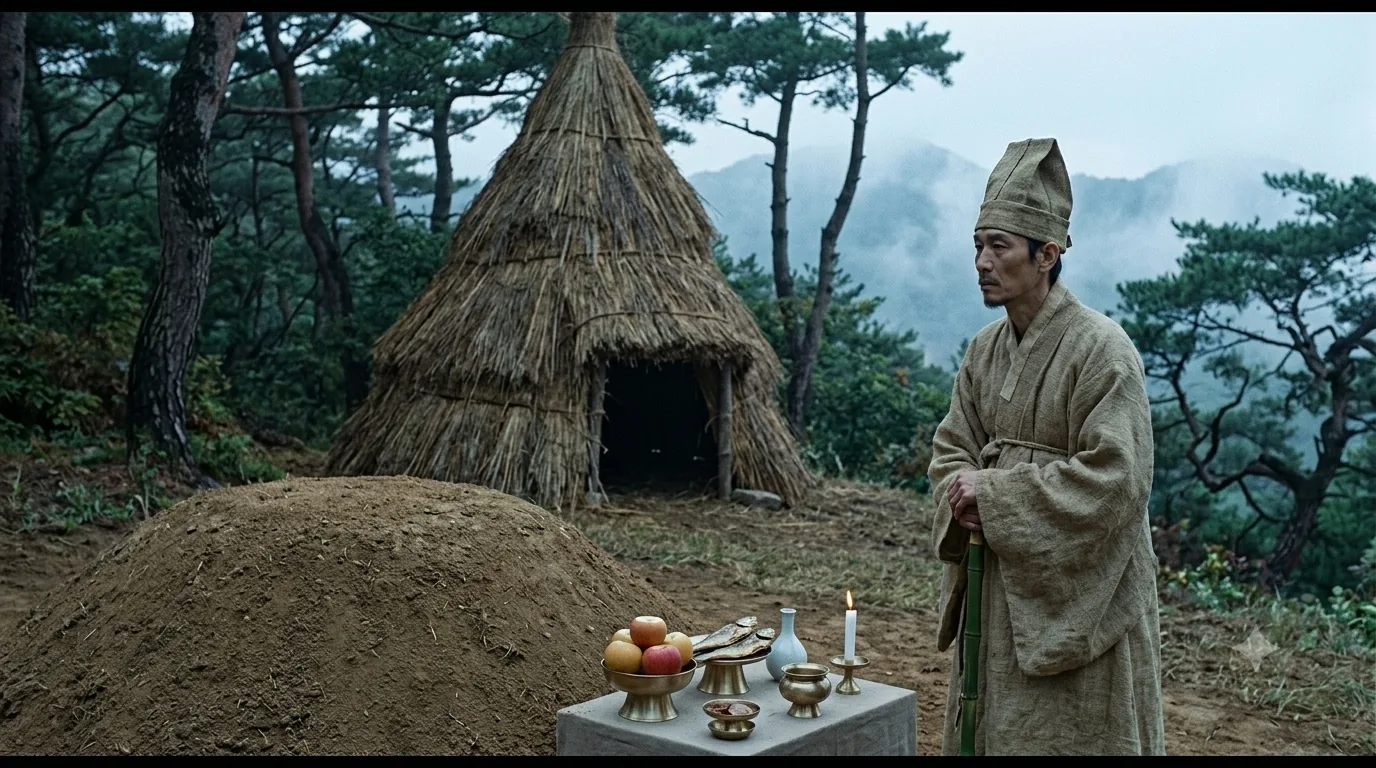
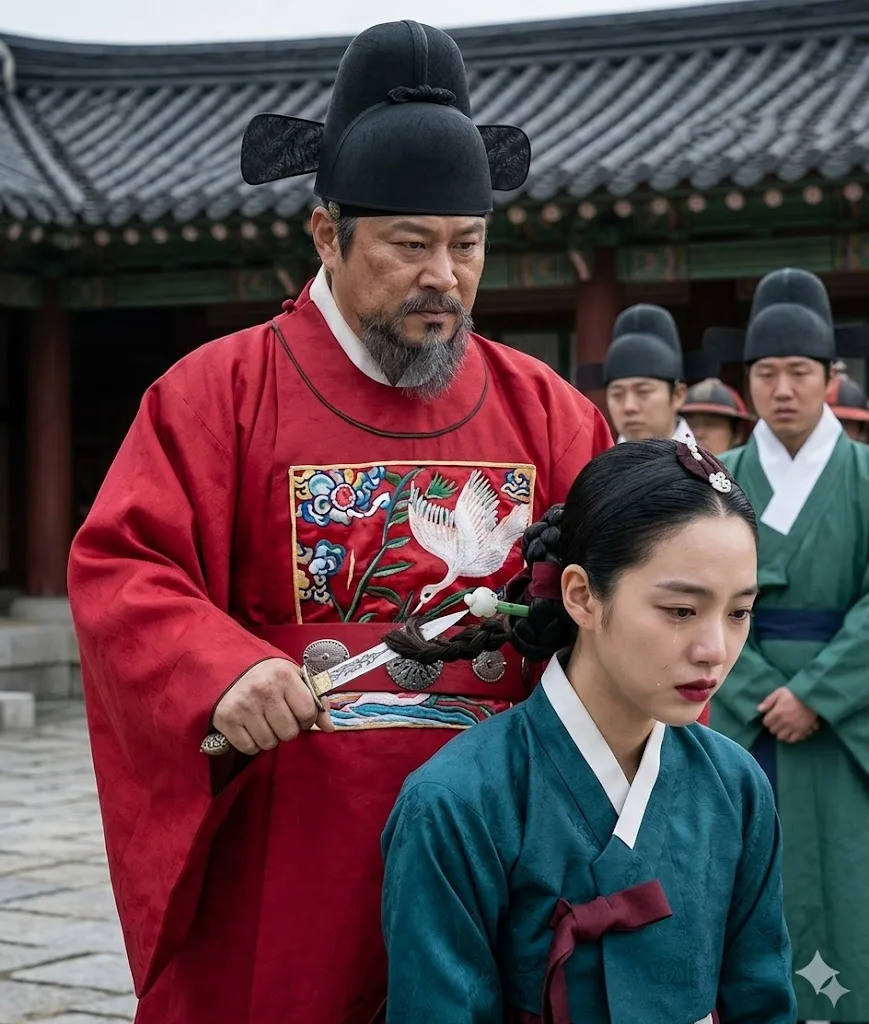
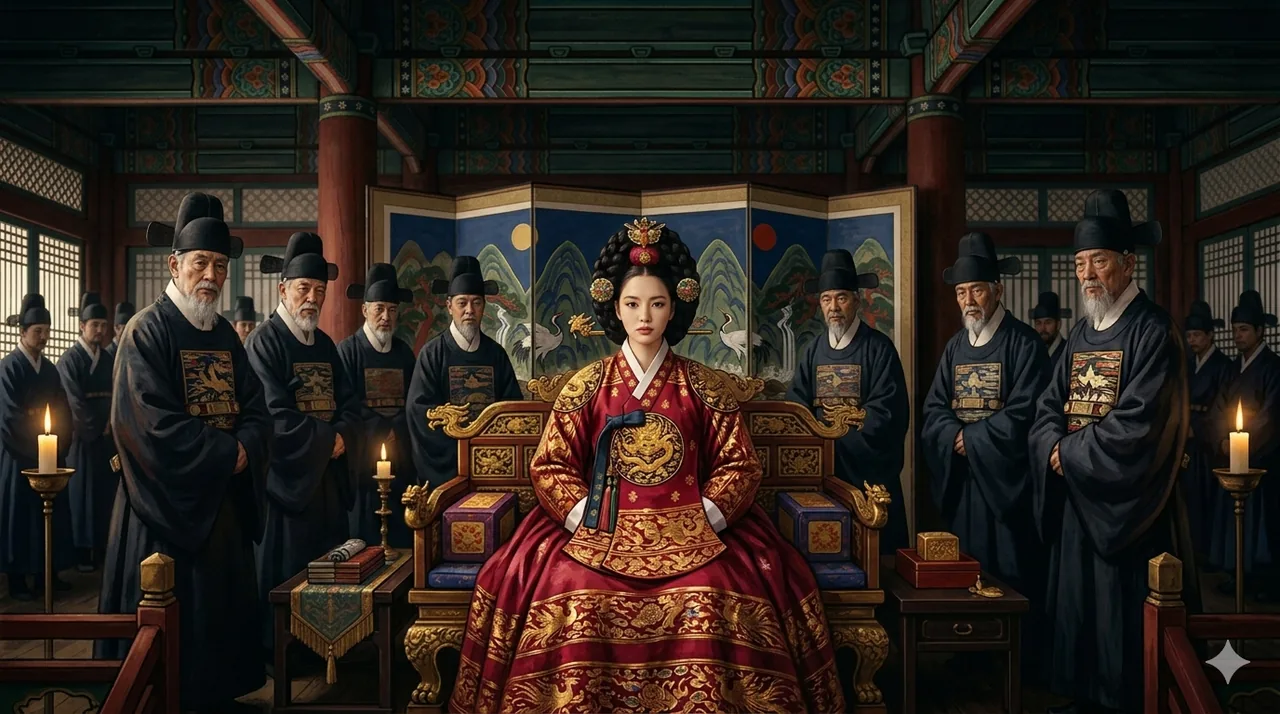
Flower Crew: Joseon Marriage Agency, Explained: Why Joseon Marriage Was a Family Affair, Not Just a Love Story
Theme: Confucian Life & Ritual
From the research behind Pause the Drama.
If you’ve watched the 2019 JTBC drama Flower Crew: Joseon Marriage Agency (꽃파당: 조선혼담공작소) — the one where a blacksmith-turned-king still can’t just marry the woman he loves — you know the premise sounds almost modern: Ma Hoon, Yeong-soo, and Do-joon run Joseon’s top matchmaking firm, a 90-percent-success-rate operation that arranges other people’s weddings for a living. When the newly crowned Lee Soo wants to marry his first love, Gae-ttong, even a king can’t just decide it. He has to hire the agency.
Here’s what the comedy glides past for its international viewers: the agency itself is a comic invention, but the social role it professionalizes was real. Joseon families commonly relied on an intermediary to carry proposals, exchange information, and shield both households from the embarrassment of a face-to-face rejection — because a wedding had far less to do with the two people getting married than with the two families behind them. The Flower Crew stages a lavish ceremony for Lee Soo and Gae-ttong. The groom never makes it to the altar — he’s abducted by palace agents hours before, on what was supposed to be his wedding day — and the agency is left holding the bill and a ruined reputation. A wedding, in other words, was infrastructure: paperwork, gifts, dates chosen by fortune-tellers, and a business built entirely around getting it right, because getting it wrong could ruin more than one household.
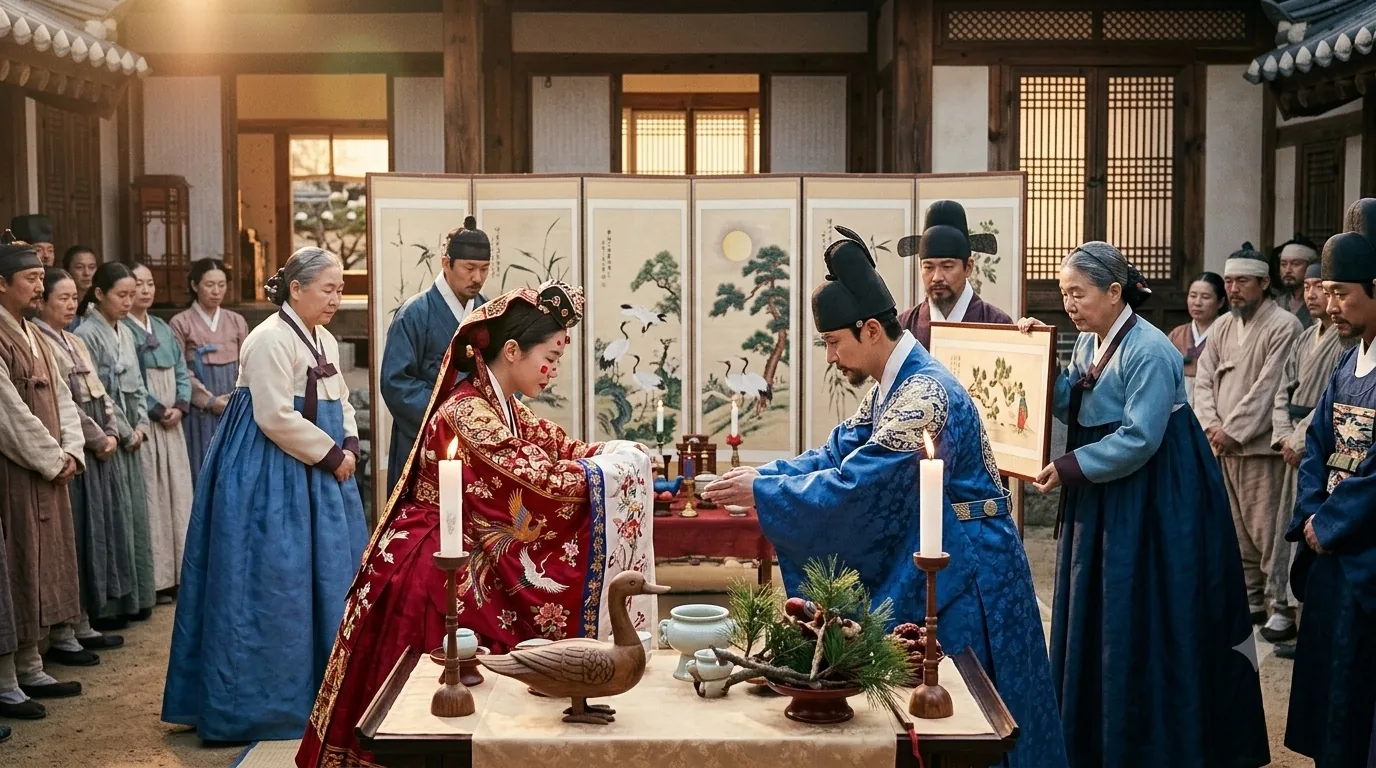
Quick answer: Flower Crew: Joseon Marriage Agency turns Joseon matchmaking into a fictional professional business, but the intermediary role itself was real. Marriages were commonly negotiated between families through a matchmaker (jungmae), followed by formal exchanges — the groom’s birth-chart document (sajudanja), the selection of an auspicious date, and a betrothal box (ham) holding a marriage letter and gifts. Personal preference could matter, but a marriage also joined family lines, property, status, and ancestral obligations — so getting a step wrong could damage a family’s standing for a generation.
Let’s unpack it.
Why did Joseon need professional matchmakers at all?
Because a Joseon marriage wasn’t really a contract between a man and a woman — it was a contract between two households, and households don’t fall in love.
In the Confucian framework Joseon inherited, marriage’s core purpose was to link two family lines, produce an heir to continue ancestor worship, and often to shore up or extend a family’s social standing. Personal affection between the couple was, at best, a hoped-for side effect. Given those stakes, families rarely negotiated directly — a rejected proposal made face-to-face was a serious insult. Instead they used a go-between: the jungmae (중매), known by several folk names — jungsin-abi (중신아비), jungsin-eomi (중신어미), jungsin-halmi (중신할미), maepa (매파) — usually a relative or acquaintance trusted by both sides, who carried proposals, haggled over terms, and absorbed the awkwardness of a “no” so the families never had to hear it from each other. Flower Crew’s agency exaggerates this into a corporate operation for comic effect, but the underlying job — professional intermediary standing between two families who cannot simply ask each other directly — is real.
What actually happened between “yes” and the wedding day?
Choosing the wedding date came relatively late in the process — after the match and several ritual exchanges had already been formalized. Before anyone set a date, both families worked through a sequence of ritual paperwork.
Confucian ritual texts prescribed six formal steps, the Six Rites (육례, yukrye): napchae (납채, the formal marriage request), munmyeong (문명, asking the bride’s name — usually folded into the first step), napgil (납길, confirming a good match through divination), napye (납폐, sending betrothal gifts), cheonggi (청기, fixing the wedding date), and chinyeong (친영, the groom “fetching” the bride) (Encyclopedia of Korean Culture, 납채; 청기). In everyday Joseon practice, families followed a more practical, folk version of the same idea — roughly uihon (의혼, discussing the match), napchae (formalizing it), yeongil (연길, picking the date), napye (sending the ham), chorye (초례, the ceremony itself), and ugwi (우귀, the bride’s eventual move to the groom’s household) (National Institute of Korean History, 혼례와 혼서).
A key early document was the sajudanja (사주단자) — a paper recording the groom’s saju (사주), the “four pillars” of his birth year, month, day, and hour. After the families had provisionally agreed to the marriage, the groom’s household sent his sajudanja; it formally recorded his birth data and was used above all in selecting an auspicious wedding date, after which the bride’s family returned a date-setting document (yeongildanja). Families could also weigh compatibility beliefs, but the sajudanja’s documented ritual role was to formalize the match and fix a date — not to serve as a simple pass-or-fail matchmaking test.
Why did the groom’s family send a mysterious wooden box the night before the wedding?
Because paperwork alone wasn’t enough — the engagement had to be sealed with something you could hold.
That box was the ham (함), sent as part of the napye (납폐) step and carried to the bride’s house by a hamjinabi (함진아비, literally “the man who carries the ham”), often a friend of the groom, sometimes accompanied by a noisy, celebratory procession through the streets — a custom that still survives in modern Korean weddings, minus most of the historical stakes. It was commonly brought the night before or the morning of the wedding, though the exact timing and contents varied by period, region, and household. Inside was a honseo (혼서, the formal marriage letter) thanking the bride’s family for the match and confirming the agreed date, along with bolts of cloth for the bride’s wedding clothes and other betrothal items, which varied by region and by how wealthy the family was (National Institute of Korean History, 혼례와 혼서). Note what the ham was not, at least in principle: a payment for the bride. It functioned closer to a ceremonial, documented pledge than a purchase price. That said, the ham wasn’t the whole financial picture: separately from it, both families typically prepared substantial dowry goods and household property. So it’s the ham itself — not Joseon marriage as a whole — that was symbolic rather than a wealth transfer, a distinction that matters once you start comparing Joseon’s system to other marriage economies around the world, which we’ll get to.
On the wedding day itself, the bride’s face carried its own layer of meaning: a dab of red rouge, yeonji (연지), on both cheeks, plus — for a first-time bride specifically — an extra dot on the forehead, the combination popularly called yeonji-gonji. Here the record gets genuinely uncertain, and it’s worth being honest about that rather than repeating drama trivia as fact. Facial rouge itself is old in Korea — Goguryeo tomb murals from roughly the 5th–6th century already show women with reddened cheeks — but scholars disagree sharply on where the practice came from and why red specifically marked a bride: some point to a shamanistic belief that red repelled evil spirits, others to Chinese court customs, and Joseon-era scholars themselves floated competing theories tracing it to Xiongnu or Mongol influence transmitted through China or Goryeo — though this last transmission theory rests on thin evidence and shouldn’t be presented as settled (Encyclopedia of Korean Culture, 연지). What the record does support is the function: only a bride on her first marriage wore the full cheek-and-forehead rouge, marking her specifically as young and unmarried — a remarrying bride skipped it.
Here’s the drama’s premise translated into the historical machinery underneath it:
| In Flower Crew | In real Joseon history |
|---|---|
| A corporate agency arranges marriages for a fee | Matchmaking was real but informal — a trusted relative or jungmae, not a business |
| The couple falls for each other, then gets matched | The match was decided by family status and saju compatibility, not romantic feeling |
| One lavish ceremony, arranged in what looks like days | Real matches moved through months of ritual paperwork (the Six Rites) before a wedding date was even set |
| The king personally needs the agency’s help to marry | Royal weddings followed an even more elaborate version of the same rites, run by a dedicated state office (Garye-dogam, 가례도감) |
| The wedding is presented as the finish line | For many couples, the wedding was a midpoint — the bride might not move to the groom’s household for months or years afterward |
So did the bride move in with the groom’s family — or the other way around?
This is the part where Joseon custom didn’t match the Confucian ideal for a very long time, and it’s worth walking through carefully rather than flattening it into a clean before/after story.
The older, pre-Confucian-reform pattern was namgwiyeoga-hon (남귀여가혼, “the groom returns to the wife’s house”) — the groom married at the bride’s family home and, at least for some initial period, lived there. The custom traces back through Goguryeo and Goryeo practice and remained the norm well into the Joseon period (Encyclopedia of Korean Culture, 남귀여가). Joseon’s Neo-Confucian reformers found this deeply uncomfortable: it inverted the hierarchy they wanted, where a wife should join her husband’s household, not the reverse. Drawing on the Chinese-derived ritual manual Zhu Xi’s Family Rituals (朱子家禮, Jujagarye), scholars like Seo Gyeong-deok and Jo Sik pushed for chinyeong (친영) — the groom traveling to fetch the bride and bringing her back to be married and to live at his family’s home from the start.
They failed to replace Korea’s older custom outright — but over time they did shorten the bride’s stay with her natal family and strengthen the expectation that she would ultimately join her husband’s lineage. Rather than abandon their own custom, families gradually blended the two: the ceremony itself moved from a three-day process to a same-day meeting between bride and groom (dangil sanggyeollye, 당일 상견례), and by the 16th century a compromise called banchinyeong (반친영, “half-chinyeong”) had emerged among yangban families in Seoul — the main ceremony still took place at the bride’s home, but the newlyweds performed a formal greeting of the groom’s parents (gugojirye, 구고지례) the next day or so, rather than the couple staying at the bride’s home for the traditional extended period (Encyclopedia of Korean Culture, 반친영; 친영). Even banchinyeong never became dominant — leaving the bride’s home again so soon proved impractical for many families, and the older pattern, in modified forms, persisted stubbornly into the later Joseon period. ★
That doesn’t mean the Confucian push failed entirely, though — it just didn’t win on the terms it originally set out. Over the same long stretch, even where the literal chinyeong rite wasn’t fully practiced, the expectation that a wife now belonged to her husband’s household — rather than remaining a daughter of her own family — steadily strengthened, even as the ceremony itself often still took place, in whole or in part, at the bride’s home. The ritual geography didn’t fully change; the ideology around it did.
Key terms. Jungmae (중매) — the matchmaker who negotiated a marriage between two families so they never had to approach each other directly. Sajudanja (사주단자) — the groom’s “four pillars” birth-data document, sent so the bride’s family could check astrological compatibility. Ham (함) — the betrothal box, delivered by a hamjinabi, containing the marriage letter (honseo) and gifts of cloth, not primarily money. Chinyeong (친영) — the Chinese-derived rite requiring the groom to fetch the bride to his own family home; only partially and unevenly adopted across the Joseon period.
Why does a Joseon wedding feel so different — and so familiar — once you compare it worldwide?
Nearly every civilization treated marriage, at some level, as bigger than the two people in it — but each one built a different machine to manage that fact, and the shape of the machine tells you what each society actually feared losing. Set Joseon beside China, Europe, and India, and Flower Crew’s matchmaking agency stops looking like a quirky sitcom premise and starts looking like a very old, very serious kind of institution wearing a comedy’s clothes.
Korea — a paper trail designed to prevent a family from losing face. Joseon’s system was built around avoiding direct confrontation and irreversible mistakes: a go-between absorbed rejections, a birth-chart document screened for bad omens before anyone got emotionally or financially committed, and a documented gift (the ham) turned a private understanding into something both households could point to later. The emphasis wasn’t on wealth transfer — it was on process, paperwork, and reputation management. A matchmaking agency like the one in Flower Crew is a very natural (if exaggerated) descendant of that logic: a marriage was too procedurally important to leave to two individuals negotiating it themselves.
China — the source code Joseon was adapting. Joseon’s Six Rites weren’t a Korean invention; they were drawn from classical Chinese ritual literature, most directly the Yili (儀禮), specifically its “Rites for the Betrothal of a Scholar” (士昬禮) chapter, which lays out the same sequence — proposal, name inquiry, confirming a favorable match, sending betrothal gifts, fixing a date, and the groom fetching the bride (Chinese Text Project, Yili). Centuries later, Zhu Xi’s Family Rituals repackaged and simplified these classical rites for practical use across East Asia, and it was this Song-dynasty manual — not the ancient Yili directly — that Joseon’s Confucian reformers actually imported and tried to enforce. In other words: what looks like a distinctly “Korean” wedding tradition is, structurally, an imported Chinese ritual template that Korea then bent, resisted, and folk-adapted for roughly five centuries — the chinyeong fight being the clearest evidence that the import never fully took.
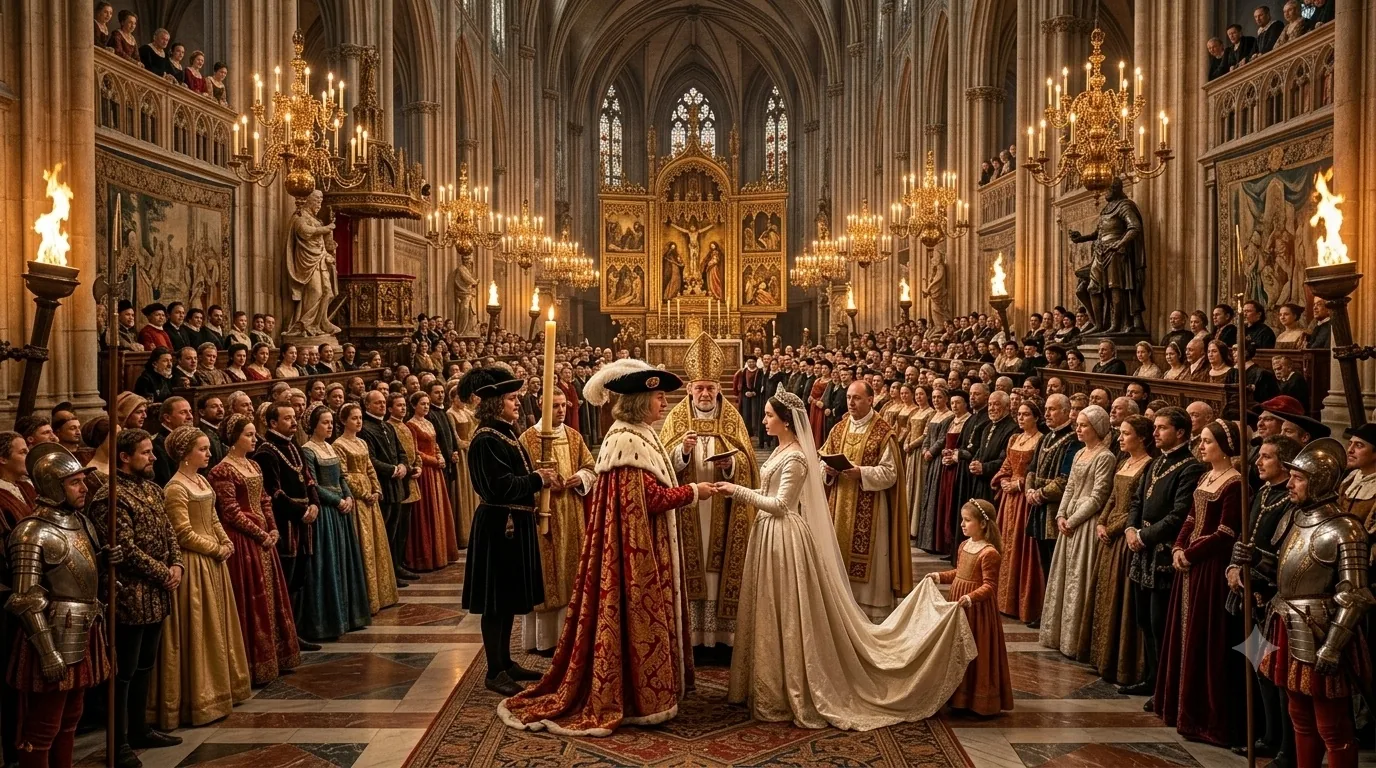
Europe — marriage as foreign policy. If Joseon’s matchmaking was about protecting a family’s local reputation, the marriage strategy of Europe’s ruling houses was about winning without fighting. No case makes this more vivid than the House of Habsburg. A Habsburg marriage into the Burgundian and then Spanish royal lines — Maximilian I’s 1477 marriage to Mary of Burgundy, then his son Philip’s to Joanna of Castile in 1496 — eventually brought the Habsburgs the Netherlands, Burgundy, and the crowns of Castile and Aragon under his grandson Charles V (Encyclopædia Britannica, House of Habsburg). It’s often romanticized as bloodless expansion, but the reality was messier: marriage opened the doors, while a chain of untimely deaths, contested successions, and no small amount of war actually carried the inheritances through. The line summing up the strategy, attributed to the Hungarian king Matthias Corvinus, became a proverb: Bella gerant alii, tu felix Austria, nube — “Let others wage war; you, happy Austria, marry.” European aristocratic marriages typically came with a dowry moving from the bride’s family to the new couple (or to the groom), meant to help the new household get established — a direction of wealth transfer often contrasted with the Joseon ham. But the two aren’t simply mirror images: the ham was a symbolic, documented pledge from the groom’s side rather than a dowry, and they differ enough in function and legal character that it’s more accurate to call them different institutions than opposites. It’s also worth remembering that a great dynasty’s marriage strategy and an ordinary family’s wedding are very different things to set side by side.
India — the same family logic, running the opposite economic direction. Dowry in India runs the other way from Joseon’s ham: wealth moves from the bride’s family toward the groom’s. Its scale and social weight grew heavy enough that dowry-related abuse and “dowry deaths” became a serious social problem, and India’s parliament banned the giving, taking, and demanding of dowry in the Dowry Prohibition Act of 1961 (Encyclopædia Britannica, Dowry Prohibition Act) — though the custom and its harms have persisted since. The ham and the dowry differ in the direction wealth moves and in their legal character, so they aren’t simple mirror images. But they meet at the point this whole comparison keeps returning to: a marriage was never the private business of two individuals — it bound together the economic and social standing of two families.
Four windows on one truth: Joseon protected a family’s reputation with paperwork and a go-between; China supplied the classical ritual template Joseon reformers sought to adapt; Europe’s ruling houses treated marriage as dynastic strategy; and India’s dowry shows the same family-over-couple logic running in the opposite economic direction. They were very different institutions across very different eras — but none of them treated a wedding as simply the private business of two people in love. Look again at Ma Hoon’s matchmaking agency solemnly discussing a client’s saju compatibility, and it’s not just a period-drama gag — it’s a centuries-old risk-management system, played for laughs.
Coming up next
One king who couldn’t just marry the woman he loved — and we’ve traveled from a matchmaker’s birth-chart paperwork to a mysterious wedding-night box, to a Chinese ritual classic two thousand years old, to a Habsburg wedding that redrew the map of Europe, to a modern Indian law still contending with a dowry custom it banned decades ago. That’s the quiet gift of even a comedy costume drama: underneath the jokes, there’s a real system.
In the next essay, we’ll take another K-drama scene that looks like pure fiction — and trace the real Korean history hiding underneath it.
Frequently asked questions
Is Flower Crew: Joseon Marriage Agency based on a true story? No. The king, the matchmaking agency, and the romance plot are fictional, set in an unspecified Joseon reign. But the marriage machinery it depicts — matchmakers, birth-chart exchanges, betrothal gifts, and a wedding that could collapse the families involved — reflects real Joseon custom.
What was a sajudanja in Joseon Korea? A sajudanja (사주단자) was a document listing a prospective groom’s four pillars (사주) — the year, month, day, and hour of his birth — sent to the bride’s family early in the marriage process so they could check astrological compatibility before agreeing to the match.
What was inside the ham (함), the wedding box? The ham was a box the groom’s family sent to the bride’s house, usually the night before or on the wedding day, carried by a hamjinabi (함진아비, the “ham-bearer”). It held the honseo (혼서, marriage letter) along with cloth for the bride’s clothing and other betrothal gifts — not primarily cash or land.
Did a Joseon groom really move into his bride’s house after the wedding? Often, yes — at least for a time. The older custom, namgwiyeoga-hon (남귀여가혼), had the groom marry and initially live at the bride’s family home. Confucian reformers pushed for the opposite Chinese-style chinyeong (친영), where the bride moved to the groom’s house immediately. In practice Joseon never uniformly switched; compromises like banchinyeong coexisted with the older pattern for centuries.
Was Joseon marriage arranged only for the elite, or for everyone? Family involvement and intermediaries were not limited to the elite, but the full documentary rites described in ritual manuals were practiced most elaborately by royal and yangban households — the ones with the most property, status, and lineage records at stake. Poorer families often followed abbreviated or locally adapted forms, with less emphasis on formal documents.
Sources & further reading
This piece was written from the historical script and fact-check of 사뚱샘의 역사방 (SaDDungSam). Key sources are cited inline above. For broader reading:
- The Six Rites in the Yili (儀禮) — the classical Chinese ritual text Joseon’s marriage customs ultimately trace back to. (Chinese Text Project, “Shi Hun Li”)
- Namgwiyeoga-hon vs. chinyeong — the centuries-long, never-fully-resolved tension between Korea’s older matrilocal-leaning wedding custom and the Confucian ideal imported from China. (Encyclopedia of Korean Culture, 남귀여가 / 반친영)
- The Dowry Prohibition Act of 1961 — India’s legal effort against a dowry custom, and a contrast in the direction marriage-related wealth moves. (Encyclopædia Britannica)
Thanks for reading — see you in the next one.
This article was researched and written by K-Drama History. Source: Flower Crew: Joseon Marriage Agency, Explained: Why Joseon Marriage Was a Family Affair, Not Just a Love Story — K-Drama History