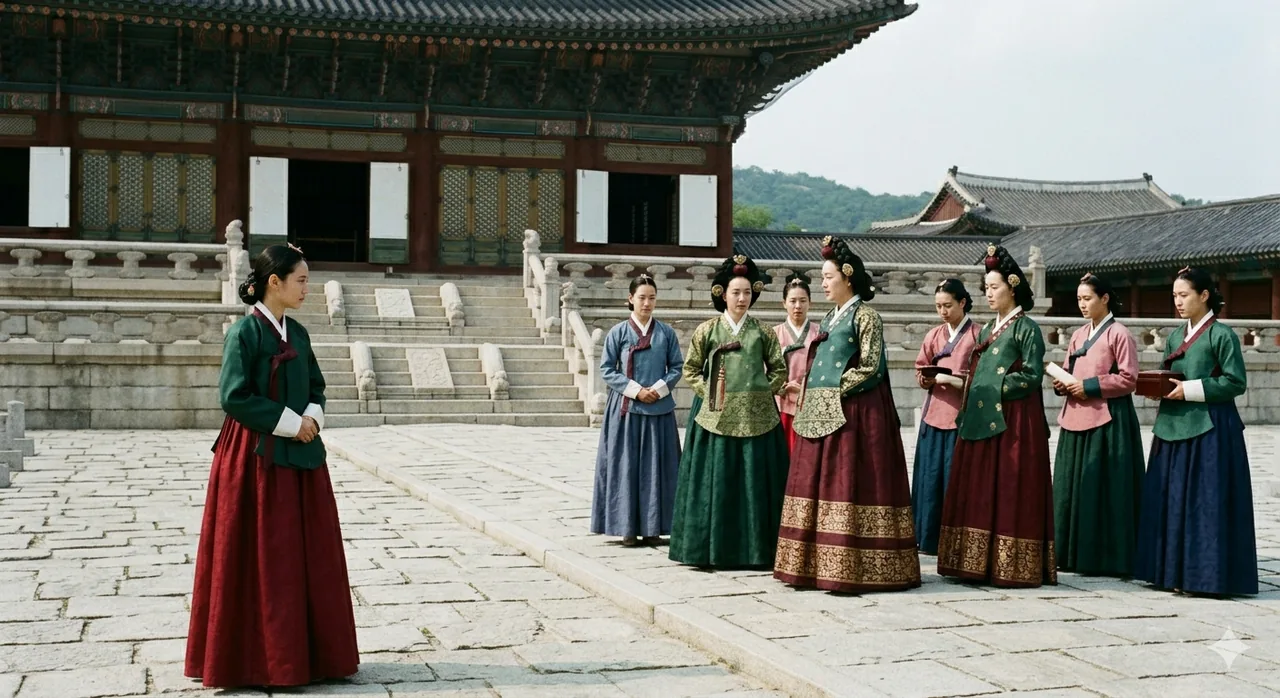
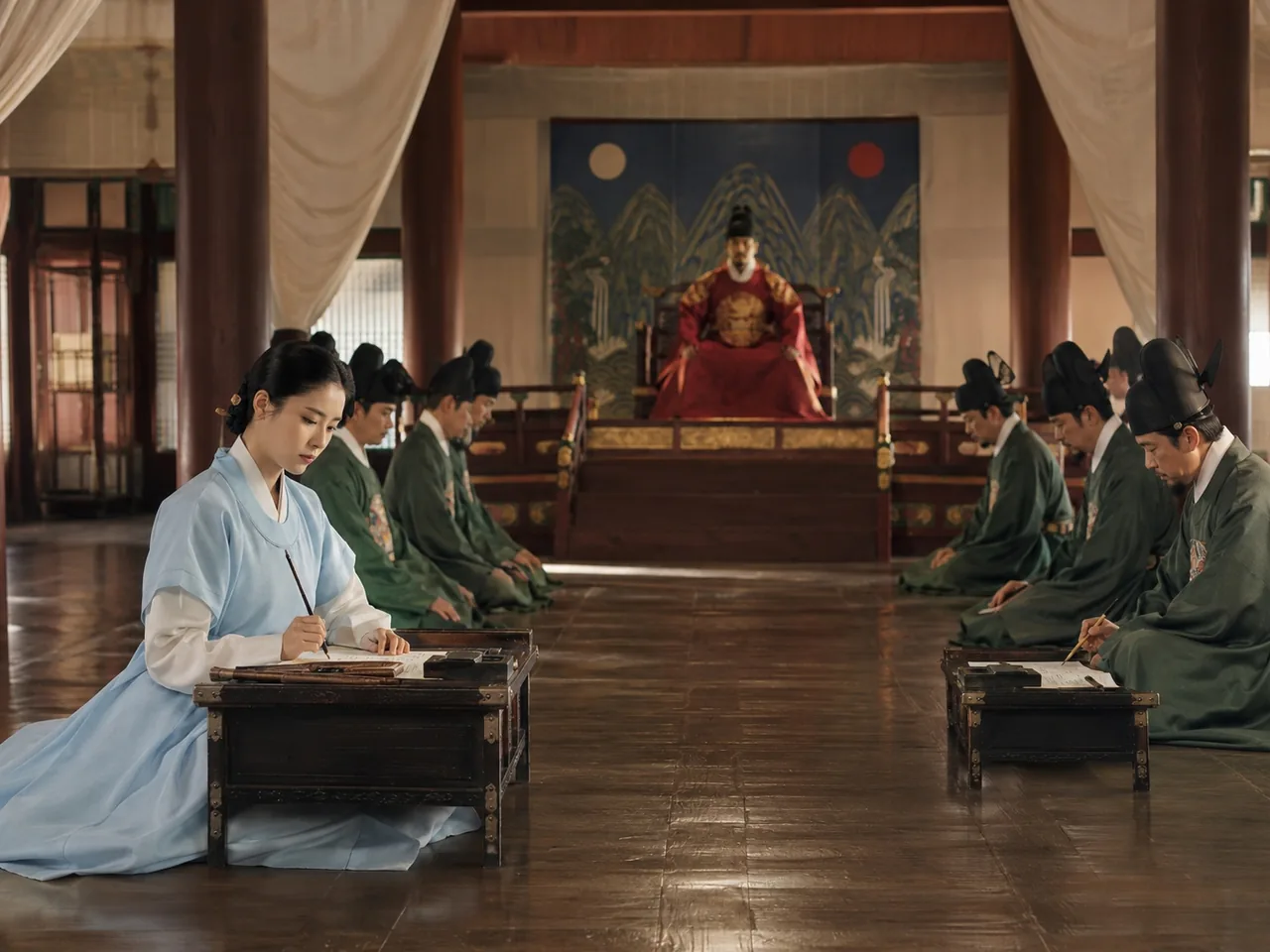
From the research behind Pause the Drama.
Picture a woman born to a commoner family on an island the government wouldn’t even let its own people leave. Orphaned as a child. Placed, through circumstances she never chose, on the official registry of gisaeng — state-bound women trained to entertain officials. And picture that same woman, decades later, so wealthy from trade that when famine gutted her island, she alone could put a ship on the water and buy enough grain to keep her neighbors alive — and so respected that the King of Joseon personally arranged for her to break a centuries-old travel ban just to grant her a wish.
That isn’t a K-drama fantasy. It’s the documented life of Kim Man-deok (김만덕, 1739–1812), the real woman behind KBS’s 2010 drama 거상 김만덕 (“Kim Man-deok, the Great Merchant”). Her story is dramatized, but the bones of it are startlingly real — and stranger, in places, than the fiction built around it.
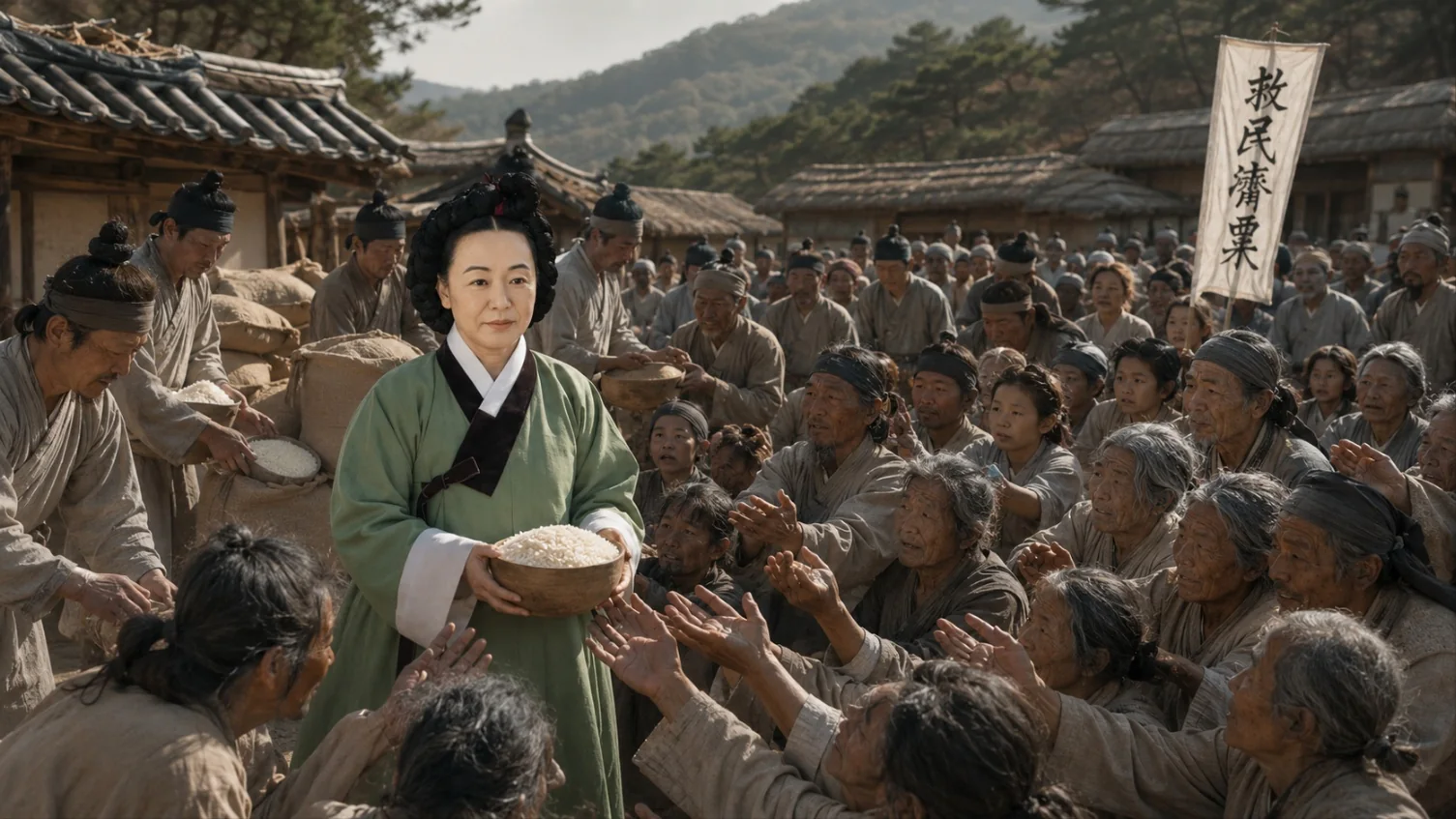 During the 1794–95 Jeju famine, Kim Man-deok gave away much of her merchant fortune to feed starving islanders — the act that carried her name all the way to King Jeongjo’s court. (AI illustration)
Quick answer: Kim Man-deok (1739–1812) was a real Jeju woman who was placed on the gisaeng register as a child, successfully petitioned officials in her twenties to be reclassified as a commoner, and built one of the island’s largest merchant fortunes through cross-strait trade. During the catastrophic 1794–95 Jeju famine, she spent much of that fortune buying mainland grain for starving islanders. King Jeongjo rewarded her not with rank or riches — she asked instead to see Seoul and Mount Geumgang, a trip normally forbidden to any Jeju woman, and he made it happen.
Let’s unpack it.
Why does Kim Man-deok’s story matter?
Because almost every part of it runs against what a woman of her status was supposed to be able to do in 18th-century Joseon — and yet it’s documented, not legend.
Joseon society sorted people rigidly: by birth status, by gender, and — for Jeju islanders specifically — by an additional law that simply forbade most residents from crossing the sea to the mainland at all. A woman born a commoner, pulled down onto the gisaeng register by hardship, wasn’t expected to climb back out of it, let alone become one of the wealthiest traders on her island, let alone catch the personal attention of the king. Kim Man-deok did all three. That combination — reclassified status, self-made fortune, royal audience — is rare enough in the historical record that it’s worth asking, plainly: how?
What actually happened?
An orphan, then a name on a register she didn’t choose. Kim Man-deok’s father, a merchant who traded between Jeolla province and Jeju, died in a shipwreck when she was about eleven; her mother died of grief not long after (Encyclopedia of Korean Culture). Left without parents, she was taken in by relatives and eventually placed with a gisaeng household, where — through the mechanics of that world rather than any wish of her own — she ended up entered on the official gisaeng register (우리역사넷, National Institute of Korean History). A gisaeng in Joseon Korea wasn’t simply an “entertainer” in the casual sense — it was a fixed legal status, state-registered and difficult to leave once assigned.
She petitioned her way out of it. In her early twenties, Kim Man-deok did something most people in her position never attempted: she went directly to Jeju’s magistrates and argued that she had been born a commoner’s daughter and did not belong on the gisaeng register at all. Accounts agree she was initially rebuffed, but her petition eventually succeeded, and she was restored to commoner (yangin) status (Encyclopedia of Korean Culture; 우리역사넷). This alone is a striking detail: a formal, successful appeal against one’s assigned status, by a woman, on the strength of an argument about her own birth.
Free of the register, she built a trading house. Rather than marry, Kim Man-deok opened a gaekju (객주) — a combined inn and trade brokerage — at the port outside Jeju town. She shipped Jeju specialties (horsehair, dried seaweed, abalone, pearls) to the mainland, and brought back grain, cloth, and goods the island needed. She also leaned on something her gisaeng years had taught her: an eye for fashion and cosmetics that let her supply mainland-style clothing, accessories, and makeup to yangban women on the island (Encyclopedia of Korean Culture). Between commission trade and a sharp read of supply gaps between Jeju and the mainland, she built one of the largest personal fortunes on the island.
Then came the famine. Jeju’s crops failed catastrophically starting in the “gabin year” of 1794, and the crisis deepened over the years that followed, leaving tens of thousands of islanders without enough grain (some regional accounts give very specific figures for those in need and the grain required, but those rest on later press summaries rather than verified primary tallies, so we leave the exact numbers aside here). Kim Man-deok was among the recorded relief donors, giving a large share of her own stores. The crisis worsened in 1795, when a government relief shipment from the mainland partly wrecked at sea before it could reach the island. That’s when Kim Man-deok did something even larger: she personally financed a voyage to the mainland to buy additional grain — Chae Je-gong’s biography Mandeok-jeon records the sum as “a thousand pieces of gold” (천금), which is best read as a period idiom for a great personal fortune spent on relief rather than a literal ledger figure — and had the proceeds distributed to islanders who were, in the plainest sense, starving (우리역사넷).
The report reached the king — and so did an unusual request. Word of her relief effort traveled up through Jeju’s magistrate to the royal court. The Veritable Records of King Jeongjo record the moment plainly: “the gisaeng Mandeok of Jeju distributed her wealth and saved the starving people” (濟州妓萬德, 散施貨財, 賑活饑民) — and when offered a reward, she asked instead “to cross the sea, go up to the capital, and go on to see Mount Geumgang” (願涉海上京, 轉見金剛山) (Veritable Records of King Jeongjo, 20th year, 11th month, 25th day). Notably, even at this late point in her life the record still identifies her by her old gisaeng-register status rather than a full name with surname — a small reminder of how status, once assigned, clung to a person in the archive.
Why that request was almost impossible to grant. Jeju residents were barred by law from crossing to the mainland except for narrowly defined trade purposes, and a separate rule restricted Jeju women even more tightly. So Jeongjo solved the legal problem the only way available: he granted Kim Man-deok a temporary court post — an honorary rank as a senior court physician-attendant (의녀반수) — a status that let her travel to Hanyang under royal sanction rather than as an ordinary Jeju woman breaking the sea-crossing law. She reached Seoul in 1796, met members of the royal household, and in the spring of 1797 finally traveled on to Mount Geumgang, touring its temples and famed peaks before returning to Jeju (한국고전번역원, Institute for the Translation of Korean Classics).
Here is what the drama compresses into scenes, next to what the record says:
| In the drama | In history |
|---|---|
| A young Man-deok is forced into gisaeng life, then fights her way out through sheer will | She was orphaned, placed with a gisaeng household by circumstance, and later won a formal petition before Jeju’s magistrates to be reclassified as a commoner |
| Man-deok’s trading empire is built through dramatic rivalries and romance | Her wealth came from a gaekju trading house moving goods — and information — between Jeju and the mainland over years of steady commission trade |
| The famine relief plays as a single heroic act | Relief came in stages — an initial large grain donation in 1794, then a personal mainland grain-buying voyage in 1795 after a government shipment wrecked |
| The king summons her to court out of admiration | Jeongjo rewarded her because Jeju’s magistrate reported her relief work upward — and her own request (to travel, not to gain rank) is what made the reward remarkable |
In short: the 2010 drama dramatizes real turning points — a former gisaeng-registered woman’s reclassification, her rise as a merchant, and a famine that made her name known at court — but the record’s version is quieter, slower, and in some ways more remarkable for being ordinary bureaucratic history rather than legend.
Key terms. Gisaeng (기녀) — a state-registered woman trained for entertainment and hosting at official functions; a fixed, low legal status rather than an occupation freely entered or left. Yangin (양인) — the commoner legal status Kim Man-deok successfully petitioned to reclaim. Gaekju (객주) — a merchant inn and trade brokerage, the kind of business Kim Man-deok ran at Jeju’s port. Jinhyul (진휼) — official famine relief, the state (and, in her case, private) distribution of grain during a crop failure. Geumgangsan (금강산) — Mount Geumgang, Joseon’s most celebrated scenic and pilgrimage destination, normally far out of reach for a Jeju commoner woman under the era’s sea-crossing restrictions.
Common misconception: “Isn’t Kim Man-deok mostly Jeju folklore?”
It’s an understandable guess — she’s the kind of larger-than-life, rags-to-riches-to-royal-audience figure that folklore tends to produce. But the documentary trail here is unusually solid for a non-elite Joseon woman.
She appears by name (or at least by her registered identity) in the Veritable Records of King Jeongjo, one of the most rigorously kept government archives in premodern world history (sillok.history.go.kr). Her famine relief also shows up in period administrative rosters cataloging local donors (Jeju Ilbo). And her contemporary, Chief State Councilor Chae Je-gong, wrote a formal biography of her, Mandeok-jeon, treating her as a genuine moral exemplar worth recording for later generations. Folklore tends to accumulate around real figures like this — and some retellings do smooth out dates or inflate specific numbers — but the core of her story (gisaeng-to-commoner reclassification, merchant fortune, famine relief, the Geumgang reward) rests on state records, not just oral tradition. Today she’s honored at the Kim Man-deok Memorial Museum in Jeju, opened in 2015 as Korea’s first museum dedicated to a culture of giving (Kim Man-deok Memorial Museum).
Why Kim Man-deok’s story resonates beyond Korea
Here’s what lifts her story out of one island’s history: a woman becoming an exceptional economic actor in an era that generally didn’t allow it is a pattern that shows up, in different shapes, almost everywhere in the pre-modern world.
In much of medieval and early modern Europe, formal guild membership — the legal gateway to running a workshop or trading house in your own name — was built around men. Historians studying the actual guild statutes find that the “vast majority of guilds restricted their membership to men,” with corporate rules often blocking women from even entering an apprenticeship or taking paid work with a master, let alone becoming a mistress of a trade in their own right (Cambridge Core / International Review of Social History). The one well-worn side door was widowhood: a woman whose husband had held a guild membership could sometimes continue his trade — with real limits — after his death.
England went further on paper, with a specific legal category called femme sole (“woman alone”), which let certain married women trade, sign contracts, and be sued as though they were unmarried — bypassing the default rule that folded a wife’s legal identity into her husband’s. It sounds, at first glance, like a real institutional opening for women in commerce. But the historian who has studied the surviving court records most closely, Sara Butler of Ohio State University, found that femme sole status was available in only a handful of English towns, that almost no registration records survive, and that “so few women fell into this category in the Middle Ages that referencing femme sole in a general overview of women’s legal rights seemed senseless” (Legal History Miscellany). In other words: the mechanism existed, but using it was the exception, not the rule.
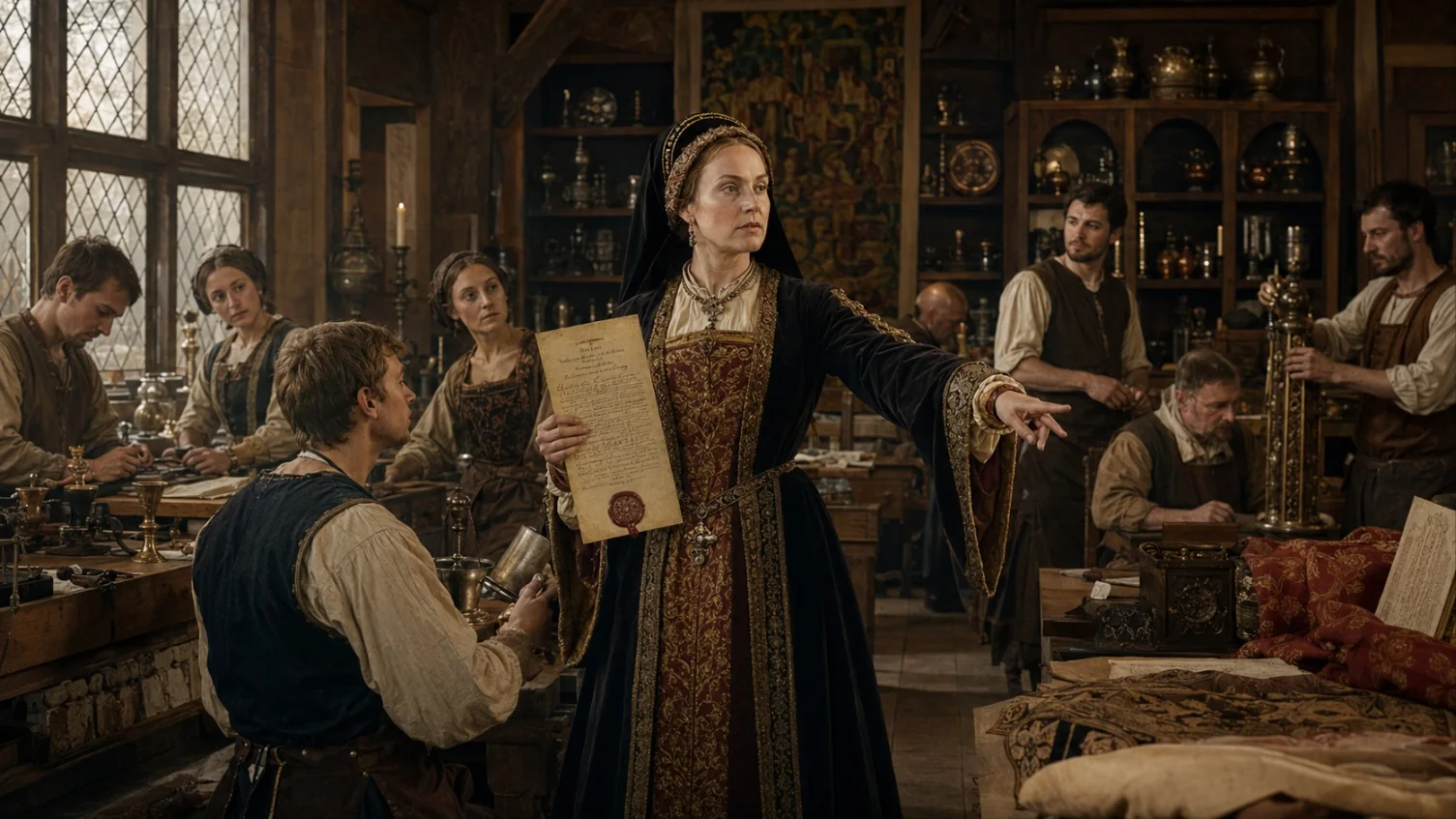 In early modern Europe, a woman usually reached this kind of commercial authority only through a side door — a widow continuing her late husband’s guild trade, or England’s rare “femme sole” status. The mechanisms differed by civilization; the rarity did not. (AI illustration)
That’s the honest parallel to draw with Kim Man-deok — not a false equivalence, but a real structural echo. Pre-modern civilizations, East and West, built their formal economic institutions — guilds, trade licenses, court audiences — around men by default. Exceptional women could and did break through, whether through a widow’s inherited guild rights, a rare femme sole registration in London, or a Jeju commoner’s petition and a famine that put her fortune to unmistakable public use. The mechanisms differed by civilization. What didn’t differ was the rarity: a woman running a fortune or a trading house on her own name was possible almost everywhere, and remarkable everywhere it happened.
Coming up next
One petition to a magistrate, one famine, one impossible-sounding wish granted by a king — and underneath a 30-episode television drama sits a life that state archives, not storytellers, actually recorded. That’s the pattern worth remembering: the most dramatic-seeming K-drama beats are sometimes the ones closest to the paper trail.
In the next essay, we’ll take another K-drama scene that looks like pure invention — and trace the real Korean history hiding underneath it.
Timeline: Kim Man-deok’s life
- 1739 — Born to a commoner family on Jeju Island.
- c. 1750 — Orphaned; later placed with a gisaeng household and entered on the official register.
- Early 1760s — Petitioned Jeju’s magistrates and recovered commoner (yangin) status.
- From her twenties — Ran a gaekju trading house at Jeju’s port, building one of the island’s largest fortunes.
- 1794–95 — Spent much of that fortune on famine relief for starving islanders.
- 1796–97 — Traveled to Hanyang (Seoul) and Mount Geumgang with royal permission.
- 1812 — Died on Jeju, aged 73.
Frequently asked questions
Is Kim Man-deok a real historical figure or a folk legend? Real, and unusually well documented for a commoner woman of her era. She appears in the Veritable Records of King Jeongjo, in period relief-donor rosters, and in a formal biography written by a sitting Chief State Councilor. Some popular retellings smooth over details, but the core of her story rests on official records, not just legend.
What was a gisaeng, and how did Kim Man-deok stop being one? A gisaeng (기녀) was a state-registered status for women trained in entertainment and hosting — not a career most people chose. Orphaned young, Kim Man-deok was placed in a gisaeng household and entered onto the register. In her early twenties she petitioned Jeju’s magistrates directly, arguing she was born a commoner, and was eventually restored to commoner (yangin) status.
How did she become one of Joseon’s wealthiest merchants? After leaving the gisaeng register, she opened a gaekju — a trading house and inn — at Jeju’s port, moving island goods to the mainland and mainland goods back, while also supplying fashionable clothing and cosmetics to noblewomen using knowledge from her gisaeng years. Steady commission trade over years built one of the island’s largest personal fortunes.
What happened in the Jeju famine of 1794–95? A severe crop failure left tens of thousands of islanders short of grain. Kim Man-deok gave a large share of her own stores in the initial relief effort, and then, after a mainland government relief shipment partly wrecked at sea in 1795, personally financed a voyage to buy more grain and distributed it to starving residents. Chae Je-gong’s biography Mandeok-jeon describes the amount as “a thousand pieces of gold” (천금) — a period idiom for a great personal fortune rather than a precise sum.
What reward did King Jeongjo give her? When her relief work was reported to the throne, Jeongjo offered a reward. She asked only to see Seoul and Mount Geumgang — both essentially off-limits to a Jeju woman under the era’s sea-crossing restrictions. Jeongjo granted her a temporary court post to make the journey legally possible, and she traveled to Hanyang in 1796 and Mount Geumgang in 1797. The title was honorary — a temporary court status to make her travel lawful, not recognition of any medical career.
Why was a trip to Mount Geumgang such an extraordinary reward? Mount Geumgang was Joseon’s most celebrated scenic and pilgrimage site, but Jeju’s sea-crossing ban meant most islanders — and especially women — could never travel there. Making that trip possible meant granting one commoner woman a lawful exception to that ban through a temporary court appointment.
Did women elsewhere in the pre-modern world run businesses of this scale? Occasionally, but almost always as an exception. In Europe, guild membership was largely closed to women, though widows sometimes kept a late husband’s trade, and English law had a rare “femme sole” status letting some women trade independently. Historians who’ve studied the surviving records find these were narrow exceptions, not a normal path — a real parallel to how exceptional Kim Man-deok’s rise was in Joseon.
What is the 2010 KBS drama 거상 김만덕 about? 거상 김만덕 (Kim Man-deok, the Great Merchant), broadcast in English as Kim Man Deok or The Great Merchant, is a 30-episode KBS 1TV weekend drama that aired from March to June 2010, starring Lee Mi-yeon in the title role. It dramatizes her path from hardship on Jeju to merchant power and a royal summons — condensing a real life into television’s shape.
Sources & further reading
This piece was written from the historical script and fact-check of 사뚱샘의 역사방 (SaDDungSam). The specific claims above are sourced inline, cross-checked against the Encyclopedia of Korean Culture (Academy of Korean Studies), the National Institute of Korean History’s 우리역사넷, the Veritable Records of King Jeongjo, the Institute for the Translation of Korean Classics, and period relief records reported by Jeju Ilbo. For broader reading:
- A general English-language introduction to her life. Korea.net, “Meet the Joseon businesswoman who saved Jeju.” (Korea.net)
- An English-language opinion piece situating her in Korean philanthropic history. The Korea Times, “Kim Man-deok, remarkable female philanthropist.” (Korea Times)
- On women and guild membership in early modern Europe. International Review of Social History, “Women, Gender, and Guilds in Early Modern Europe: An Overview of Recent Research.” (Cambridge Core)
- On the limits of England’s “femme sole” status. Prof. Sara Butler, “Femme Sole Status: A Failed Feminist Dream?” (Legal History Miscellany)
- The memorial site dedicated to her in Jeju. Kim Man-deok Memorial Museum. (mandukmuseum.or.kr)
Thanks for reading — see you in the next one.
This article was researched and written by K-Drama History. Source: Kim Man-deok, Explained: How a Former Gisaeng Became Jeju's Legendary Merchant — K-Drama History