Arthdal Chronicles, Explained: Korea's Oldest Transmitted Law — and the Stain That Outlived the Sentence
Theme: Status & Class
From the research behind Pause the Drama.
One image Arthdal Chronicles comes back to, again and again, is not a battle.
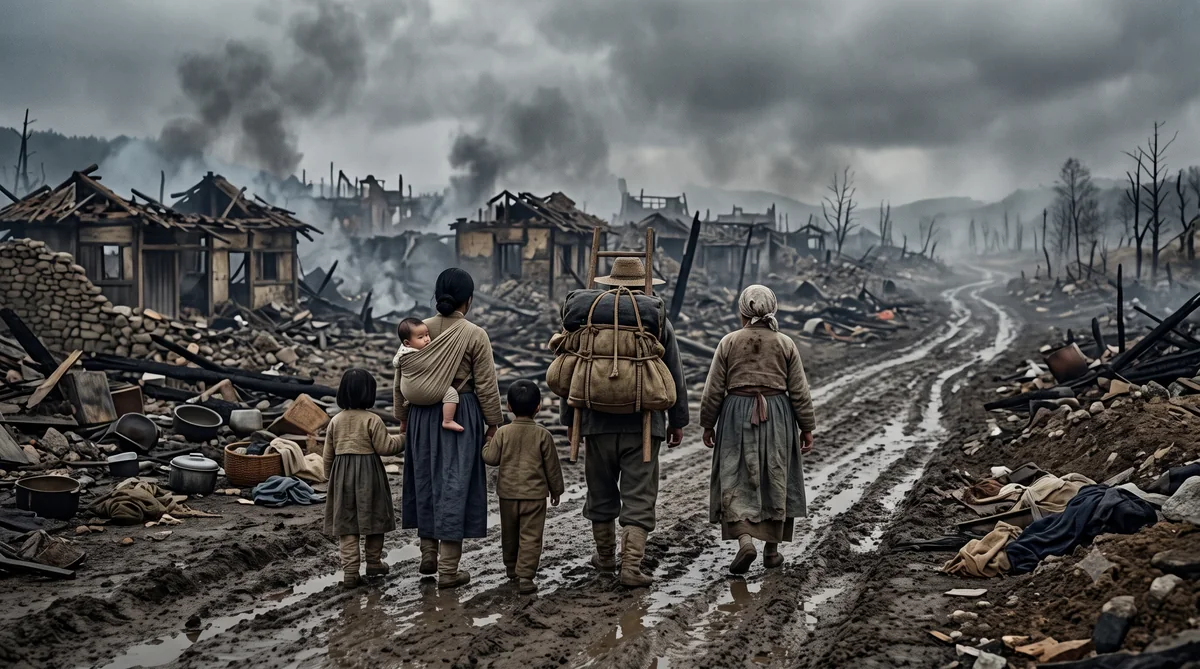
It is the moment somebody establishes who belongs to whom. A defeated tribe is marched into labour. People are counted, assigned, handed over. Of everything the drama invents, that transaction is the part that feels least like fantasy.
Arthdal itself is invented — a world imagining prehistory and the birth of an early state, not a reconstruction of any documented Korean period. tvN’s planning materials describe it as a reinterpretation of the Dangun narrative with fantasy added, and the writers have said the project began under the title Asadal Chronicles, borrowing from Asadal, transmitted as the capital of Dangun Wanggeom. The Neanthal and the Igutu appear in no source.
That Dangun material sits in a different category from everything below, and is worth placing correctly first. The Dangun narrative is transmitted in later works such as the thirteenth-century Samguk Yusa — a foundation narrative set down long afterwards, not a contemporaneous record of Gojoseon’s beginnings. That is not a dismissal: a story that survives long enough to be written down tells you something real about the people who kept telling it. It just tells you about them, not about the events.
But the question the show keeps circling is a real one, and it has an answer somewhere else entirely.
Did the actual Gojoseon have people who could be owned? And if so, how did someone become one?
Quick answer: The oldest law transmitted for Korea is the eight prohibitions of Gojoseon, recorded not in a Gojoseon document but in the later Chinese history Han shu. Three provisions are explicitly described in the surviving passage: killing is paid for with death, injury with grain, and theft turns the thief into a servile dependant — who may redeem the offence for 500,000. The same passage then records that even after redemption the shame remained, and that such a person had difficulty finding anyone to marry — so a legal exit existed, and social consequence continued past it.
What we actually have — and what we don’t
One clarification first, because it changes how you read everything below.
We are not reading Gojoseon’s own law code. No such document survives. What survives is a passage in the Han shu (漢書), the Chinese dynastic history, in the Treatise on Geography — a later record, written elsewhere, about a place and a period it did not belong to.
Nor is this passage all we have about Gojoseon. There is material in the Shiji’s account of Chosŏn, in the Sanguozhi’s eastern barbarian chapter and in the Hou Han shu. The narrow claim is the accurate one: of the eight prohibitions, three are explicitly described in the surviving passage.
Even “three” needs care. Eight prohibitions are named, but only three are stated explicitly, and the classical commentary on the passage records that the eight are not preserved in full. The Encyclopedia of Korean Culture separately discusses a possible provision on adultery. Three are explicitly described — which is not the same as saying exactly three ever existed.
The three provisions
As set out by the National Institute of Korean History:
- One who kills another is repaid with death.
- One who injures another compensates with grain.
- One who steals another’s goods is made a servile dependant — no (奴) if a man, bi (婢) if a woman. One wishing to redeem the offence must pay 500,000.
Read them in order and a society comes into focus one layer at a time.
The first sets death against death. Reference commentary offers more than one reading — including the protection of labour in an agricultural society — so it is better taken as a statement of the rule than as evidence of a philosophy of life.
The second settles injury in grain. For grain to work as compensation, individuals must be able to hold and dispose of it. Taken together with the theft provision and the social differentiation implied across the prohibitions, this is the basis on which private property and stratification are inferred for Gojoseon. One clause alone does not prove it; the set of them points that way.
The third is the one worth slowing down for.
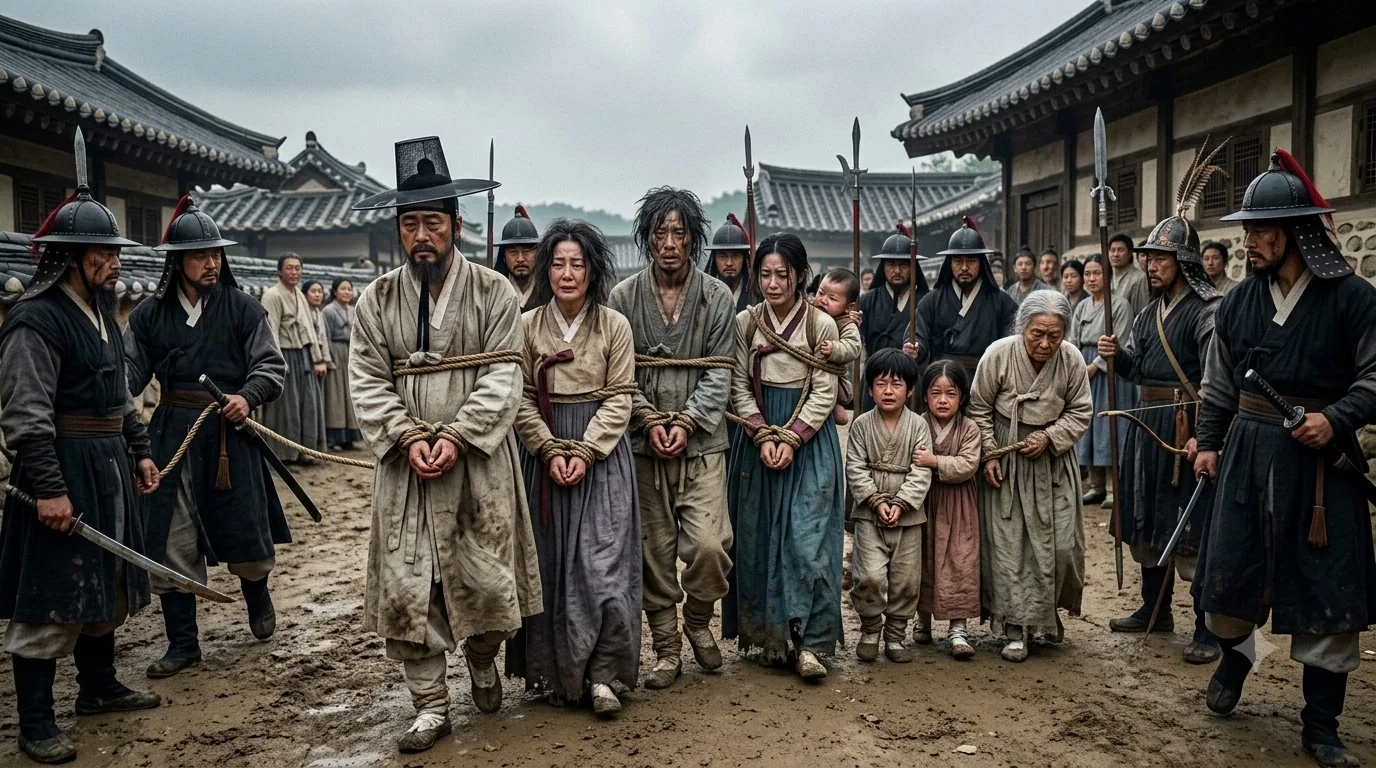
 Arthdal imagines the birth of a state. The law transmitted for Gojoseon describes one power of an early state: defining offences, assigning penalties and changing a person’s legal status. (AI illustration)
What the third provision hides
Three things are folded into that one clause.
Servile status could be imposed by punishment. A person could be moved into the position of no or bi by committing theft. Note the limit: that punishment could push someone into servile status does not tell us how status in Gojoseon was determined in general. Nor is it the hereditary nobi system of Goryeo and Joseon — a far later institution that nothing in this passage describes.
That status had a price attached. One wishing to redeem the offence paid 500,000 — a penalty of servitude that a payment could lift, rather than evidence that status itself was a tradable commodity on some market.
The sum was heavy. The received text gives the amount simply as 人五十萬. Standard Korean translations conventionally supply the monetary unit and render it as 500,000 coins, but no reliable conversion into modern currency is possible. Specialist commentary treats the amount as very heavy against Han-era penalties, and figures converting it into modern money rest on no primary source, so this article gives none.
One related caution: the Encyclopedia of Korean Culture raises the possibility that the redemption clause specifically was added or revised during the Han commandery period. That view applies to the 500,000 rule rather than the whole third provision, and is not settled consensus.
The line that the whole story turns on
The passage does not stop at redemption. What follows is the sentence that makes this law worth writing about at all.
Even after redeeming the offence and becoming a commoner, the record says, people regarded it as shameful — and when such a person sought to marry, there was no one willing to be matched with them.
The sentence ended. The stigma did not.
A note on the word: the text says 免爲民, and the standard Korean rendering is that the person becomes an ordinary commoner. Not citizen — there is no modern conception of citizenship here. The person steps out of servile status into the general population, and that is all the phrase claims.
What we can say from this is bounded. The Han shu records a redemption rule, and records that social shame and difficulty in marriage followed. It names no individual who paid and was released, and says nothing about how often any of this happened in practice. What it preserves is the shape of the thing: a legal exit existed, and social consequence continued past it.
Drama vs history
| In Arthdal Chronicles | In the transmitted record |
|---|---|
| A fully realised world with its own peoples — Neanthal, Igutu, Wahan | An invented setting; these beings appear in no source |
| The birth of a state, dramatised as conquest and ownership | Eight prohibitions named in a later Chinese history; three described in the surviving passage |
| Status is seized and enforced by power | Status could be imposed by criminal punishment; redemption by payment is recorded |
| A defeated people are owned outright | The text records no / bi as a punishment, not the later hereditary nobi system |
| The drama ends its arcs | The record notes what came after release: shame, and no one to marry |
Arthdal invents its world, but the question it keeps asking is the one the transmitted law answers — and answers more harshly: the punishment ends, the mark does not.
Three claims worth correcting
“Slaves existed, so it was a slave society.” The reference explanations are careful here. Servile status established by punishment is not the same as a society organised as a slave economy. What the prohibitions support is the inference of private property, of social differentiation, and of a state able to define and enforce both.
“A sage from China gave them the law.” The narrative in which Gija (箕子) becomes king of Gojoseon and hands down its law is a later construction rather than a documented event. The prohibitions are presented as the law of Gojoseon itself. How the Han shu layers its Gojoseon, Han-commandery and Gija material has been examined directly in recent scholarship — a more interesting story than the legend.
“Here is the complete list of all eight articles.” Search for the eight articles and you will find full lists, drawn from texts such as the Taebaek Ilsa within the Hwandan Gogi. Mainstream historical scholarship does not accept the Hwandan Gogi as an authentic source for ancient Gojoseon and generally regards it as a modern pseudohistorical compilation. Such texts are legitimately studied as evidence of later thought; what cannot be done is to present the eight-article list as the authentic law of Gojoseon. If you meet one, check where it came from.
What happened next
After Gojoseon fell in 108 BCE, Han established commanderies in its former territory — Lelang, Lintun, Zhenfan, Xuantu — with Lelang the central one. The Han shu then reports that the prohibitions grew in number until they reached more than sixty, explaining this by saying customs had deteriorated. The National Institute of Korean History reads it differently: society had become more varied and complex, and the law expanded with it. Whether the original eight were directly amended into that larger code, as one continuous body of law, is not something the record establishes.
The mark that outlives the sentence
 Rome freed him by law and kept obligations attached to him afterwards. (AI illustration)
The pattern is not unique to Gojoseon. Across very different societies, legal release has often arrived before social acceptance. The comparison should not erase the differences among Roman freed status, modern discrimination by descent and the consequences of criminal records. It simply illuminates the narrow point preserved in the Han shu: formal redemption did not erase reputation.
Back to the drama
Arthdal Chronicles spends thirty episodes imagining how a state gets made: who conquers, who is counted, who ends up owned. Season one arrived on Netflix globally in 2019; the sequel, The Sword of Aramun, followed in 2023 and as of July 2026 is listed on Disney+ in some regions — worth checking where you are.
The transmitted law is shorter than any episode. Someone steals. They are made a dependant. They pay, and the law returns them to the general population. And then the record adds, almost in passing, that people found it shameful and no one would marry them.
The drama imagines the founding of a society. The law preserves one of the things that society refused to forgive. Next time, we’ll open another door.
Frequently asked questions
Is Arthdal Chronicles the story of Gojoseon? No. It is an invented world imagining prehistory and the birth of an early state. tvN’s planning statement calls it a reinterpretation of the Dangun narrative with fantasy added; the Neanthal and Igutu have no basis in any source.
Did Gojoseon actually have slaves? The Han shu records a provision making a thief a servile dependant — no (奴) for a man, bi (婢) for a woman. Often translated as “slave,” although the surviving passage alone does not reveal the full legal and economic character of the status. It is not the hereditary nobi system of Goryeo and Joseon.
Could someone really buy their way out? The text records a redemption provision, and records that social shame followed. It gives no named case of anyone paying and being released.
How much is 500,000 in today’s money? The received text gives the amount simply as 人五十萬. Standard Korean translations conventionally supply the monetary unit and render it as 500,000 coins, but no reliable conversion into modern currency is possible.
Did the law really have only three provisions? The Han shu names eight prohibitions but explicitly describes three, and the classical commentary on the passage records that the eight are not preserved in full. Three survive with their content intact — which is not the same as only three having existed.
What about the complete list of all eight articles I found online? Those lists come from texts such as the Taebaek Ilsa within the Hwandan Gogi, which mainstream scholarship does not accept as an authentic source for ancient Gojoseon.
Didn’t a sage from China give Korea its laws? The story that Gija (箕子) became king of Gojoseon and handed down its law is a later construction, not a documented event. The prohibitions are presented as the law of Gojoseon itself.
Is the Dangun story history? It is a foundation narrative, transmitted in later works such as the Samguk Yusa. It tells us what later generations understood about their origins, not what happened.
Sources & further reading
- 『漢書』 권28하 「지리지」 연군 조선 기사 — the eight prohibitions, the redemption clause, the marriage passage, and the growth to sixty-odd provisions
- National Institute of Korean History, 우리역사넷 — 「고조선의 범금 8조」 (hm_001_0060) and 「8조법」 (tg_001_0500)
- Encyclopedia of Korean Culture — 「팔조법금」 E0059778 · 「환단고기」 E0064977
- 조우영, 「『한서』 지리지에 나타난 고조선의 법」, 『법사학연구』 22, 2000
- 조원진, 「『漢書』의 古朝鮮·漢郡縣·箕子 자료에 대한 검토」, 『동양학』 92, 2023
- 『三國遺事』 「기이」 고조선조 · National Institute of Korean History, Korean History Database
- Matthew J. Perry, Gender, Manumission, and the Roman Freedwoman, Cambridge University Press, 2013
- Ministry of Justice, Japan — human rights materials on Buraku discrimination
- U.S. Equal Employment Opportunity Commission — guidance on criminal records in employment
- tvN planning materials for 아스달 연대기 / 아라문의 검 · Netflix announcement (2019) · Disney+ title page for The Sword of Aramun
Thanks for reading — see you in the next one.
This article was researched and written by K-Drama History. Source: Arthdal Chronicles, Explained: Korea's Oldest Transmitted Law — and the Stain That Outlived the Sentence — K-Drama History