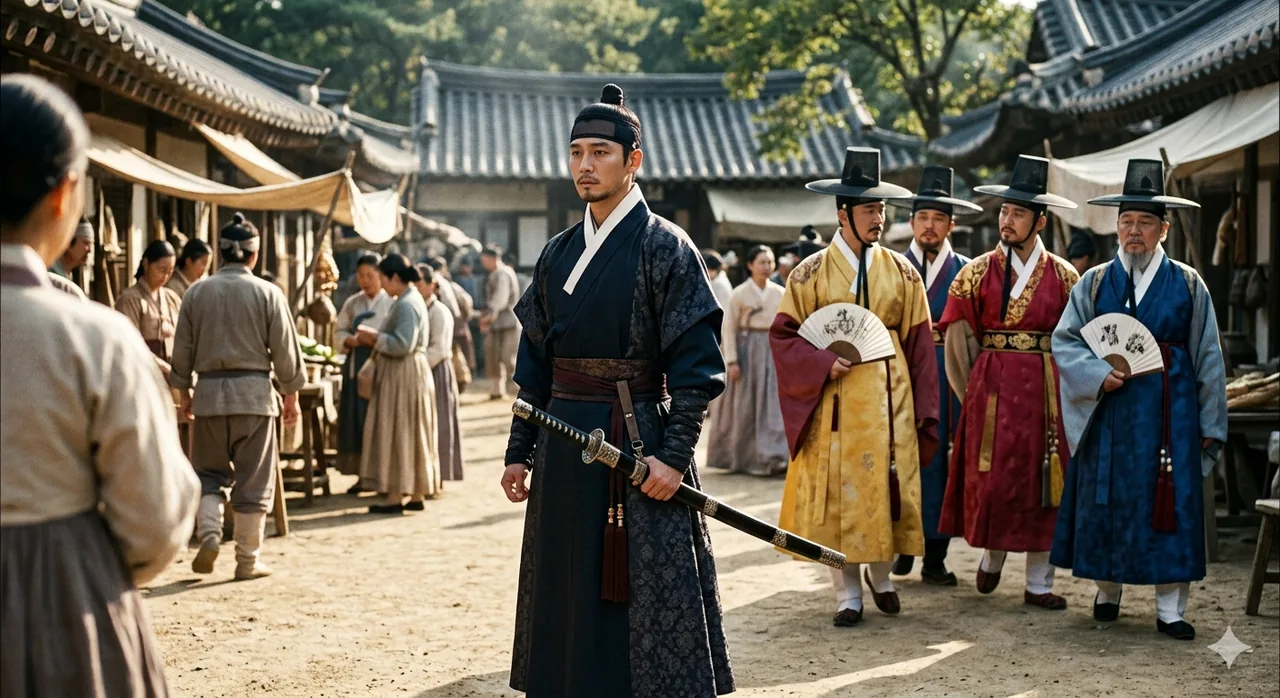
Mr. Sunshine, Revisited: Why Baekjeong Stigma Faded in Korea but Burakumin Discrimination Survived in Japan
Theme: Status & Class
From the research behind Pause the Drama.
In our last essay on Mr. Sunshine, we followed Gu Dong-mae — the fictional swordsman branded for life as a butcher’s son — and saw how Joseon Korea, Tokugawa Japan, India, and medieval Europe all built nearly the same hereditary outcast trap. We ended on the law: in 1894, Korea’s Gabo Reform abolished the baekjeong’s status; in 1871, Japan had already freed its own outcasts.
So here is the question the drama plants but never answers: if both countries abolished their outcast classes — Japan even earlier than Korea — why did the stigma quietly fade in Korea, while in Japan it survived all the way to a 2016 anti-discrimination law?
The answer is unsettling, and it has almost nothing to do with which society was kinder.
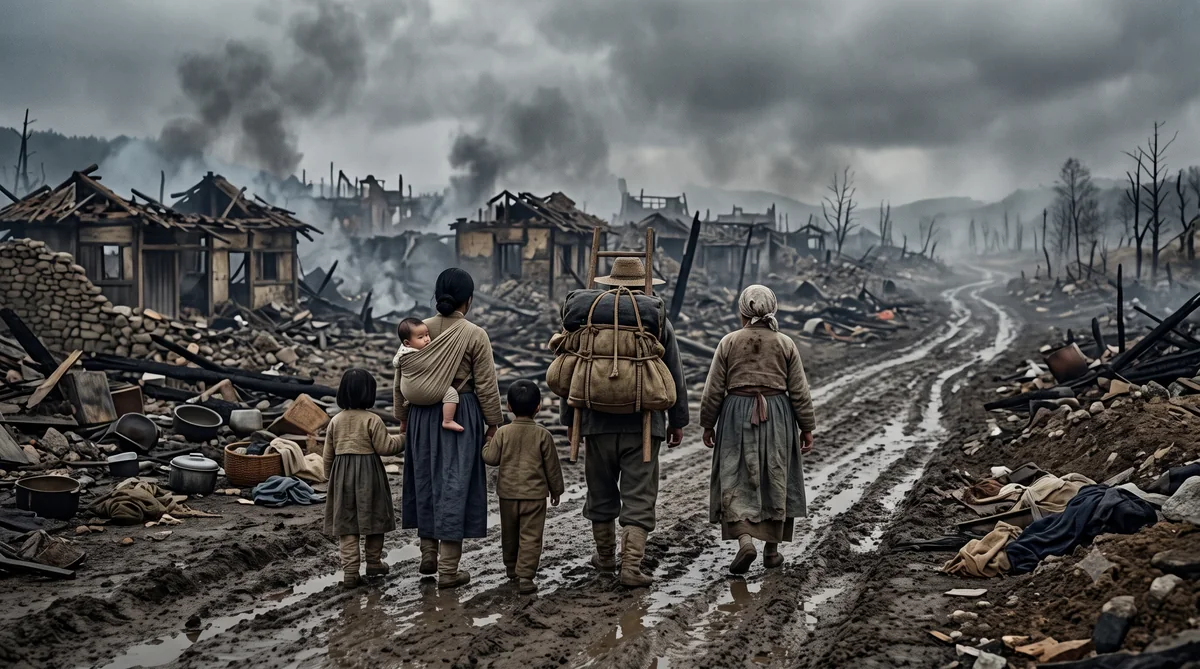 In Korea, a century of war and displacement scattered communities — and with them, the records and village memory that discrimination needs to find its target. (AI illustration)
Quick answer: Korea and Japan both abolished their hereditary outcast classes — the baekjeong in 1894, the burakumin in 1871 — yet the outcomes split. The decisive factor was not morality but traceability: whether a person’s descent from an outcast bloodline could still be looked up. In Korea, the upheavals that followed liberation — war, mass displacement, and rapid urbanization — blurred the registers and village memory that discrimination relies on. In Japan, the household-register system (koseki) and address-based records — exposed most shockingly by a secret 1975 directory of 5,300 outcast villages — kept those origins traceable for generations. A stigma, it turns out, doesn’t only live in people’s hearts. Sometimes it survives longer on paper.
Let’s unpack it.
Wait — didn’t the baekjeong get freed in 1894?
Yes — and that’s exactly where the puzzle begins.
As we saw with Dong-mae, the 1894 Gabo Reform legally dismantled Joseon’s hereditary class system, and the baekjeong were freed along with it. But legal freedom and social acceptance are two different things. Contempt persisted for decades, which is why the baekjeong had to found the Hyeongpyeong equality movement in Jinju in 1923 (Independence Hall of Korea), demanding to be treated as equals a full generation after the law had supposedly already made them so.
That much, the first essay covered. But 1923 is not the end of the story — it’s barely the middle. The real test of an abolished caste is what happens over the next hundred years. And here, Korea and Japan — two neighbors that abolished strikingly parallel, though not identical, outcast systems within a generation of each other — diverged so sharply that the contrast itself becomes the lesson.
The hinge is a single, unglamorous idea: a stigma can only keep punishing people as long as society can still tell who belongs to it.
Korea: how the stigma lost its paper trail
For a long stretch after 1894, the baekjeong stain was still very findable. Discrimination continued in marriage and residence, and under Japanese colonial rule a person’s old status could still be marked in household registers and even on résumés.
Then the twentieth century did something that no equality movement alone could have done: it scrambled the records.
As families moved out of their old segregated settlements and away from the village communities that had remembered exactly who was who, the basis for tracing someone’s outcast origins began to crumble. The Korean War and the mass displacement it caused, followed by breakneck urbanization, industrialization, and the dissolution of tight rural communities, scattered people and severed the local knowledge that caste contempt fed on. (This is one interpretation historians offer rather than a single proven cause — the precise weight of each factor is debated — but the broad picture is widely cited.)
And that points to something easy to miss about discrimination of this kind: it doesn’t run on prejudice alone. It needs information. To shut someone out for being a baekjeong’s descendant, you first have to know they are one — which house they come from, which village, which despised trade their ancestors practiced. Strip away that knowledge, and the prejudice loses its grip even if it hasn’t fully died in people’s hearts. In Korea, the machinery of identification was badly weakened by a century of upheaval — and open, institutional baekjeong discrimination lost its footing with it.
Keep that mechanism in mind, because Japan is about to show us the mirror image.
Japan: the address that wouldn’t disappear
Japan abolished its outcast status in 1871, a full twenty-three years before Korea. By the simple arithmetic of head starts, you’d expect Japan to be further along. Instead, burakumin discrimination is still openly discussed today — in marriage, in hiring, and on the internet.
Why? Because in Japan, the trail never went cold. And the reason it didn’t is largely a matter of records.
The key instrument was the koseki (戸籍), Japan’s modern household-registration system. By tying each person to a family and a registered home domicile (honseki), the koseki — and the way it was compiled from the 1870s — left traces by which a former outcast community and its descendants could be identified. Trace someone’s ancestry and home registry back far enough, and you could infer whether they came from a particular place. The status was legally gone; the address and the paperwork held the old brand in place.
The most shocking proof of this arrived in 1975, with the discovery of the Buraku Chimei Sōkan (部落地名総鑑, the “Comprehensive List of Buraku Place Names”). A secret directory listing the names, locations, household counts, and residents’ occupations of some 5,300 former outcast communities across Japan had been quietly printed and sold to companies and individuals. Employers used it to screen out job applicants of buraku descent; individuals used it to investigate the background of a prospective spouse. By the reporting at the time, the directory’s maker admitted that roughly 99% of orders came from a wish not to “mix bloodlines” with buraku people, and 223 companies were found to have bought copies. The law had erased the status decades earlier; the list dragged it back out of the ground.
And this is not closed history. As buraku location data and discriminatory posts began re-circulating online, Japan enacted a Buraku Discrimination Elimination Promotion Act (部落差別解消推進法) in 2016, whose text states plainly that buraku discrimination still exists and that its forms are changing with information technology. A wealthy, modern democracy needing a fresh law against caste discrimination in the twenty-first century is the loudest possible evidence of how long a stigma can survive — not in hearts, but on records and addresses.
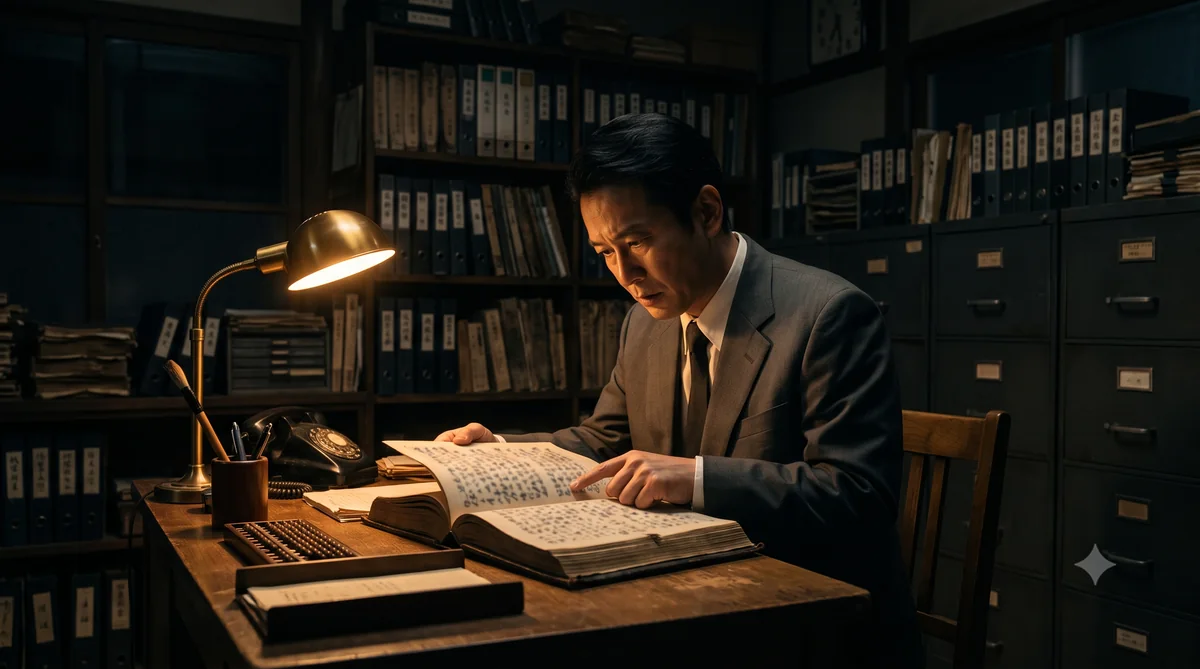 In Japan, the record never went cold. The koseki and a secret 1975 directory of some 5,300 communities kept outcast descent findable — for employers and families alike. (AI illustration)
Here is the divergence at a glance:
| Korea — the baekjeong | Japan — the burakumin | |
|---|---|---|
| Legal abolition | 1894 (Gabo Reform) | 1871 (Emancipation Edict) — earlier |
| The decades after | Contempt persisted; Hyeongpyeong movement (1923) | Discrimination persisted in marriage and work |
| What happened to the records | Blurred by colonial rule, war, displacement, urbanization | Preserved through the koseki and address-based registers |
| Traceability today | Largely lost — hard to “look up” outcast descent | Durable enough that a secret list of 5,300 villages circulated in 1975 |
| Where it stands now | Open institutional discrimination largely faded | A new anti-discrimination law was still needed in 2016 |
In short: Korea and Japan abolished strikingly parallel — though not identical — outcast systems within a generation of each other, but Korea’s century of upheaval weakened the traceability of outcast descent, while Japan’s household-registration system kept that descent findable — so the stigma faded in one country and survived in the other.
Key terms. Koseki (戸籍) — Japan’s household-registration system, tying each person to a family and a registered home domicile; because it records ancestry and place, it could preserve traces of former outcast status. Buraku Chimei Sōkan (부락 지명 총람) — the secret 1975 directory of roughly 5,300 former outcast communities, sold to employers and families to screen for buraku descent. Hyeongpyeong movement (형평운동) — the baekjeong-led equality movement founded in Jinju in 1923, demanding real social equality decades after legal abolition. Traceability — the social and bureaucratic ability to identify a person’s descent from an outcast group; the hidden variable that decided whether the stigma lived or died.
So what actually made the difference?
Not virtue. Not the date of abolition — Japan, remember, was earlier. The difference was whether the machinery of identification survived.
A law can abolish a status in a single year. But ending the discrimination takes more than a clause, because contempt outlives statutes — and it feeds on the ability to know who is who. Where the address, the household register, the secret directory, and the village memory survive, the stigma survives with them. Where they are scattered and erased, the prejudice slowly loses its target.
Korea’s twentieth century, for all its trauma, broke the chain of identification almost by accident. Japan’s meticulous, durable record-keeping kept it intact — and so the same brand that marked Gu Dong-mae in the 1900s became, in Japan, a line in a ledger that could still cost someone a job or a marriage in living memory.
That is the quiet, chilling coda to Dong-mae’s story. The wound the drama shows isn’t only a man’s shame in 1900s Korea. It’s a reminder that a stigma can step off the body and onto paper — and that on paper, it can outlive the very law that was supposed to kill it.
Coming up next
One outcast class, two countries, two fates — and the deciding factor turned out to be something as dry as a household register. That’s the strange afterlife of caste: long after the law lets people go, the records can keep holding on.
In the next essay, we’ll take another K-drama scene that looks like pure fiction — and trace the real Korean history hiding underneath it.
Frequently asked questions
Korea and Japan both abolished their outcast classes — so why does discrimination linger more in Japan? The decisive difference was not morality but traceability — how easily a person’s descent from an outcast group could still be looked up. In Korea, war, mass displacement, urbanization, and the collapse of village communities blurred the records and local memory that discrimination depends on. In Japan, the household-registration system (koseki) and address-based records kept outcast origins traceable for generations, even after the law had freed people in 1871.
Are the baekjeong and the burakumin the same thing? No. They are parallel, not identical. The baekjeong were Joseon Korea’s hereditary butcher-outcast class; the burakumin are descendants of Japan’s Tokugawa-era eta and hinin outcasts. Two different countries built strikingly similar hereditary underclasses out of the same idea of “pollution” — but they are separate histories, and they diverged sharply after each was legally abolished.
What was the 1975 Buraku Chimei Sōkan (부락 지명 총람) incident? It was the discovery that a secret directory listing the names, locations, household counts, and residents’ occupations of some 5,300 former outcast (buraku) communities across Japan had been printed and quietly sold to companies and individuals. Employers used it to screen out job applicants of buraku descent; individuals used it to investigate the background of prospective marriage partners. Reporting at the time found that roughly 99% of orders were driven by a wish not to “mix bloodlines” with buraku people, and that 223 companies had bought copies.
Is burakumin discrimination still a problem today? Yes, which is why Japan enacted a Buraku Discrimination Elimination Promotion Act (Act No. 109) in 2016. The law explicitly states that buraku discrimination still exists and that its form is changing with the spread of information technology — for example, the online re-circulation of old buraku location data. A modern, wealthy democracy still needing such a law shows how long this kind of stigma can survive on records and addresses.
Did the baekjeong stigma completely disappear in Korea? It faded dramatically, but not overnight. Legal abolition came with the 1894 Gabo Reform, yet contempt persisted for decades — which is exactly why the baekjeong founded the Hyeongpyeong equality movement in 1923. Over the following century, however, the social machinery that let people trace someone’s outcast origins weakened, and open, institutional baekjeong discrimination largely lost its footing.
Why did Korea’s “traceability” fade while Japan’s didn’t? One interpretation historians offer is that twentieth-century upheaval did the work: after liberation, the Korean War and mass displacement, rapid urbanization and industrialization, and the breakup of old village communities scattered families and weakened the local knowledge of “which house, which village, which trade” that discrimination needs. (Under colonial rule, by contrast, old status was often still marked in registers and on résumés — the erosion came later.) This is a widely cited reading rather than a single proven cause — but the contrast with Japan’s durable record-keeping is striking.
What is the koseki, and how did it preserve old status? The koseki (戸籍) is Japan’s household-registration system, which ties each individual to a family and a registered home domicile (honseki). Because it records ancestry and home location, it left traces by which someone’s descent from a former outcast community could be inferred — meaning that even after status was legally abolished in 1871, the paperwork could still point back to it.
Is Mr. Sunshine’s Gu Dong-mae based on a real person? No. Gu Dong-mae is a fictional character in the 2018 drama, set against the real backdrop of the late Korean Empire. But the baekjeong outcast status that defines him — and the long afterlife of that stigma explored here — is firmly historical.
Sources & further reading
This piece was written from the historical script and fact-check of 사뚱샘의 역사방 (SaDDungSam), with specific facts and figures sourced inline and cross-checked against primary and official records. For broader reading:
- The Hyeongpyeong movement (형평운동) — Independence Hall of Korea — the baekjeong-led equality movement founded in Jinju in 1923, evidence of how long contempt outlived the 1894 abolition. (독립기념관)
- Baekjeong (백정) — Encyclopedia of Korean Culture (Academy of Korean Studies) — the hereditary butcher-outcast class and its restrictions in Joseon. (한국민족문화대백과)
- Baekjeong (백정) — National Institute of Korean History (우리역사넷) — the outcast class in the Joseon status order. (우리역사넷)
- Burakumin and the koseki — Unseen Japan, “Burakumin: Japan’s Hounded ‘Untouchables’” (2019) — how the household-registration system left old outcast origins traceable.
- The 1975 Buraku Chimei Sōkan incident — Buraku Liberation and Human Rights Research Institute (BLHRRI) — the secret directory of some 5,300 communities and its use by employers.
- Discrimination against Japan’s burakumin — Books & Ideas / Minority Rights Group — the 99%-of-orders and 223-companies figures, and ongoing discrimination in marriage, employment, and online.
- Buraku Discrimination Elimination Promotion Act (部落差別解消推進法, Act No. 109 of 2016) — Japanese Law Translation, Ministry of Justice — the modern law acknowledging that buraku discrimination persists.
Thanks for reading — see you in the next one.
This article was researched and written by K-Drama History. Source: Mr. Sunshine, Revisited: Why Baekjeong Stigma Faded in Korea but Burakumin Discrimination Survived in Japan — K-Drama History