Was Empress Ki Real? Goryeo's Gongnyeo Tribute Women and the Yuan Dynasty, Explained
Theme: Women’s Lives
From the research behind Pause the Drama.
In Empress Ki (기황후), the drama opens in pain: a young Goryeo woman, separated from her family by the Yuan dynasty’s demand for tribute, is sent to a foreign imperial court. The drama will eventually turn her suffering into triumph — she rises to become Empress of the Yuan dynasty, one of the most powerful women in 14th-century Asia. But before the triumph is the system. And the system is what history remembers.
What was the gongnyeo (貢女) institution? How did a Korean dynasty come to send its women as tribute to a foreign empire? And how does that system compare to the other forms of human tribute that pre-modern states used to manage power and dependence?
Quick answer: The gongnyeo tribute-women system was a real and documented institution of the Goryeo–Yuan relationship. Following Goryeo’s submission to the Mongol Empire, the Yuan dynasty demanded women as tribute — periodically and irregularly across roughly 80 years of overlordship from the 1270s onward, with official histories recording some 50 requisitions and an estimated 2,000-plus women sent. To manage these demands, Goryeo established a bureau called the Gyeolhon Dogam (Marriage Bureau). One documented social consequence was the spread of very early marriage as families tried to marry daughters off before they could be conscripted. The historical Empress Ki was a real figure — a Goryeo-born woman who rose to Second Empress of the Yuan dynasty — though the chronicle evidence describes a far more complex and politically ambiguous figure than the drama’s sympathetic protagonist.
Let’s trace the system, the person, and the comparisons.
What was the gongnyeo system, and how did it work?
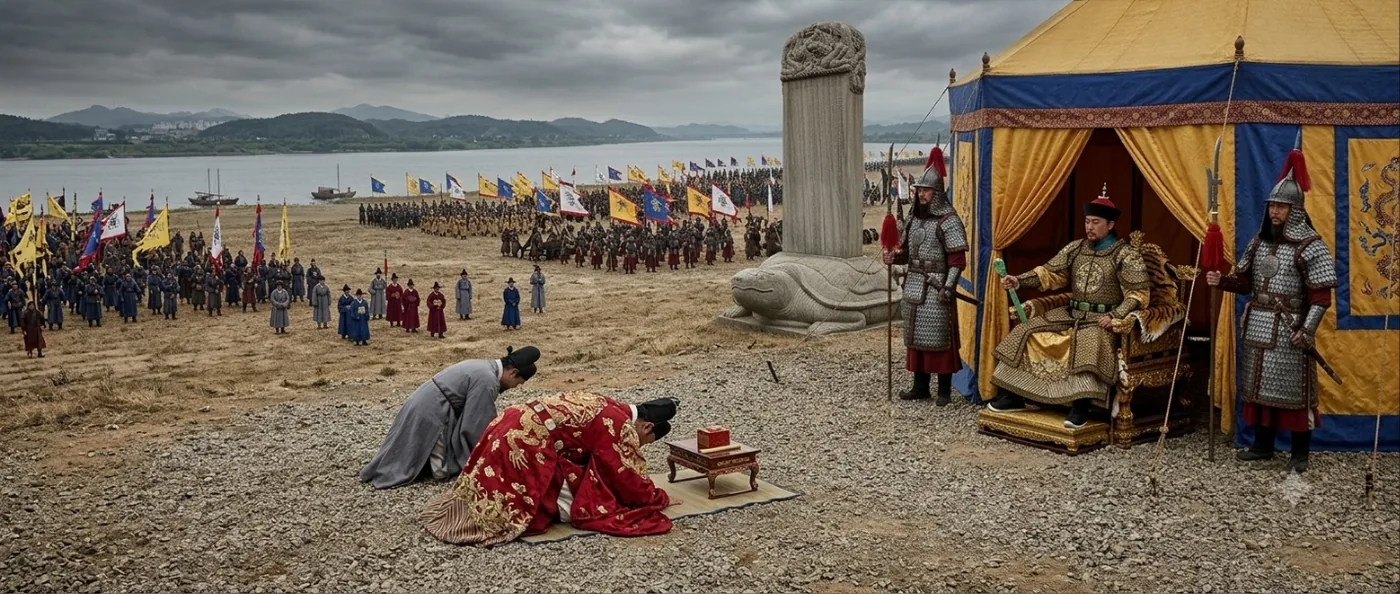
The word gongnyeo (貢女) literally means “tribute women” — women sent as a form of tribute from a subordinate state to its overlord. The institution became systematic in Goryeo’s relationship with the Yuan dynasty following Goryeo’s practical submission to Mongol authority. Regular requisitions began in earnest after the 1st year of King Chungnyeol (1274), according to the Goryeo-sa and Goryeo Jeolyo chronicles, and continued through periodic and irregular demands across the subsequent decades of Mongol overlordship.
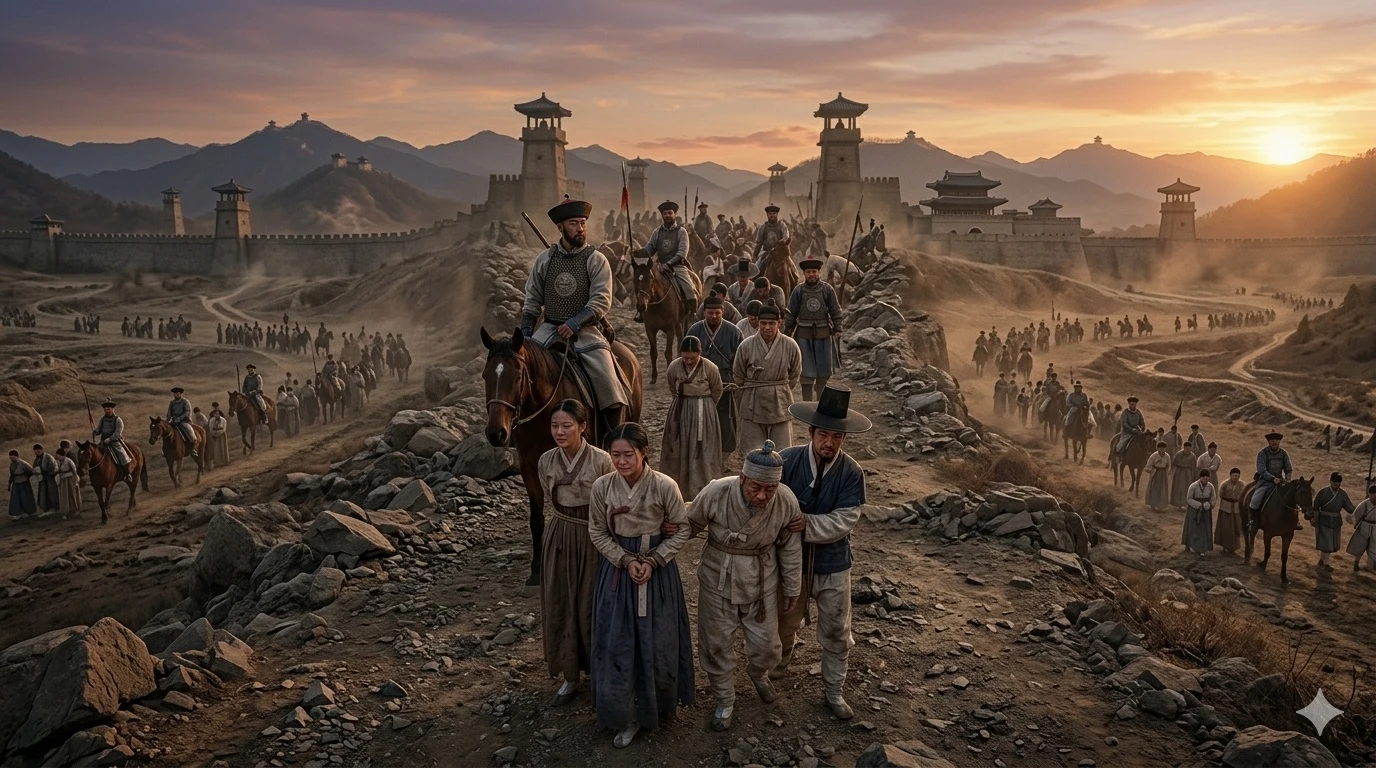
How many women, and how often? No single source tallies a definitive total, but the official record gives a usable shape. According to the National Institute of Korean History’s 우리역사넷 (https://contents.history.go.kr/mobile/km/view.do?levelId=km_001_0040_0030_0020_0010), official histories document some 50 separate requisitions over roughly 80 years — from the early reign of King Chungnyeol to the early reign of King Gongmin. The scholar-official Yi Gok (이곡), in his famous memorial urging the system’s abolition, notes that a single requisition could take 40–50 women at a time; on that basis the total number of women sent to the Yuan is estimated at more than 2,000 (Yu Hong-ryeol, 1957). These figures rest on official records and scholarly estimation — and counting the women that Yuan envoys, nobles, and officials took privately, the real scale was likely larger. The safe formulation is “some 50 documented requisitions, an estimated 2,000-plus women,” rather than a precise count.
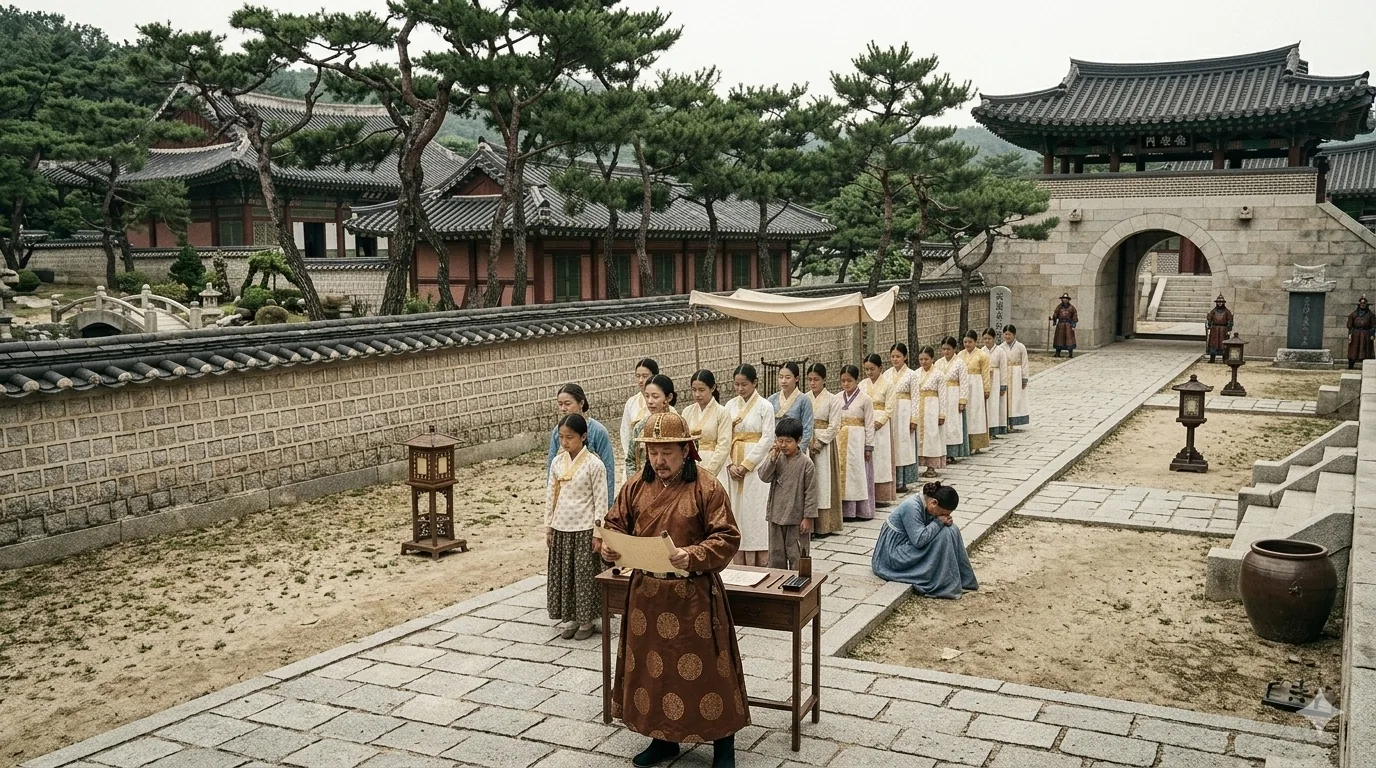
What the records capture clearly is the institutional response. In the 3rd month of 1274, the Yuan court sent an envoy, Cho Uk, demanding 140 women without husbands. Goryeo answered by establishing a dedicated bureau, the Gyeolhon Dogam (結婚都監, “Marriage Bureau”), to survey eligible women, compile lists, and oversee the requisition. It is worth being precise about what this office was: not an institution the Yuan planted inside Goryeo, but a temporary implementing body Goryeo itself set up in response to the Yuan demand.
Women sent as gongnyeo were assigned a range of roles in the Yuan imperial household: consorts for the emperor or imperial family members, ladies-in-waiting, servants. They were drawn primarily from commoner families — a structural distinction from the diplomatic marriages by which Goryeo kings were simultaneously expected to take Yuan princesses as their primary queens. The gongnyeo system and the royal marriage system operated in opposite directions along the same axis of power.
One documented social consequence — recorded in sources including the Goryeo-sa and discussed in the National Institute of Korean History’s account of Goryeo marriage customs (https://contents.history.go.kr/mobile/km/view.do?levelId=km_023_0050_0020_0010_0030) — was the spread of very early marriage (chohon, 早婚) in Goryeo, along with the yeseoje (豫壻制) custom of taking a son-in-law into the household early. Families rushed to marry off daughters, or betroth them, before a marriage ban could freeze the eligible pool. Historians caution that early marriage in Goryeo had multiple causes (Confucian propriety, economic arrangements, property considerations); the gongnyeo demand is best understood as having strongly accelerated these customs rather than inventing them from nothing.
What happened to the gongnyeo women — slaves, concubines, or palace servants?
There was no single fate. The gongnyeo were not one legal category, and the records describe a range of outcomes. According to the National Institute of Korean History’s 우리역사넷, many spent their lives as palace attendants or servants (effectively in servile status); some were placed in concubinage with members of the elite; and a small number rose unusually high — becoming the consorts of high officials, or, in the most exceptional case, an empress. Empress Ki is the famous outlier, not the rule.
What united them, then, was not a shared role but the mechanism: a coercive tribute system that removed women from Goryeo and transferred them into Yuan-controlled households and institutions, where their subsequent status depended on chance, patronage, and the demand of the moment. The drama naturally follows the one woman who reached the top; the institution itself consigned most of its women to anonymity.
Was Empress Ki a real historical figure, and what does the historical record say about her?
Lady Ki — later Empress Ki (奇皇后) — was a real person, of documented Goryeo origin, who entered the Yuan court and rose to become one of the most politically significant women in 14th-century East Asia (Encyclopedia of Korean Culture).
She was the daughter of Ki Cha-o (奇子敖) of the Haengju Ki clan. Entering the Yuan court (the specific circumstances of her entry are recorded differently in different sources), she gained the favor of Emperor Toghon Temür (元 順帝), bore his son Ayushiridara (1339) — later a Northern Yuan emperor — and was elevated to Second Empress in 1340. After Ayushiridara was named crown prince, she effectively eclipsed the First Empress politically, becoming a central force in Yuan court affairs; and on the First Empress’s death in 1365 she rose to First Empress herself.
Her reach extended back to Goryeo. She promoted Goryeo-born officials at the Yuan court and supported her brother Ki Cheol (奇轍), who accumulated extraordinary power in Goryeo — power that King Gongmin found intolerable. In 1356, as part of his anti-Yuan reformist policies, Gongmin moved against the pro-Yuan faction, executing Ki Cheol along with Gwon Gyeom and No Chaek. (Tension was not new: an earlier attempt to eliminate the Ki family during the 1352 Jo Il-sin revolt had only partly succeeded.) The Goryeo-sa records Ki Cheol’s removal as a pivotal event in Gongmin’s reform program, and places Ki Cheol himself in its “treason” biographies — a sign that the Goryeo court saw his power not as ordinary in-law influence but as a political threat to the throne.
Did Empress Ki really order an invasion of Goryeo?
It is tempting to summarize what followed as “Empress Ki ordered an invasion of Goryeo.” But the chronicle is more careful than that, and so should we be. The Goryeo-sa tells the episode primarily through the biography of Choe Yu (최유): it was Choe Yu who worked on Empress Ki’s resentment and the power of the Yuan court to push for deposing Gongmin and installing Deogheung-gun (덕흥군) as king of Goryeo. The structure of the record is not “the empress single-handedly commanded a war,” but “Choe Yu used the empress’s grievance and Yuan authority to drive a deposition-and-replacement plot.”
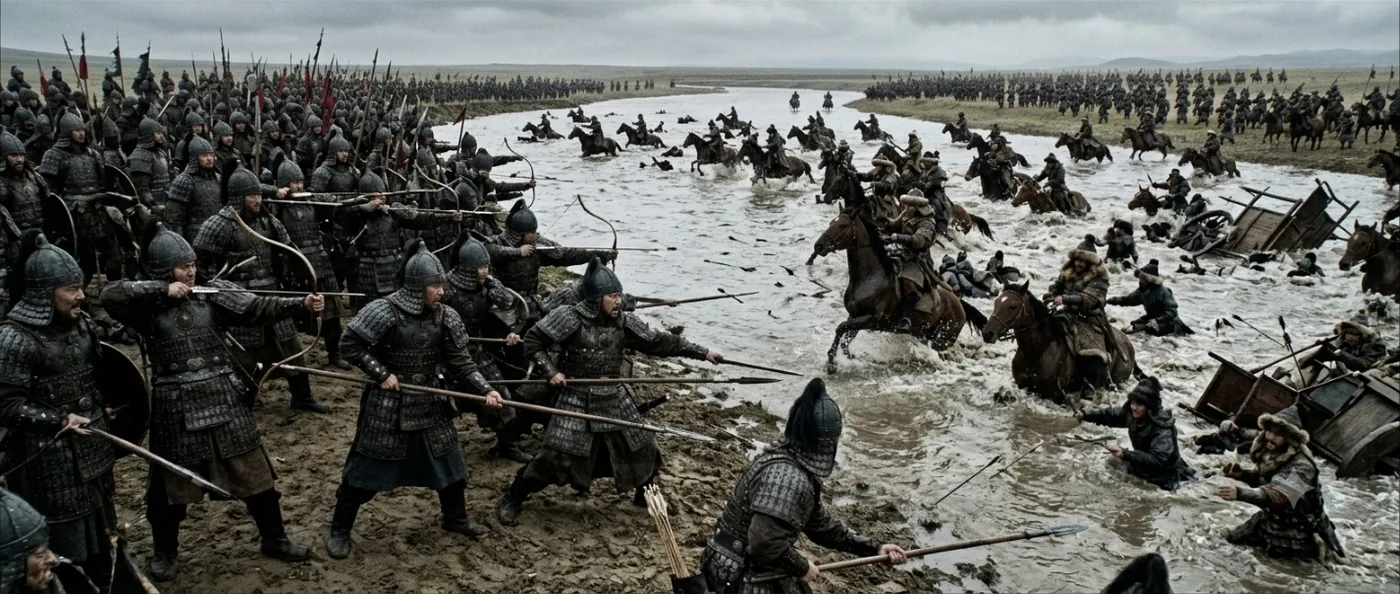
That plot became real military action. Deogheung-gun was set up in the Yuan as the rival king of Goryeo, and Choe Yu mobilized troops from Liaoyang to invade. Goryeo’s army repelled the invasion, and the attempt to unseat Gongmin failed. The episode is best described not as a personal vendetta but as a political-military crisis: when Gongmin destroyed the central pro-Yuan faction, Choe Yu and others leveraged the empress’s anger and the Yuan empire’s power to try to put their own candidate on the Goryeo throne.
On her death — what the sources actually say. Her death date is genuinely uncertain, and it is worth getting this right. The Yuan Shi (元史), compiled in the early Ming, follows Empress Ki only as far as her 1368 retreat north with Emperor Toghon Temür and records no death year at all. The later Xin Yuanshi (新元史, “New History of Yuan,” compiled in the early 20th century) states that she died in 1369. The Encyclopedia of Korean Culture, by contrast, treats her end as unknown and does not fix a date. In other words, “1369” comes from a much later source, not the contemporary official history — and the honest summary is that her final years are a gap in the record.
The crucial historical correction: The drama frames Empress Ki as a wronged woman who rises through virtue and determination. The historical sources — both the Yuan Shi and the Goryeo-sa — describe a more complicated figure. The Yuan Shi records her political activities in a relatively neutral register. The Goryeo-sa, written within the subsequent Korean dynastic tradition, is sharply critical of her family’s behavior. Neither portrait matches the drama’s sympathetic protagonist: the historical Empress Ki was a significant political actor who pursued power aggressively and used it in ways that both Korean and Chinese chroniclers found troubling.
Drama vs. real history — what does Empress Ki change?
| In Empress Ki | In real Goryeo–Yuan history |
|---|---|
| Lady Ki is sent as an unwilling tribute woman and rises through moral courage | Historical Empress Ki’s entry path and personality are contested; she is recorded primarily as a political actor |
| The drama frames her as a victim and hero | The Goryeo-sa treats her family’s conduct negatively; the Yuan Shi records her activities neutrally |
| She personally commands a vengeful war on Goryeo after her brother’s death | The Goryeo-sa frames the post-1356 attempt through Choe Yu, who used her resentment and Yuan power to install the pretender Deogheung-gun — an invasion Goryeo repelled |
| Ki Cheol (her brother) is portrayed with some complexity | Historical Ki Cheol was a powerful, widely resented figure placed in the Goryeo-sa’s “treason” biographies; his elimination was part of Gongmin’s reforms |
| Love and personal virtue drive the story | Historical sources are almost entirely silent on her inner life or personal motivations |
Key terms. Gongnyeo (貢女) — tribute women sent by Goryeo to the Yuan dynasty under Mongol overlordship, from 1274 onward; some 50 documented requisitions, an estimated 2,000-plus women. Gyeolhon Dogam (結婚都監) — the temporary Goryeo bureau set up in 1274 to administer gongnyeo requisitions. Chohon (早婚) — early marriage; its spread in Goryeo is partly attributed to families marrying daughters off before conscription age. Ki Cheol (奇轍) — Empress Ki’s brother; a powerful Goryeo figure executed by King Gongmin in 1356. Deogheung-gun (덕흥군) — the Yuan-backed pretender whom Choe Yu tried to install on the Goryeo throne. Yuan Shi (元史) — the official Chinese dynastic history of the Yuan, one of two main primary sources for Empress Ki’s life. Goryeo-sa (고려사) — the official Korean history of the Goryeo dynasty, compiled in the early Joseon period; more critical in tone regarding Empress Ki’s family. Heqin (和親) — the Chinese tradition of sending imperial women to steppe rulers as a peace gesture; structurally opposite to the gongnyeo.
How does the gongnyeo system compare to other forms of human tribute in world history?
The gongnyeo is striking in global comparative context precisely because it is so little known outside Korea — yet the structural practice it represents appears, in different forms, across pre-modern history.
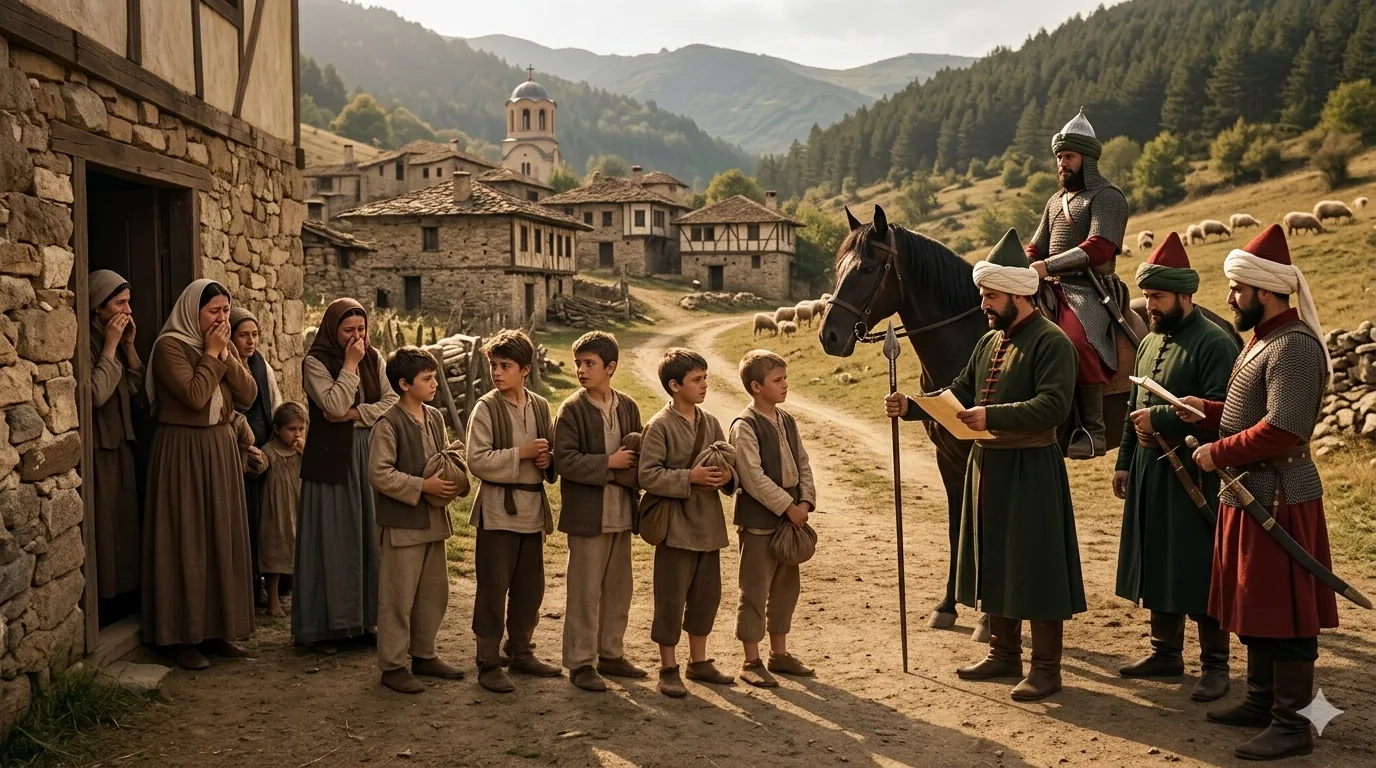
The Ottoman devshirme — a useful structural comparison, not an exact parallel. The devshirme operated across roughly the 14th through 17th centuries. The Ottoman state conscripted boys from Christian households in the Balkans and Anatolia, converted them to Islam, and trained them either for the elite Janissary military corps or for the Ottoman administrative bureaucracy (Encyclopædia Britannica). The comparison is useful because both were state-administered systems that extracted human subjects from subordinate populations through state power, as a form of tributary relationship. But the outcomes diverged radically: devshirme boys could be trained into military and bureaucratic elites — a coerced path that nonetheless led upward into the imperial apparatus — while gongnyeo women were sent into domestic, court-service, or concubinage roles under a very different gendered logic, and required no religious conversion. The devshirme appears with relative frequency in Western historical education; the gongnyeo does not, despite a comparable institutional logic of coercive human tribute.
Western European dynastic marriage — the same power, different structure. European medieval and early-modern dynastic marriage also used women as diplomatic instruments — princesses exchanged between royal families to seal alliances and peace agreements. But the structural difference from the gongnyeo is fundamental: dynastic marriage operated within the noble and royal class, involved negotiated exchange between families of roughly comparable standing, and carried significant (if often illusory) protections and agreements for the women involved. The gongnyeo system extracted commoner women from a subordinate state through state compulsion — not negotiation. The power asymmetry was total in a way that dynastic marriage, for all its coerciveness, was not.
Chinese “peace princesses” — the direction reversed. China’s own tradition of heqin (和親), or “harmonious kinship,” involved the Han and later dynasties sending imperial women — sometimes actual princesses, sometimes court ladies designated with the title — to marry steppe leaders as a means of buying peace. The most famous example is Princess Wencheng (文成公主), sent by Emperor Taizong of Tang to marry the Tibetan king Songtsen Gampo. This practice ran in the opposite direction from the gongnyeo: it was the dominant power offering women to manage a threatening peripheral power, rather than a subordinate power being forced to surrender women to its overlord.
Coming up next
A tribute system, a political empress, a cultural memory — and comparisons that span from the Bosphorus to the steppes to the Goryeo royal court. The gongnyeo is one of history’s less-examined institutions of coercive human exchange, and the drama, whatever its historical liberties, has done something valuable: it made the institution visible to a global audience that had never heard of it.
In the next essay, we return to Joseon — to the world of private tutors, examination fever, and the centuries-long roots of the SKY Castle admissions race.
Thanks for reading — see you in the next one.
Frequently asked questions
Was Empress Ki a real historical figure? Yes. Lady Ki (Empress Ki, 奇皇后) was a Goryeo-born woman who entered the Yuan court, became Emperor Toghon Temür’s favored consort, bore his son Ayushiridara (later a Northern Yuan emperor), rose to Second Empress in 1340, and became First Empress in 1365. She wielded substantial political influence in both the Yuan court and Goryeo. Her death date is uncertain — the contemporary Yuan Shi gives none, while the later Xin Yuanshi records 1369.
What was the gongnyeo tribute-women system? Gongnyeo (貢女) was the practice by which the Yuan dynasty demanded women from Goryeo as tribute during the Mongol overlordship period, beginning in earnest after 1274. Official histories record some 50 requisitions over roughly 80 years, with the total estimated at more than 2,000 women. They were assigned roles in the Yuan imperial household ranging from consorts to servants, drawn mainly from commoner families, and administered through a dedicated Goryeo bureau, the Gyeolhon Dogam.
What was the Gyeolhon Dogam? The Gyeolhon Dogam (結婚都監, Marriage Bureau) was a temporary Goryeo office set up in the 3rd month of 1274, after the Yuan envoy Cho Uk demanded 140 women. It surveyed eligible women, compiled lists, and oversaw conscription. It was Goryeo’s own implementing body created in response to the Yuan demand — not an office the Yuan ran inside Goryeo. One documented consequence was the spread of very early marriage, as families rushed to marry daughters off before conscription.
Were all gongnyeo women commoners? Mostly, but not exclusively. They were drawn primarily from commoner families — part of what distinguished the gongnyeo from the diplomatic marriages of royal and noble women. The demand could reach across social backgrounds depending on its scale, but the defining feature was the power asymmetry: Goryeo had to supply women under Yuan pressure, and families across the social spectrum tried to avoid it.
Did tribute women ever return to Goryeo? Some women returned after the Yuan dynasty’s collapse and Goryeo reasserted independence, but individual records are incomplete; many settled in place or vanish from the record. Scholarship on how returning women were received and reintegrated is limited by the fragmentary nature of the sources.
Did Empress Ki really order an invasion of Goryeo? Not in the simple sense the phrasing suggests. After King Gongmin executed her brother Ki Cheol in 1356, the Goryeo-sa records — primarily through the biography of the official Choe Yu — that her resentment and the Yuan court’s power were used to try to depose Gongmin and install a Yuan-backed pretender, Deogheung-gun, on the Goryeo throne. That plot led to a real invasion from Liaoyang, which Goryeo repelled. The accurate framing is a political-military crisis driven by Choe Yu and the Yuan court, leveraging the empress’s grievance — not a personal command of war.
How does the gongnyeo system compare to the Ottoman devshirme? Both were state-administered tribute systems extracting human subjects from subordinate populations. The devshirme targeted boys from Christian households, converted them to Islam, and channeled them into military (Janissary) or bureaucratic careers. The gongnyeo targeted women and assigned them domestic and court roles without religious conversion. The devshirme is relatively well known in Western historical education; the gongnyeo is not, despite a comparable institutional logic.
Is Empress Ki’s tomb really in Korea? There is a local tradition that it is, but it cannot be confirmed. In Yeoncheon, Gyeonggi Province, an old tomb mound is said to be Empress Ki’s grave. Because the sources do not agree on when or where she died — the Yuan Shi follows her only to her 1368 retreat north to Yingchang in today’s Inner Mongolia, and the major chronicles record no return to Goryeo — the Yeoncheon mound cannot be confirmed as her actual tomb. The National Institute of Korean History notes the tradition while stating its truth cannot be verified.
How is Empress Ki portrayed differently in Korean and Chinese historical records? The Yuan Shi records her political activities in a relatively neutral, matter-of-fact register. The Goryeo-sa, compiled in the early Joseon period from a Korean dynastic perspective, treats her family’s conduct — particularly Ki Cheol’s abuses — in clearly negative terms, placing Ki Cheol among its “treason” biographies. Neither source corresponds to the drama’s sympathetic framing of her as a virtuous victim turned hero.
Sources & further reading
This piece was written from the historical script and fact-check of 사뚱샘의 역사방 (SaDDungSam), drawing on primary chronicles, official dynastic histories, and scholarly sources:
- Gongnyeo system and total requisition numbers — National Institute of Korean History, 우리역사넷, “Marriage with Yuan princesses and gongnyeo” (https://contents.history.go.kr/mobile/km/view.do?levelId=km_001_0040_0030_0020_0010); Yu Hong-ryeol, “Goryeo’s Tribute Women to the Yuan,” Jindan Hakbo 18 (1957), pp. 34–37; Jeong Gu-seon, Gongnyeo (Kukhak Jaryowon, 2002).
- Empress Ki, Ki Cheol, Choe Yu, Deogheung-gun — Academy of Korean Studies, Encyclopedia of Korean Culture (한국민족문화대백과사전), entry on Empress Ki (기황후) (https://encykorea.aks.ac.kr/Article/E0008496); Goryeo-sa (고려사), Sega and the “treason” biographies (列傳 反逆) on Ki Cheol and Choe Yu; Yuan Shi (元史), biography of the empresses (后妃傳), Lady Ki; Xin Yuanshi (新元史) on her death in 1369.
- Gyeolhon Dogam and early marriage (chohon / yeseoje) — Encyclopedia of Korean Culture, “Gyeolhon Dogam” (https://encykorea.aks.ac.kr/Article/E0002210); National Institute of Korean History, 우리역사넷, “Changes in marriage customs and institutions” (https://contents.history.go.kr/mobile/km/view.do?levelId=km_023_0050_0020_0010_0030); Goryeo-sa, entries on gongnyeo, the Gyeolhon Dogam, and marriage.
- Scholarly studies on the Goryeo–Mongol relationship — Yi Myeong-mi, Research on Goryeo–Mongol Relations (고려-몽골 관계 연구).
- Ottoman devshirme — Encyclopædia Britannica, “Devshirme” (https://www.britannica.com/topic/devsirme).
- Chinese heqin (peace princess) tradition and Princess Wencheng — standard Tang-dynasty history; the heqin tradition and the marriage of Princess Wencheng to Songtsen Gampo are recorded in the standard histories of the Tang.
This article was researched and written by K-Drama History. Source: Was Empress Ki Real? Goryeo's Gongnyeo Tribute Women and the Yuan Dynasty, Explained — K-Drama History