Netflix's The East Palace: Why a Confucian Kingdom Kept an Official Shaman Inside the City Walls
Theme: Belief, Death & the Uncanny
From the research behind Pause the Drama.
Royal sons keep dying.
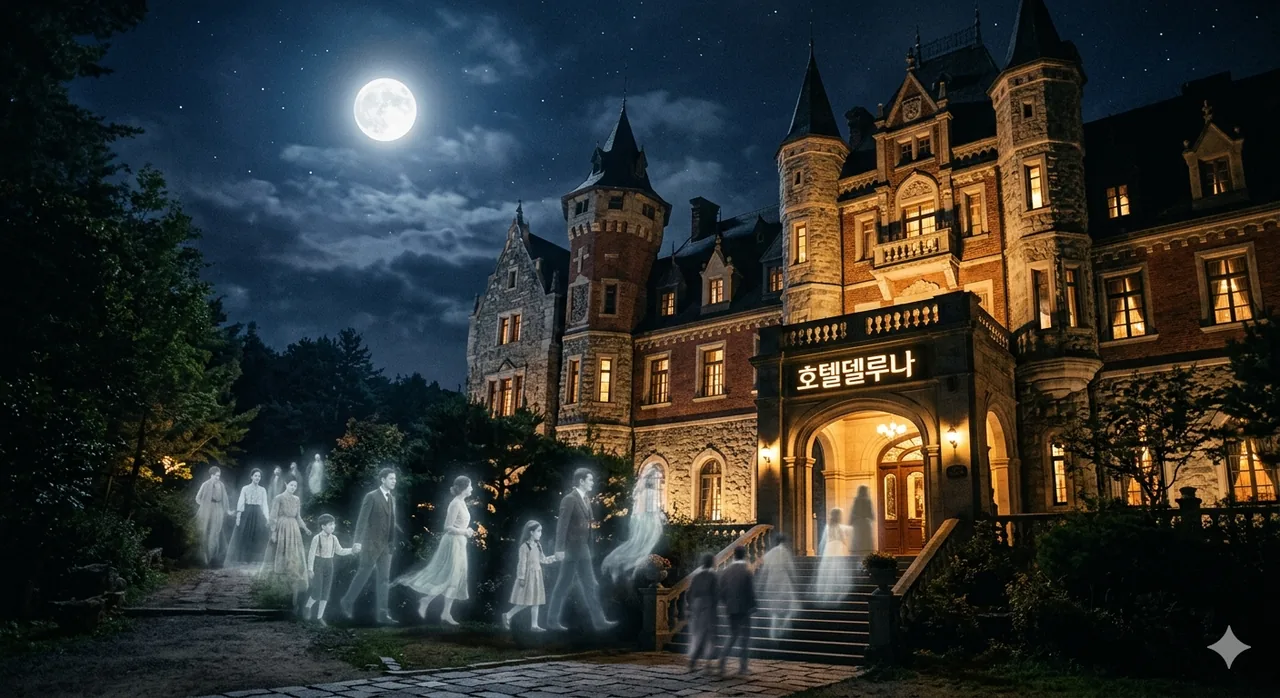
That is where The East Palace (동궁) starts — the eight-part Netflix mystery that dropped on July 17, 2026. Princes are falling dead with no cause anyone can name, and the palace has begun to whisper the explanation everyone reaches for when medicine runs out: a vengeful spirit. So the king (Cho Seung-woo) does something a Confucian monarch is not supposed to do. He does not convene the Office of the Inspector-General. He quietly sends for two people who have no business anywhere near a throne room — Gu Cheon (Nam Joo-hyuk), an exorcist who can cross into the world of the dead, and Saeng-gang (Roh Yoon-seo), a palace maid who can hear it. Go into the Donggung, the crown prince’s quarters, he tells them. Find what is in there.
The kingdom is invented. The show says so, and so should we.
That summons is not.
Strip the ghosts out of the scene and what remains is a historically recognizable Joseon response: royal illness, exhausted physicians, and ritual specialists called in to address what medicine could not explain — quietly, because the state’s own ideology said the king shouldn’t, and repeatedly, because the state kept such specialists on hand anyway.
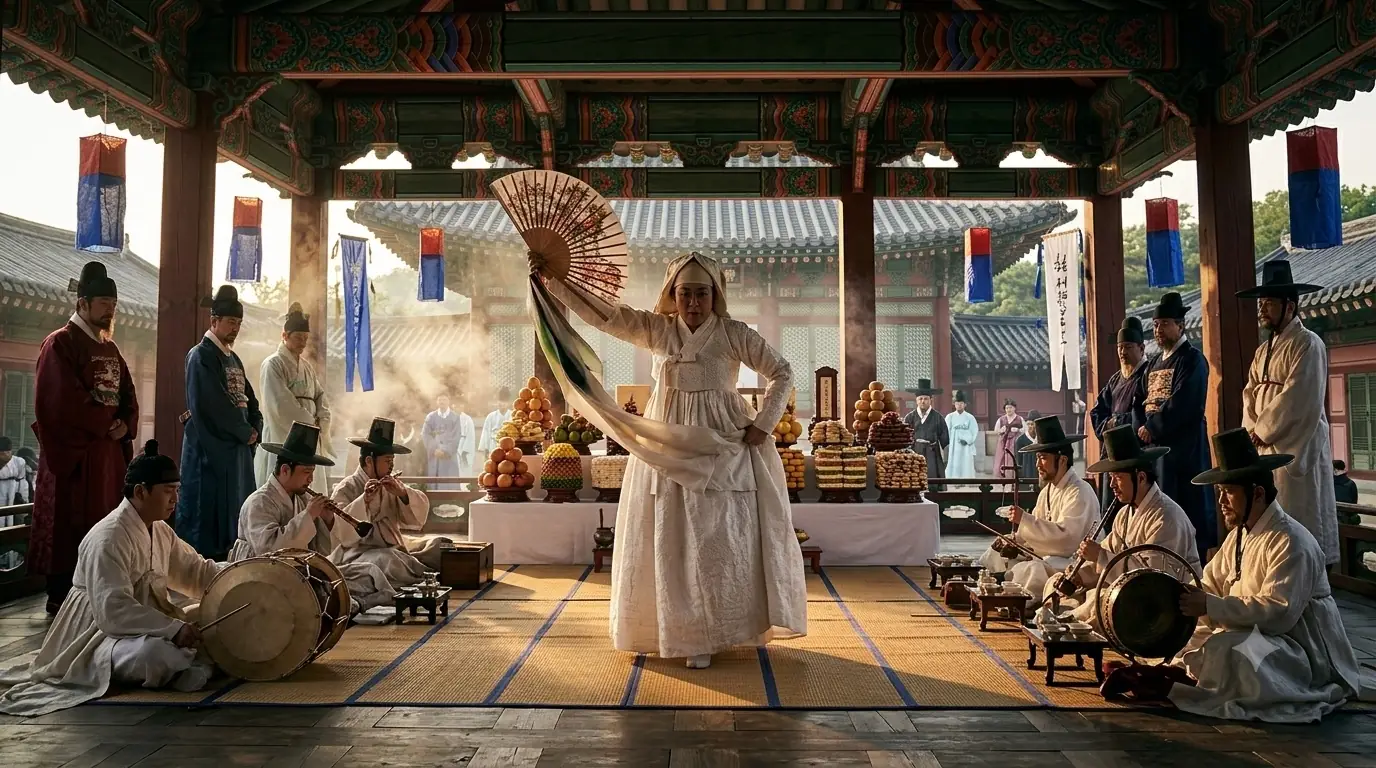
Quick answer: Joseon was a Neo-Confucian state that publicly classed shamanism as vulgar superstition — and simultaneously ran an office in the capital, the Seongsucheong (성수청), whose entire purpose was to let a national shaman conduct ritual petitions on behalf of the royal house. Confucian officials filed memorial after memorial pointing out the hypocrisy. The office was not abolished. Court shamanism was not simply Confucianism’s opposite: it operated as a parallel ritual system that the Joseon state repeatedly criticized, restricted — and continued to use.
Let’s open the palace door.
What does Donggung mean in Korean history?
Before the ghosts, a word about the title, because it tells you where the drama is pointing.
Donggung (동궁, 東宮) literally means “the eastern palace.” In the Sinitic court tradition Korea shared, the heir apparent’s residence was conventionally sited to the east of the sovereign’s main halls. Over time the building’s name migrated onto its occupant, and Donggung became a standard way of referring to the crown prince himself, the way “the Crown” can mean a monarch rather than a hat.
So a drama called The East Palace about an evil presence in the crown prince’s quarters is not just naming a location. It is naming the succession. In a dynastic monarchy, the heir’s residence is the single most politically loaded square of ground in the country — and a haunting there is, structurally, a crisis about the future of the state. Whatever else the show is doing, it has picked the right room.
Which raises the historical question the series never has to answer, because it opted out of real history: if something had genuinely gone wrong in that room, who would a Joseon king have called?
Did Joseon really keep a shaman on the government’s books?
It did, and this is the fact that reframes every court-shaman scene you have ever watched.
The Encyclopedia of Korean Culture, the standard reference compiled by the Academy of Korean Studies, has an entry for an office called the Seongsucheong (성수청, 星宿廳). Its description is remarkably plain: it was an office of the Joseon period established so that the gungmu — the national shaman — could take exclusive charge of gieun (기은, 祈恩), the state’s ritual petitions for the good fortune of the royal house. Gieun covered praying for the royal family’s safety, and also gi-u (기우) and gicheong (기청) — rites for rain and for clear skies — performed officially, by the state, as sinsa (신사, 神事), affairs of the spirits. (Encyclopedia of Korean Culture — Seongsucheong)
Read that again with the standard image of Joseon in mind. This is the kingdom of memorial tablets, ancestral rites, and scholar-officials who could quote the Book of Rites from memory. And in its capital there was an office whose staff was a shaman and whose job was to petition the spirits on the throne’s behalf.
The encyclopedia is careful about what it does not know, and we should be equally careful. The date the Seongsucheong was founded is unknown. So is the date it stopped functioning; the entry suggests it gradually became a dead letter as repeated measures to expel shamans from the capital wore it down. It also notes that the office may have resembled, or descended from, a Goryeo body called the Byeollye Gieun Dogam (별례기은도감, 別例祈恩都監) — while explicitly flagging that this is a supposition, not an established fact.
That hedging is worth pausing on. The surviving record is unusually thin: unlike better-documented offices, the Seongsucheong has left no securely identified founding edict or complete staffing record, and it appears most clearly in the sources when officials objected to it. That imbalance may reflect the office’s contested status — though the sources do not let us prove why its administrative record is so incomplete.
What did the palace actually hire a shaman to do?
Here the sources get specific, and the specifics are more interesting than any drama’s version.
The encyclopedia’s entry on the gungmudang (국무당, 國巫堂) — the national shaman — defines them as religious practitioners who handled the shamanic rites commissioned by the state. In Goryeo they were attached to the Byeollye Gieun Dogam, established in King Myeongjong’s reign. In Joseon they were attached to the Seongsucheong and to the Hwarinseo (활인서, 活人署). (Encyclopedia of Korean Culture — Gungmudang)
They were also organized by role. There was a domu (도무, 都巫), the presiding shaman, and jongmu (종무, 從巫), the shamans who assisted. This was a division of duties rather than a formal grade in the civil-service ladder — but it is still the shape of an assigned staff, not a folk arrangement.
And their listed duties read like a job description:
- the byeolgieun rite (별기은제), the special petition ceremony,
- rainmaking rites (기우제),
- rituals on behalf of queens and queen dowagers (왕비·태후의 무제),
- and byeonggut (병굿) — healing rituals — performed inside the palace.
That last item is the one to sit with. A gut is the mudang’s core ritual: music, dance, and trance, staged to summon spirits and set something right. A byeonggut is a gut performed against illness. The record says these were conducted in the palace, on behalf of the royal house, by shamans the state itself organized.
Ordinary people, the encyclopedia notes, had their own names for these figures — naramudang (나라무당) and naramansin (나라만신), “the kingdom’s shaman” — and for their rituals: naragut (나라굿), “the kingdom’s gut.” Those were popular usages rather than official titles. Whatever the scholar-officials wrote in their memorials, the population knew perfectly well that the state had shamans, and had ordinary words for them.
So: when The East Palace has a king reach past his ministers for someone who deals in spirits, the drama is inventing the people and the plot. It is not inventing the reflex.
If the Confucians hated it, why didn’t they just abolish it?
They tried. Repeatedly. The paper trail of their failure is one of the most revealing things in the whole record.
The complaints start early. In 1426, the eighth year of Sejong’s reign, the Office of the Censor-General petitioned for the abolition of the gungmudang, on the grounds that not only commoners but even the scholar-official class were keeping shamans and using them to make offerings to mountain, river, and city-god spirits. (Encyclopedia of Korean Culture — Gungmudang) Note the actual grievance: it was not simply that shamanism existed. It was that it had climbed the social ladder into the elite.
Then, in 1478, the ninth year of Seongjong’s reign, Seong Hyeon and colleagues at the Office of Special Counsellors submitted a memorial that puts its finger on the exact contradiction — and it is such a good line that it barely needs paraphrasing. The court, they observed, had installed a Seongsucheong inside the city walls so that gieun rites ran unbroken through spring and autumn, while simultaneously forbidding the common people to practise shamanism. (Encyclopedia of Korean Culture — Seongsucheong)
One law for the palace, another for the village. The Confucian bureaucracy saw the hypocrisy clearly, and said so in writing. The Seongsucheong was not abolished as a result — the record of the memorial does not tell us what else, if anything, followed.
The throne’s answer, when it came, was disarming. In 1503, the ninth year of Yeonsangun’s reign, the question before the king was whether to punish a particular national shaman who had been denounced. He declined, observing that placing a national shaman in the Seongsucheong was a practice of long standing — and asking, in effect, why this one shaman should be singled out when shamans generally worked the same way. (Encyclopedia of Korean Culture — Seongsucheong) Not “it is correct.” Not “the classics permit it.” Simply: this is how it has always been done. It was a reply about one case, not a formal defence of the institution — but against a bureaucracy that ran on precedent, it was unusually well aimed.
Two things then happen in the same year, 1506, and it is worth keeping them apart. In the third month, still under Yeonsangun, a royal order granted the Seongsucheong’s national shaman exemption from miscellaneous corvée labour. In the tenth month, now under Jungjong, Yi Yun and colleagues — again from the Office of Special Counsellors — revived the demand that the office be abolished. (Encyclopedia of Korean Culture — Seongsucheong)
The exemption came roughly seven months before that petition, so it was not a reply to it. But the pairing is still telling: within a single year the state both relieved its national shaman of labour obligations and was being told to abolish her office — and it did the first while declining the second.
It is worth setting this against a case that went the other way. Joseon also inherited a Daoist ritual office, the Sogyeokseo (소격서, 昭格署), which conducted cho rites — Daoist offerings to celestial deities. It descended from the Goryeo-era Sogyeokjeon, scaled down and renamed. And here the Neo-Confucian intellectuals mounted a genuine campaign: the encyclopedia describes a fierce confrontation between the throne and Confucian officialdom over abolishing the Sogyeokseo across the reigns of Yeonsangun and Jungjong. (Encyclopedia of Korean Culture — Sogyeokseo)
The contrast is instructive. The Daoist office was a nameable, attackable target — a discrete institution with a doctrine attached, exactly the kind of thing a reform movement can put in its sights. Court shamanism was harder to kill, because it wasn’t really a doctrine at all. It was a set of things people did when someone was dying, when the rain failed, when the palace felt wrong. You can abolish a bureau. It is considerably more difficult to abolish a reflex.
Why does this story keep leading back to royal women?
Because the sources keep leading there, and it is not a coincidence.
Recall the gungmudang’s listed duties: among them, explicitly, rites on behalf of queens and queen dowagers. (Encyclopedia of Korean Culture — Gungmudang) The women of the inner court were not incidental clients of court shamanism. They were named beneficiaries of it, in the reference entry describing the institution.
The structural reason is straightforward. Neo-Confucian ritual life was built around the ancestral rites, and those rites were performed by men, in a lineage system organized through men. Women were present in that world largely as supporting participants. The inner palace, meanwhile, was where the dynasty’s most acute anxieties actually lived — conception, childbirth, infant survival, a consort’s standing, a prince’s health. Confucian ritual could organize lineage, mourning and hierarchy with extraordinary precision; it was far less equipped to provide the immediate, emotionally responsive intervention sought when a royal pregnancy failed or a child stayed dangerously ill.
What the sources do show is narrower than a theory of gaps, and better evidence for it: shamanic rites are recorded in exactly these situations — illness in the royal house, petitions for its welfare — with the women of the inner court named as beneficiaries.
Which is why the most explosive court-shamanism scandal in Joseon history involves precisely those stakes. In Sukjong’s reign, after the death of Queen Inhyeon, a court investigation concluded that the royal concubine Huibin Jang-ssi had maintained a shrine (sindang, 신당) to the west of Chwiseondang (취선당), where rituals were performed against the late queen and for Jang’s restoration to the position of consort. The affair is known as the Mugo ui Ok (무고의 옥, 巫蠱의 獄) — the “sorcery incident,” mugo meaning shamanic cursing. (Encyclopedia of Korean Culture — Huibin Jang-ssi)
The consequences were not confined to the inner palace, and this is the part usually flattened in dramatizations. The Soron faction pleaded for Huibin’s life for the sake of the crown prince — her son. Sukjong refused, ordering her to take her own life. Her brother Jang Hui-jae was executed after interrogation, and a number of those implicated were punished. Senior Soron figures including Nam Gu-man, Yu Sang-un and Choe Seok-jeong were exiled or dismissed, though the individual outcomes differed — Choe Seok-jeong was sent out to Jincheon and released the following year. The affair weakened the Soron’s position at court and opened ground for the Noron. (Encyclopedia of Korean Culture — Mugo ui Ok)
Look at what that sequence demonstrates. A shrine behind a palace hall reorganized the balance of power between the two great factions of the Joseon court. Shamanic ritual inside the palace was not a private superstition running harmlessly alongside politics. When it surfaced, it was politics — with executions and exiles attached.
It also shows why the practice was so hard to document and so easy to weaponize. Court shamanism was, most of the time, tolerated and half-official. The moment it could be framed as cursing, the same activity became a capital matter. What separated a sanctioned rite for a queen’s welfare from treasonous sorcery was not the ritual itself but a combination of things — who it was aimed at, to what end, whether it had been ordered or authorized — with factional advantage pressing on every one of those judgements.
Where did shamans sit when the court dealt with sickness and death?
This is where the parallel-system argument becomes concrete, because sickness and death are where any state’s real cosmology shows.
Start with sickness. The gungmudang, remember, was attached not only to the Seongsucheong but to the Hwarinseo (활인서, 活人署) — and the Hwarinseo was not a religious body at all. It was the capital office responsible for the treatment of the sick. It was suspended during the Imjin War and abolished in 1882. (Encyclopedia of Korean Culture — Hwarinseo)
Sit with that for a moment. The office that ran relief and treatment for the capital’s sick and poor, and the state’s shamans, were placed within the same administrative landscape. That is not the same as saying shamans were the regular medical staff of a public health system — but whatever Neo-Confucian theory said about the causes of illness, these two channels were tied together on paper.
Now death — and here the pattern flips, because royal death was the one domain where Confucian ritual had a fully articulated answer.
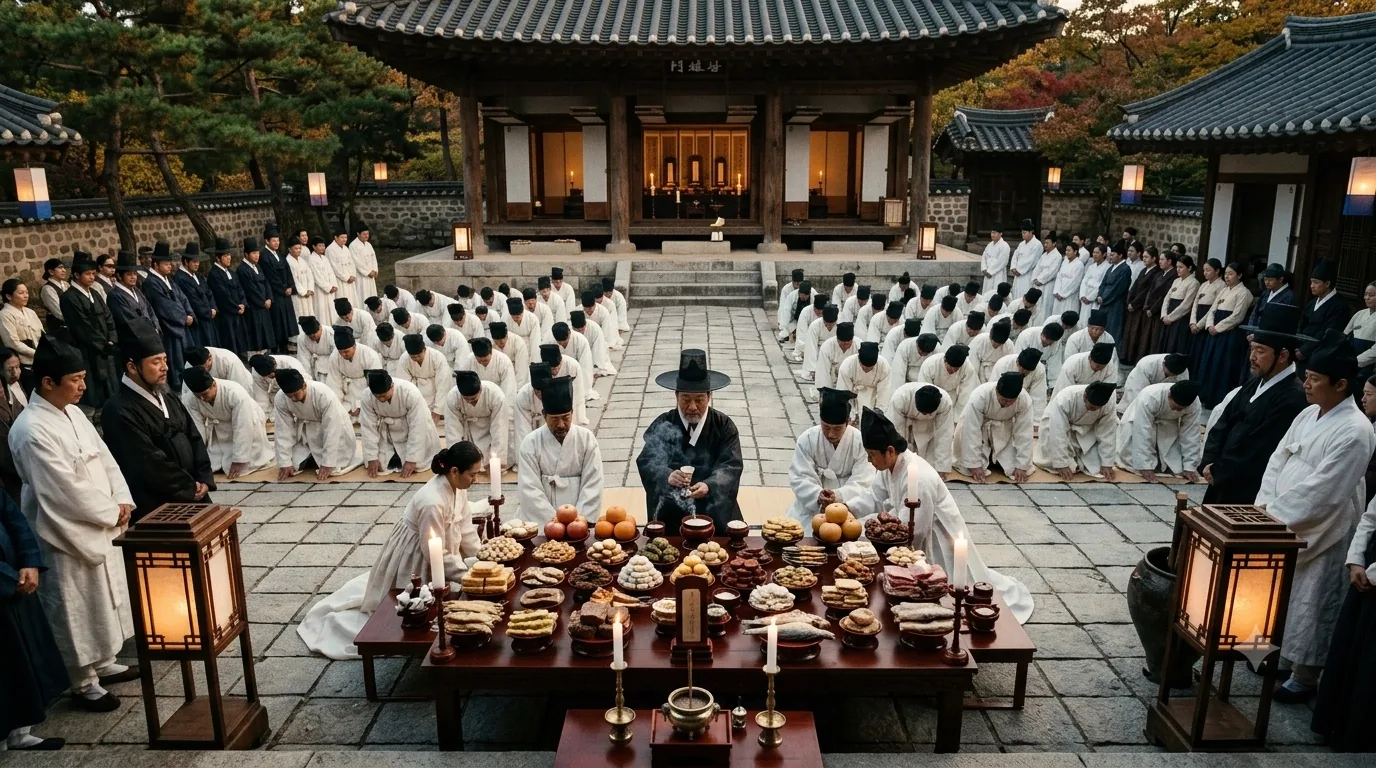
A royal death (guksang, 국상) triggered a machine. Three temporary directorates were set up first: the Binjeon Dogam (빈전도감), which installed and ran the binjeon — the hall where the coffin lay before burial; the Gukjang Dogam (국장도감), which oversaw the state funeral in its entirety, handling mourning, ceremony, finances, facilities and documentation across a process running roughly five months; and the Sallung Dogam (산릉도감), which built the tomb. After the burial the Binjeon Dogam was converted into the Honjeon Dogam (혼전도감), which ran the honjeon (혼전) — the spirit hall where the deceased’s tablet was enshrined and served until its eventual removal to the royal ancestral shrine. (Encyclopedia of Korean Culture: Guksang; Binjeon Dogam; Gukjang Dogam; Honjeon Dogam; Honjeon)
Notice the shape of this. The dead king is not simply buried. He is housed — coffin hall, then spirit hall, then ancestral shrine — and served at each stage by dedicated bureaucracies, on a multi-month schedule, all of it recorded. That is Confucian ritual at full institutional power.
Which is the crucial point for understanding court shamanism. Joseon’s Confucian order was not indifferent to the dead. It was obsessed with them.
It is tempting to say it had nothing to offer the dead who fell outside that order — and that would be wrong. Confucian state ritual did address them: the yeoje (여제, 厲祭) was a state rite for the musagwisin (무사귀신, 無祀鬼神), the “spirits without sacrifices” — those who died without descendants or met an unlucky end. The Gukjo Oryeui, Joseon’s ritual code, sets out their spirit tablets and the procedure for serving them. The state had a form for the ownerless dead.
What it did not have was a negotiation. The honjeon system places an ancestor at a settled rank and serves him there; the yeoje feeds the unplaced dead so that they stay quiet. Neither is a bargaining session with a specific angry spirit, conducted on that spirit’s terms — which is what an exorcist in a drama does, and what a gut does.
That is the real distinction, and it is narrower than “Confucianism had no answer.” It is the difference between ritual that assigns the dead a place and ritual that treats them as a party you have to deal with.
Did the Joseon court perform official rites to expel evil spirits? Yes — on a schedule.
If you take one fact from this piece, take this one, because it demolishes the tidy version of Joseon more efficiently than anything else.
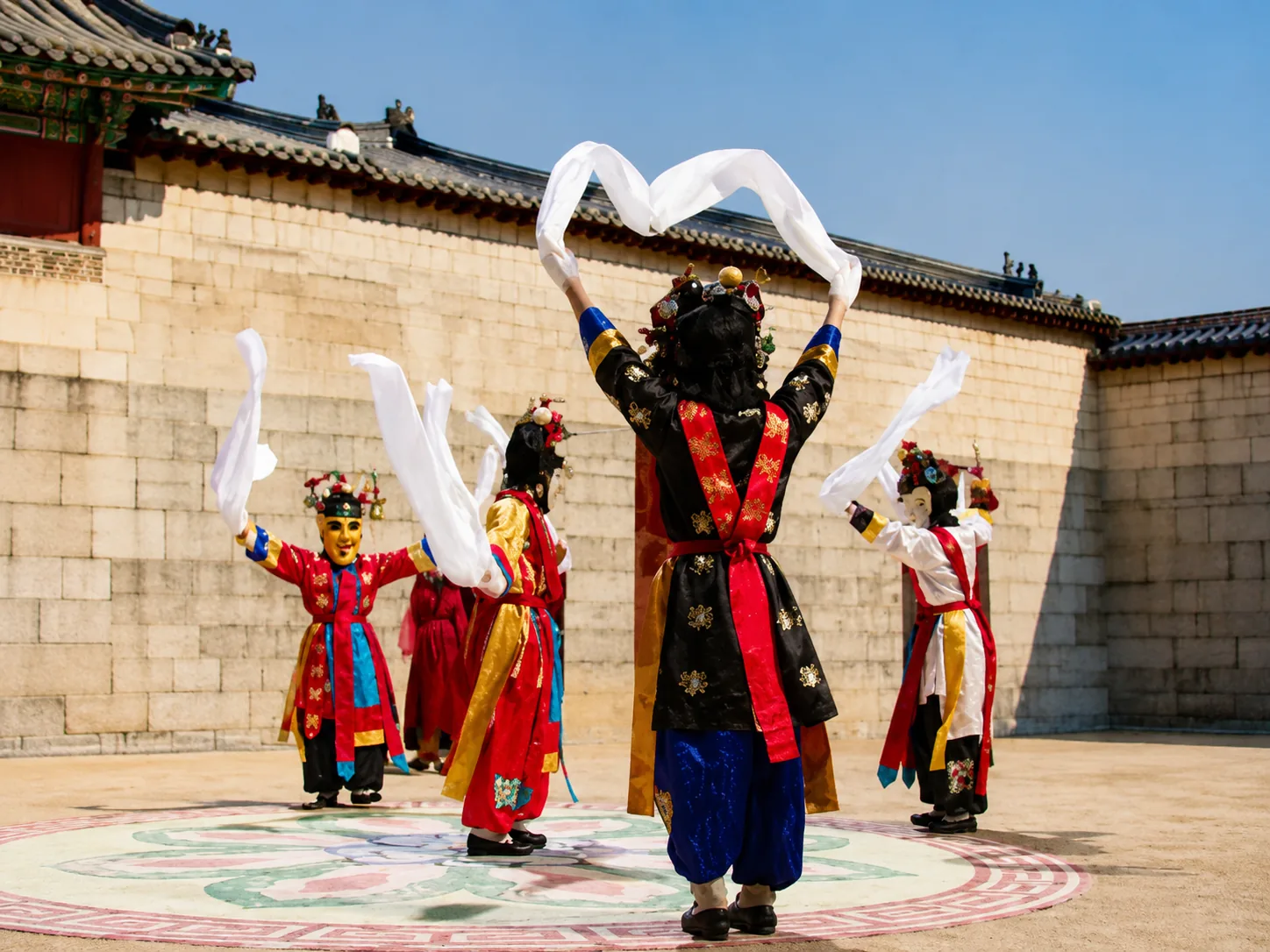
The narye (나례, 儺禮) was a court rite whose stated purpose was to expel malign spirits and purify the palace — on the explicit reasoning that as the palace became pure, the whole country would prosper and the people would live in peace. It appears to have reached Korea from China by around 1040 — the sixth year of Goryeo’s King Jeongjong (靖宗, the tenth ruler) — the reference works themselves putting it no more firmly than that, and from that reign onward it was performed on the last night of the lunar year to drive out evil spirits. In Joseon, it was also performed on other occasions, including rites at the royal ancestral shrine and the reception of foreign envoys. (Encyclopedia of Korean Culture — Narye) A directorate, the Narye Dogam (나례도감), was set up to organize it — a temporary body, raised when the rite was to be held and dissolved afterwards. Under Gwanghaegun a standing Narye-cheong was established; after it was abolished under Injo, the Bureau of Astronomy took the work on as required. (Encyclopedia of Korean Culture — Narye Dogam)
So: the Joseon court held an official rite of ritual expulsion and purification — an exorcistic ceremony in the broad sense, though not the same thing as a drama’s spirit-medium confronting a single ghost — on the calendar, with a government directorate to run it, on the theory that a spiritually clean palace produced a peaceful kingdom.
This is the sentence that should retire the idea of Joseon as a purely rationalist Confucian polity. It was not that the court privately indulged in ritual it publicly disavowed — though it did that too. It was that the driving out of malign influence from the royal residence was a normal item of state business, run by an administrative body the state set up for the purpose.
And this, finally, is why the premise of The East Palace rings truer than its fictional setting suggests. The show asks you to accept that a Joseon-style king would take seriously the idea that something malign had settled in the crown prince’s quarters, and would act on it. Historically, the premise is not as alien to Joseon court practice as it first appears.
| In The East Palace (2026) | In the Joseon record |
|---|---|
| A king secretly commissions specialists in the unseen | The state maintained the Seongsucheong so a national shaman could conduct gieun rites for the royal house |
| A shaman-adjacent figure operates inside the palace | Gungmudang were ranked (domu / jongmu) and performed byeonggut healing rites within the palace |
| The court publicly upholds Confucian order | Officials petitioned against the gungmudang in 1426, and against the Seongsucheong in 1478 — and lost |
| The heir’s residence is the site of the crisis | Donggung meant the crown prince’s quarters, and by extension the crown prince himself — the succession made architecture |
| Malign influence must be driven from the palace | The narye was an official court rite to expel evil spirits and purify the palace, run by a dedicated directorate |
| A woman of the inner court is entangled with the spirits | Rites for queens and queen dowagers were listed duties of the national shaman; the Mugo ui Ok made palace sorcery a matter of state |
| The kingdom itself is fictional | It is. The institutions behind the premise are not |
In short: the drama invented its kingdom, its characters, and its haunting — but almost every structural element around them, from the exorcism of the palace to the shaman on the state’s roster, is drawn from things Joseon actually did.
Key terms.
- Seongsucheong (성수청, 星宿廳) — the Joseon office established so the national shaman could take exclusive charge of the state’s ritual petitions for the royal house; founding and abolition dates unknown.
- Gungmudang (국무당, 國巫堂) — a shaman performing state-commissioned rites, organized as presiding (domu) and assisting (jongmu), called naramudang in popular usage.
- Gieun (기은, 祈恩) — official state petitions for royal welfare, including rites for rain and clear weather.
- Byeonggut (병굿) — a healing gut performed against illness, including within the palace.
- Narye (나례, 儺禮) — the court rite that expelled malign spirits and purified the palace, held on the last night of the lunar year.
- Honjeon (혼전, 魂殿) — the spirit hall where a deceased monarch’s tablet was enshrined and served after burial.
- Mugo (무고, 巫蠱) — shamanic cursing; the charge at the centre of the Mugo ui Ok.
Was Joseon unique in keeping specialists of the unseen near the state?
No. Japan formalized divination openly in the civil service: the Onmyōryō (陰陽寮), the imperial bureau of yin-yang divination, its functions attested from around 675 and formally established under the Taihō Code of 701, with duties covering divination, astronomy and the calendar (Masuo Shin’ichirō, Japanese Journal of Religious Studies 40-1, 2013). European monarchs, for their part, kept court astrologers close for decisions of war, marriage and succession. Rulers keeping diviners near the throne is closer to the premodern norm than the exception.
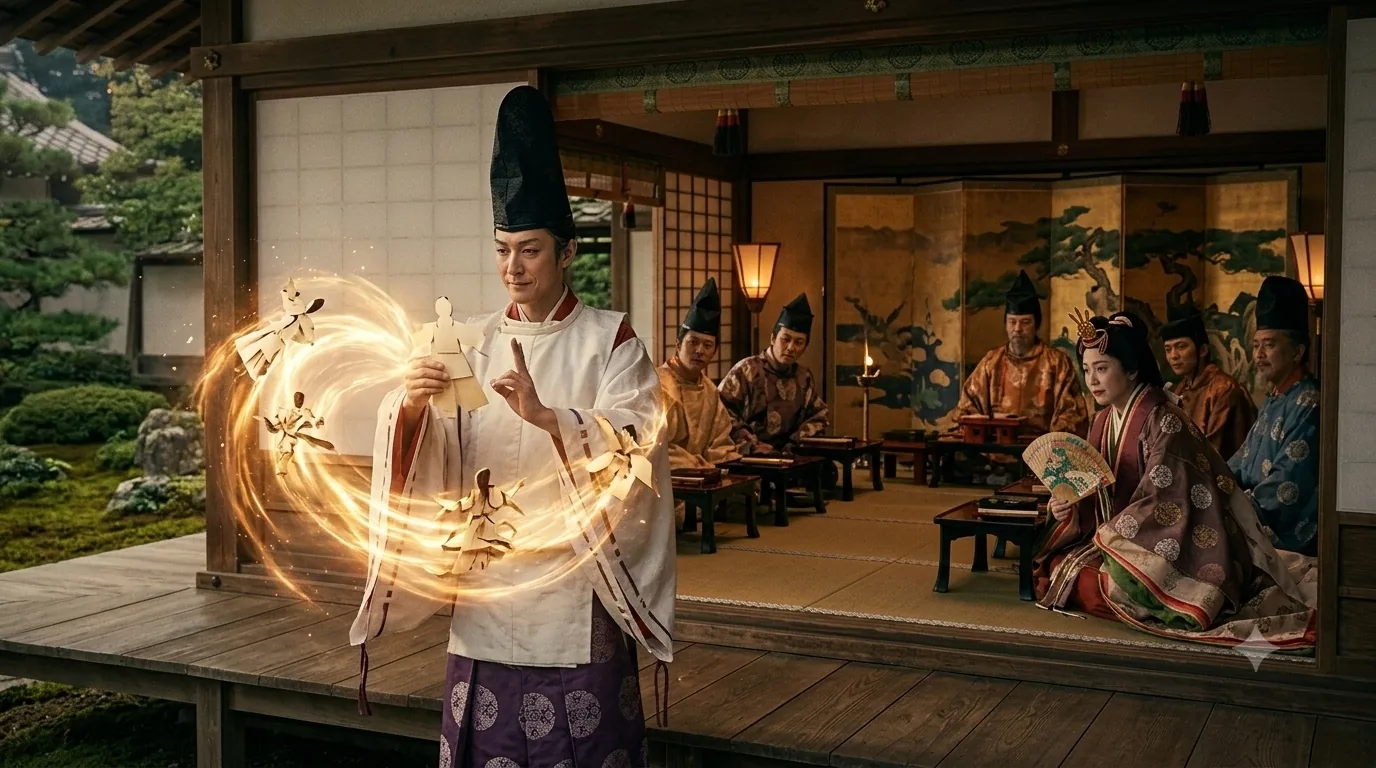 Japan’s answer to the same problem: put the diviners in a government bureau, openly. (AI illustration)
What distinguished Joseon was the uneasy combination: official condemnation, periodic expulsion of shamans from the capital, memorial after memorial demanding abolition — and continued royal use, century after century, without the arrangement ever receiving a public charter. What we are looking at in the Seongsucheong is not a state fighting a losing war against superstition, but a state running two ritual systems at once, giving one of them the prestige and asking the other for a range of practical work, and declining, century after century, to resolve the contradiction. (How other premodern courts managed their diviners is a story for a separate essay.)
The old faith outlasted the argument, too. The Inwangsan Guksadang (인왕산 국사당), the shrine housing deities of shamanic worship, still stands on Inwangsan in Seoul — moved there from Namsan in 1925, because the Japanese colonial authorities had built the Chōsen Shrine and objected to the Guksadang sitting above it. It was designated a national folk cultural property in 1973. (Encyclopedia of Korean Culture) It is a separate institution from the Seongsucheong, not its survival — but it is a reminder that the practices the memorials kept attacking outlasted both the dynasty that hosted them and the empire that came next, which could only make the shrine move uphill.
Coming up next
One haunted room in a fictional palace, and we’ve ended up with a state office for shamans, a memorial from 1478 that did not close it, a corvée exemption granted in the same year officials were demanding abolition, a shrine behind Chwiseondang that toppled a faction, and an annual government exorcism of the royal residence. That is the reward for asking what a drama takes for granted.
Next time, we’ll take another K-drama premise that looks like invention — and find the institution underneath it.
Frequently asked questions
Is Netflix’s The East Palace based on a true story? No. The series is set in a fictional kingdom, and its characters — the exorcist Gu Cheon, the ghost-hearing court lady Saeng-gang, and the king — are invented. What is not invented is the situation: Joseon really did maintain an office of state shamans inside the capital, and its court really did commission rituals against sickness, drought, and malign influence while officially condemning shamanism as superstition.
Did Joseon really employ palace shamans? Yes. State-commissioned shamans known as gungmudang performed rites organized through state institutions — in Joseon, the Seongsucheong and the Hwarinseo. Their recorded duties included ritual petitions for royal welfare, rainmaking rites, rituals on behalf of queens and queen dowagers, and byeonggut healing rites performed inside the palace. Ordinary people called them naramudang — the kingdom’s shaman.
What was the Seongsucheong? The Seongsucheong (성수청, 星宿廳) was the Joseon office that existed so the national shaman could take exclusive charge of gieun (기은) — the state’s ritual petitions for the royal house’s welfare, including prayers for rain and clear weather. Its founding date is not known, and neither is the date it ceased to function; it appears to have faded as repeated expulsions of shamans from the capital hollowed it out.
What does Donggung mean in Korean history? Donggung (동궁, 東宮) literally means “east palace.” It named the crown prince’s residence, placed east of the king’s quarters, and by extension came to mean the crown prince himself — the heir and the building shared a name. That is why a haunted Donggung is, dramatically, a haunted succession.
Did the Joseon court perform official exorcism rituals? Yes, in the broad sense, and on a schedule. The narye (나례) was a court rite meant to drive out malign spirits and purify the palace, performed on the last night of the lunar year, with a temporary directorate — the Narye Dogam — set up to run it. It was a rite of collective expulsion and purification, though, not the drama’s image of a spirit-medium confronting a single ghost.
Why is court shamanism so often tied to royal women? Because that is where the record puts it. The Encyclopedia of Korean Culture lists rituals for queens and queen dowagers among the national shaman’s specific duties. The most notorious case came in Sukjong’s reign: after Queen Inhyeon’s death, a court investigation concluded that the royal concubine Huibin Jang-ssi had maintained a shrine west of Chwiseondang where rituals were performed against the late queen and for her own restoration. The scandal is known as the Mugo ui Ok, and it ended with Sukjong ordering her to take her own life.
Was a gungmudang a government official? Not in the usual sense. A gungmudang was attached to state institutions and performed state-commissioned rites, but should not be imagined as a civil official who passed the examination system or held a conventional bureaucratic rank. The surviving sources describe designated ritual roles — a presiding shaman (domu) and assisting shamans (jongmu) — rather than civil-service grades.
Sources & further reading
This piece was written from the historical script and fact-check of 사뚱샘의 역사방 (SaDDungSam), working from Korea’s own reference and primary-source collections. Where the record is uncertain — the Seongsucheong’s founding and abolition dates, its relationship to the Goryeo Byeollye Gieun Dogam — this article says so rather than filling the gap.
- Seongsucheong (성수청) — the office established so the national shaman could take charge of state gieun rites; the 1478 memorial by Seong Hyeon and colleagues, Yeonsangun’s 1503 refusal to punish a national shaman on grounds of long precedent, and the corvée exemption granted in the third month of 1506. (Encyclopedia of Korean Culture)
- Gungmudang (국무당) — institutional attachments in Goryeo and Joseon, the domu/jongmu ranks, duties including byeolgieun, rainmaking, rites for queens and queen dowagers, and palace byeonggut; the 1426 petition for abolition; the folk terms naramudang and naragut. (Encyclopedia of Korean Culture)
- Musok (무속) and Mudang (무당) — the indigenous shamanic tradition and its practitioners. (Musok; Mudang)
- Hwarinseo (활인서) — the capital office for treating the sick, to which national shamans were attached; suspended during the Imjin War and abolished in 1882. (Encyclopedia of Korean Culture)
- Munyeochon (무녀촌) — shaman settlements and the social placement of shamans. (Encyclopedia of Korean Culture)
- Narye (나례) and Narye Dogam (나례도감) — the court rite for expelling malign spirits and purifying the palace, its transmission from China in Goryeo, its performance on the last night of the lunar year, and the temporary directorate that ran it. (Narye; Narye Dogam)
- Sogyeokseo (소격서) — the Joseon office for Daoist cho rites, descended from the Goryeo Sogyeokjeon, and the confrontation over its abolition under Yeonsangun and Jungjong. (Encyclopedia of Korean Culture)
- Mugo ui Ok (무고의 옥) and Huibin Jang-ssi (희빈 장씨) — the shrine west of Chwiseondang, the cursing of Queen Inhyeon, Sukjong’s order that Huibin take her own life, and the resulting damage to the Soron faction. (Mugo ui Ok; Huibin Jang-ssi)
- Royal death ritual — guksang and the three temporary directorates for the coffin hall, the state funeral and the tomb, with the coffin-hall directorate later converted to run the spirit hall. (Guksang; Binjeon Dogam; Gukjang Dogam; Honjeon Dogam; Honjeon)
- Inwangsan Guksadang (인왕산 국사당) — the shamanic shrine relocated from Namsan in 1925 and designated a national folk cultural property in 1973. (Encyclopedia of Korean Culture)
- Onmyōryō (陰陽寮) — Japan’s imperial bureau of yin-yang divination; functions attested from around 675 and the bureau formally established under the Taihō Code of 701, its duties covering divination, astronomy, the calendar and official timekeeping. (Masuo Shin’ichirō, JJRS 40-1, 2013)
If you want the companion piece on why Confucian Joseon could never rid itself of shamanism in the first place, that argument is laid out in our essay on The Moon Embracing the Sun.
Thanks for reading — see you in the next one.
This article was researched and written by K-Drama History. Source: Netflix's The East Palace: Why a Confucian Kingdom Kept an Official Shaman Inside the City Walls — K-Drama History