Why Did King Sejong's Own Scholars Try to Block Hangul? Tree with Deep Roots & the Politics of Korean Literacy, Explained
Theme: Knowledge & Science
From the research behind Pause the Drama.
The 45-second version — on YouTube
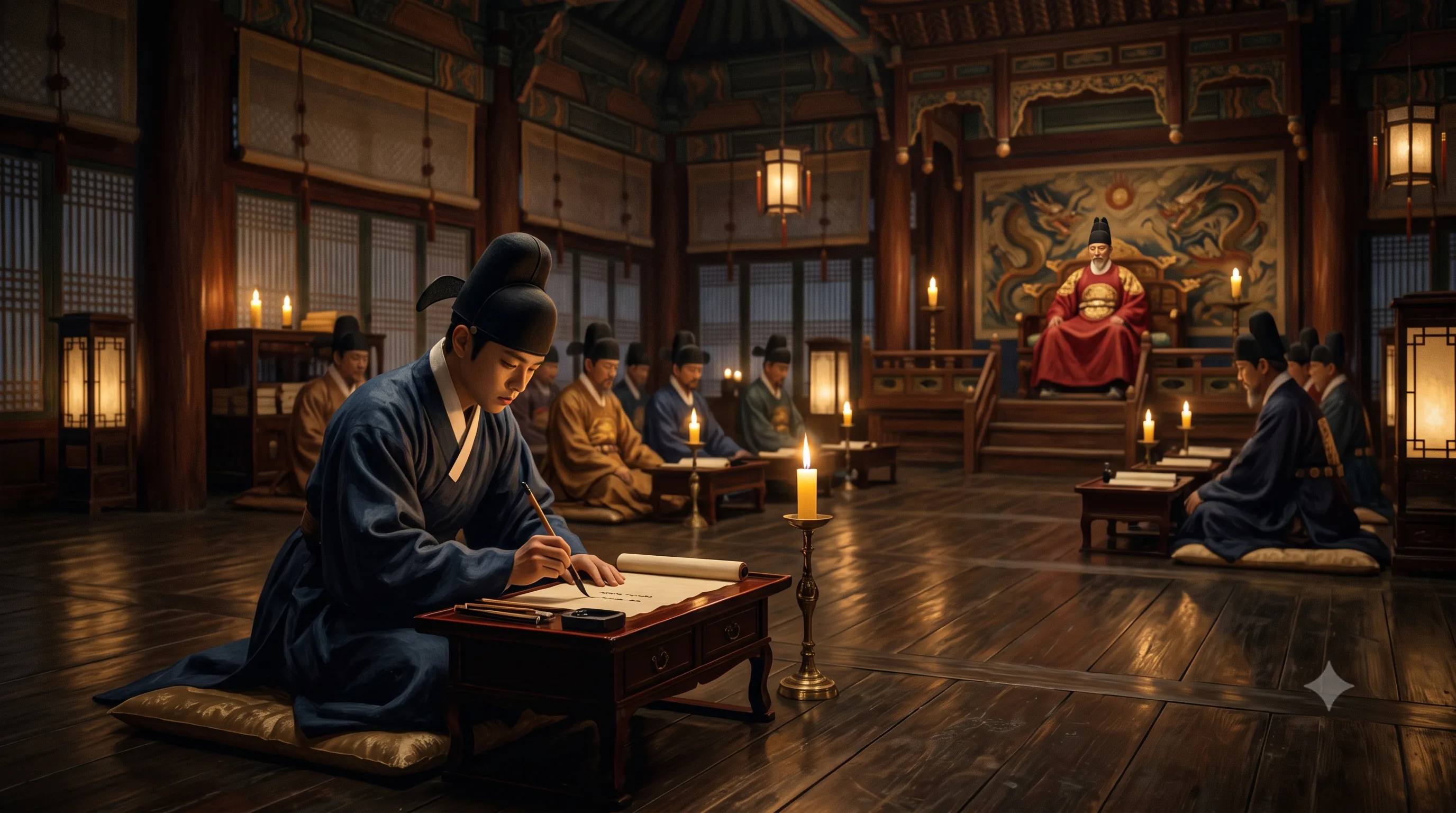
In Tree with Deep Roots (뿌리깊은 나무), the thriller’s tension doesn’t come from swords or palace coups in the usual sense. It comes from ink. A scholar kneels in candlelight and submits a petition — not against a tax, not against a war, but against the very idea that ordinary Koreans should have their own letters. The man is Choe Man-ri, Deputy Director of the Jiphyeonjeon, the royal research institute. The thing he wants to stop is Hangul.
That image — a learned man arguing that a new alphabet should not exist — sounds strange to modern ears. But the petition Choe filed in early 1444 was not irrational. It was a precise defense of the system that made men like him powerful. Understanding why he fought, and why King Sejong pushed back, is the first step to understanding what Korean literacy meant — and what it still means today.
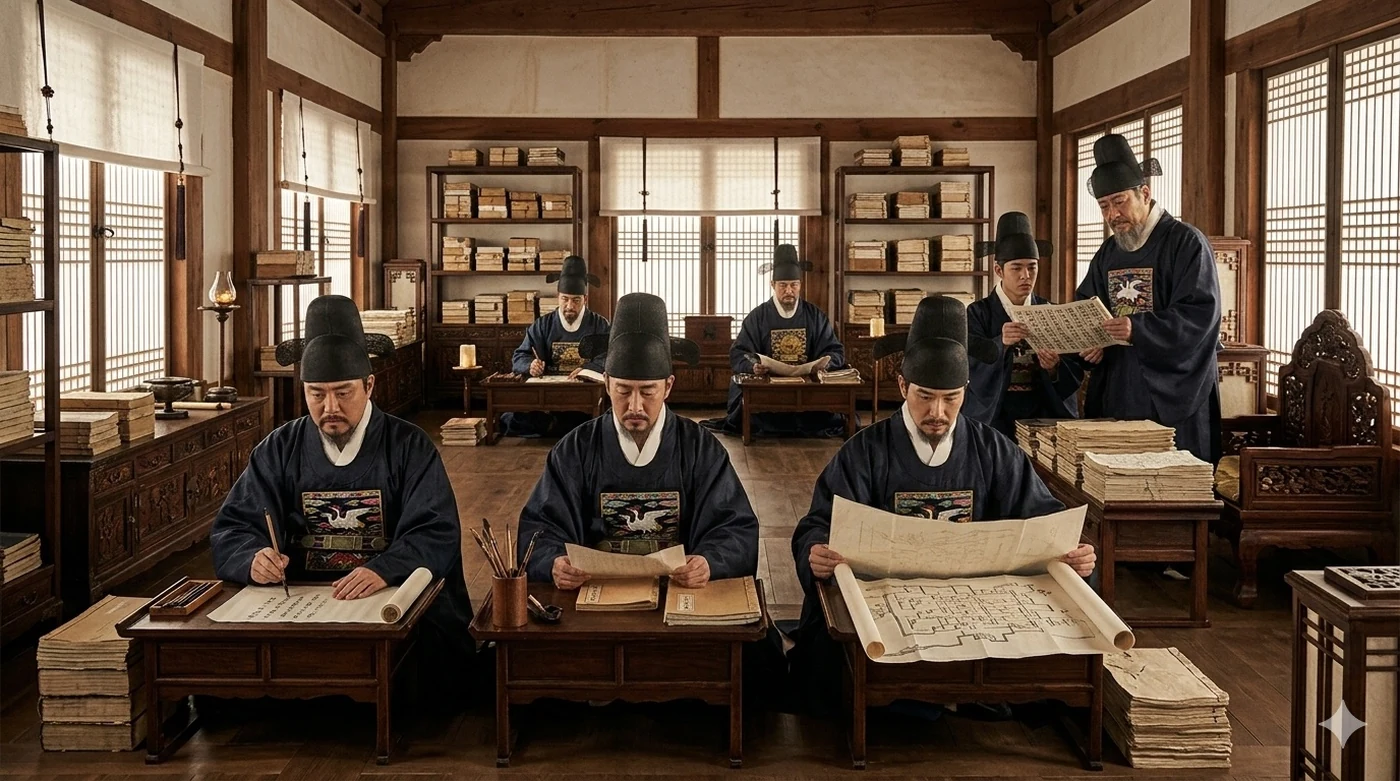
Quick answer: Tree with Deep Roots dramatizes a real historical conflict. King Sejong completed Hangul — then called Hunminjeongeum, “the correct sounds for instructing the people” — in 1443, promulgated it officially in 1446, and faced genuine scholarly opposition from men who understood that an alphabet ordinary people could learn quickly would erode the monopoly on power that classical Chinese literacy had maintained for centuries. The drama sharpens this into thriller form; the history is more nuanced, but the stakes were real.
Let’s unpack it.
Who actually created Hangul — and why does that question matter?
The most persistent misconception about Hangul is that the Jiphyeonjeon (집현전) scholars created it. The Annals of the Joseon Dynasty (Joseonwangjo Sillok) say the opposite, explicitly and repeatedly: Sejong himself designed the script. The scholars did participate — but in a later role. They helped compile the Hunminjeongeum Haerye (훈민정음 해례본), the 1446 explanatory manual that detailed the phonological principles behind each letter. The design of the alphabet itself is attributed to Sejong throughout the primary record.
This distinction matters beyond court politics — though the claim needs stating precisely, and we have tightened it since first writing this. It is often said that Hangul is almost the only script whose creator, date, design and purpose are all on record. That is too strong: the Cherokee syllabary and the Mongol Phags-pa script are also documented inventions with named creators and dates. What is unusual about Hangul is narrower and more remarkable — a document from the moment of creation, the Hunminjeongeum Haerye, sets out the reasoning behind the shape of each individual letter. (We take the comparison up in The Hunminjeongeum and Phags-pa.) Most of the world’s scripts evolved over centuries or millennia, passed through dozens of cultures, and cannot be traced to a single mind or moment. Chinese characters evolved across at least three thousand years. The Latin alphabet adapted from Greek, which adapted from Phoenician, across two thousand years of gradual change. Hangul was different: a deliberate design, completed in a specific year, by a named individual, for an explicit reason.
That reason is stated in Sejong’s own preface to the Hunminjeongeum: “There are many among our people who, having something they wish to say, are unable in the end to express their thoughts.” The language is carefully framed — but the meaning is not. The king was acknowledging, in a founding document, that literacy was a class barrier, and that he intended to lower it.
Why was classical Chinese a political technology, not just a language?
To understand why Hangul was disruptive, it helps to understand what classical Chinese (hanmun) actually demanded. Mastering enough characters to read and write official documents, pass the civil-service examination (gwageo), and participate in governance required decades of intensive study — the kind that only wealthy yangban families with tutors, libraries, and long study periods could sustain. A poor farmer’s son had virtually no path to this literacy.
This was not a side effect of the system. It was the system. The yangban scholar-official class’s access to knowledge — and therefore to power — flowed directly from their exclusive control of the written word. A new script that an ordinary Korean could learn in days (contemporary accounts suggest that motivated adults could grasp Hangul’s basic mechanics within a week or two) was therefore not a neutral educational tool. It was a long-term structural challenge to the architecture that kept the learned class at the top.
Choe Man-ri and his colleagues understood this. Their 1444 petition ran to six formal objections, which can be grouped into three main lines of argument: that a distinctively Korean script would distance Joseon from the shared Sinitic cultural sphere and damage diplomatic relations with China; that the existing idu phonetic notation system already served any legitimate purpose; and that deep scholarship required classical Chinese and could not be conducted in a vernacular script. (The remaining objections concerned legal fairness, the lack of broad consultation before implementation, and the Crown Prince’s involvement in the project.) These arguments had genuine logical coherence within a Confucian scholarly worldview.
It is worth noting that Choe’s opposition was not simply resistance to a script for the common people — he had raised no objection while the Hunminjeongeum itself was being developed. His memorial specifically targeted the follow-on project of using the new script to reform Sino-Korean character readings (based on the Chinese rhyme dictionary Gujin Yunhui Juyao), a point that makes his stance a matter of scholarly and diplomatic principle rather than pure obstruction.
When Sejong refuted each argument in a direct personal audience — an unusual act in Joseon court etiquette — he had the seven signatories briefly detained by the Uigeumbu (Royal Investigation Bureau) and released the very next day. Of the group, only Jeong Chang-son was formally dismissed from office; the others, including Choe Man-ri, kept their posts. Choe Man-ri himself, however, resigned shortly afterward and retired to his hometown, where he lived out his remaining years. The historical record suggests Sejong recognized the petition as serious scholarly disagreement rather than sabotage, which is consistent with Choe’s standing as a respected academic within the court. The drama transforms this into something more sinister for narrative effect; the real story is subtler, and in some ways more interesting.
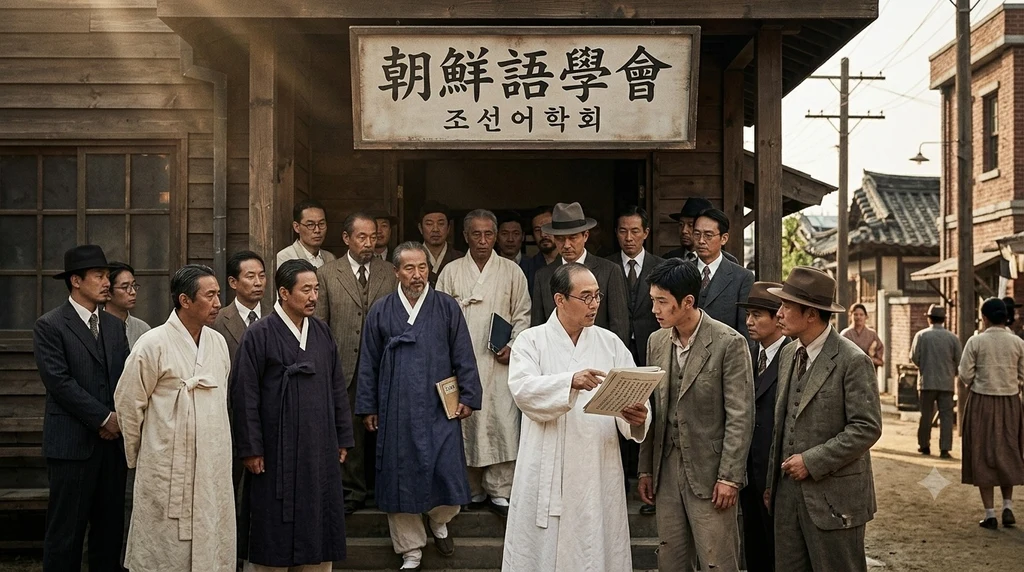
Even after royal promulgation in 1446, Hangul’s displacement of Chinese was far slower than a royal decree might suggest. The scholarly establishment continued to call it eonmun (언문, “vernacular script”) — a word often described as dismissive, though that reading needs care, since the Veritable Records use it in the very entry recording the king’s own creation of the script (上親制諺文二十八字), which makes it the ordinary term set against classical Chinese rather than an insult in itself — and classical Chinese remained the language of official documents, the gwageo, and diplomatic correspondence for the next four centuries. Hangul circulated through private letters, popular fiction, Buddhist devotional texts, and the writing of women and commoners — a persistent but unofficial literary culture running beneath the official one. It was not until the late 19th century, through reform movements, nationalist journalism, and the Independence Club press, that Hangul began to be treated as an equal of Chinese characters in official life. Japanese colonial policy both suppressed Korean-language education and, paradoxically, sharpened Hangul’s identity as the medium of Korean national consciousness.
What makes Hangul’s design scientifically unusual?
The Hunminjeongeum Haerye is the document that makes Hangul remarkable not just as a cultural artifact but as a linguistic object. It explains, in systematic detail, the phonological logic behind every letter shape — something almost no other writing system’s foundational documents do, because almost no other writing system was engineered in this way.
Consonants are shaped to represent the position of the speech organs that produce them. The basic shape ㄱ represents the back of the tongue raised against the soft palate — exactly the configuration the mouth makes when producing k or g. Add a stroke to get ㅋ (the aspirated version). Double it for ㄲ (the tensed version). The logic is consistent: phonetic features are encoded directly into graphic form. Many linguists classify Hangul as a featural alphabet — a script in which letter shapes systematically encode phonological features rather than simply pairing arbitrary symbols with sounds. Linguist Geoffrey Sampson’s influential analysis placed Hangul in this category, though the extent to which every element of the script is truly featural remains a subject of ongoing scholarly discussion. It is, at minimum, one of the most deliberately engineered scripts in recorded history.
Vowels follow a different but equally systematic logic drawn from a Neo-Confucian cosmological framework of three elements: heaven (ㆍ), earth (ㅡ), and humanity (ㅣ). Complex vowels are built by combining these primitives.
The original script contained twenty-eight letters. Modern standard Korean uses twenty-four — fourteen consonants and ten vowels. The four letters no longer in use — the arae-a vowel ㆍ and the consonants ㅿ, ㆁ, and ㆆ — fell away for different reasons. Three dropped out as the sounds they represented shifted or disappeared from spoken Korean during the middle Joseon period. The fourth, ㆁ (the “old ieung”), did not vanish for phonetic reasons: after centuries of being used interchangeably with ㅇ, it was formally merged into the modern ㅇ by the 1933 Unified Hangul Orthography (한글맞춤법통일안).
UNESCO recognized the Hunminjeongeum Haerye — the 1446 explanatory manual — on its Memory of the World Register in 1997, citing the document’s extraordinary nature as one of the only surviving primary sources that records a writing system’s complete design logic and intended purpose in the words of its creator’s own time.
How accurately does Tree with Deep Roots portray the historical conflict?
| In Tree with Deep Roots | In real history |
|---|---|
| Scholars are killed to protect the secrecy of Hangul’s creation | No killings occurred; the opposition took the form of an open court petition, not a conspiracy |
| The Jiphyeonjeon is divided into secret factions for and against the new script | The opposition was concentrated in a specific petition; other scholars later assisted with the Haerye |
| Choe Man-ri functions as a central antagonist figure | He was a real scholar who submitted a real petition; he was briefly jailed, then restored to his post — not a villain in the historical record |
| The new script is framed as a direct threat to the ruling class’s monopoly | Historically accurate: classical Chinese literacy was the foundation of yangban social power, and an accessible new script was a structural long-term challenge |
| Sejong works on the script in total secrecy | The Sillok records that Sejong shared the work with specific scholars; total operational secrecy is a dramatic invention |
The drama’s core historical argument — that creating Hangul was a political act threatening entrenched power — is sound. The thriller scaffolding around it is invention, but the underlying tension it dramatizes was genuine.
Key terms. Hunminjeongeum (훈민정음) — “the correct sounds for instructing the people”; the original name for what we now call Hangul, applied both to the script and to the 1446 royal proclamation. Jiphyeonjeon (집현전) — Joseon’s royal research institute of elite scholars; key members helped compile the Haerye but did not design the script itself. Haerye (해례) — the 1446 explanatory manual that sets out the phonological principles of each letter in systematic detail; the document UNESCO inscribed in 1997. Eonmun (언문) — “vernacular script,” the standard Joseon term for Hangul, used to distinguish it from hanmun (classical Chinese), which was treated as the only legitimate literary language for centuries after Hangul’s creation. Gwageo (과거) — the Joseon civil-service examination, conducted entirely in classical Chinese; passing it was the gateway to officialdom, and the literacy barrier it imposed was precisely what the yangban class had built its exclusive status on.
Script, power, and the vernacular: what happened in the rest of the world?
Korea’s story of a literacy gate and the attempt to open it has close parallels — and significant contrasts — across the globe.
China — the script that crossed every dialect. Chinese characters presented the inverse of a vernacular-script problem. Because they are logographic — one character encodes one meaning — educated people across regions whose spoken languages were mutually incomprehensible could write to each other in classical Chinese. A scholar from Guangdong and one from Beijing might not have understood each other in conversation, yet could correspond freely on paper. This made hanmun a powerful instrument of cultural cohesion across East Asia — but at the cost of an enormous and exclusive literacy barrier. The Baihua Movement of the early 20th century, which pushed for written Chinese based on vernacular Mandarin rather than classical wenyanwen, is roughly analogous to what Hangul represented: an attempt to make writing available to people who had always spoken but could not read or write.
Western Europe — Luther, the press, and the vernacular explosion. The analogy that travels furthest in European terms is Martin Luther’s 1522 German Bible translation. Medieval Europe’s situation mirrored Joseon’s in one important respect: Latin was the language of the Church, the law, and the university. Ordinary people spoke German, French, Italian, and English, and vernacular writing certainly existed — but Latin still dominated the highest institutions of Church, law, and university learning. When Luther translated scripture into vernacular German — and Gutenberg’s printing press disseminated it at unprecedented speed — the literacy monopoly of Latin cracked open. The resulting explosion of vernacular print culture fueled not just the Reformation but the foundations of modern national literatures. The parallel with Hangul is suggestive rather than exact. Unlike Sejong, who commissioned an entirely new writing system from scratch, Luther did not create the first vernacular German Bible — at least eighteen printed German editions predate his 1522 New Testament. What made his version transformative was its idiomatic, source-language translation and the printing press’s role in mass distribution, not the invention of vernacular scripture itself. Still, the underlying dynamic rhymes: a change in the medium of writing challenged institutions that had built their authority on the old medium’s inaccessibility.
Turkey — a top-down script revolution in reverse. The most dramatic modern comparison is Mustafa Kemal Atatürk’s 1928 alphabet reform, which replaced the Arabic-based Ottoman Turkish script with a Latin-based one. The surface resemblance to Sejong ends quickly: Atatürk adopted a foreign script rather than inventing a native one, and his goal was Westernization rather than popular accessibility in the same sense. But the political logic was structurally similar — who controls the script controls access to the written past and the literate future. The reform was implemented within months in what historians describe as a radical rupture with Ottoman cultural inheritance. One lasting consequence was that modern Turkish citizens lost direct access to Ottoman-script texts — a severance from the literary past that Sejong’s reform did not cause in the same way, since Hangul was introduced alongside Chinese literacy rather than in place of it. The scale of what Atatürk mandated in a matter of months — replacing a script system across an entire nation’s educational apparatus — is striking in any comparison, and the historical accounts confirm it was indeed accomplished with extraordinary speed, though reconstructing the exact timeline remains complex.
Coming up next
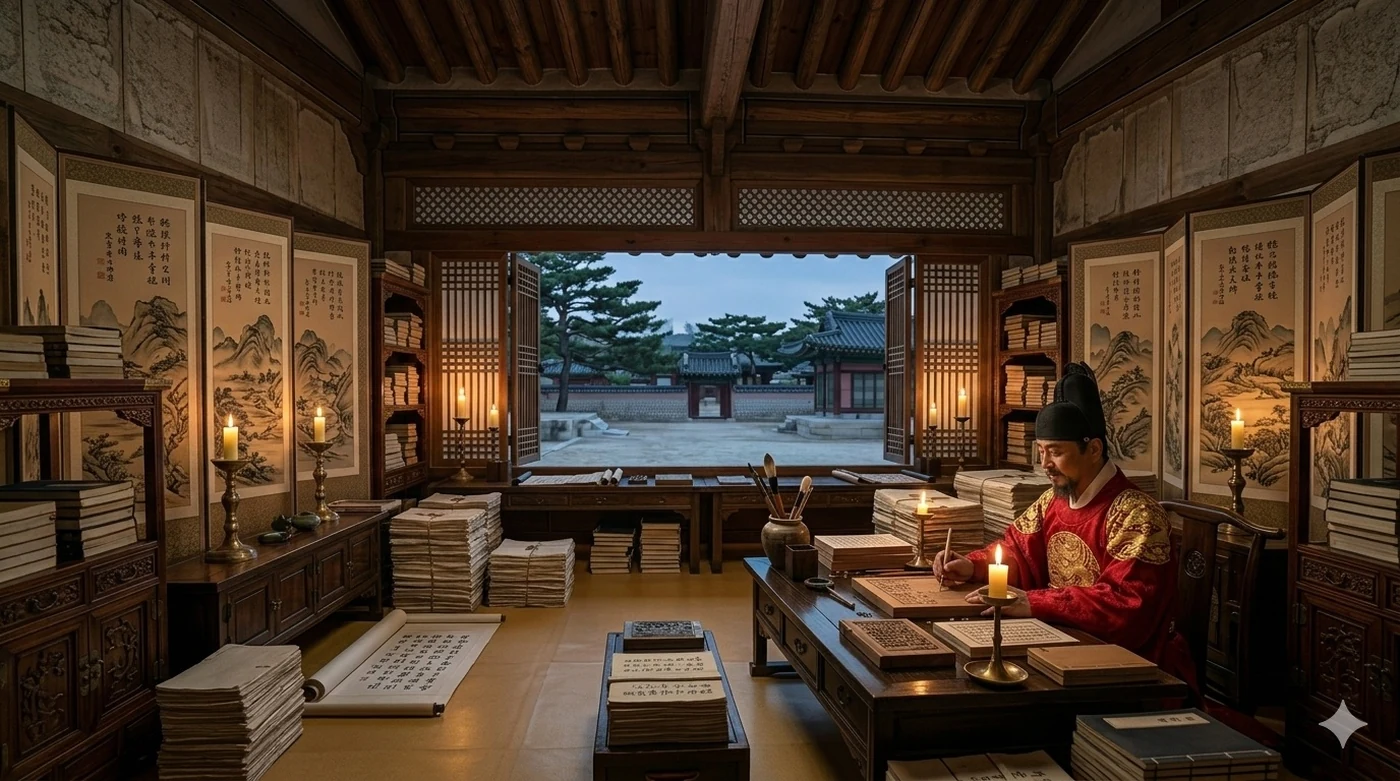
A king who spent years designing a script in the face of his own scholars’ resistance. A literacy system that remained “unofficial” for four centuries after royal promulgation. And a single explanatory manual so unusual in the history of writing that UNESCO inscribed it as a world document. The most extraordinary part of the Hangul story may not be the creation but the persistence: how a script written off as “vernacular” for centuries became the medium through which Korean national identity eventually crystallized.
In the next essay, we look at another Joseon institution with deep roots — one that kept not just knowledge but people themselves locked inside a social structure for five hundred years.
Thanks for reading — see you in the next one.
Frequently asked questions
What is Tree with Deep Roots about? Tree with Deep Roots (뿌리깊은 나무, 2011, SBS) is a historical thriller set in the court of King Sejong during the secret creation of Hangul. A series of murders targeting Jiphyeonjeon scholars drives the plot, but the drama’s real subject is the question behind every killing: who has the right to control the written word, and what would threatened power do to protect it?
Did King Sejong really invent Hangul alone, or did the Jiphyeonjeon scholars create it? The Annals of the Joseon Dynasty (Joseonwangjo Sillok) attribute the creation of the script to Sejong personally. The Jiphyeonjeon scholars later contributed to the Hunminjeongeum Haerye — the explanatory manual — but the design of the alphabet itself is recorded as Sejong’s own work. This makes Hangul one of the only writing systems in history whose inventor, date of creation, and design principles are all documented in surviving contemporary records.
Why did Choe Man-ri oppose Hangul in 1444? Choe Man-ri and six fellow Jiphyeonjeon scholars — the seven signatories named in the Sejong Sillok petition of 1444 — submitted a petition arguing that the new script would damage Joseon’s ties with China, was unnecessary given the existing idu system, and could not support serious scholarship. Underlying these arguments was a structural reality: mastery of classical Chinese characters was the foundation of the scholar-official class’s monopoly on knowledge and power. A script ordinary Koreans could learn quickly threatened that foundation.
What is a featural alphabet, and is Hangul really one? A featural alphabet is a writing system in which letter shapes encode phonological features — the position of speech organs, the presence of aspiration, and so on — rather than simply assigning arbitrary symbols to sounds. Many linguists, following analyses like Geoffrey Sampson’s, classify Hangul as a featural alphabet because its consonant shapes are derived from the geometry of the speech organs that produce the corresponding sounds. It is considered a rare, possibly unique, example of this type among fully developed writing systems, though the precise scope of the classification continues to be discussed in the literature.
How many letters does Hangul have? The original 1443 script had twenty-eight letters. Modern standard Korean uses twenty-four: fourteen consonants and ten vowels. Three of the four discontinued letters fell away as their sounds changed or disappeared from the mid-Joseon period; the fourth, ㆁ, was merged into the modern ㅇ by the 1933 Unified Hangul Orthography rather than disappearing for phonetic reasons.
When did UNESCO recognize the Hunminjeongeum, and why? UNESCO inscribed the Hunminjeongeum Haerye — the 1446 explanatory manual for the new script — on its Memory of the World Register in 1997. The recognition cited the document’s extraordinary nature: it is one of the only surviving primary sources that records, in the creator’s own era, the complete design logic and intended purpose of a writing system.
Why did Hangul remain a “second-class” script for centuries after its creation? Despite royal endorsement, the Joseon scholarly establishment kept Hangul in a subordinate role — the term eonmun (“vernacular script”) is the ordinary contrast with classical Chinese rather than an insult in itself, since the Veritable Records use it in the entry recording the king’s own creation — and continued using classical Chinese for official documents, the gwageo examination, and diplomacy for four more centuries. Hangul circulated through popular fiction, private letters, and women’s writing — important but unofficial channels. Only in the late 19th century, through reform movements and the colonial-era Korean press, did Hangul rise to full official status.
How does Sejong’s alphabet reform compare with Atatürk’s 1928 script change in Turkey? Both were top-down decisions by powerful leaders about which script would carry the national language. The direction was opposite: Sejong created a native script to lower the literacy barrier for ordinary Koreans, while Atatürk replaced a native (Ottoman Arabic-based) script with a foreign (Latin-based) one as a Westernization measure. Atatürk’s change was implemented within months, severing modern Turks from direct access to Ottoman-script texts. Sejong’s change was introduced alongside Chinese literacy rather than in place of it, and it took centuries for Hangul to fully displace classical Chinese in official use.
Sources & further reading
This piece was written from the historical script and fact-check of 사뚱샘의 역사방 (SaDDungSam), drawing on primary records, institutional encyclopedias, and peer-reviewed scholarship:
- King Sejong as creator of Hangul; the Choe Man-ri petition (1444); Sejong’s prefatory text; royal promulgation in 1446 — Sejong Sillok (Annals of King Sejong), Joseonwangjo Sillok (Annals of the Joseon Dynasty), National Institute of Korean History digital edition. (sillok.history.go.kr)
- Phonological design of the Hunminjeongeum; the 28-letter original system; the four obsolete letters — Hunminjeongeum Haerye (1446 explanatory manual); Encyclopedia of Korean Culture (한국민족문화대백과사전), Academy of Korean Studies, entries on Hunminjeongeum and Jiphyeonjeon. (encykorea.aks.ac.kr)
- UNESCO Memory of the World inscription (1997) — UNESCO Memory of the World Programme official register entry for the Hunminjeongeum Haerye.
- Hangul as a featural alphabet; linguistic analysis of its design — Sampson, Geoffrey, Writing Systems: A Linguistic Introduction (Stanford University Press, 1985); Ledyard, Gari, The Korean Language Reform of 1446 (University of California, Berkeley, 1966).
- Hangul’s marginalization as eonmun; history of script adoption in official use — Lee, Ki-Moon and S. Robert Ramsey, A History of the Korean Language (Cambridge University Press, 2011).
- Atatürk’s 1928 alphabet reform — Lewis, Geoffrey, The Turkish Language Reform: A Catastrophic Success (Oxford University Press, 1999).
- Luther’s German Bible and the vernacular revolution in Europe — Eisenstein, Elizabeth, The Printing Press as an Agent of Change (Cambridge University Press, 1979).
Thanks for reading — see you in the next one.
This article was researched and written by K-Drama History. Source: Why Did King Sejong's Own Scholars Try to Block Hangul? Tree with Deep Roots & the Politics of Korean Literacy, Explained — K-Drama History