Agent Kim Reactivated, Explained: How Korea Went from Son Preference to “Daughter Fool” Dads
Theme: Women’s Lives
From the research behind Pause the Drama.
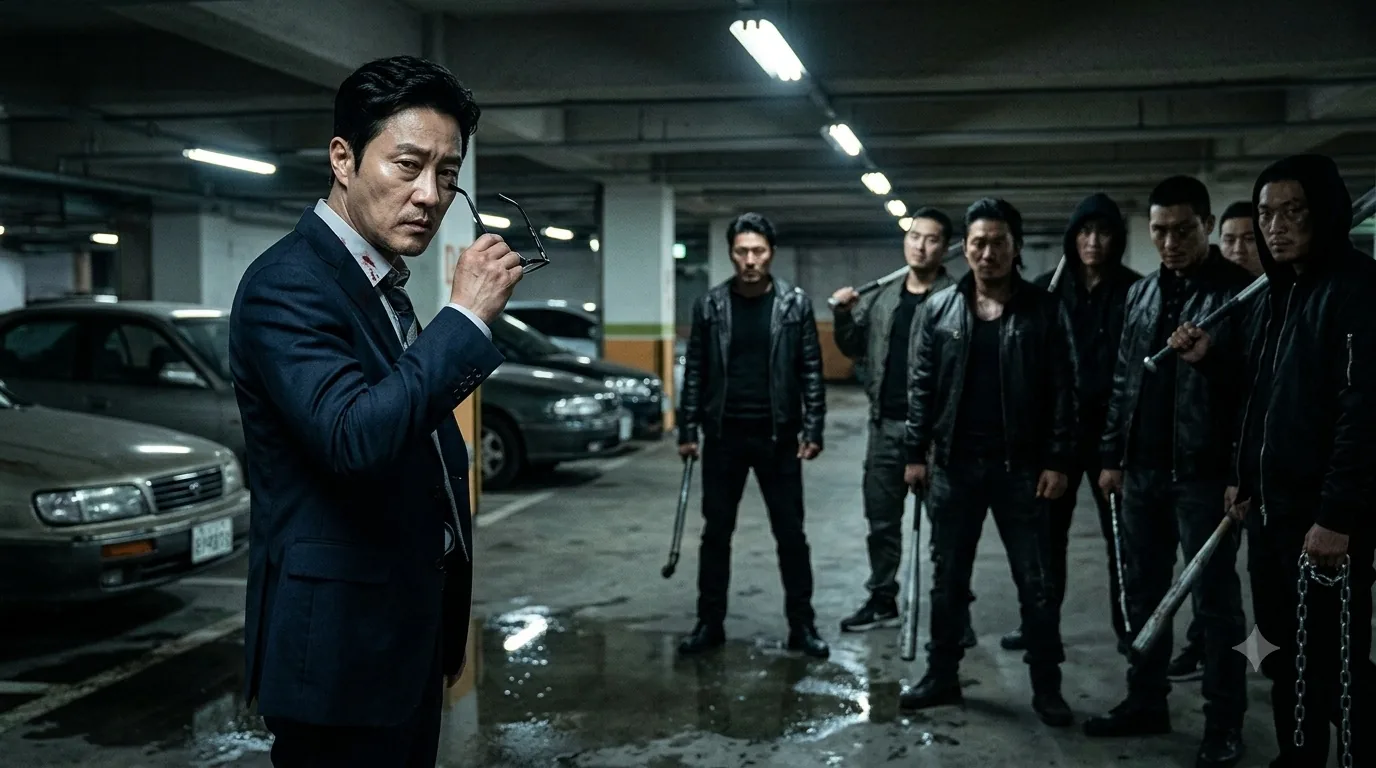
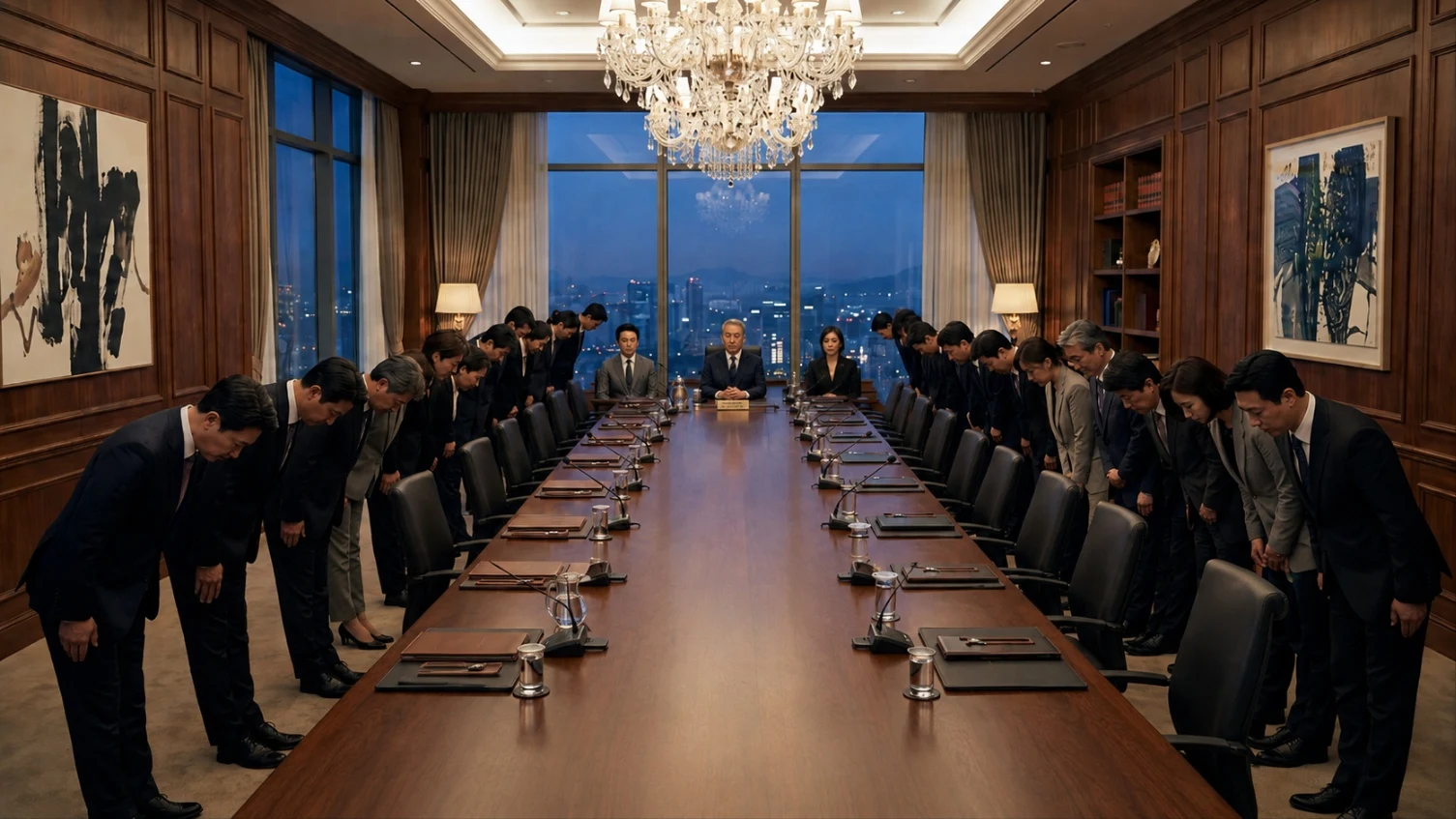
If you’ve watched SBS’s Agent Kim Reactivated (김부장) — the 2026 action hit about a mild-mannered bank manager with a buried past as a formidable covert operative — you’ve seen the scene this essay starts from. It isn’t a fight. In Episode 1, his daughter Min-ji is accused in a school-violence case and faces a disciplinary committee, and the most dangerous man in the series gets down on his knees in front of a chaebol chairman to beg for leniency. A man who could end the confrontation with one hand chooses humiliation instead, because that’s what his daughter needs from him at that moment.
So why does he kneel — and why does that scene feel so instantly legible to Korean viewers?
What does “ttalbabo” mean?
Korean has a word for fathers like Agent Kim, and it is not a solemn one: ttalbabo (딸바보) — literally, “daughter fool.” It is an affectionate, teasing term for a father whose devotion to his daughter so visibly overrides his usual judgment, pride or dignity that he seems a little foolish. It’s an everyday word in Korea, said with a grin, self-applied by presidents and pop stars alike. The kneeling scene is the word made flesh: the strongest man in the story choosing to look weak because his daughter needs it.
Devoted fathers exist everywhere, of course. What makes Korea’s version worth an essay is the history stacked underneath the word — a reversal steep enough to measure in the delivery room.
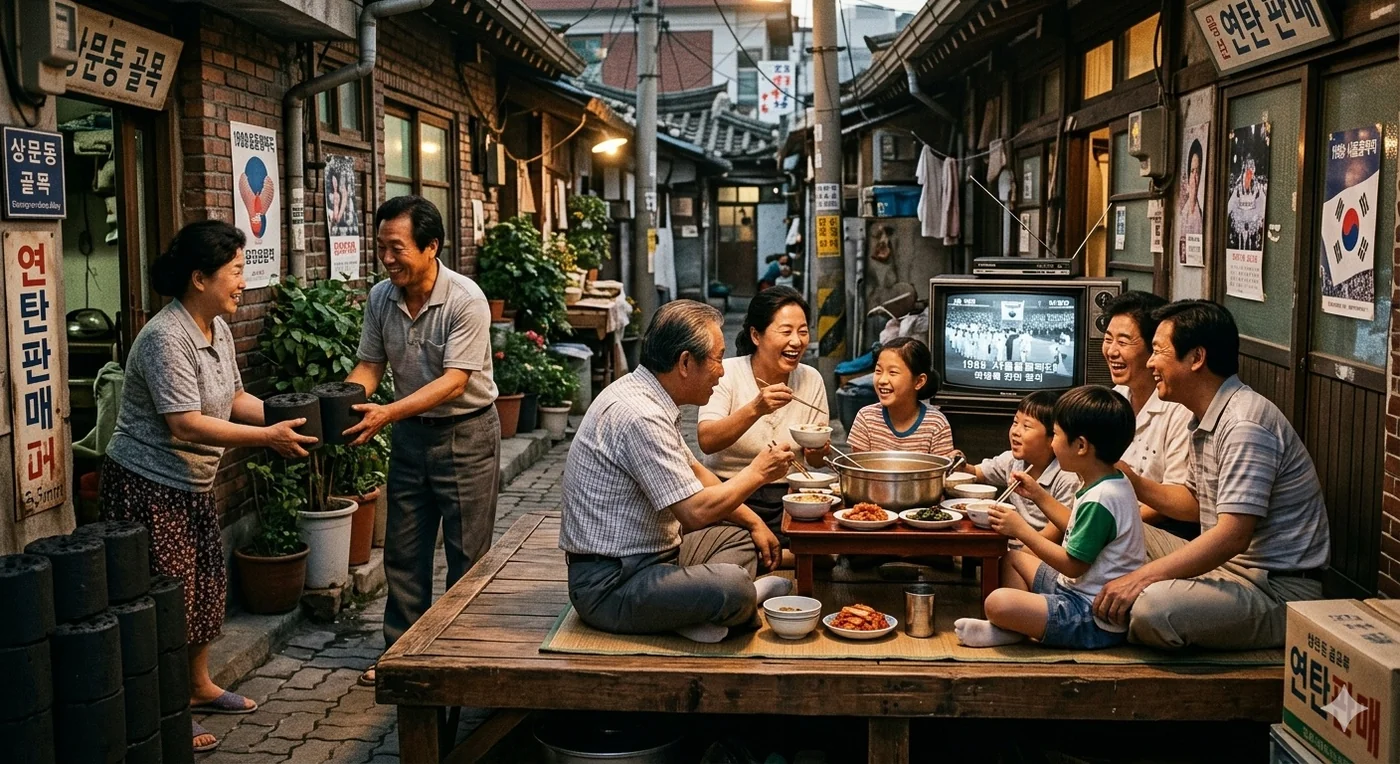
 The ttalbabo at rest: an ordinary school-run morning. What Agent Kim dramatizes at action scale is a fondness Korean has an everyday word for. (AI illustration)
Quick answer: Agent Kim kneels because the scene expresses a familiar Korean ideal of parental self-sacrifice. Korea calls an intensely devoted father a ttalbabo (딸바보), literally a “daughter fool.” What gives the scene unusual historical weight is that South Korea moved, within one generation, from severe son preference — a sex ratio at birth of 116.5 boys per 100 girls in 1990 — to a culture in which the ratio is back to normal (105.1 in 2023) and open devotion to daughters is ordinary and admired. Similar father figures exist in other cultures, but Korea’s rapid reversal makes this one especially revealing.
Is daughter-doting uniquely Korean?
No — and a quick comparison sharpens what is Korean about it.
Japan has no direct equivalent limited to daughters, but oyabaka (親馬鹿) — literally, “parent fool” — captures the same idea of parental love overwhelming judgment, worn with the same sheepish pride as its Korean counterpart.
China calls a warm, affectionate daughter a xiao mian’ao (小棉袄) — a “little padded jacket,” the thing that keeps you warm in winter; a daughter who doesn’t look after her parents is teased as a “padded jacket that leaks wind” (漏風小棉袄). The expression reflects a familiar expectation that daughters bring emotional warmth and care to the family — and it’s worth noting that China, like Korea, spent decades with a heavily skewed sex ratio at birth.
The United States has the “girl dad.” The phrase became a cultural fixture in the days after Kobe Bryant and his 13-year-old daughter Gianna died in a helicopter crash, when ESPN anchor Elle Duncan retold his backstage line — that he’d happily have five more girls: “I’m a girl dad” — and #GirlDad went viral (The Washington Post, 29 Jan 2020). The American phrase tends to emphasize visible emotional closeness, while Agent Kim dramatizes protection and self-sacrifice at action-movie scale.
Mexico gives paternal devotion a ceremonial stage: at the quinceañera, a daughter’s fifteenth-birthday rite of passage, one emotional centerpiece is the father dancing the first waltz with his daughter (Britannica) — fatherly affection given a public, ritual place inside a major family celebration.
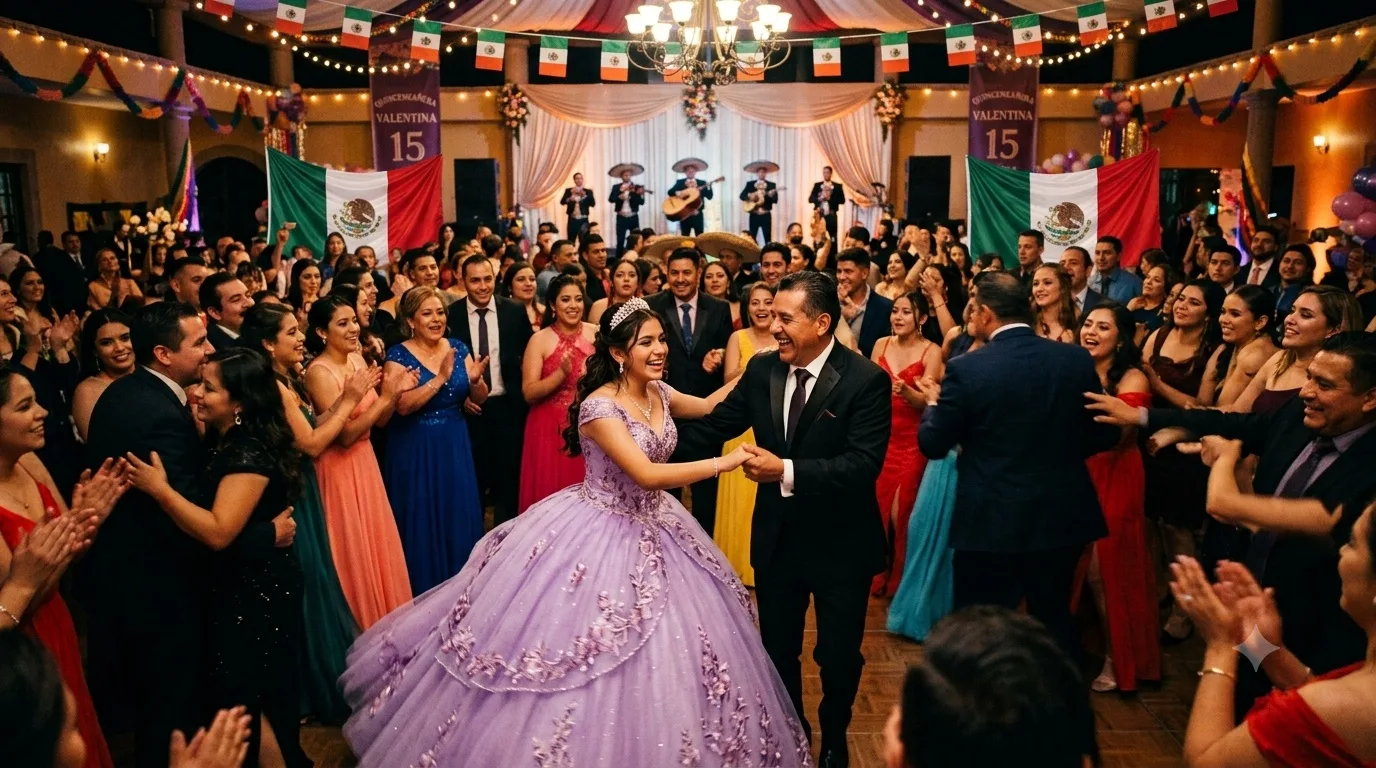 The quinceañera waltz: a father’s devotion as public ceremony. Different grammar, same sentence. (AI illustration)
Islamic tradition preserves one of the oldest models: hadith collections record that when the Prophet Muhammad’s daughter Fatima entered the room, he would rise, take her hand, and seat her in his own place (Sunan Abi Dawud 5217; Jami’ at-Tirmidhi 3872) — while the Qur’an condemns the pre-Islamic practice, reported of some groups, of burying infant daughters alive (Qur’an 81:8–9).
So the affection is close to universal. This is the wider emotional vocabulary behind Agent Kim’s kneel — but none of these places share the thing that makes the Korean case historically startling.
The Korean reversal: from wanting sons to doting on daughters in one generation
Here is the part that surprises international readers most. The country where ttalbabo is casual vocabulary was, within living memory, a society with a strong preference for sons — a preference so strong it showed up in the delivery room statistics.
Some history first, kept honest: Korean family order wasn’t uniformly son-centered across all of its history. Historians describe the patrilineal family system hardening especially from the late Joseon period onward, as lineage succession, ancestral rites and inheritance concentrated on sons (Encyclopedia of Korean Culture, 남아선호사상). By the twentieth century, “you must have a son” was a load-bearing sentence in Korean family life.
Then the statistics bent. The natural sex ratio at birth runs around 103–107 boys per 100 girls. In 1990, South Korea’s reached 116.5 — one of the most skewed figures recorded anywhere. Demographers attribute the spike to several forces working together: entrenched son preference meeting rapidly shrinking family sizes, with the spread of prenatal sex screening from the late 1980s as one of the key enabling conditions. Fewer children per family meant each birth carried more weight — and some parents made sure it was a son.
And then, within a generation, it unbent. Statistics Korea’s birth data show the sex ratio at birth at 105.1 in 2023 — back inside the natural range (KOSTAT, Birth Statistics for 2023). Meanwhile, surveys of what parents say they want have tilted the other way entirely: in a 2025 international survey on child-sex preference, Korean respondents expressed one of the strongest daughter preferences measured (The Korea Times, 11 Aug 2025). In June 2025, The Economist put the global fading of son preference on its cover — “The stunning decline of the preference for having boys” — and treated the emerging lean toward daughters, with Korea among its clearest examples, as something that may be unprecedented in recorded history.
Two honest cautions, because this is where retellings usually overshoot. First, stated preference and birth behavior are different instruments: what flipped dramatically is what parents say; what the birth statistics show is the quieter, deeper fact that parents stopped intervening against daughters. Second, this was never about individual fathers not loving their daughters in 1990 — a skewed ratio at birth reflects preferences about the next child’s sex, not an absence of love for daughters already born. Plenty of 1990s Korean fathers were daughter fools before the word was fashionable.
Why did it turn? No single cause explains it; the reversal came from several changes working together. Families shrank to one or two children, concentrating attention on each child regardless of sex. The law moved against sex selection — prenatal sex screening and disclosure were restricted. Patriarchal family law was reformed, most symbolically with the abolition of the hoju family-head system in the 2000s, weakening the legal logic that only a son could carry the family line. Women’s education and workforce participation rose, and with them the practical case for “must have a son” thinned out. And a very unsentimental observation spread through Korean society: when parents grow old, it is very often the daughter who shows up. The padded jacket, as the Chinese would say.
Korea’s demographic reversal is what gives Agent Kim’s devotion its historical meaning. A father staking everything on one daughter is a completely legible, even aspirational figure in 2026 Korea — the kind of devotion the culture now names with a smile.
What the drama invents — and what it doesn’t
Let’s be clear about the fiction. Agent Kim Reactivated is a Taken-style genre piece: the ex-operative who sealed away a lethal past, the daughter in danger, the state machinery he has to face down — that is action fantasy, and no ordinary father awakens into a human weapon. The show’s premise (confirmed in its official materials) is that a formidable former agent walked away from that life and chose an ordinary one, raising his daughter quietly; the series begins when that bargain breaks.
But here’s the part the fiction didn’t have to invent: the fists are fantasy; the folding of a father’s life for his daughter is not. A man giving up his identity, his pride, and his past so a child can live an ordinary life sits squarely inside a Korean family ethic that has long treated self-sacrifice for family as a virtue rather than a defeat. That’s why the kneeling scene lands. It isn’t a strong man being humiliated. It’s the strongest man in the story deciding, instantly and without visible struggle, that his daughter’s ordinary life matters more than his dignity.
The scariest father in the drama is also the most tender one. Korean viewers recognize that combination — and now you know the word for it.
Watch it again
Watch the kneeling scene again and it plays differently. It is one father’s choice in one school office — and, symbolically, part of a larger national reversal: a society once marked by measurable son preference now instantly recognizes, and admires, a father who places his daughter above status, pride and even safety.
In the next essay, we’ll take another K-drama scene that looks like pure fiction — and trace the real Korean history hiding underneath it.
Frequently asked questions
What does ttalbabo mean in Korean? Ttalbabo (딸바보) literally means “daughter fool.” It is an affectionate, humorous term for a father whose devotion to his daughter is so obvious that it seems to override his usual judgment, pride or dignity. It is teasing rather than insulting, and it’s everyday vocabulary in Korea.
Why does Agent Kim kneel for his daughter? In Episode 1, his daughter Min-ji is accused in a school-violence case and faces a disciplinary committee, and Agent Kim — a formidable ex-operative — kneels before a chaebol chairman to beg for leniency. The scene dramatizes a familiar Korean ideal of parental self-sacrifice: the strongest man in the story chooses humiliation because that is what his daughter needs.
Did Korea really have strong son preference before? Yes, and it is measurable. The natural sex ratio at birth is roughly 103–107 boys per 100 girls; in 1990 South Korea’s reached 116.5, far outside that range. Demographers point to entrenched son preference, rapidly shrinking family size, and the spread of prenatal sex screening in the late 1980s as the main background factors working together.
Why did South Korea’s son preference decline? Several changes worked together: families shrank to one or two children; prenatal sex screening and disclosure were legally restricted; patriarchal family law was reformed, including the abolition of the hoju family-head system in the 2000s; women’s education and workforce participation rose; and the assumption that only sons could continue the family line or support aging parents weakened.
Do Korean parents now actually prefer daughters? Surveys of stated preference have tilted that way — in a 2025 international survey Koreans expressed one of the strongest daughter preferences measured, and The Economist’s June 2025 cover story on the global decline of son preference used Korea as a prominent example. But that is what parents say. The birth statistics show something quieter: the sex ratio returned to the natural range (105.1 in 2023), meaning parents stopped intervening against daughters.
Is daughter-doting unique to Korea? No. Japan has oyabaka (親馬鹿, “parent fool”), China calls a warm, affectionate daughter a xiao mian’ao (小棉袄, “little padded jacket”), and America has the “girl dad.” The affection is close to universal; what is distinctive about Korea is the speed of the reversal underneath it — from one of the world’s most skewed sex ratios at birth to daughter-doting as everyday culture within a generation.
Sources & further reading
This piece was written from the historical script and fact-check of 사뚱샘의 역사방 (SaDDungSam). Key facts are sourced inline. A note on method: claims about what “overseas fans” think are easy to assert and hard to source, so this essay doesn’t make them — the framing questions are ours.
- Statistics Korea, Birth Statistics for 2023 — sex ratio at birth 105.1, back in the natural range. (KOSTAT press release)
- Son preference (남아선호사상) — the patrilineal background and its modern consequences. (Encyclopedia of Korean Culture)
- The Economist, “The stunning decline of the preference for having boys” (June 2025) — the global picture, with Korea as a leading example. (thread)
- The 2025 child-sex-preference survey as reported in Korea. (The Korea Times, 11 Aug 2025)
- The girl-dad moment — Elle Duncan’s Kobe Bryant tribute and its afterlife. (The Washington Post)
- Muhammad and Fatima — the hadith record. (Sunan Abi Dawud 5217 · Jami’ at-Tirmidhi 3872 · Qur’an 81:8–9)
Thanks for reading — see you in the next one.
This article was researched and written by K-Drama History. Source: Agent Kim Reactivated, Explained: How Korea Went from Son Preference to “Daughter Fool” Dads — K-Drama History