Queen of Tears, Explained: Why Korea's Chaebol Families Are Drawn Like Royal Dynasties
Theme: Modern Korea
From the research behind Pause the Drama.
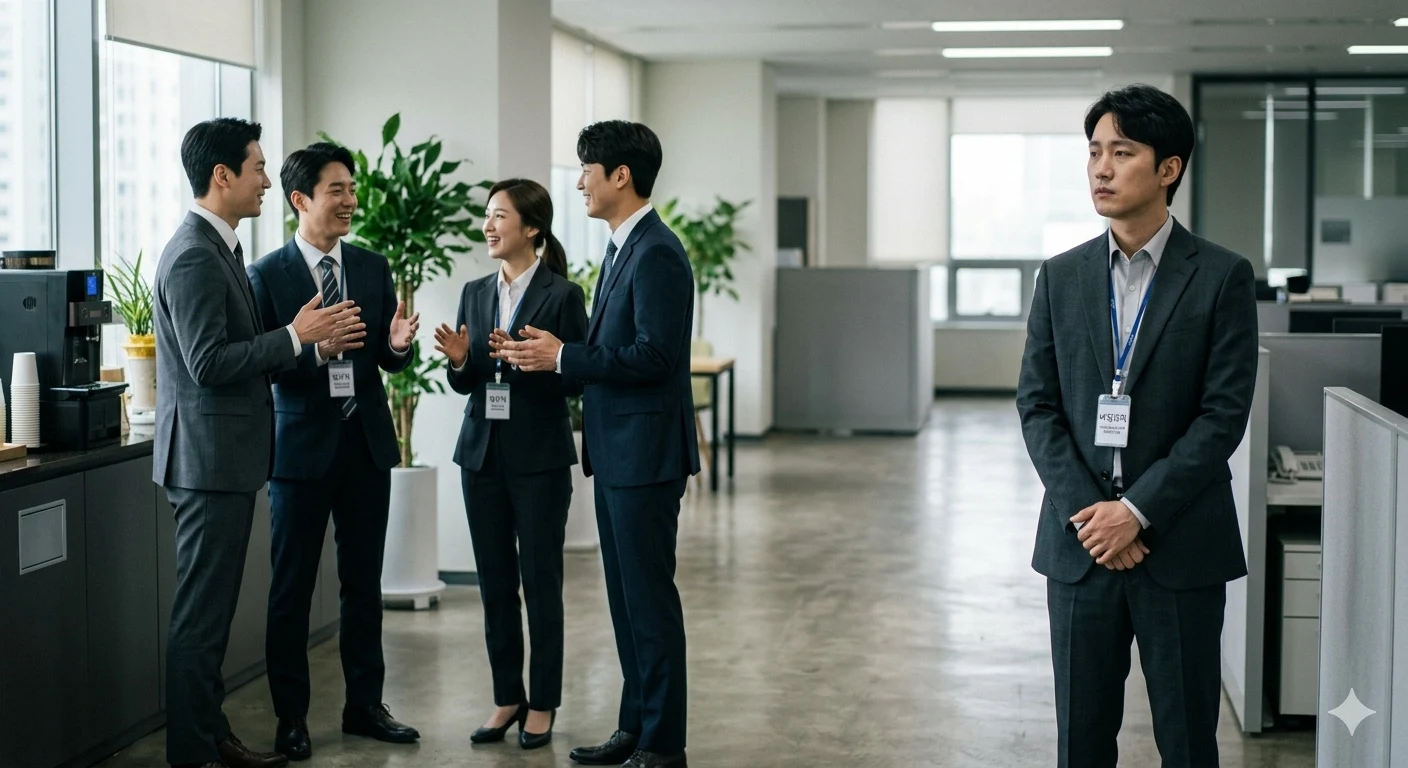
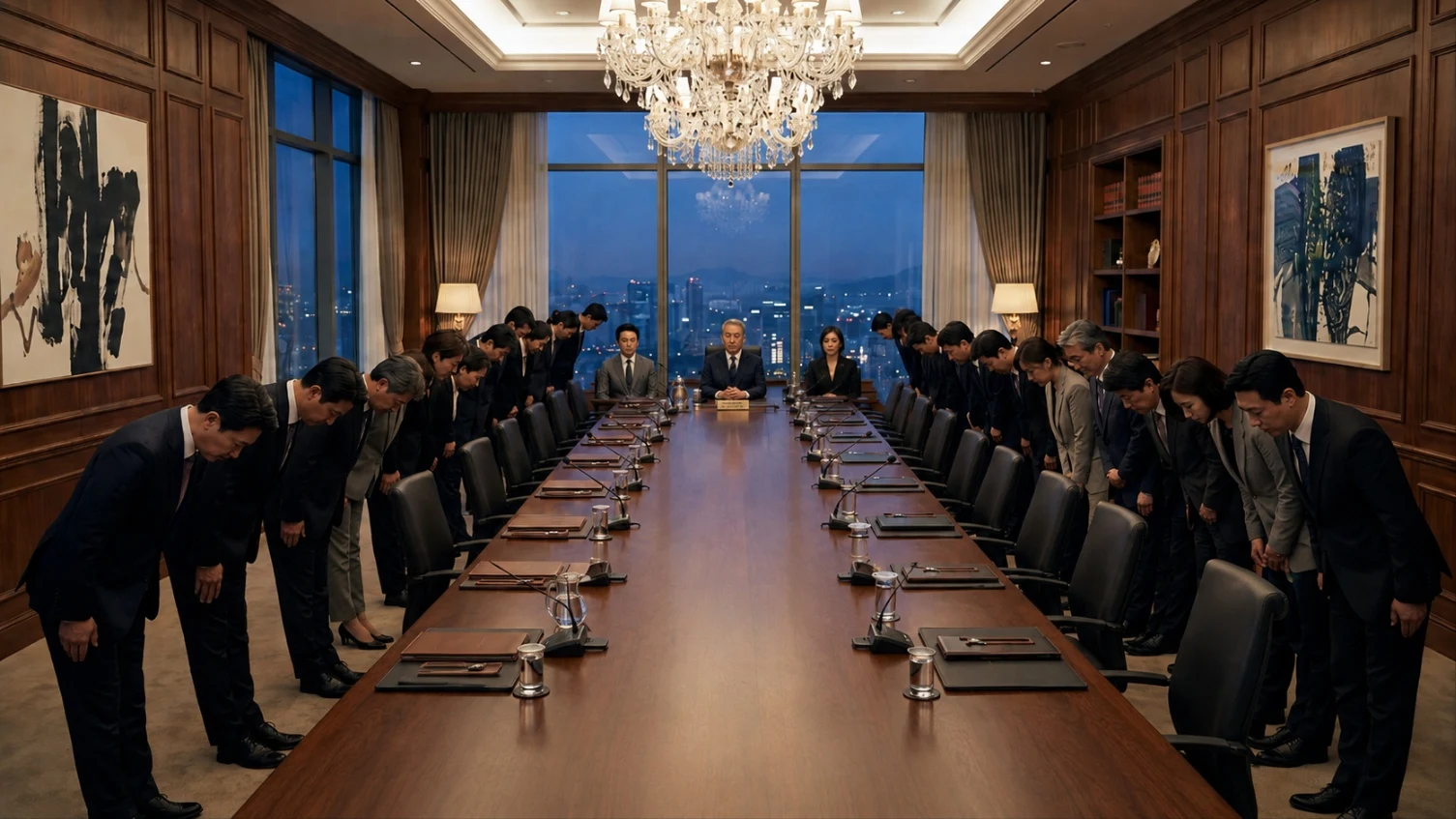
If you watched the 2024 mega-hit Queen of Tears (눈물의 여왕) — the most-watched drama in tvN’s history — you remember the Hong family of Queens Group (퀸즈그룹). They live in a palace of a house. They hold tense meetings around a long table where a single sentence can topple an heir. They marry for strategy, plot for succession, and guard their family honor as if a kingdom depended on it.
And here’s the strange part: Queens Group is a company. Not a monarchy. Not a royal house. A corporation that sells things. Yet everything about the way the drama frames the Hong family — the bloodline anxiety, the arranged-feeling marriages, the war over who inherits the throne — feels less like a boardroom and more like a dynasty.
That isn’t lazy writing. It’s the most honest thing about the show. Korea’s real chaebol families really are structured — and often portrayed — like royal dynasties. The question worth asking isn’t “what is a chaebol?” Everyone’s heard that one. The real question is: why does a corporation end up looking like a kingdom?
Quick answer: In Queen of Tears, the Queens Group family behaves like a royal dynasty — and that’s not a dramatic exaggeration. Korea’s real chaebol (재벌) are family-controlled conglomerates where a founding bloodline passes down control across generations, arranges marriages like diplomatic treaties, and wields enormous power through a mechanism called circular shareholding — often controlling an entire empire with only a small direct stake, in some famous cases just a few percent. The drama is royal because the real thing is royal.
Let’s unpack it.
Why does a company end up looking like a royal court?
Because in a chaebol, the family doesn’t just run the company — the family is the company’s spine, passed down by blood.
The word chaebol (재벌, 財閥) literally combines “wealth” (財) and “clan/faction” (閥). The second character is the key: 閥 is the same character used for a powerful aristocratic house. Baked into the very name is the idea that this is not merely a business but a lineage of wealth — something inherited, like a title.
That’s why Queens Group feels royal. Succession isn’t decided by a board hiring the best outside executive; it’s decided by which child of the founding family takes the throne. Marriage isn’t a private matter; it’s a dynastic alliance that can strengthen or threaten the house. Loyalty and betrayal don’t run along contracts — they run along blood. Strip away the smartphones and the stock prices, and the emotional machinery of a chaebol drama is the same machinery that drives a story about a Joseon palace: who inherits, who marries whom, who is cast out, who is loyal to the family and who plots against it.
The drama didn’t impose a royal frame on a corporation. It simply noticed that the frame was already there.
In Queen of Tears vs. real Korea — how closely does the drama match?
| In Queen of Tears | In real Korea |
|---|---|
| Queens Group controlled by the Hong family bloodline | Real chaebol (Samsung, Hyundai, LG) remain under founding-family control across generations |
| A family member with 5% stake commands the whole group | Founding families often hold ~5% yet direct the entire conglomerate via circular shareholding |
| Marriage treated as a dynastic alliance, not romance | CEO Score data: 48.3% of chaebol heirs marry into other chaebol families — a “closed aristocracy” (Korea Herald) |
| Succession war determines who inherits the empire | Real heir disputes (Samsung, Lotte, Hyundai) have played out publicly for decades |
| The family acts untouchable, above normal corporate rules | 2025 Commercial Code reforms aimed to strengthen shareholder protections and corporate governance — part of efforts to close the “Korea discount” (Berkeley Journal of International Law) |
How can one family control a giant empire they barely own?
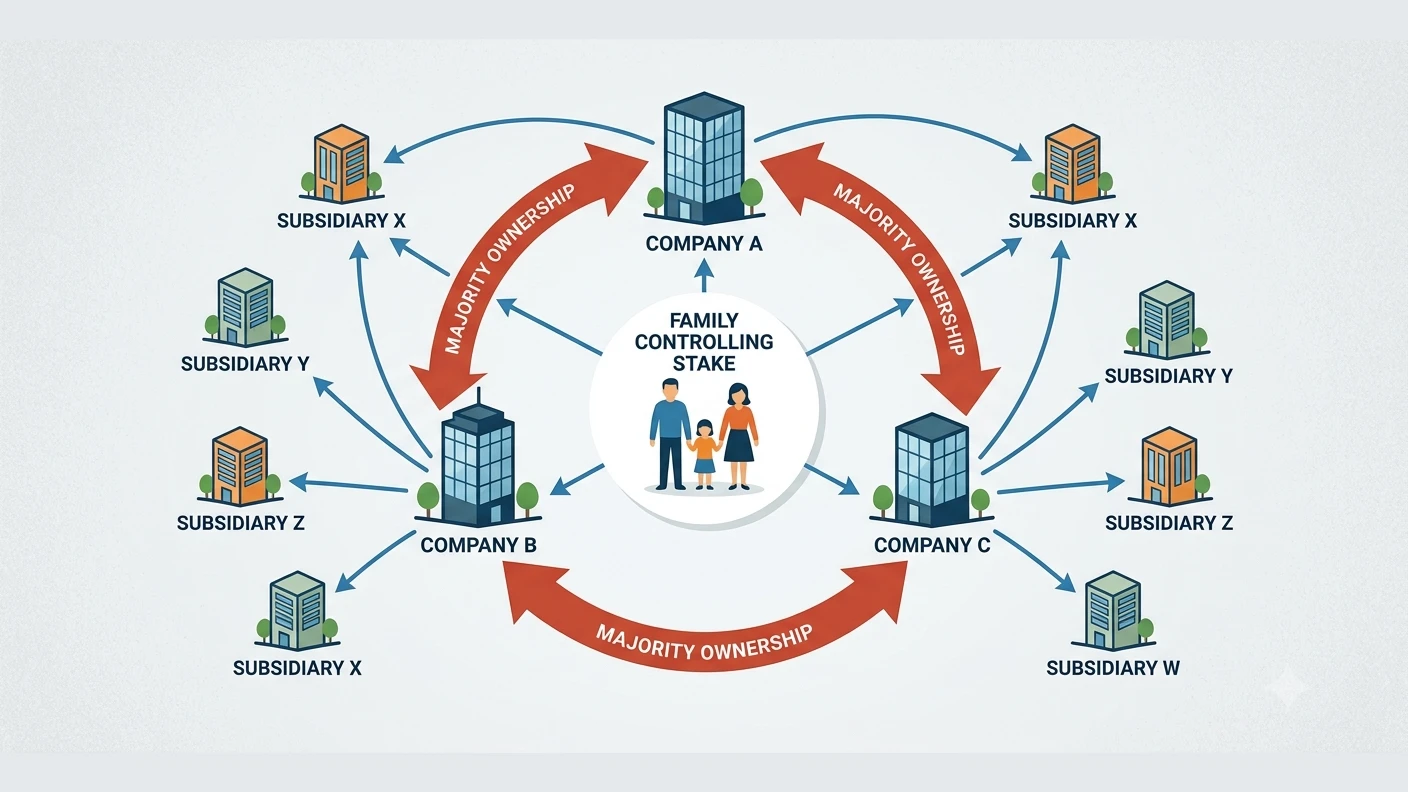
Here’s the mechanism that makes the “dynasty” real rather than metaphorical — and it surprises almost everyone the first time they hear it: the founding family often owns only a tiny slice of the empire they completely control.
A chaebol is typically a sprawling group of dozens of separate companies. The founding family may directly own only a small slice — in some famous cases just a few percent — of the whole group, yet it commands everything. How? Through a structure called circular shareholding (순환출자), also known as cross-shareholding. Company A owns a chunk of Company B, which owns a chunk of Company C, which loops back and owns a chunk of Company A. The family holds a key stake at one point in the loop, and the loop does the rest — letting them steer the entire web from a small, carefully placed foothold.
The most-cited real examples involve Korea’s largest groups. Samsung’s founding Lee family historically controlled its companies through exactly this kind of cross-shareholding among affiliates — though the group has since unwound much of that circular structure. Hyundai Motor Group is the clearer present-day case: its founding Chung family still controls the group today through a circular chain — Hyundai Mobis → Hyundai Motor → Kia → back to Mobis — steering the whole web from a relatively small direct stake (Council on Foreign Relations; MDPI/JRFM 2025).
This is precisely how royal power works. A king doesn’t personally own every field and forest in the kingdom — he sits at the structural top and the whole system answers to him. A chaebol family sits at the structural center of the corporate web and the whole group answers to them, no matter how little of it they technically “own.” Control without full ownership: that’s a crown, not a stock certificate.
Why all the marriages and bloodline drama?
Because for a chaebol, marriage has long been a tool of statecraft — almost exactly as it was for royal houses.
In Queen of Tears, marriage is never just romance; it’s leverage, alliance, and threat. Real history backs this up. In Korea’s earlier decades, chaebol families frequently arranged marriages with politicians and powerful officials to secure influence — one widely reported example being the marriage that linked the SK Group’s chairman to the family of a former president, an alliance long cited when people discuss how politics and chaebol houses became intertwined. (Whether it produced concrete business favors is disputed and has been contested in court.) These were not love stories. They were treaties.
What’s fascinating is how this is shifting. As Korea democratized and political favors became riskier, chaebol families increasingly stopped marrying into politics and started marrying each other. Corporate tracker CEO Score found that 48.3% of chaebol owner family members are married to peer chaebol figures, rising to 50.7% in the younger generation — while political marriages fell from 28% to just 7% (Korea Herald). The great houses are knitting themselves into an even tighter aristocracy.
If that sounds familiar, it should: it’s the marriage politics of European royalty, where dynasties married into one another until half the thrones of the continent were cousins. The chaebol world is doing a corporate version of the same thing — building a closed network of intermarried great houses. The bloodline drama in Queen of Tears isn’t soap-opera excess. It’s a dramatized version of how these families really consolidate power: through who marries whom.
Key terms. Chaebol (재벌, 財閥) — “wealth-clan,” Korea’s founding-family-controlled conglomerates; the character 閥 signals aristocratic house, not mere company. Circular shareholding (순환출자) — companies in a group own stakes in one another in a loop, letting a family with ~5% direct ownership control the whole web. Zaibatsu (財閥) — prewar Japan’s equivalent family-controlled industrial combines, written with the identical Chinese characters as chaebol, dissolved by U.S. occupation forces after 1945. Keiretsu (系列) — what replaced the zaibatsu: company clusters linked by cross-shareholding and a main bank, but without a single ruling family at the top.
Wait — isn’t a chaebol just the same as a Japanese keiretsu?
This is the most common misconception, so let’s correct it carefully — because the difference is the heart of the whole story.
People often assume “chaebol” and Japan’s keiretsu (系列) are just two words for the same thing. They’re not, and the gap between them is one of the most revealing facts in modern East Asian history. The chaebol model was indeed influenced by Japan’s prewar zaibatsu (財閥) — note that Korea’s 財閥 and Japan’s 財閥 are written with the identical Chinese characters, a direct historical fingerprint. But the two systems took opposite paths after World War II, and that’s exactly why one still looks like a dynasty and the other doesn’t.
Here is the historical fork:
- Japan’s zaibatsu were dismantled. After Japan’s defeat in 1945, the U.S.-led occupation authority (SCAP) made breaking up the great family-controlled zaibatsu combines an explicit goal (Britannica). Holding companies were dissolved, family assets were frozen, and family members were purged from management. What re-emerged later — the keiretsu — was a different animal: clusters of companies linked by cross-shareholding and a main bank, but no longer controlled by a single founding family from the top. The dynasty was, by design, removed from the center.
- Korea’s chaebol were preserved — and then supercharged. Korea never had that family-busting intervention. Instead, beginning in the 1960s, the South Korean government actively partnered with founding-family conglomerates to drive rapid industrialization, channeling credit, export incentives, and protection to them. Far from dismantling the family houses, the state fed them. The family stayed firmly on the throne — and the throne grew enormous.
That single contrast is the answer to the whole article. Japan deliberately cut the family out of the top of its corporate giants; Korea deliberately kept the family there and made it stronger. So a modern Japanese keiretsu feels like a network of allied companies, while a Korean chaebol still feels like a house with a ruling family — which is exactly why a drama can portray Queens Group as a royal court and have it ring true.
How does this compare with family empires in the West?
Family-controlled business empires exist everywhere — but the chaebol’s dynastic intensity still stands out. Walk around the globe and you can see the spectrum.
The United States — the founder’s family fades. America has famous business dynasties: the Rockefellers, who built the world’s first great oil fortune; the Waltons, the family behind Walmart and one of the richest families on earth; the Fords. But there’s a pattern American capitalism tends to follow — captured in the old saying “shirtsleeves to shirtsleeves in three generations.” Founding families often cash out into diversified wealth and foundations, while professional managers and dispersed public shareholders take over running the companies. The Waltons still hold a huge stake in Walmart, but day-to-day Walmart is run like a public corporation, not a royal house. The family is rich; it doesn’t necessarily reign.
Europe — old aristocratic houses, but a different logic. Europe has the deepest dynastic roots of all: families like the Rothschilds, whose finance houses spanned the continent and held one of the world’s great fortunes across the 19th century; the Wendel ironmasters of France; the older merchant-banking Fugger dynasty. Some European family firms genuinely stretch across centuries, far longer than any chaebol. But Europe’s deepest dynasties grew out of an actual hereditary aristocracy — land, title, and nobility that predate modern corporations. Their power was born aristocratic.
Korea — a new aristocracy, built in a single lifetime. The chaebol are the striking case because they manufactured a royal-style dynasty from scratch, in decades. There was no centuries-old noble lineage behind Samsung or Hyundai or a fictional Queens Group — these are 20th-century companies. Yet through circular shareholding, family succession, and strategic intermarriage, the founding families built something that functions like hereditary nobility within a single modern economy. America tends to let the founding family dissolve into mere wealth; Europe inherited its dynasties from a feudal past; Korea engineered brand-new dynasties inside brand-new corporations — and that’s the specific thing Queen of Tears is, knowingly or not, dramatizing. A kingdom that is only two or three generations old, and still very much ruled by its family.
But some founders chose the opposite throne
Not every founder wanted a dynasty. A few deliberately did the reverse — handing their company to society instead of a bloodline. In Korea, Yu Il-han, founder of the pharmaceutical company Yuhan, refused to pass the firm to his children: in 1969 he handed management to a non-family professional and left most of his stock to an educational foundation. America’s steel magnate Andrew Carnegie poured his fortune into roughly 2,500 free public libraries, insisting the rich were only trustees of their wealth. Japan’s Shibusawa Eiichi, often called the father of Japanese capitalism, preached that business and ethics must advance together — building joint-stock companies and charities rather than a single family combine.
None of them were flawless saints, and each choice cast its own shadow. But they are the mirror image of the chaebol story — proof that corporate power can be passed down to society rather than down a bloodline. Queen of Tears dramatizes the families that kept the throne; these founders are the ones who stepped off it.
Coming up next
One long, tense family dinner — and we’ve traveled from the meaning of a single Chinese character, to a 5% stake that controls an empire, to marriage treaties between great houses, to a U.S. occupation order that dismantled Japan’s dynasties while Korea’s were left to grow. That’s the quiet gift of a good drama: a corporate boardroom turns out to be a royal court in disguise.
In the next essay, we’ll take another K-drama scene that looks like pure fiction — and trace the real Korean history hiding underneath it.
Thanks for reading — see you in the next one.
Frequently asked questions
Is Queen of Tears based on a real chaebol family? No. Queens Group and the Hong family are fictional. But the dynamics the drama shows — family-controlled conglomerates, succession battles, strategic marriages, and control through a web of affiliated companies — closely mirror how real Korean chaebol are structured and how they behave.
How can a chaebol family control a company they barely own? Through circular (cross-) shareholding. The group’s companies own stakes in one another in a loop, and the founding family holds a key position in that loop. This lets a family that directly owns only a small percentage — sometimes around 5% of the whole group — effectively command the entire web of companies. It’s control through structure, not through majority ownership.
Why were Japan’s zaibatsu broken up but not Korea’s chaebol? After World War II, the U.S.-led occupation of Japan made dissolving the family-controlled zaibatsu an explicit goal, breaking up the holding companies and loosening family control; what later emerged (keiretsu) was no longer family-ruled from the top. Korea experienced no such intervention. Instead, from the 1960s the South Korean government actively backed founding-family conglomerates to drive industrialization, so the chaebol families kept control and their groups grew far larger.
Sources & further reading
This piece was written from the historical script and fact-check of 사뚱샘의 역사방 (SaDDungSam). Primary and official sources are linked inline beside the claims they support:
- Chaebol structure and circular shareholding — how founding families control vast groups with small stakes, and the 2025 Commercial Code reforms targeting chaebol dominance. (Council on Foreign Relations: “South Korea’s Chaebol Challenge” · Berkeley Journal of International Law: “Beyond the Korea Discount”)
- The Rise of the Chaebol: A Bibliometric Analysis of Business Groups in South Korea — peer-reviewed survey of chaebol scholarship, covering circular shareholding, family control, and governance. (MDPI, Journal of Risk and Financial Management, 2025)
- Zaibatsu dissolution after WWII — the Allied occupation’s (SCAP) program to break up Japan’s family-controlled combines and the emergence of the keiretsu. (Encyclopædia Britannica: Zaibatsu)
- Chaebol marriage networks — the shift from political marriages to inter-chaebol alliances across generations (CEO Score data). (The Korea Herald)
Further reading: for the governance reform context, see the Korea Development Institute’s research on the “Korea discount” and minority shareholder rights; the National Assembly Research Service legislative history of circular shareholding (순환출자) regulation; and academic work in Korean economics on chaebol succession and the evolution of inter-chaebol marriage networks.
Thanks for reading — see you in the next one.
This article was researched and written by K-Drama History. Source: Queen of Tears, Explained: Why Korea's Chaebol Families Are Drawn Like Royal Dynasties — K-Drama History