Netflix's Mr. Sunshine, Explained: Why the Butcher's Son Could Never Escape His Blood
Theme: Status & Class
From the research behind Pause the Drama.
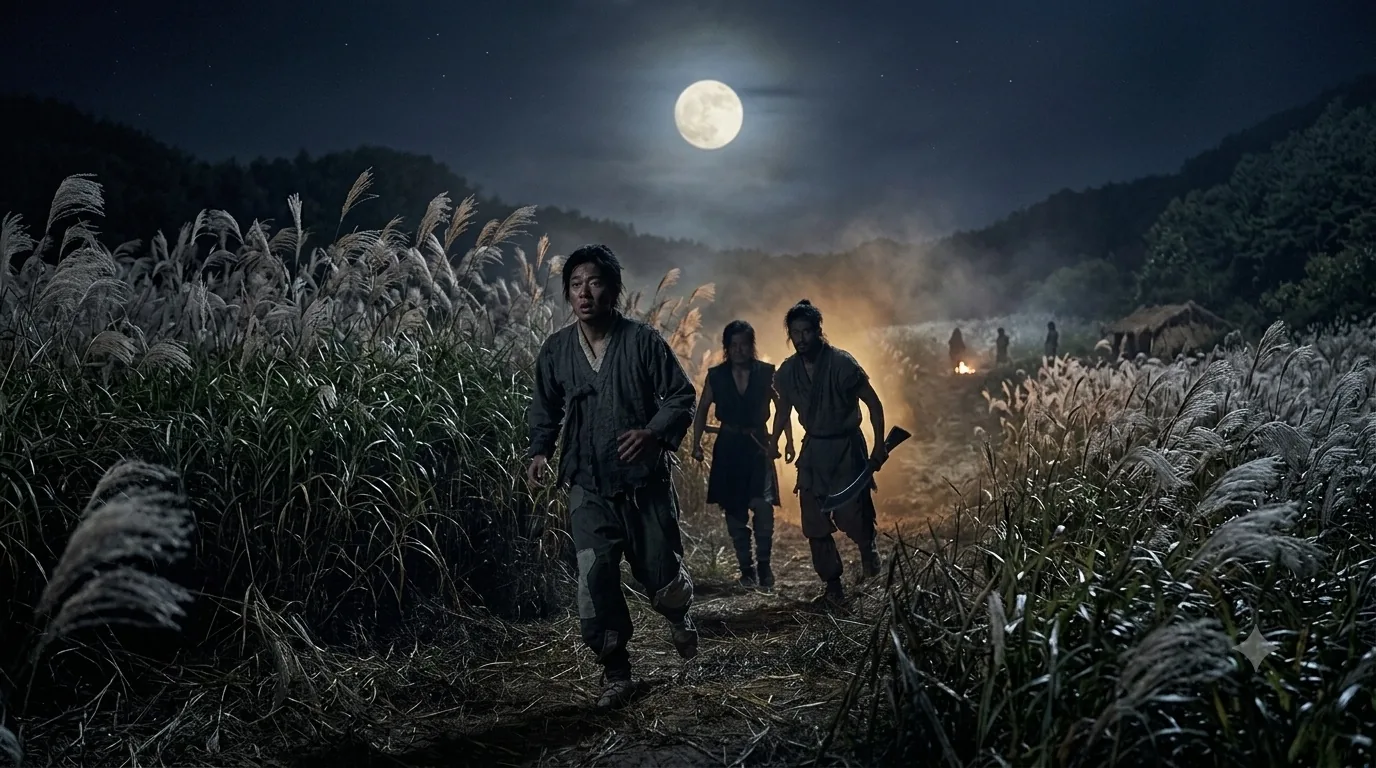
If you’ve watched the sweeping 2018 K-drama Mr. Sunshine (미스터 션샤인) — set in the final, doomed years of the Korean Empire — you don’t forget Gu Dong-mae, the show’s fictional swordsman anti-hero. He is lethal with a blade, feared by powerful men, dressed sharper than the aristocrats who look down on him. And yet, again and again, one fact written into his character reaches out of his childhood and pulls him back down: he was born the son of a butcher.
No matter how strong he becomes, no matter how many people fear him, a single word — baekjeong — clings to him like a brand. The drama lets you feel the injustice of it without ever fully explaining it. So here’s the part it leaves out: in Joseon Korea, being a butcher’s son wasn’t a low job. It was a hereditary stain you could never wash off — and Korea was far from alone in inventing it.
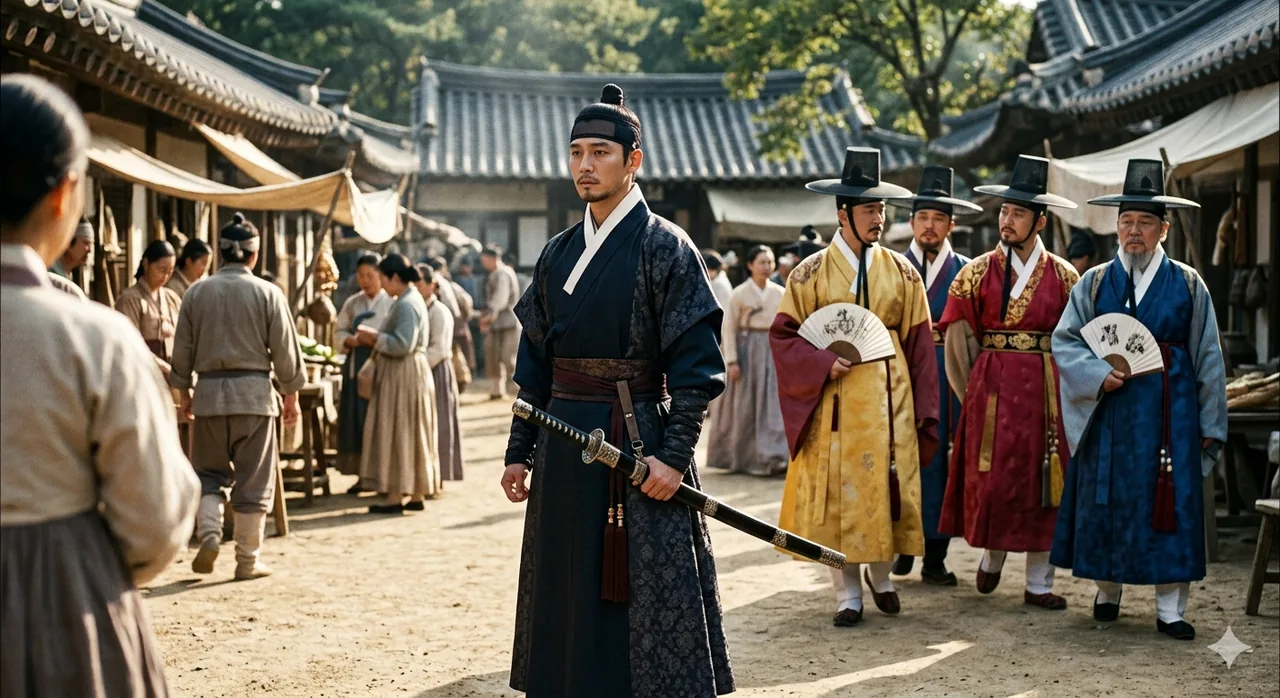 However powerful he became, the word “butcher” followed him. (AI illustration)
Quick answer: In Netflix’s Mr. Sunshine, Gu Dong-mae’s power means nothing to a society that sees only “butcher’s son.” The baekjeong were Joseon Korea’s hereditary outcast class — banned from ordinary village life, restricted in dress and marriage, defined by “polluting” work with blood and leather. Their low status was legally abolished in 1894 but survived in practice for decades. And as this essay shows, Korea wasn’t alone: Japan, India, and medieval Europe all built the same trap.
Let’s unpack it.
What was a baekjeong, exactly?
A baekjeong (백정) was, by the late Joseon period, the word for a butcher — but the status went far beyond a job description.
Joseon society was organized under a deep divide between the yangin (good/free people) and the cheonin (the “base” people) — the so-called yangcheonje (양천제). At the very bottom of the base people sat groups whose labor was considered ritually polluting: shamans, certain entertainers, and above all those who killed animals and worked with blood, hides, and leather. The baekjeong were the most despised of these. They were often kept out of the household registers, barred from living among ordinary villagers, restricted in whom they could marry, and even limited in what clothes they could wear (Encyclopedia of Korean Culture, Academy of Korean Studies). In some regions and periods, local custom went further still — keeping them from freely using the same roads or gates as ordinary people — though this was a patchwork of social practice rather than a single nationwide law (National Institute of Korean History).
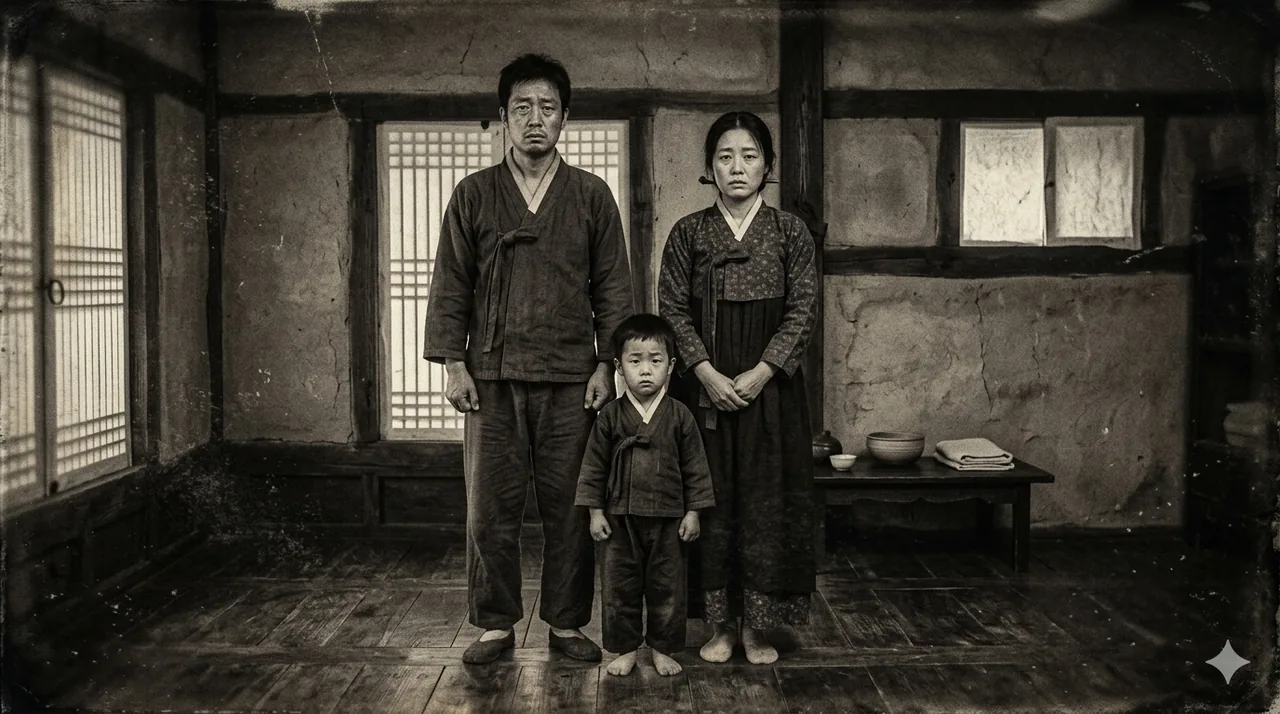
The cruelest part was that none of this was about a person’s character or ability. It was inherited. A baekjeong’s child was born a baekjeong. That is the trap Mr. Sunshine dramatizes through Dong-mae: a man of formidable skill, forever defined by the work of his father.
Why butchering, of all trades? Blood and the Confucian idea of “pollution”
Here is the question that puzzles many international viewers: why would a society despise the very people who fed it meat and made its leather?
The answer lies in a powerful and very old idea: ritual pollution. Confucian society placed enormous value on ceremonial purity and on a moral hierarchy of labor — scholarship and farming were honored, while trades that dealt in killing, blood, corpses, and animal carcasses were seen as spiritually defiling. Slaughter touched death directly, and death was the ultimate source of impurity. So the people who did that necessary, daily work were treated as if the impurity soaked into them — and, the logic went, into their children and their children’s children.
That is the dark engine behind almost every untouchable class in history: a society depends on certain work, decides that work is “unclean,” and then punishes forever the people forced to do it. Once you see that mechanism, the baekjeong stop looking like a strange Korean peculiarity — and start looking like one version of something nearly universal.
Key terms. Baekjeong (백정) — Joseon’s hereditary butcher-outcast class, defined not by individual character but by birth into “polluting” work with blood, hides, and leather. Cheonmin / cheonin (천민) — the “base people” at the bottom of Joseon’s social ladder, encompassing slaves, entertainers, shamans, and the baekjeong. Yangcheonje (양천제) — Joseon’s two-tier legal framework dividing society into the “good” (yangin) and the “base” (cheonin). Hyeongpyeong movement (형평사) — the baekjeong-led human-rights movement founded in Jinju in 1923, demanding social equality decades after legal abolition.
But wait — didn’t 1894 abolish all of this?
On paper, yes. In real life, a law on a page could not undo centuries of contempt overnight — and that gap is the most important thing to understand about untouchability anywhere.
In 1894, the sweeping Gabo Reform (갑오개혁) began legally dismantling Joseon’s hereditary class system — freeing slaves (nobi) and abolishing the formal distinction between the “good” and “base” people (Britannica). The baekjeong were freed as part of this broader reform process: the very first 1894 reform measures did not single them out by name, but within that dismantling of hereditary status, the butcher’s son was now, on paper, a citizen like any other.
In practice, the stigma simply went on. Baekjeong were still refused ordinary treatment, still marked in records, still shut out of normal village life. The pressure built until 1923, when baekjeong and their supporters founded the Hyeongpyeong movement (형평사, the “Equality Society”) in Jinju (Independence Hall of Korea) — one of the most remarkable human-rights movements in Korean history, demanding to be treated as equal human beings decades after the law had supposedly already made them so.
This is the pattern to hold onto: legal liberation and social acceptance are two completely different things, and the second can lag the first by generations. Keep that in mind, because we’re about to watch the exact same story play out in three other civilizations.
Here is how the drama’s story lines up against real history:
| In Mr. Sunshine | In real Joseon history |
|---|---|
| Dong-mae’s birth as a butcher’s son marks him for life | Baekjeong status was strictly hereditary, passed from parent to child |
| Even his wealth and swordsmanship cannot erase the stigma | Baekjeong faced restrictions on dress, residence, and marriage regardless of personal achievement |
| The elite use “butcher” as a slur to diminish him | Baekjeong were excluded from ordinary village life and household registers |
| The story is set in the 1900s, long after class reform | The 1894 Gabo Reform abolished the class legally, yet social contempt persisted well into the 20th century |
| His rage and alienation feel modern | It took until 1923 — thirty years after abolition — for baekjeong to organize the Hyeongpyeong equality movement |
In short: Mr. Sunshine dramatizes a real Joseon reality — baekjeong status was hereditary, no personal skill or wealth could erase it, and even the 1894 legal abolition took three more decades to translate into organized equality, which is why the baekjeong had to found the Hyeongpyeong movement in 1923.
Why Dong-mae’s wound is everyone’s wound: Korea, Japan, India, and Europe built the same trap
This is where the story stops being only about Korea. Look across Eurasia and you find societies that, with no contact and no shared scripture, arrived at strikingly similar machinery — a permanent underclass defined by “polluting” work, especially work touching death, blood, and leather.
Japan — the burakumin. During the Tokugawa era (1603–1867), Japan placed outside its four official classes two outcast groups whose names were slurs: the eta (“much filth”) and hinin (“non-human”). Their hereditary trades — butchery, tanning, leatherwork, disposing of dead animals — were judged unclean under Buddhist and Shinto ideas of pollution, the very same logic as Joseon’s. In 1871, the Meiji government’s Emancipation Edict legally abolished their outcast status — almost the mirror image of Korea’s 1894 reform. And just as in Korea, the law did little: their descendants, the burakumin, faced discrimination in marriage and employment well into modern times (Britannica).
India — the Dalits. The most famous untouchables of all sit outside the four-fold varna caste order. Among the tasks historically forced on them were the classic “polluting” jobs: handling carcasses, sweeping filth, and — once again — leatherwork. Independent India did something extraordinary: Article 17 of its Constitution (in force 1950) abolishes “untouchability” by name (Britannica), perhaps the only constitution on earth to outlaw a specific social practice so directly. And yet — the now-familiar refrain — caste discrimination against Dalits persisted long after, especially in rural areas, prompting further protective laws for decades.
Medieval and early-modern Europe — the “dishonorable people.” Lest anyone think this was an “Asian” idea, Europe built its own version. In the German lands especially, a whole category of unehrliche Leute (“dishonorable people”) were shut out of honorable society by their trades. At the top of the list of the despised stood the executioner and the knacker/skinner (the Abdecker or Schinder), who handled corpses and dead animals — joined by tanners, gravediggers, and others (Kathy Stuart, Defiled Trades and Social Outcasts, Cambridge University Press). Their dishonor, too, could be hereditary, passed down through generations, and an honorable citizen risked his own standing through mere contact with them. Tanners, soaking hides in urine and dung, even carried the literal smell of their pollution. Different continent, different religion — the same idea: death-work and blood-work defile, and the defilement is inherited.
Line up all four and the parallels are almost eerie. Korea’s baekjeong, Japan’s eta, India’s Dalits, Europe’s Schinder — four civilizations, four untouchable classes, and one shared blueprint: take the essential, unavoidable work of blood, death, and leather; declare it “unclean”; bind that uncleanness to bloodline; and then have the cruelty to say it can never be escaped. Mr. Sunshine isn’t showing us a uniquely Korean injustice. It’s showing us one of humanity’s most universal ones.
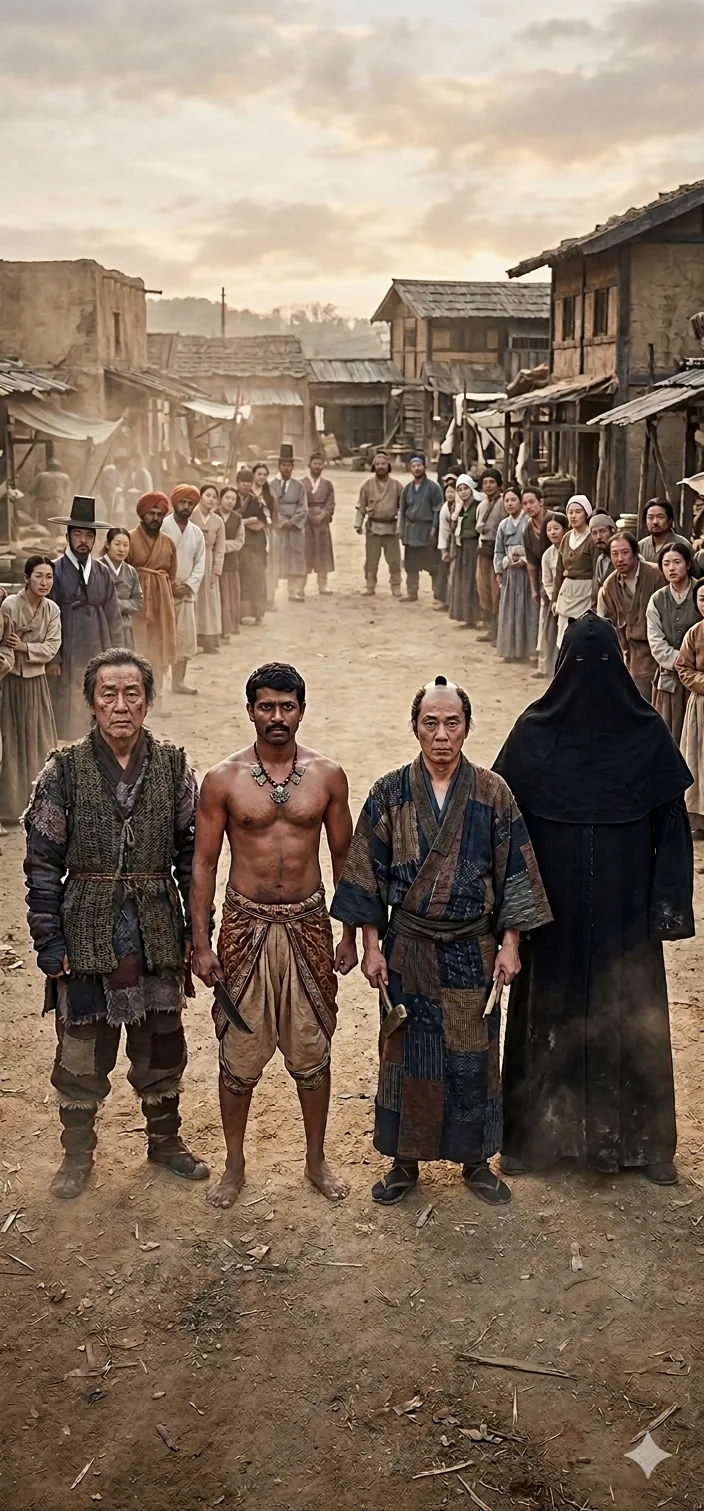 Four civilizations, no contact, the same trap: blood-work declared unclean, then made hereditary. (AI illustration)
So why does Dong-mae’s story still hit so hard?
Because the wound the drama shows is not really about a sword fighter in 1900s Korea. It’s about an idea humans have reached for again and again: that some work makes a person permanently less, and that this lessness can be inherited like an eye color.
When Dong-mae is reminded, sneeringly, of what his father was — when his strength and intelligence are waved away by a single word — we are watching the exact mechanism that produced the eta, the Dalit, and the Schinder. And we are watching, in his rage, the same fury that eventually built the Hyeongpyeong Society, the burakumin liberation movement, and the long Dalit struggle for dignity. A society can change its laws in a single year. Changing the contempt underneath them takes far, far longer — and Mr. Sunshine, in one character, lets you feel exactly how long.
Coming up next
One brand — butcher — and we’ve traveled from a Joseon slaughterhouse to a Tokugawa tannery, to a clause in India’s constitution, to a German executioner shunned by his own town. That’s the quiet gift of a good historical drama: a single character’s shame is a doorway into one of the oldest patterns in human society.
In the next essay, we’ll take another K-drama scene that looks like pure fiction — and trace the real Korean history hiding underneath it.
Thanks for reading — see you in the next one.
Frequently asked questions
Is Mr. Sunshine based on a true story? No. Its main characters, including Gu Dong-mae, are fictional, set against the very real backdrop of the late Korean Empire (Daehan Jeguk) in the early 1900s. But the social reality it draws on — the baekjeong outcast class and the contempt they faced even after legal abolition — is firmly historical.
What does baekjeong mean — was it just “butcher”? By the late Joseon period the word meant butcher, but it described a hereditary outcast status, not merely an occupation. Baekjeong were among the lowest of the cheonin (“base people”), tied to “polluting” work with animals, blood, and leather, and faced severe restrictions on where they lived, whom they married, and how they dressed — discrimination that was passed down by birth.
If the class system was abolished in 1894, why did discrimination continue? Because law and social attitude are not the same thing. The 1894 Gabo Reform legally ended hereditary status, but social contempt persisted for decades, which is exactly why baekjeong founded the Hyeongpyeong equality movement in 1923. The same lag appears with Japan’s burakumin (freed 1871) and India’s Dalits (untouchability abolished by the 1950 Constitution) — legal freedom came first, real acceptance came much later.
Who were the burakumin, and how do they compare to Korea’s baekjeong? Japan’s burakumin are descendants of Tokugawa-era outcast groups called eta (“much filth”) and hinin (“non-human”), whose hereditary trades — butchery, tanning, leatherwork — were judged unclean under Buddhist and Shinto ideas of pollution. Legally freed in 1871, they continued to face discrimination in marriage and employment well into modern times — a near-exact mirror of the baekjeong experience.
Sources & further reading
This piece was written from the historical script and fact-check of 사뚱샘의 역사방 (SaDDungSam). The specific facts, dates, and figures above are sourced inline, cross-checked against primary and official records — the Encyclopedia of Korean Culture (Academy of Korean Studies), the National Institute of Korean History (우리역사넷), the Independence Hall of Korea, and Encyclopædia Britannica. For broader reading:
- Baekjeong (백정) — Encyclopedia of Korean Culture (Academy of Korean Studies) — primary Korean reference on the butcher-outcast class, its hereditary status and restrictions in Joseon. (한국민족문화대백과)
- Baekjeong — 우리역사넷 (National Institute of Korean History) — the “base people” at the bottom of Joseon’s yangcheonje social structure. (우리역사넷)
- The Hyeongpyeong movement (형평운동) — Independence Hall of Korea — the baekjeong-led equality movement founded in Jinju in 1923. (독립기념관)
- Burakumin — Britannica — Japan’s eta/hinin outcasts, “polluting” trades, the 1871 Emancipation Edict, and continuing discrimination. (Encyclopædia Britannica)
- Dalit — Britannica — India’s untouchable caste and Article 17 of the 1950 Constitution abolishing untouchability by name. (Encyclopædia Britannica)
- Defiled Trades and Social Outcasts — Kathy Stuart’s study of executioners, skinners, and tanners as unehrliche Leute in early modern Germany. (Cambridge University Press)
Thanks for reading — see you in the next one.
This article was researched and written by K-Drama History. Source: Netflix's Mr. Sunshine, Explained: Why the Butcher's Son Could Never Escape His Blood — K-Drama History