My Dearest, Explained: Who Were the Karayuki-san — and Why They Weren't the Japanese Military's 'Comfort Women'
Theme: Women’s Lives
From the research behind Pause the Drama.
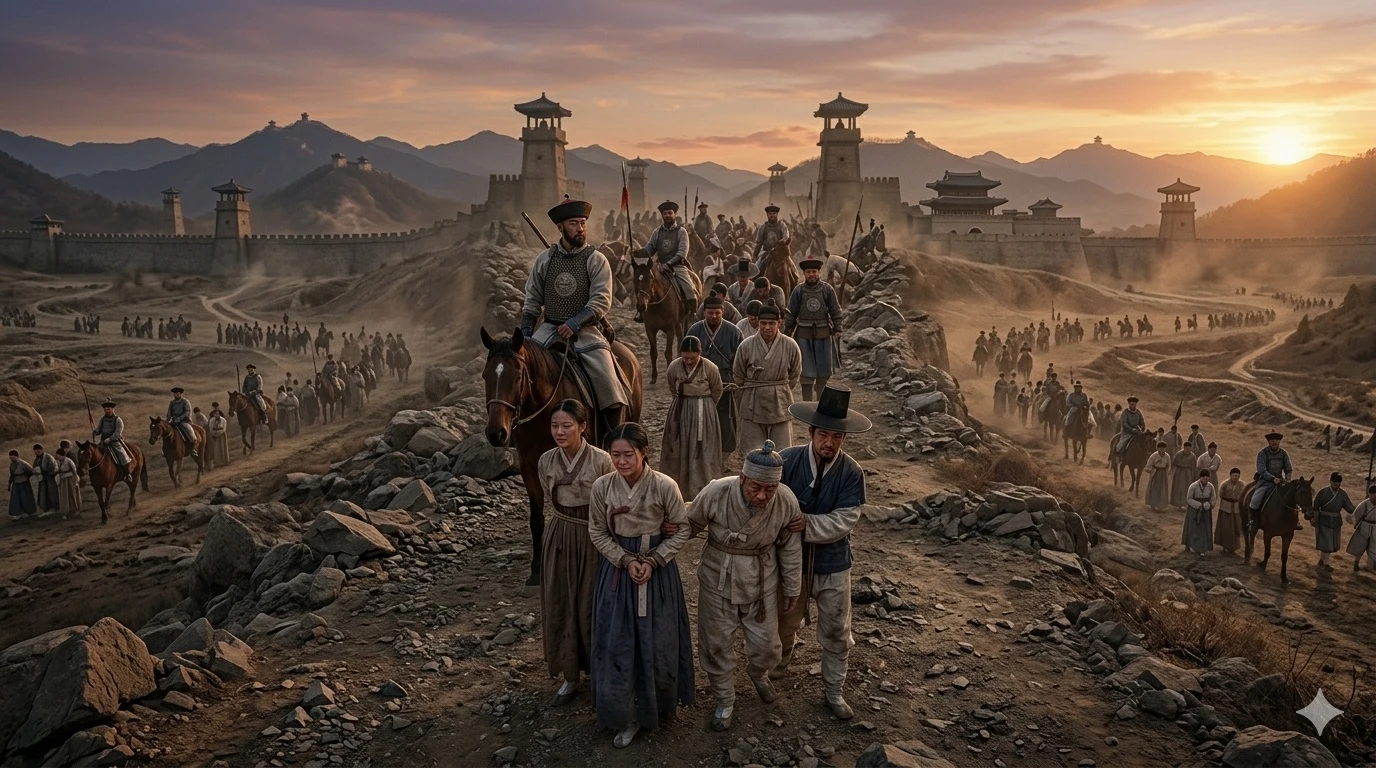
If you’ve watched MBC’s My Dearest (연인, 2023), the sharpest pain in it isn’t on the battlefield — it comes after. Women taken captive during the Qing invasion of Joseon (1636–37) are finally ransomed home, and are met not with relief but with averted eyes and whispers. Some families wish their returned daughter had simply never come back. These women were called hwanghyangnyeo (환향녀), “women who returned home” — and, as we’ve traced in a companion piece, the word soured from relief into a slur (My Dearest, MBC 2023; 병자호란 — Encyclopedia of Korean Culture).
Watch that story with an English-speaking audience and one question comes up almost immediately, and almost always wrong: “Isn’t this the same as the ‘comfort women’?” It is not — those are a separate, 20th-century history. But the reflex to fold different histories of exploited women into one story points at a third chapter that hardly reaches Western readers at all: Japan’s own Karayuki-san.
Keeping these histories distinct is not a way to minimize any of them. It is a way to keep each system of violence — a 17th-century war captivity, a modern trafficking trade, and a wartime military system — historically visible in its own right.
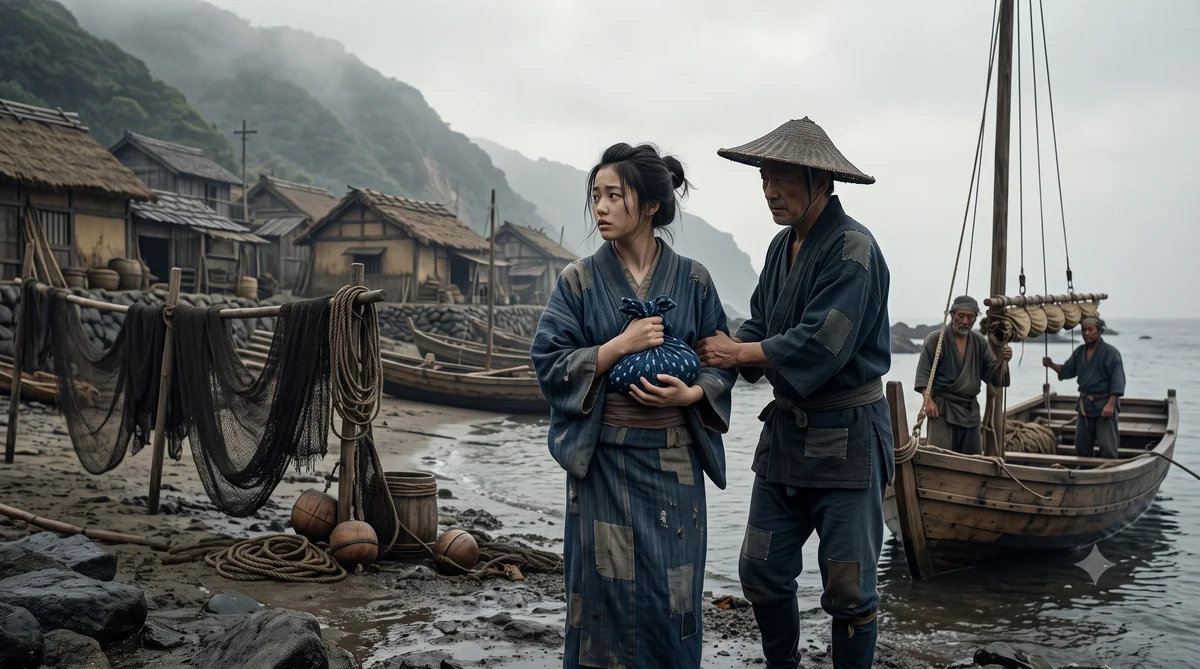 A girl taken from a poor Kyushu fishing village, a broker at her side and a boat waiting — the beginning of a Karayuki-san’s story. (AI illustration)
Quick answer: My Dearest’s hwanghyangnyeo were Joseon women taken captive in the 1636–37 Qing war and shamed on their return — a 17th-century story of war and stigma. That is not the same as Japan’s military “comfort women” (a wartime system of sexual violence, roughly 1932–1945), nor as the Karayuki-san — poor Japanese women trafficked abroad as prostitutes from the 1870s onward through poverty and private brokers, not state mobilization. Three different histories, from three different centuries and systems. What they share is one dark pattern: women society failed or exploited were then made to carry the shame. Let’s untangle them.
Who were the Karayuki-san?
Karayuki-san (からゆきさん) literally means “those who went overseas.” In practice it became the name for poor Japanese women and girls who, from roughly the 1870s into the early 20th century, were trafficked or pushed by poverty into overseas prostitution across Asia (James F. Warren, Ah Ku and Karayuki-san, NUS Press).
Many came from the poorest farming and fishing districts of Kyushu — the Amakusa islands and the Shimabara area. Daughters of struggling families left for the sake of household survival, or under the pressure of debt and deception. Some were promised work abroad and lied to; others left because their parents had already taken an advance payment, so that in effect they had been sold.
The people who moved them were brokers known as zegen (제겐). A zegen would tour poor villages recruiting girls or persuading parents, then hand the women to overseas brothel operators for profit — sometimes taking them abroad and running the brothels himself. And the destinations followed Japan’s expanding overseas footprint: Singapore, Hong Kong, British Borneo, across Southeast Asia, and into Siberia and Manchuria, with ports in Korea and China serving as waypoints. The historian James F. Warren’s study Ah Ku and Karayuki-san documents just how substantial their presence was in Singapore between 1870 and 1940 (NUS Press).
The key point: not state mobilization, but poverty, trafficking, and official silence
Here is the distinction that decides whether this history is told accurately or not.
There is no confirmed Meiji-government policy of officially recruiting Japanese women and dispatching them abroad as prostitutes. So the sentence “Japan sent its women overseas as prostitutes” is too strong, and wrong. The engine of the Karayuki-san trade was poverty and private human trafficking — desperate families, predatory brokers, and the ordinary machinery of debt.
But the opposite claim — that the state had nothing to do with it — is also false. Overseas Japanese prostitution became part of the economic life of early emigrant communities, and the money the Karayuki-san sent home flowed back to families, villages, and sometimes the foreign Japanese settlements themselves. In an era when Japan was still straining to catch up with the Western powers, that remittance income and overseas expansion were quietly tolerated. Around the brothels grew other emigrant trades — lodging, food, laundry, sundries, medicine — so that part of the early economic base of overseas Japanese society was, uncomfortably, built on these women’s labor and exploitation.
So the accurate frame is three words: poverty, trafficking, and official tolerance. Not a state that mobilized women — but a state and society that did not stop it, and for a while profited from looking away.
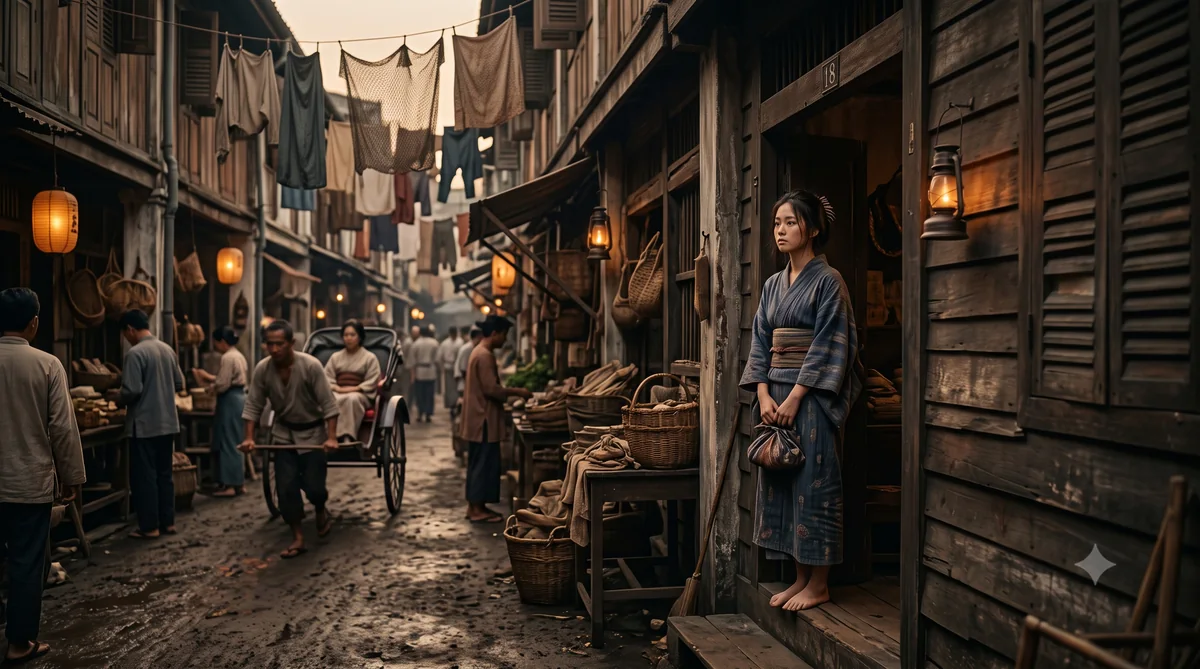 Far from home, at the bottom of Japan’s overseas expansion — a Karayuki-san in a foreign port quarter. (AI illustration)
Key terms. Karayuki-san (からゆきさん) — poor Japanese women trafficked abroad as prostitutes, c. 1870s–early 1900s, driven by rural poverty. Zegen (제겐) — the private brokers who recruited or bought these women and delivered them to overseas brothels. Hwanghyangnyeo (환향녀) — Joseon women taken captive in the 1636–37 Qing war and ransomed home, then stigmatized under chastity ideology (the subject of My Dearest). Comfort women (일본군 위안부) — women subjected to the Imperial Japanese Army’s wartime system of sexual violence, roughly 1932–1945 — a separate history from both of the above.
Karayuki-san, comfort women, hwanghyangnyeo: three histories people keep confusing
The reason to lay these side by side is precisely so they don’t get merged. Each is a distinct event, with its own century, its own perpetrating structure, and its own mechanism:
| History | When | Who / mechanism |
|---|---|---|
| Hwanghyangnyeo (환향녀) | 1636–37 and after | Joseon women taken as war captives by the Qing, ransomed home, then shamed under Confucian chastity ideology |
| Karayuki-san (からゆきさん) | c. 1870s–early 1900s | Poor Japanese women trafficked abroad through poverty and private brokers; the state tolerated rather than organized it |
| Comfort women (일본군 위안부) | c. 1932–1945 | Women coerced into the Imperial Japanese Army’s wartime comfort-station system through military, colonial, occupation, and recruitment structures |
In short: these are three different histories — a 17th-century war captivity, a modern poverty-and-trafficking phenomenon, and a wartime military system. Collapsing them into one story flattens all three: it erases the specific military character of the “comfort women” issue, simplifies the poverty and private trafficking behind the Karayuki-san, and misreads the war-captivity roots of the hwanghyangnyeo. Comparison is possible; equating them is not.
Why My Dearest’s returned women belong in this conversation
If the histories are so different, why put them together at all? Because underneath them runs the same grim logic.
In each case, women were harmed by forces far larger than themselves — a war, an economy, an army — and were then treated by their own society as the source of shame rather than its victims. The hwanghyangnyeo were prisoners of a war the state lost, yet it was they who were made unmarriageable and unmentionable. The Karayuki-san were sold out of poverty their country had not solved, and were later recast as a national embarrassment to be tidied away. In both, the moral failure belonged to the society that failed them — and the stigma was loaded onto the women.
That is the thread My Dearest pulls on when it lingers on a returned woman standing at a gate that will not fully open to her again. The drama is Korean and 17th-century; the pattern is neither only Korean nor only old. Naming the Karayuki-san — and keeping them distinct from the “comfort women” and from the hwanghyangnyeo — is a way of seeing that pattern clearly without dissolving three real histories into a single blur.
(One image often attached to the Karayuki-san — that some who died abroad were buried with their graves turned away from Japan — is better treated as a resonant tradition than a documented fact. It is said, rather than recorded.)
Coming up next
A single scene of a shamed, returning woman opens onto three separate histories a century and an ocean apart — and the discipline the subject demands is to hold them apart even while seeing what they share. That is the quiet work a serious drama can start: not blurring the past into one feeling, but making its distinctions legible.
In the next essay, we’ll take another K-drama scene that looks like pure fiction — and trace the real history quietly running underneath it.
Frequently asked questions
Who were the Karayuki-san? Karayuki-san (からゆきさん, “those who went overseas”) were poor Japanese women and girls, from roughly the 1870s to the early 20th century, who left impoverished villages — mostly in Kyushu, around Amakusa and Shimabara — and were trafficked or pushed by poverty into prostitution across East and Southeast Asia, Siberia, and Manchuria. Many were deceived or effectively sold through debt by brokers called zegen. The term literally means “people who went abroad,” but came to mean these women specifically.
Were the Karayuki-san the same as Japanese military “comfort women”? No — and conflating them is a real error. Karayuki-san were largely a Meiji–Taishō phenomenon driven by poverty and private trafficking, which the Japanese state failed to stop or quietly tolerated rather than organized. The military “comfort women” system was a separate, later history (roughly 1932–1945) run through the Imperial Japanese Army’s wartime apparatus of sexual violence, in which colonized and occupied women were coerced. Different era, different perpetrating structure, different mechanism.
Did the Japanese government officially send women abroad as prostitutes? There’s no confirmed policy of the Meiji state formally recruiting and dispatching women as overseas prostitutes, so it’s wrong to say “Japan sent them.” But the state isn’t blameless either: the trade was driven by poverty and private brokers, and the money these women sent home fed families and helped anchor early overseas Japanese communities — so for a long time the authorities looked away. The honest summary is poverty, trafficking, and official tolerance, not state mobilization.
Where did the Karayuki-san go? Wherever Japan’s overseas presence was expanding: Singapore, Hong Kong, British Borneo, across Southeast Asia, and into Siberia and Manchuria. Ports in Korea and China are also mentioned as waypoints. James Warren’s study Ah Ku and Karayuki-san documents their large presence in Singapore between 1870 and 1940.
How is this connected to My Dearest and the hwanghyangnyeo? It isn’t the same event — it’s the same uncomfortable pattern. In My Dearest, the hwanghyangnyeo are Joseon women taken captive in the 1636–37 Qing war who return home only to be treated as a source of shame. The Karayuki-san are a different case in a different century, but they share the core injustice: women whom society failed or exploited were then made to carry the shame themselves. The point of comparing is to see that pattern — not to blur three distinct histories into one.
Is it true their graves were said to face away from Japan? This is often told, but it’s best treated as a resonant tradition rather than a documented fact. The story goes that some Karayuki-san who died abroad were buried with their graves turned away from Japan — the homeland that had sold and then forgotten them. It circulates in memoirs and film, so the careful phrasing is “it is said,” not “it is recorded.”
Why were the Karayuki-san forgotten? Because they sat at the very bottom of Japan’s modernization story, and that story preferred to remember factory workers and soldiers, not women sold into overseas brothels. As international pressure against trafficking grew in the 20th century, their existence came to be seen as a national embarrassment, and Japanese authorities abroad worked to close the brothels and repatriate the women. Many never returned; those who did often faced the same silence and stigma.
Sources & further reading
This piece was written from the historical script and fact-check of 사뚱샘의 역사방 (SaDDungSam), with the “comfort women” history handled as a distinct and separate subject, treated with care:
- Karayuki-san — the overseas trafficking of poor Japanese women. James F. Warren, Ah Ku and Karayuki-san: Prostitution in Singapore, 1870–1940 (NUS Press); and Yamazaki Tomoko’s foundational memoir-history Sandakan Brothel No. 8 (山崎朋子, 1972). Overview: NUS Press.
- The military “comfort women” — a separate 20th-century history. Encyclopædia Britannica, “Comfort women.”
- Sokhwan (속환) — the ransoming of Joseon war captives after 1637. Encyclopedia of Korean Culture.
- My Dearest (연인, 2023) and the Qing invasion of Joseon (1636–37). (My Dearest — MBC Global Media; 병자호란 — Encyclopedia of Korean Culture)
- The hwanghyangnyeo and their stigma — see our companion piece, My Dearest, Explained: the returned women.
Thanks for reading — see you in the next one.
This article was researched and written by K-Drama History. Source: My Dearest, Explained: Who Were the Karayuki-san — and Why They Weren't the Japanese Military's 'Comfort Women' — K-Drama History