Gyebaek, Explained: The Mireuksa Gold Plate That Named a Different Queen Than Seonhwa
From the research behind Pause the Drama.
In MBC’s Gyebaek (계백, 2011), Oh Yeon-soo plays the Gukjumo (국주모, 國主母), known in the drama as Sataek-bi (사택비). MBC’s official Korean character page calls her “stepmother of Uija, hubi (후비) of King Mu,” and “daughter of Sataek Jeokdeok (沙宅積德), of a branch of the Great Eight Clans and their most powerful man.” The same page gives her motive: “When Queen Seonhwa dies, she works to make her own son, Gyogi, crown prince.”
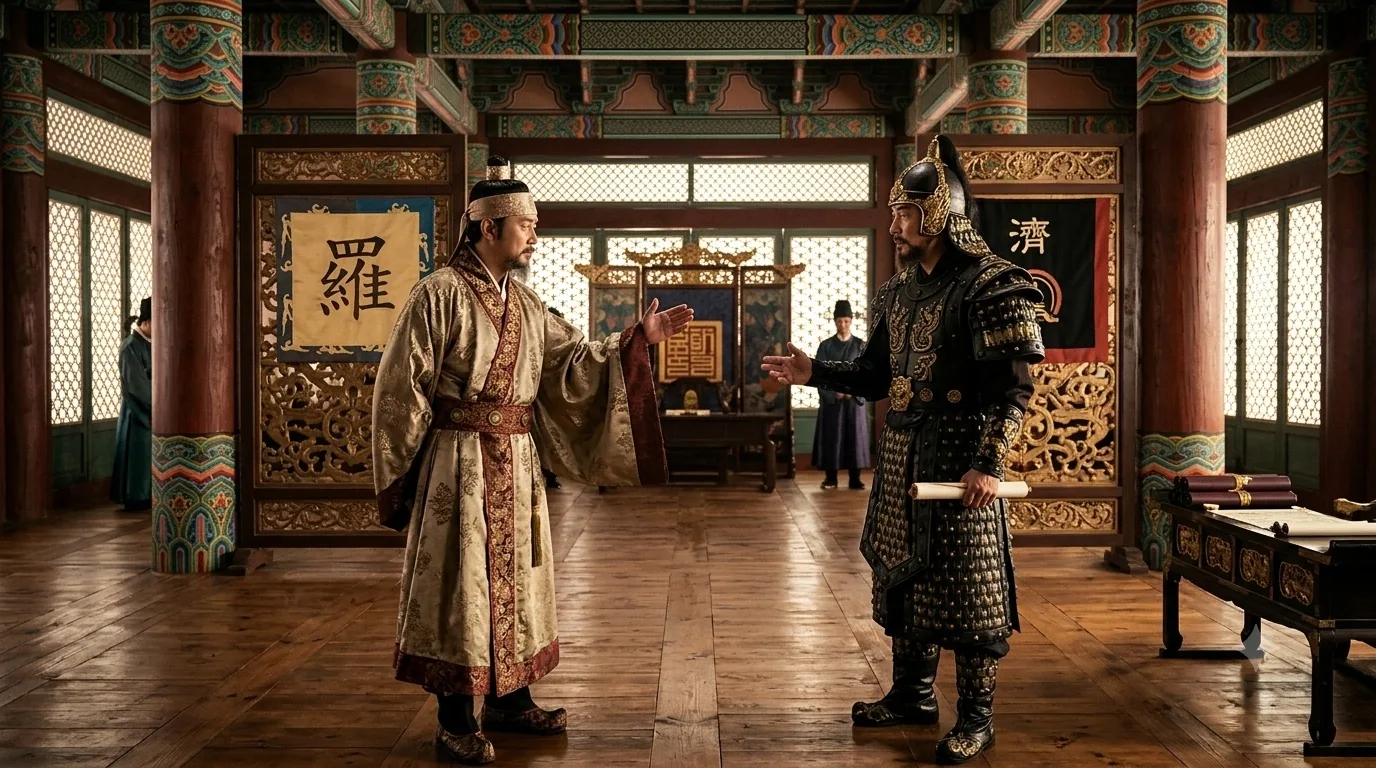
So the drama sets up two women. Queen Seonhwa came from Silla. The daughter of Sataek Jeokdeok is another wife of the king, and she starts to move once Seonhwa is gone.
The word hubi needs care. In general usage hubi (后妃) can simply mean a king’s wife, and it does not have to mean a rank below the principal queen. MBC’s own English introduction calls the same character “Empress Satek” and “the queen of King Mu.” Hubi is a production label for a character, not a term from the sources.
What the Baekje sources themselves say is narrower and firmer.
The drama sets Queen Seonhwa and Sataek-bi side by side. The queen that a contemporary Baekje inscription of 639 directly confirms is the daughter of Sataek Jeokdeok.
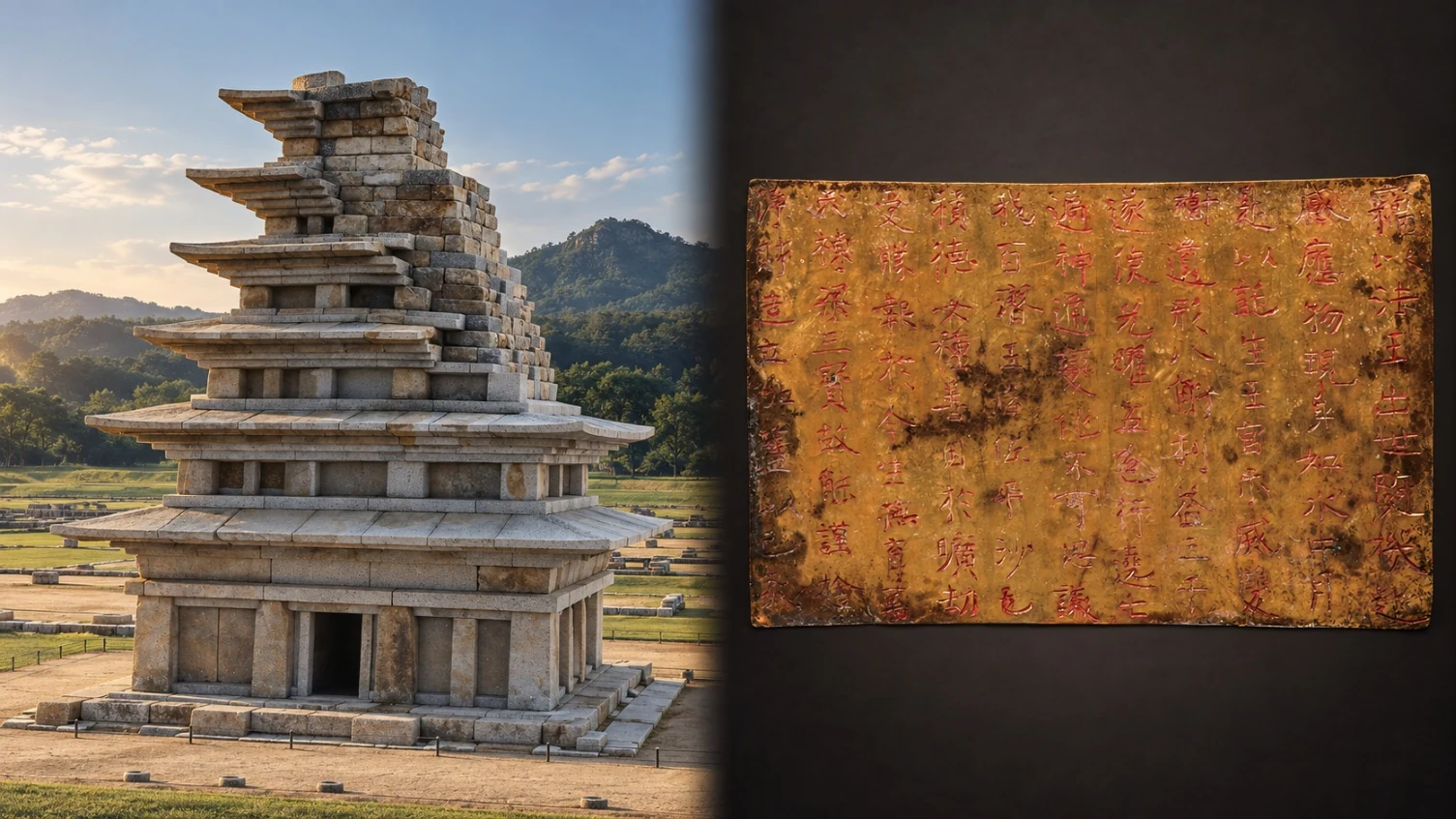 The west stone pagoda at Mireuksa and the gold plate found inside it, shown together. (AI illustration)
What did the Mireuksa gold plate say?
Quick answer: On 14 January 2009, workers dismantling the west stone pagoda of Mireuksa in Iksan took a gold plate out of the sarira chamber in the central pillar stone of the first story. It records that the queen of Baekje, daughter of jwapyeong Sataek Jeokdeok, gave her wealth to build the monastery, and that the sarira were enshrined on the 29th day of the first month of the gihae year (639). The thirteenth-century Samguk yusa says Mireuksa was built by Princess Seonhwa, third daughter of King Jinpyeong of Silla. The plate does not mention Seonhwa. It does not prove she never existed, either.
The object is called the gold sarira enshrinement record (금제사리봉안기, or 금제사리봉영기). It is a contemporary Baekje inscription, made in 639 and placed in the west pagoda’s sarira chamber. The Samguk yusa was compiled more than six hundred years later.
Excavations often adjust a timeline. This plate hit a story. A boy who dug yams wins a princess from an enemy kingdom with a song, becomes king, and builds a temple with her. That tale went into textbooks, then into dramas and festivals. A sentence without her name came out of the temple she was said to have built.
What do the 193 characters say?
The plate is about the size of a postcard, 15.3 × 10.3 cm in the National Institute of Korean History’s record, and it is 90 percent gold and 10 percent silver. It carries 193 characters, cut with a knife: 99 on the front and 94 on the back. The strokes on the front were filled with red pigment so the words would stand out. The text is written in parallel prose (四六騈儷體), an ornate, balanced style used for formal writing. Every character survives clearly, and the Institute notes there is no dispute over the reading.
When the chamber was exposed, the plate was not lying flat. It stood at a slant on the south side, next to the gilt-bronze sarira jar at the centre, in the top layer of objects, in plain sight.
The key phrase reads 我百濟王后佐平沙乇積德女: “our queen of Baekje, daughter of jwapyeong Sataek Jeokdeok.” The corrected transcription writes the surname 沙乇. Punctuated editions and modern studies write 沙宅. The word used for her is wanghu (王后), “queen.” This article has not been able to confirm how strictly that word was kept apart from titles for lesser royal wives in seventh-century Baekje writing.
The plate itself has no modern paragraph divisions. Researchers and institutions divide its content into three or four parts: the Encyclopedia of Korean Culture uses four, and the National Iksan Museum uses three. In the Encyclopedia’s four-part reading:
- The Dharma King (法王), the Buddha, appears in the world and benefits the “three thousand great thousand worlds.”
- The queen, daughter of Sataek Jeokdeok, gives her wealth and builds a monastery (謹捨淨財造立伽藍), and the sarira are enshrined on the 29th day of the first month of 639 (以己亥年正月卄九日奉迎舍利).
- A prayer that the life of the Great King, His Majesty, may last like the mountains.
- A prayer that the queen’s mind may be like a clear mirror and her body like diamond (金剛).
The plate fixes 639 as the date the sarira were enshrined in the west pagoda. That is not a groundbreaking or completion date for the whole monastery. Before the find, there was a view, recorded in the Encyclopedia’s entry on the plate, that Mireuksa was completed early in King Mu’s reign, by 634 at the latest. With a fixed date for the west pagoda’s enshrinement, earlier views on when Mireuksa was built had to be substantially revised.
How the plate came to light matters too. Over the centuries the west pagoda had partly collapsed, and only about half of it stood. In 1913 the Japanese scholar Sekino Tadashi and others photographed and measured it. In 1915 the collapsed parts were shored up with cement mortar. Dismantling and repair began in October 2001, which meant removing the colonial-era mortar and taking the stones down one by one. The plate was found in 2009, in the eighth year of that work. Reassembly of the stones finished in December 2017, and the repaired pagoda was opened to the public in June 2018 (Encyclopedia of Korean Culture). If the pagoda had not been taken apart, the sentence would still be inside the stone.
There is an irony in that 1913 survey. According to the Encyclopedia’s entry on Princess Seonhwa, Sekino dated Mireuksa to the late seventh century, after the fall of Baekje, and pointed instead to a later marriage: Silla settling the Goguryeo prince Anseung in this region and giving him King Munmu’s sister as a wife. The man who measured the pagoda stone by stone had no idea that a seventh-century answer was sitting in its central pillar.
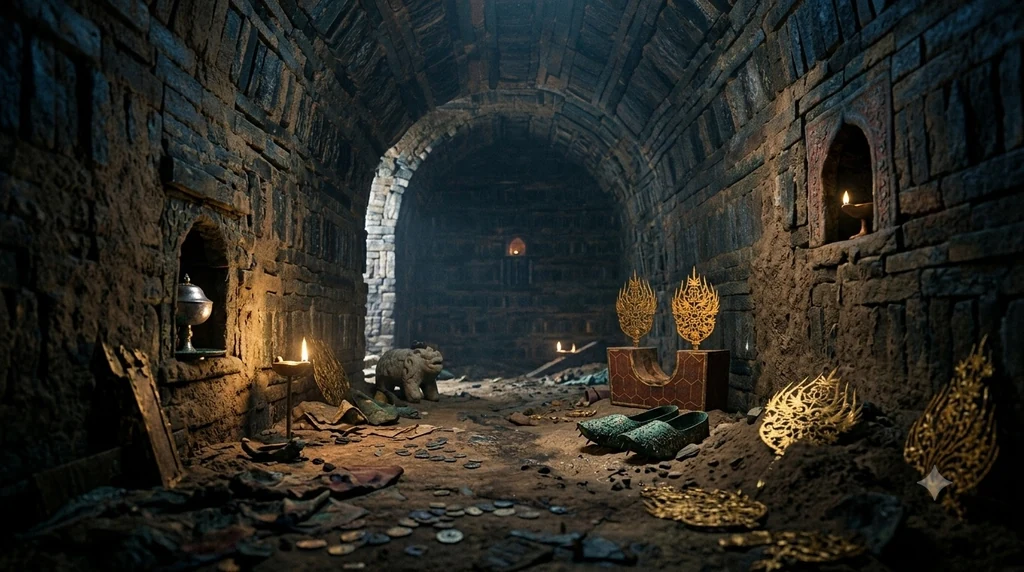
The sarira chamber also held a gilt-bronze outer sarira jar, a gold inner sarira jar, a glass sarira bottle, bronze bowls, silver crown ornaments and silver belt fittings. Among them was a pair of gold tweezers. Some read them as a grooming tool, but the object’s name in the official list does not settle what it was used for.
Who were the Sataek clan?
In the drama, the Gukjumo leans on a faction called the Wijedan to push the court around. A queen backed by a powerful clan that presses on the throne is not at odds with the sources.
The surname Sataek (沙宅) is also written 沙矺. Some Chinese histories, including the Sui shu, shorten it to Sa (沙氏). Inscriptions and other sources also show 沙乇, 沙宅, 砂宅 and 沙吒. When the Sui shu account of Baekje lists the country’s eight great clans (大姓八族), the first name it gives is Sa (國中大姓有八族沙氏燕氏……). Listing order should not be read as an official ranking.
The Encyclopedia of Korean Culture entry on Queen Sataek holds that King Mu took Sataek Jeokdeok’s daughter as his wife for political stability, to win her clan as a base of support. Some researchers read the plate’s identification of the queen by her father, rather than by her own name, as a sign of the Sataek clan’s standing and of a political marriage. The plate itself does not explain why the marriage was made.
Then there is the drama’s title for her. Gukjumo is not a word the drama made up. It appears in the Nihon shoki, in its entry for the first year of Empress Kōgyoku (642). Baekje envoys’ attendants report that “this year, in the first month, the king’s mother died,” and that Gyogi, the inner jwapyeong Gimi and more than forty notable people were sent away to an island (今年正月國主母薨……有高名之人卌餘被放於嶋; NIKH translation). 國主母 means “mother of the ruler of the country,” and in 642 the ruler was King Uija.
The line does not name her, and it does not say her death caused the expulsions. But Jeong Jae-yun, in the Encyclopedia’s entry on Queen Sataek, identifies this woman as Queen Sataek and Uija’s mother, and reads her death as the spark for the shake-up early in his reign. If he is right, the title the drama hands its scheming stepmother literally means “the king’s mother.” The same passage, in the NIKH translation, calls Gyogi the son of a younger royal brother, not the son of the queen.
Why Iksan? Three Baekje kings died within three years: Wideok in 598, Hye in 599 and Beop in 600. King Mu came to the throne after them, and his development of Iksan is well attested. Researchers connect that project to building a political base and strengthening royal power. The primary sources do not say he did it because he wanted a new city.
Mireuksa had three pagodas and three main halls side by side, which is an unusual plan. It is seen as an architectural expression of the belief that Maitreya will come down into the world and save living beings by preaching three times. The monastery’s name means “Temple of Maitreya.”
How does Gyebaek differ from the real history?
Gyebaek did not invent the name Sataek Jeokdeok. It is a real name on a real gold plate, and a new one: the Encyclopedia’s entry on the plate describes Sataek Jeokdeok and his daughter as people unknown before the find. In 2009 the name came out of a pagoda. In 2011 it was a character in a prime-time drama. Which sources the writers worked from is not established here. What the drama arranged is the relationship around the name.
First, the drama gives Queen Seonhwa and Sataek-bi a specific coexisting relationship and ranking. That is the drama’s reconstruction. It has not been proven that the real woman was never at any point a lesser wife, and the word hubi does not by itself mean a lower rank.
Second, the drama still keeps the Samguk yusa’s Queen Seonhwa, two years after the find. In effect it put the legend’s queen and the plate’s queen in the same palace. Baekje’s own narrative records have largely not survived. Its history is pieced together mostly from neighbouring states’ records, later histories, inscriptions and archaeology, and the Seodong and Seonhwa tale is one of the few Baekje stories that lasted a thousand years.
Third, the drama places Gyebaek inside a power struggle with the Sataek clan. Very little is known about his origins and family. The Samguk sagi biography records that he was a man of Baekje whose rank was dalsol (達率), second of Baekje’s sixteen official ranks and far from low. It also records that he led 5,000 men at Hwangsanbeol in 660, killed his own family before the battle, spoke to his troops, won four engagements, and was finally defeated and killed. It does not record his birth year, birthplace or parents, and no source connects him to the Sataek clan. The drama filled a silence in the sources, not their content.
Fourth, the founding of Mireuksa does not appear in MBC’s official character introductions or synopsis. This article has not checked all 36 episodes or the scripts, so whether the founding appears on screen remains unconfirmed.
What did the Mireuksa gold plate call the king of Baekje?
The plate’s third part refers to King Mu as daewang pyeha (大王陛下), “Great King, His Majesty” (仰資大王陛下). In traditional Chinese ritual, pyeha (陛下) was in principle the form of address for an emperor.
Jo Gyeong-cheol, author of the Encyclopedia of Korean Culture entry on the plate, writes that this is the only case of a Three Kingdoms king being addressed as pyeha. That is his judgment. This article has not checked it independently across all the sources.
It ties in with the Muryeong tomb epitaph covered earlier on this site. That stone uses bung (崩) for the king’s death, a character reserved for the Son of Heaven. The same stone also records the title General Who Pacifies the East (寧東大將軍), which King Muryeong received from the Liang court in China. The Encyclopedia explains that the Muryeong tomb alone left scholars hesitant to draw conclusions, and that the Mireuksa plate uses pyeha. That one usage is not enough to conclude that Baekje had an imperial system.
The plate also bears on an old question. The Samguk sagi records that King Mu’s father, King Beop, received the posthumous name Beop (法, “law” or “Dharma”) after his death (上諡曰法). It does not say who gave him the name. Scholars long disagreed over whether the name was meant in a Confucian sense, a king who established law, or a Buddhist sense, pointing to the Buddha. The plate opens with 竊以法王出世, using beopwang (法王) for the Buddha. That gives important support to a Buddhist reading of the name, though it does not by itself close the question of what was intended.
The fourth part has the phrase 又願王后卽身心同水鏡, which the punctuated edition breaks as 又願王后卽身, 心同水鏡. Jo describes jeuksin (卽身) here as the first attested usage of the term. Readings differ: an honorific ending, “the queen herself,” or the jeuksin of jeuksin seongbul (卽身成佛), becoming a buddha in this very body.
Is the Seonhwa story dead?
The plate split the experts, sometimes inside the same encyclopedia.
On the questions the plate speaks to directly, the queen in 639 and the enshrinement of sarira in the west pagoda, a seventh-century contemporary inscription should carry more weight than a thirteenth-century compilation. But the plate was found in the west pagoda, while its text says the queen “built a monastery” (造立伽藍). How far that statement should be extended to all three precincts of Mireuksa is disputed.
The Encyclopedia of Korean Culture shows the split in two of its own entries. The entry on Queen Sataek, by Jeong Jae-yun, says she was King Mu’s principal queen and that it has been proven the queen who founded Mireuksa in 639 was not Princess Seonhwa. The entry on the gold plate, by Jo Gyeong-cheol, takes another view.
Jo’s argument, also set out in his 2009 article, runs as follows. Mireuksa is, as its name says, a temple of Maitreya belief, and its unusual three-pagoda, three-hall plan comes from the belief that Maitreya preaches three times. Yet the plate, which records the founding, does not mention Maitreya. It mentions the Dharma King, the Buddha Shakyamuni. So the central wooden pagoda may have been built by someone else who championed Maitreya belief, and Princess Seonhwa may be a strong candidate. On this view, neither the Samguk yusa nor the plate should be treated as the absolute source. They should be read as filling each other’s gaps.
The National Institute of Korean History’s own note on the plate (NIKH) sums up where that leaves things. After the find, studies appeared that no longer trust the Samguk yusa founding story, “but the controversy continues.” It names two live proposals. In one, Seonhwa was King Mu’s first queen and launched the temple, but did not live to see the long build finished; Queen Sataek, who came after her, enshrined the relics near completion and had the plate name herself as the patron. In the other, Sataek founded the west precinct, and Seonhwa the central or east one.
The first proposal reads almost like the drama’s character sheet: Seonhwa dies, and the Sataek queen moves. Whether the history happened that way is exactly what is still argued.
One more detail: the Encyclopedia’s entry on Princess Seonhwa, first written in 1995 and revised in 2024, still does not make the 2009 find central and ends with the older debate. Even within one encyclopedia, the entries keep different clocks.
The Seodong legend in the 13th-century Samguk yusa
This is the story Gyebaek takes over wholesale. Its Queen Seonhwa, and the idea that she came from Silla, both come from here.
This passage is a legend, not an official history. It is the founding story of Mireuksa as given in the Samguk yusa, Book 2, Gii (紀異), under “King Mu.”
As the legend tells it, Seodong of Baekje was a boy who dug and sold yams (薯蕷). He heard that Princess Seonhwa, third daughter of King Jinpyeong of Silla, was the most beautiful woman alive. He slipped into the Silla capital, won over the local children by handing out yams, and got them to sing a song he wrote saying the princess met him in secret every night. The rumour spread, the princess was driven out of the palace, and on her way into exile she met Seodong, who was waiting for her, and went with him. Seodong told her that at the place where he had dug yams since childhood, gold lay piled up like dirt (吾自小掘薯之地委積如泥土). Astonished, she proposed sending it to her parents’ palace (主聞大驚曰……此寶輸送父母宮殿何如). The monk Jimyeong of Saja Temple on Mount Yonghwa used his supernatural powers to carry the gold to the Silla palace in a single night. That won Seodong the people’s hearts, and he became king of Baekje: King Mu. Later, as the king and queen were on their way to Saja Temple, a Maitreya triad appeared from a large pond. They built Mireuksa on the spot, and King Jinpyeong sent craftsmen of every kind to help.
The legend was under fire well before the find. In the summary of the Encyclopedia’s entry on Princess Seonhwa, the historian Yi Byeong-do argued that Silla and Baekje were bitter enemies in the time of King Jinpyeong and King Mu, so such a marriage was hard to believe. He suggested the tale might be a reshaping of a real cross-border marriage a century earlier: in 493 King Dongseong of Baekje married the daughter of Biji (比智), a Silla noble of ibeolchan rank. On that reading, the princess of the song would be Biji’s daughter.
When objects meet texts: three cases
Gyebaek’s choice of the Samguk yusa story is not unusual. Objects meet texts in different ways, and which one to follow has always been a choice. Here are three cases side by side.
Japan: an object that supported the texts. In 1968 an iron sword came out of the Inariyama Kofun in Saitama Prefecture. A decade later, conservation work found 115 characters inlaid in gold along the blade, the longest sword inscription of Japan’s Kofun period, according to the Sakitama Historic Site Museum. The inscription names a Great King, Wakatakeru (獲加多支鹵大王), whom many scholars link to a king in Japan’s chronicles. Here the object did not overturn the texts. It held them up.
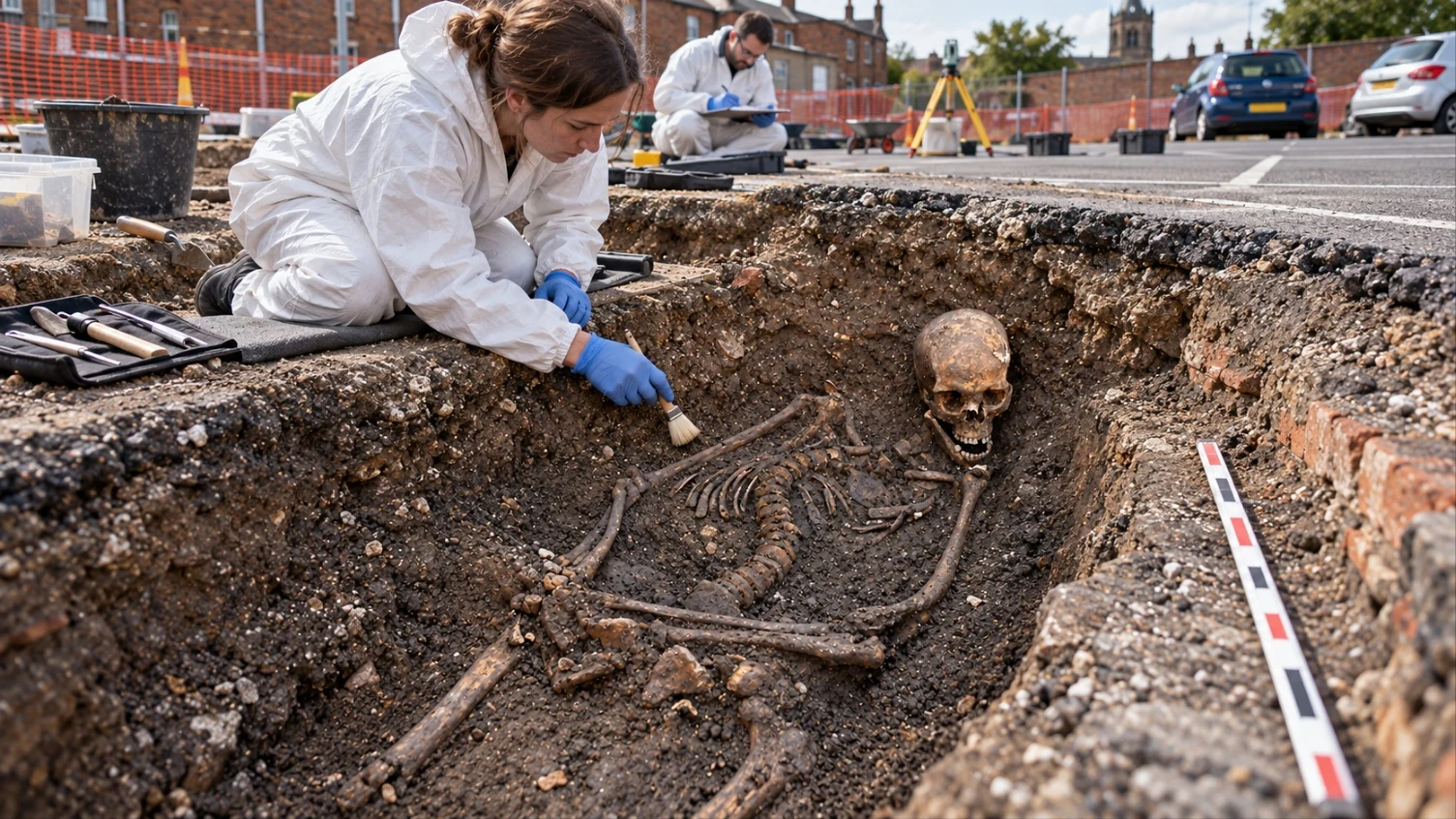 Under a car park in Leicester, 2012: the remains corrected part of a later literary image. (AI illustration)
England: remains that partly corrected a later image. In 2012 the remains of Richard III were found under a car park in Leicester. Shakespeare’s Richard III, a play written long after Richard’s lifetime and not a contemporary record, fixed the image of a hunchback. According to the University of Leicester, his scoliosis was severe, with a curve of 70 to 90 degrees, but it was a twisting curve rather than a forward hunch. His leg bones were symmetrical, so there is no evidence that he walked with a noticeable limp. The remains revised part of a later literary and popular image.
Korea: an object that challenged a text. Princess Seonhwa does not appear on the Mireuksa gold plate. Where the queen is named, the name of another woman’s father is written. Earlier on this site we looked at the Muryeong tomb epitaph. King Muryeong’s name, Sama, was already known from the texts: the Samguk sagi (武寧王諱斯摩) and the Baekje sinchan quoted in the Nihon shoki (武寧王立諱斯麻王). The epitaph confirmed it in a contemporary inscription as 百濟斯麻王. The Mireuksa plate did something different: it called into question a story everyone thought they knew. (These outside cases are for reference only and do not represent the history of archaeology in the three countries.)
Back to Gyebaek
In the drama, the Gukjumo is a wife of the king who wants her son made crown prince, and she is drawn as a figure working from outside the line of legitimacy.
What survives of the real woman is a monastery and a gold plate recording her vow and her merit. The plate calls her queen, calls her husband His Majesty, and prays that her body be like diamond. It shows that in 639 the daughter of Sataek Jeokdeok was honoured as queen. It says nothing about how she ranked against Seonhwa or in what order the two might have married.
The drama cast her as the outsider scheming against the crown. The gold plate that records her merit puts her in the same prayer as “Great King, His Majesty,” and it sat in the pagoda’s central pillar for 1,370 years.
The story we know was written down in the thirteenth century. The sentence we did not know was engraved in the seventh. The inscription settles who stood as queen and patron at the west pagoda in 639. How that fits with the princess of the song is still being argued, and the drama, for its part, kept them both.
This article was researched and written by K-Drama History. Source: Gyebaek, Explained: The Mireuksa Gold Plate That Named a Different Queen Than Seonhwa — K-Drama History