From Han to Sinmyeong: Why Korean Culture Feels Both Sad and Alive
Theme: Belief, Death & the Uncanny
From the research behind Pause the Drama.
If you’ve spent any time with Korean music, film, or drama, you’ve probably felt a strange double pulse: it can be heartbreakingly sad and explosively, joyfully alive — sometimes in the very same song. A ballad that aches. A variety show that roars. A K-pop chorus that sounds like triumph and longing at once.
Korean culture has a vocabulary for that double pulse, and it runs through four words: han, hwabyeong, hanpuri, and sinmyeong. Follow them in order and you get something like a Korean theory of how grief becomes art.
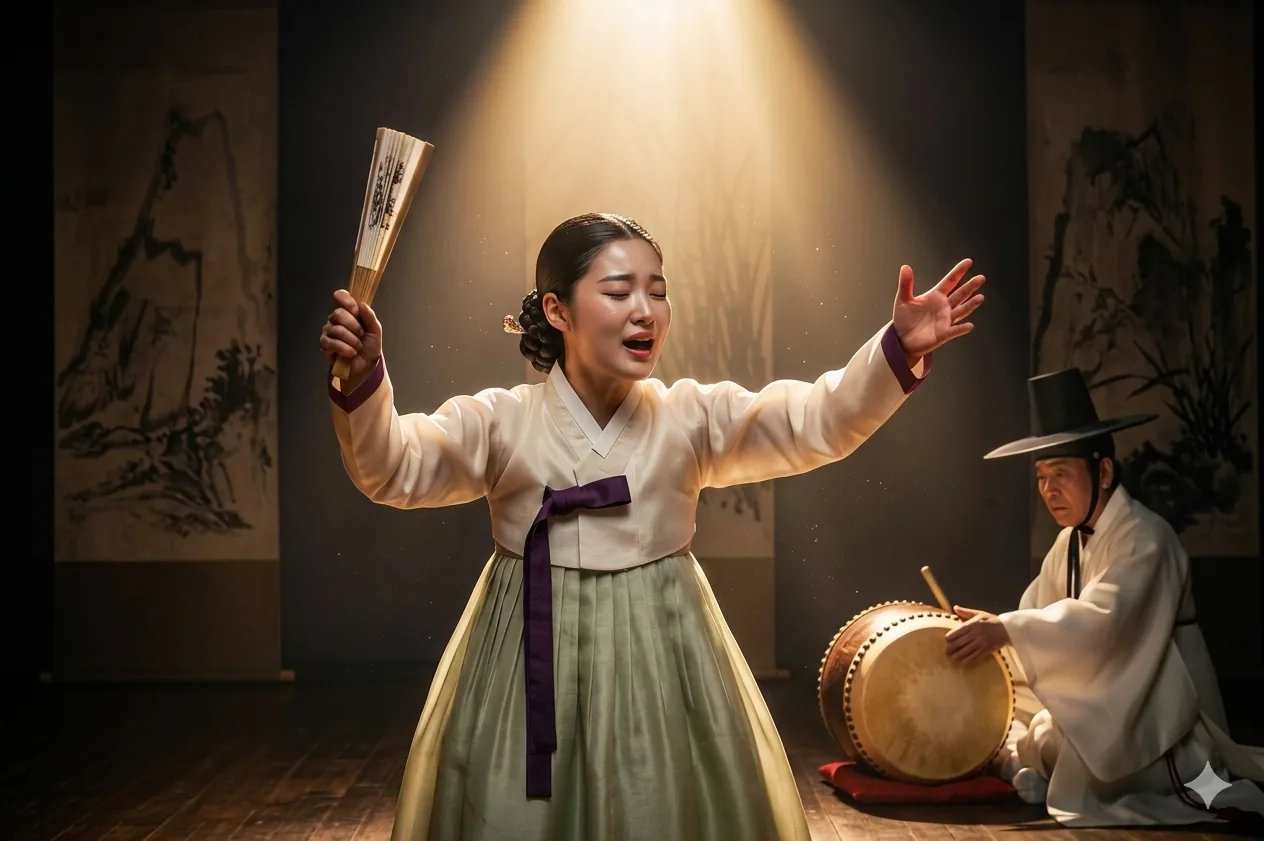 A pansori singer pours grief into song — the Korean instinct to turn pain into art rather than bury it. (AI illustration)
Quick answer: A widely told Korean account of emotion runs in a cycle. Han (한) is a knot of unresolved grief and longing. Left locked inside, it can sour into hwabyeong (화병), a “fire illness” of suppressed anger. But grief can also be released — cried, sung, and danced out, often together — and that release is hanpuri (한풀이). On the far side of release waits sinmyeong (신명), an ecstatic surge of life. It’s one way — not the only way — to read why so much Korean art feels both sorrowful and intensely alive.
A caution before we start: this is a story Koreans tell about themselves, and it’s a powerful one — but it’s an interpretation, not a measured fact. Take it as a lens, not a law.
What exactly is han?
Han (한, 恨) is one of the hardest Korean words to carry into English. It isn’t simple sadness. It’s closer to a knot — the regret of things left undone, the guilt of what should have been said, a love never spoken aloud, a duty to a parent never fully repaid, the grip of dreams and people you couldn’t hold onto. Pile those up and let them settle, and the result is a deep, accumulated ache that was never set right.
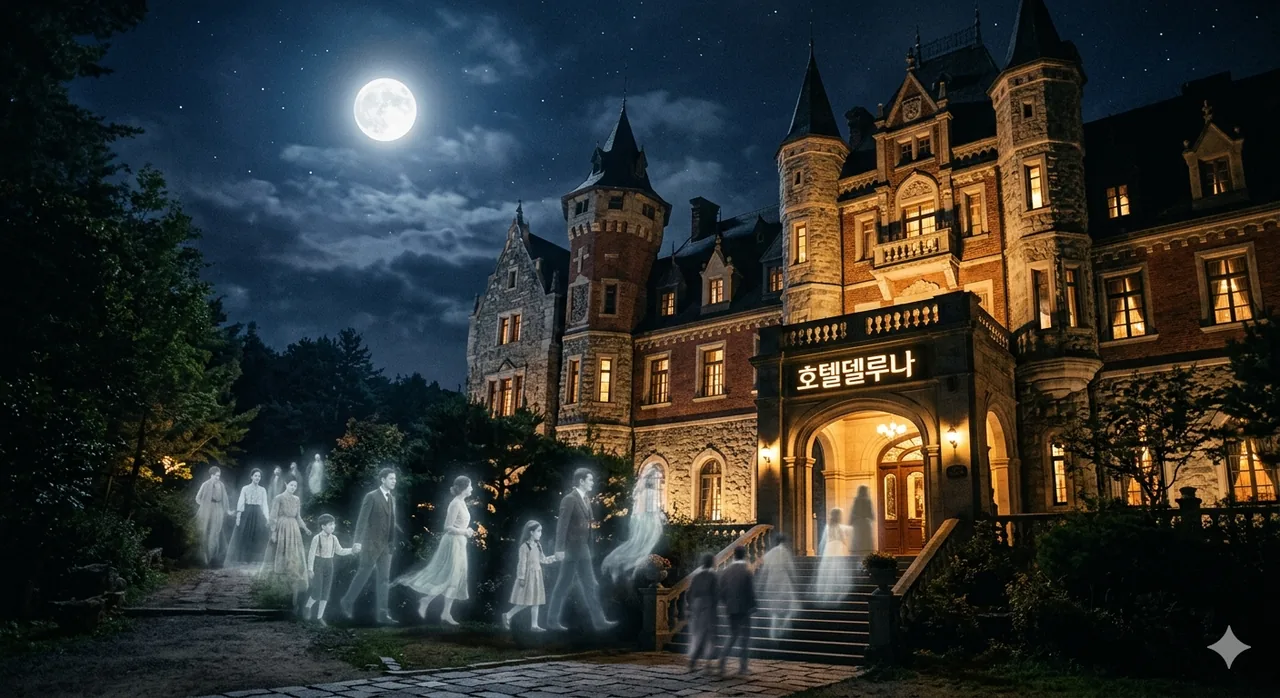
In Korean folklore, han is also what can keep a soul from moving on after death — the grievance that binds a spirit to the world. (We followed that thread through ghosts, shamans, and ancestral rites in our companion piece on Hotel del Luna.) But han isn’t only about the dead. It’s also offered as a key to the living — to Korean music, poetry, and the particular emotional weather of Korean storytelling.
But first: “han” is contested
Here’s the part a lot of breathless “Korea is the land of han” articles skip.
The idea that han is the eternal, defining emotion of the Korean people is itself debated — and increasingly criticized. Scholars such as Sandra So Hee Chi Kim have argued that han, as a supposed timeless national essence, is partly a modern, post-colonial construction — an idea shaped and amplified during and after the colonial period, then projected backward as if it had always been there (Sandra So Hee Chi Kim, “Against ‘han’” — Aeon, 2024). Read that way, “han” tells you as much about twentieth-century Korean self-understanding as about any ancient soul.
So treat han as one interpretive lens, not the master key to a whole people. It’s a genuinely useful way to talk about a recurring emotional texture in Korean art. It is not proof that Koreans are uniquely or permanently sad. Keep that caveat in your pocket for everything that follows.
When grief turns to fire: hwabyeong
What happens when han has nowhere to go?
Korean tradition — and modern Korean medicine — has a name for grief and anger that get locked inside: hwabyeong (화병), literally “fire illness,” from hwa (fire, also anger) and byeong (illness). It’s described as the somatic toll of swallowed, unexpressed anger over conditions felt to be unfair: a lump in the throat, a weight on the chest, heat rising in the body, sleeplessness.
This isn’t just folklore. Hwabyeong was reported in the American Journal of Psychiatry in 1983 (Lin, K.-M., “Hwa-Byung: A Korean Culture-Bound Syndrome?” AJP 140:1, 1983) and later listed as a culture-bound syndrome in the DSM-IV (1994) (Oh, B. H., “Hwabyung (火病): Korean Culture-related Syndrome,” Psychiatry Investigation, 2004). (Newer psychiatry has moved away from the “culture-bound syndrome” label, reframing such conditions as cultural concepts of distress — but the lived phenomenon, especially among middle-aged Korean women, is well documented.) Hwabyeong is the dark end of the cycle: han that was never released, turned inward, made physical.
Hanpuri: untying the knot
But Korean culture never treated that fire as a dead end. It built an exit.
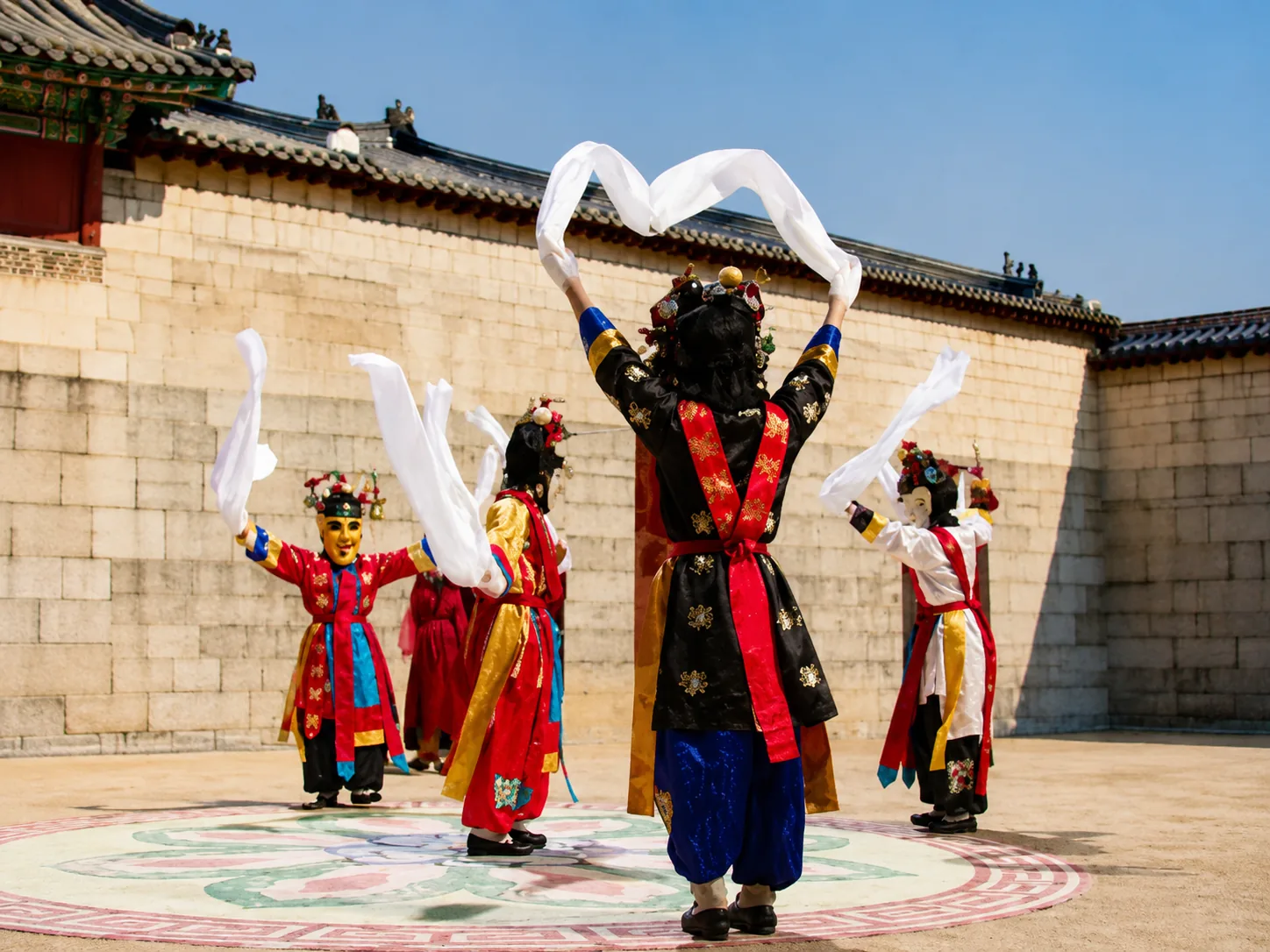
That exit is hanpuri (한풀이) — literally the untying of han. You don’t only suffer the knot; you work it loose: you cry it out, sing it out, dance it out, laugh it out — and, crucially, you often do it together. The wailing and catharsis of a shamanic gut ritual, the cracked-voice grief of a pansori singer, the communal release of a village dance — these are hanpuri in action. It’s the same logic, even the same word, as a soul being released at a gut: grief, unknotted.
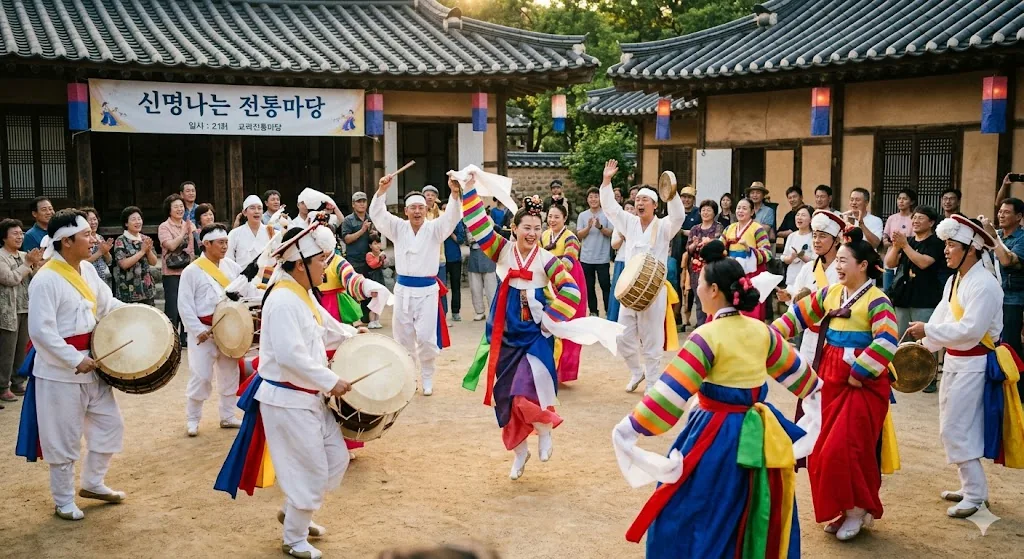 Hanpuri in action — a village comes together to drum, dance, and shake the grief loose. (AI illustration)
Notice the move. Where one instinct would be to bury the pain or let it harden into hwabyeong, hanpuri says: bring it out into the open, give it rhythm, and share it.
Sinmyeong: the joy on the far side of grief
And at the far end of hanpuri waits something that surprises people: sinmyeong (신명).
Sinmyeong isn’t mere fun or good cheer. It’s the surge of life a person lets loose only after they’ve wept the deepest — the moment someone who has endured real pain springs back toward the world, lit up. It’s why Korean laughter rarely feels shallow, Korean song rarely feels thin, and Korean dance is rarely just movement. Inside them sit the held-back tears, the failures, and a fierce will to live anyway. Grief didn’t disappear. It got transmuted.
That’s the whole arc in one breath: han (the knot) → hwabyeong (the knot turned poison, if trapped) → hanpuri (the untying) → sinmyeong (the joy that comes through, not around, the pain).
Key terms. Han (한, 恨) — a deep, accumulated knot of grief, longing, and unredressed injustice; a lens on Korean feeling, not a fixed national essence (Encyclopedia of Korean Culture). Hwabyeong (화병) — “fire illness,” the somatic toll of suppressed anger; listed in the DSM-IV as a culture-bound syndrome (Oh 2004, Psychiatry Investigation). Hanpuri (한풀이) — the act of untying han by expressing it, often communally. Sinmyeong (신명) — the ecstatic surge of life that can follow release.
From the gut and pansori to the K-pop stage
Here’s where the old vocabulary meets the modern Korean Wave.
Long before Hallyu, Korea already had art forms built around the han → hanpuri → sinmyeong cycle. Pansori — the epic, single-singer storytelling tradition recognized by UNESCO — is famous for a voice deliberately roughened by grief, building toward release. Proclaimed in 2003 and inscribed in 2008 on UNESCO’s Representative List of the Intangible Cultural Heritage of Humanity (UNESCO ICH, Pansori epic chant), it is also South Korea’s National Intangible Cultural Heritage No. 5 (designated 1964). The shamanic gut stages the same passage from sorrow to catharsis. The cycle was a performance grammar centuries before anyone said “K-pop.”
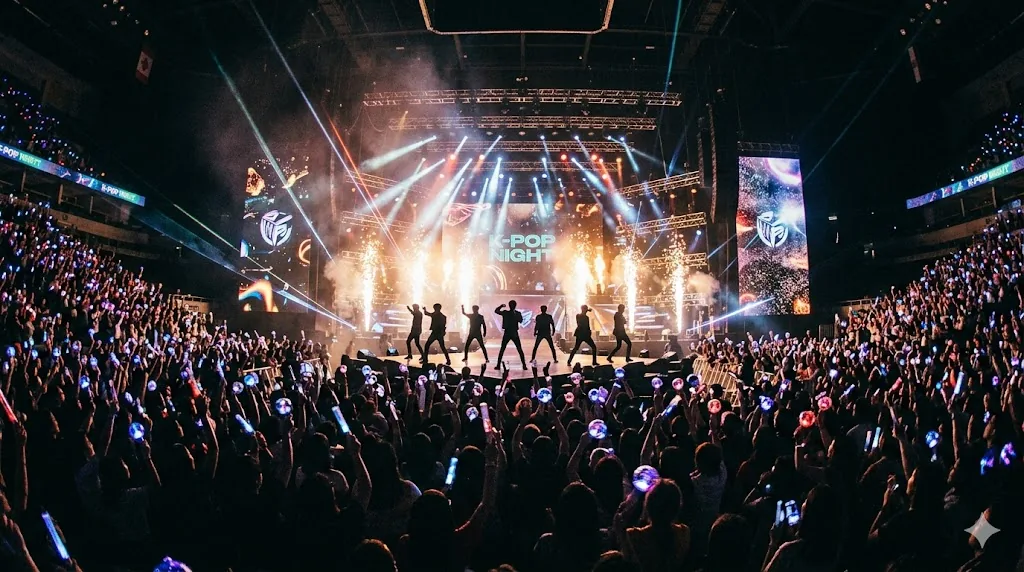 The same energy on a modern stage — a wall of light sticks and a roar of sound. One way to read the emotional charge of the Korean Wave. (AI illustration)
You can read today’s Hallyu stars in that same light. The world watches the dazzling stage; behind it sit the dark practice rooms, the endless repetition, the rejection and the loneliness. Many performers describe turning their own ache into rhythm — tears into a beat, wounds into energy, a long apprenticeship of failure into sinmyeong under the lights. Countless unknown trainees are still in that dark room right now; their han isn’t finished. But the cultural script says it can break open into something joyful and shared.
To be clear, this is one way to read Hallyu’s emotional intensity — not a measured cause of its success. K-pop and K-drama succeed for many concrete reasons: training systems, production quality, savvy global distribution, fandom infrastructure. But if you’ve ever wondered why so much of it lands as both sad and electrically alive, the han-to-sinmyeong cycle is a strikingly good lens. It describes a culture that, at its best, doesn’t hide its pain — it turns pain into art.
Where this connects
This is the deeper current running under a lot of Korean storytelling — including the ghosts. In Hotel del Luna, Explained, we saw the same instinct applied to the dead: don’t banish the grieving spirit, unknot it and guide it onward. Han, hanpuri, sinmyeong — it’s the living version of the same idea.
In the next essay, we’ll take another K-drama scene that looks like pure fiction — and trace the real Korean history hiding underneath it.
Frequently asked questions
What is han in Korean culture? Han (한, 恨) is often described as a deep, accumulated ache — a knot of sorrow, regret, longing, and unredressed injustice. It’s one of the most discussed ideas in modern Korean cultural commentary, though it’s best treated as one interpretive lens rather than the timeless “essence” of Korean identity.
Is “han” really the essence of Korean identity? This is contested. Many writers use han to explain Korean art and feeling, but scholars such as Sandra So Hee Chi Kim argue that the idea of han as an eternal national emotion is partly a modern, post-colonial construction. Read it as one lens among many, not a fixed national trait.
What is the difference between han, hanpuri, and sinmyeong? Han is the knot of unresolved grief. Hanpuri (한풀이) is the act of releasing it — crying, singing, and dancing it out, often together. Sinmyeong (신명) is the ecstatic surge of life that can follow that release. Together they describe a cycle from bound grief to joyful energy.
How does this relate to the Korean Wave (Hallyu)? It’s one way to read Hallyu’s emotional intensity: a long tradition of turning pain into expressive art — from pansori and shamanic gut rituals to modern K-pop and K-drama — rather than hiding it. This is an interpretation, not a measured fact.
Further reading
This piece was written from the historical script and fact-check of 사뚱샘의 역사방 (SaDDungSam). Primary sources are cited inline above. For broader reading:
- Sandra So Hee Chi Kim, “Korean Han and the Postcolonial Afterlives of ‘The Beauty of Sorrow’” — the peer-reviewed article behind the Aeon essay, tracing how han became a colonial construct and then a nationalist symbol. (Semantic Scholar)
- Hwabyeong in Korea: Culture and Dynamic Analysis — a clinical overview of hwabyeong’s history, symptoms, and treatment, from Transcultural Psychiatry. (World Association of Cultural Psychiatry PDF)
Thanks for reading — see you in the next one.
This article was researched and written by K-Drama History. Source: From Han to Sinmyeong: Why Korean Culture Feels Both Sad and Alive — K-Drama History