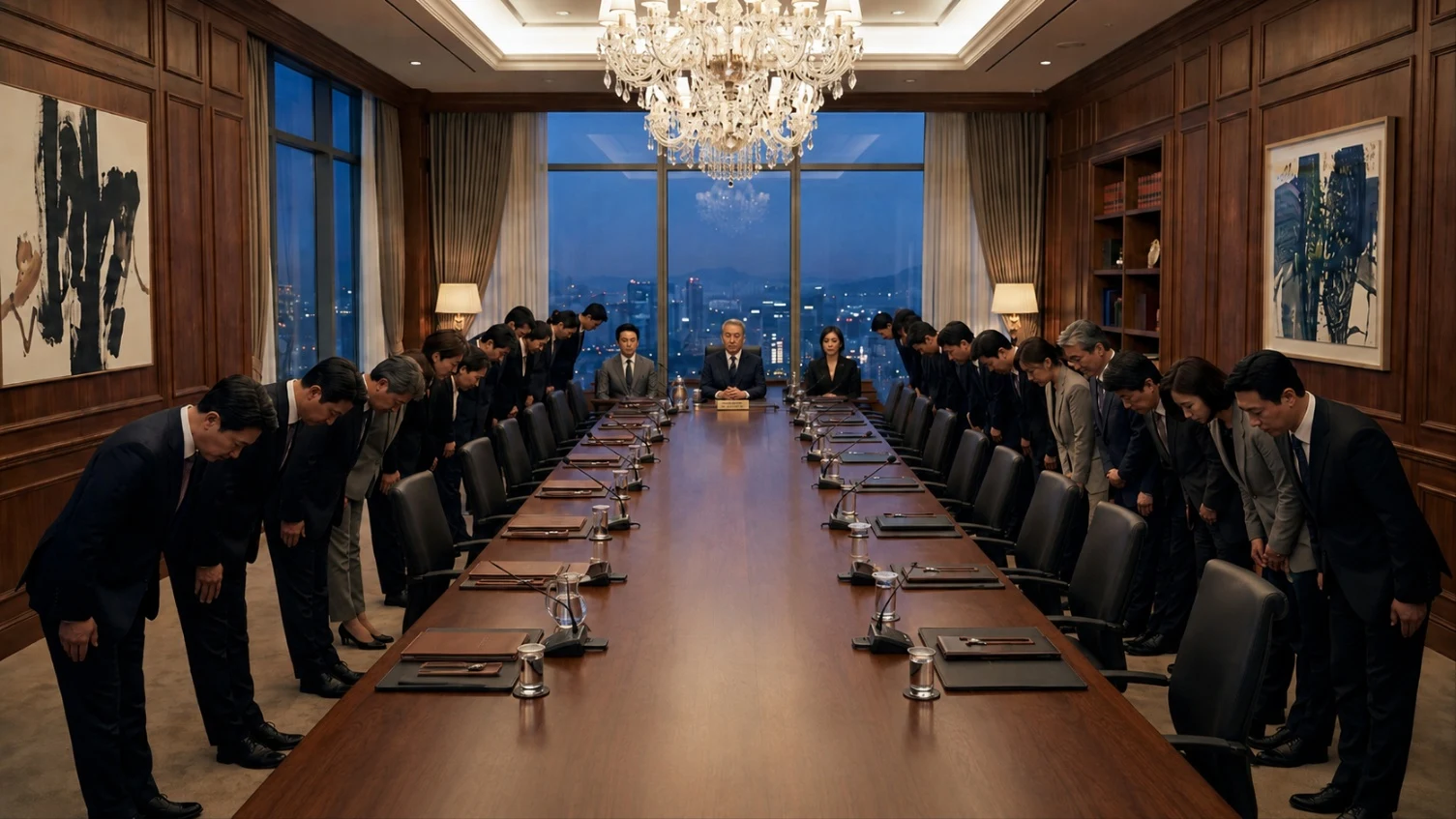
Take Charge of My Heart, Explained: Korea's Chaebol Feuds and the 'Strife of Princes'
From the research behind Pause the Drama.
In Take Charge of My Heart (Netflix, 2026), the heir to a resort empire spends his days fending off attacks. The succession conflict discussed here centers on members of his own family. The series premiered on Netflix on October 9, 2026. It’s a ten-episode limited series directed by Park Soo-won and written by Song You-chae, based on Haebeon’s Naver web novel Charge Me Up (Netflix announcement), and it stars Kim Young-kwang as Baek Ho-rang and Chae Soo-bin as Na Bo-bae (Netflix; Ilgan Sports). It has also gone by Recharge Me and Charge Me Up during production and in some English-language coverage (Sports Kyunghyang). Availability varies by country and region, so check Netflix’s own page where you are.
The drama raises a simple question for international viewers: do Korea’s chaebol families really fight like this, inside the house? (Our Queen of Tears piece covers why a Korean company can look like a dynasty in the first place. This piece asks a different question: why the enemy is so often a relative, and what has tended to decide the fight.)
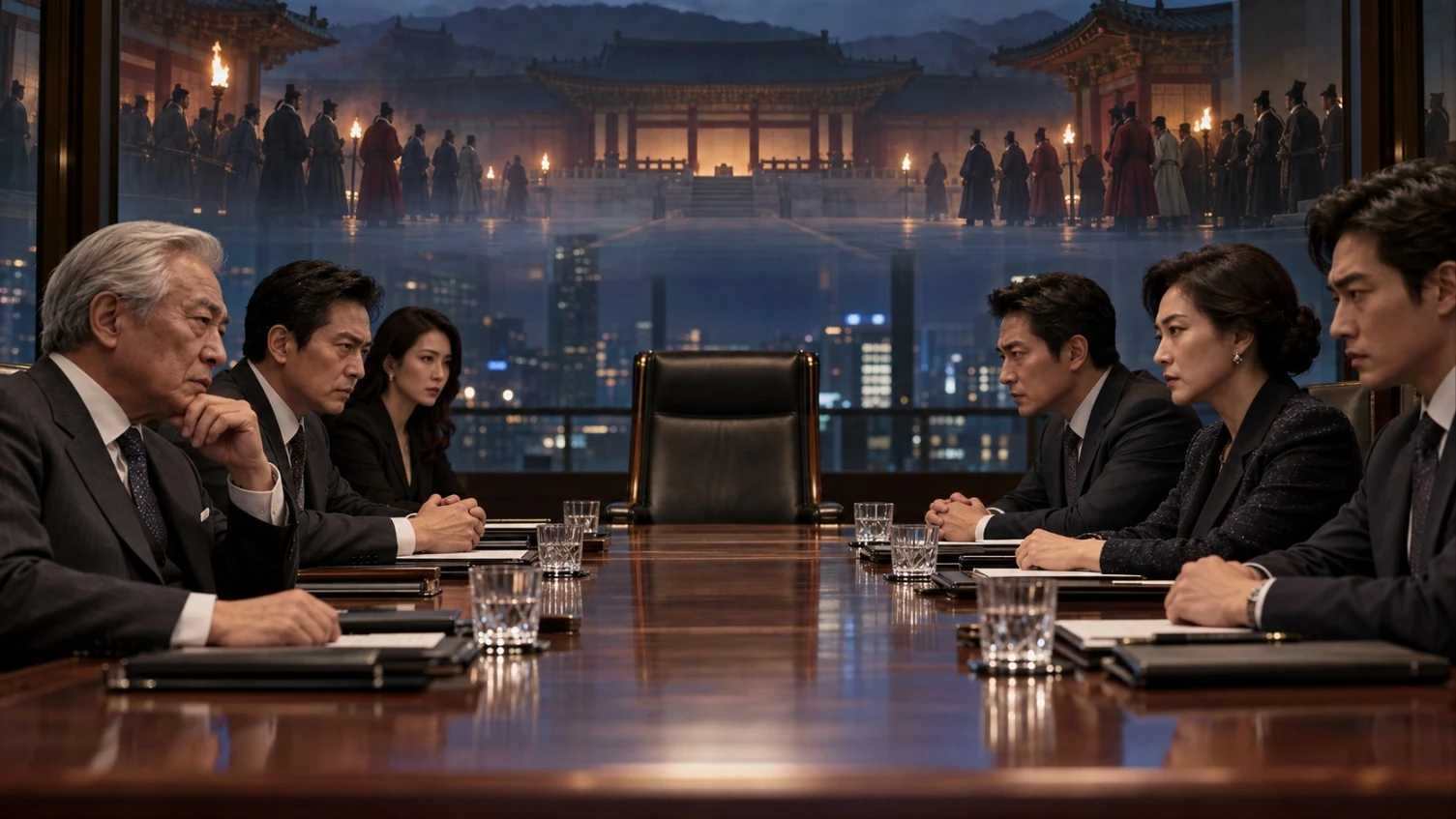 Korea’s press borrowed a palace word for boardroom wars: the “Strife of Princes.” (AI illustration)
Quick answer: In the cases we examined, yes. The five selected, widely reported fights over control of a group that we examined were all within the family, between brothers, an uncle, or siblings: Hyundai in 2000, Hyundai again in 2003 (an uncle against his nephew’s widow), Doosan in 2005, Lotte in 2015 and Hanjin in 2020. The Korean press named them after a Joseon palace coup from 1398, the “Strife of Princes.” Korean law doesn’t set any order for which relative takes over a group. Our reading of these cases is that the founder’s wishes filled that gap, and fights broke out when those wishes became unclear or were themselves contested. In the cases below, where the fight was decided also tended to shift. In 2000 both sides fought with the founder’s signature; by 2015 and 2020 the decisive moments came in board and shareholder votes. That’s a pattern across a handful of cases, not a measured trend, and there are counterexamples.
| Question | What the record shows |
|---|---|
| Is the drama a true story? | No. It’s adapted from a web novel, and the TS Group is fictional |
| Who fought in the real disputes? | All five cases we examined were within the family: brothers, an uncle, or siblings (Hyundai 2000 and 2003, Doosan 2005, Lotte 2015, Hanjin 2020) |
| Where does “Strife of Princes” come from? | The 1398 fight among the sons of Joseon’s founder. It was used for the Hyundai dispute in 2000 (first user unconfirmed) |
| Does Korean law favor the eldest son? | Not since January 1, 1991. The default is equal shares among children |
| What was fought over, and where was it decided? | Hyundai 2000: both sides wielded the founder’s signature, and the group ended up split; Lotte 2015 and Hanjin 2020: decided by board and shareholder votes |
The enemy at the temple: where this drama’s villains live
(The scenes below come from unofficial English subtitle transcripts of Episodes 1, 5, 9 and 10, which we haven’t checked against the original Korean dialogue or the episodes themselves, and from Netflix’s official Episode 8 synopsis. The lines are paraphrased, not quoted.)
In Episode 1, Baek Ho-rang, a senior managing director at TS Resort, is about to have surgery to replace the battery of his artificial heart. Beforehand, he visits the temple where his late parents are memorialized; in the subtitles you can see a memorial tablet bearing their names. There he’s told that showing weakness will make the succession harder, and that he has to look like the flawless heir his parents were. The subtitles alone don’t tell us who says it. That same day, his aunt, the head of TS Hotel, and his cousin Choi Do-yoon burst into his office. Ho-rang tells his doctor that once the surgery is over, he’ll start his plan to take the company.
In Episode 5, just before an embezzlement scandal involving a TS Hotel executive hits the news, Do-yoon’s father tells his son to fake a set of books. The idea is to make it look as if Ho-rang tried to trap his own aunt and cousin. In the same episode, Na Bo-bae snaps at Ho-rang: everyone calls him the chaebol heir, but all she sees is someone pushed around by his grandmother, his cousin, and Han Seol-hee.
So the people circling this heir aren’t competitors. They’re his aunt and her husband, his cousin, and the grandmother pushing him toward an arranged marriage. The grandmother is Gong Man-seol, played by Kim Mi-kyung. She’s chair of the TS Group, puts a stable succession above everything, and personally manages her grandson’s health and marriage (OSEN).
The short answer: yes, and Korea has a name for it
The real disputes that gripped Korea fit the same shape. Hyundai in 2000, Hyundai in 2003 (uncle against nephew’s widow), Doosan in 2005, Lotte in 2015, Hanjin in 2020. In all five, the other side was a brother, an uncle, or a sibling. The Korean press gave these fights a name from a Joseon palace more than 600 years ago: wangja-ui nan, the “Strife of Princes.”
When a chaebol drama puts its villains inside the family, it isn’t lazy writing. It matches the record.
Why inside the family? Korean law sets no order for which relative takes over a group. We mean that narrowly: nothing fixes a ranking among kin for the role of management successor. Inheriting property and controlling a company are different legal tracks. Property follows the Civil Code. If there’s no will, the estate is split equally among the children by default. If there is a will, children may still have a claim to a minimum share, the yuryubun or forced share (half of their statutory share under Article 1112 of the Civil Code), subject to the applicable rules and exceptions; a 2024 Constitutional Court ruling struck down part of those rules, and the article was amended in 2026. A forced-share claim does not confer corporate control. But the Civil Code doesn’t say which child should become a group’s chairman or a company’s representative director. Control of a company runs through shareholdings, voting rights, the election of directors and the articles of incorporation. Under Article 382(1) of the Commercial Act, directors are elected at the general meeting of shareholders. In practice, who would be entrusted with the group came down largely to the founder’s wishes. In the cases below, the fights mostly broke out at the moment those wishes became unclear or became the thing being fought over. That last point is our interpretation of the cases, not an established general cause.
Why a boardroom fight is called the “Strife of Princes”
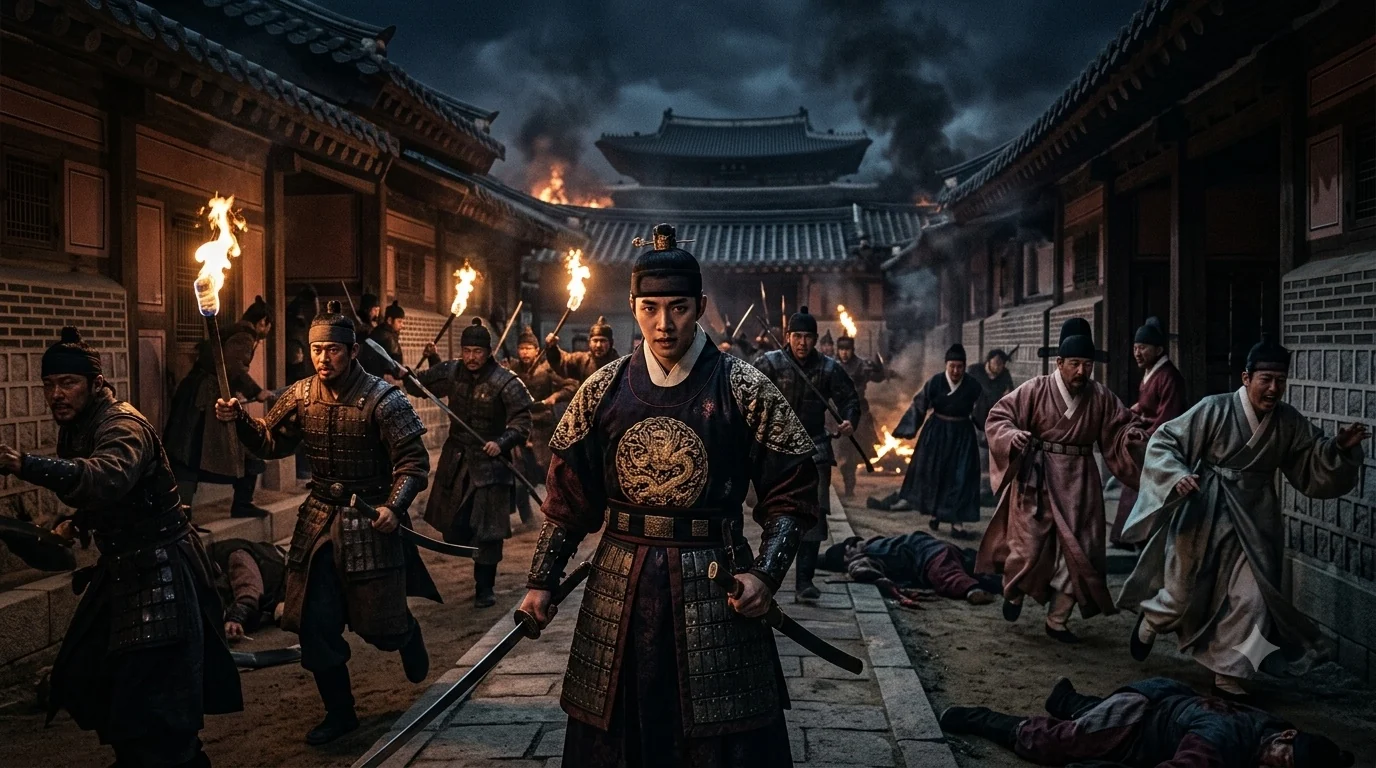
The original was in the 8th month of 1398 (the 7th year of King Taejo). Yi Bang-won, the founder Taejo’s fifth son, killed the crown prince Yi Bang-seok, Bang-seok’s older brother Yi Bang-beon, Jeong Do-jeon and others, and took power. That was the First Strife of Princes. We cover it in detail in our Taejong Yi Bang-won piece.
In 2000, newspapers applied the name to the Hyundai Group’s fight between brothers. We haven’t confirmed which outlet used it first or when. One example is the Seoul Shinmun of July 31, 2000, which ran the headline “Hyundai’s ‘Strife of Princes’ grows ever more tangled.” The same article called the founder Chung Ju-yung the wang hoejang, the “King Chairman” (Seoul Shinmun). If he was the king, his sons were the princes. The label was used for other disputes too, and spawned variants such as the “strife of brothers,” the “strife of the uncle” and the “strife of siblings.” We read this habit of describing company affairs in palace language as a sign that Korean society sees chaebol succession as both a management question and a matter of carrying on the family line. That’s an interpretation.
Hyundai, 2000: two sons, one father’s signature
Like the temple scene in Episode 1, Hyundai’s fight was over who held the father’s will.
It ignited in March 2000, when Chung Mong-koo, the second son and a co-chairman, removed Lee Ik-chi, the Hyundai Securities chairman and a close ally of the fifth son, Chung Mong-hun. On the afternoon of March 24, Kim Jae-soo, head of the group’s restructuring committee, announced that Chung Mong-koo had been dismissed as chairman of the Hyundai Management Council. Business circles took this as a sign that real power had passed to Chung Mong-hun (Seoul Shinmun). Two days later, on March 26, Chung Mong-koo’s camp released the original of a personnel order bearing honorary chairman Chung Ju-yung’s handwritten signature and announced that Chung Mong-koo was back as chairman (Seoul Shinmun). On March 27, according to Yonhap, Chung Ju-yung approved a management structure centered on Chung Mong-hun.
Then came May 31. At 2:15 p.m., Kim Jae-soo announced the “joint resignation of the father and two sons”: the honorary chairman and both sons would step down together. Kim said he had met the honorary chairman that morning, written down his wishes, and obtained his handwritten signature. After 4 p.m., Chung Mong-koo’s side issued a statement calling it “a matter never discussed with us.” Chung Ju-yung came to the headquarters himself and sat down with his two sons. Around 5:50 p.m., a reporter asked whether Mong-koo had accepted the decision. According to the Maeil Shinmun’s account, he answered “of course.” At 8:40 that night, Hyundai Motor’s side circulated a two-page statement arguing that the restructuring committee’s announcement had not gone through proper procedures (Maeil Shinmun). Mong-koo’s “of course” didn’t last three hours.
The signature didn’t end the dispute by itself, either. Questions about separating the affiliates dragged on after May. The automotive group’s separation was approved on September 1 (Yonhap). In the end, Hyundai split into Hyundai Motor Group, Hyundai Group, Hyundai Heavy Industries and others.
The twist: both sides carried the same father’s signature as their weapon. That’s a different claim from saying his signature settled the whole dispute.
Three years later, Hyundai produced something even more like a drama. After Chung Mong-hun died in August 2003, his uncle Chung Sang-young, honorary chairman of KCC, started buying Hyundai Elevator shares and contested control with his nephew’s widow, Hyun Jeong-eun. Chung Sang-young said he was acting to protect “the family tradition of the Chung clan” (Seoul Shinmun). This “strife of the uncle” ended with Hyun’s victory at the Hyundai Elevator shareholders’ meeting in March 2004 (eToday). Of all the real cases, an older generation invoking “the family” to press the younger one is the closest match to the drama’s lineup of the aunt’s family against Ho-rang.
Doosan, 2005: when exposing wrongdoing becomes a weapon
In Episode 5, Do-yoon’s family fakes a set of books to bury an embezzlement story. Account books have been weapons in real fights too. The difference: in the drama, doctored books are used to frame a rival. In reality, what came out was actual slush-fund creation and accounting fraud.
Doosan was known for “brother management,” in which the founder’s grandsons took turns as group chairman. According to a statement issued in Park Yong-sung’s name and released by Doosan on July 22, 2005, the eldest brother, Park Yong-gon, convened a family meeting in May. That meeting decided against splitting off affiliates and decided to hand over the chairmanship. That statement is one side’s account, not a minute of the meeting. Yonhap reported that Park Yong-sung, the third son, was named group chairman on July 18, replacing the second son, Park Yong-oh. Park Yong-oh then submitted a petition to prosecutors laying out alleged slush funds involving his younger brothers. The other side responded by exposing accounting fraud from Park Yong-oh’s own tenure (Chamyeo Sahoe). The prosecution’s investigation uncovered slush funds. According to a May 2006 press report, at first instance on February 8, 2006, Park Yong-oh and Park Yong-sung, who had been indicted without detention, were each sentenced to three years in prison suspended for five years and a fine of 8 billion won, and both had appealed (Weekly Kyunghyang). We haven’t checked the judgments, the outcome on appeal or the rulings on other family members. Park Yong-oh was expelled from the family.
The twist: a fight between brothers put the whole company’s accounts before the public. The fight inside the house brought an investigation from outside it.
Lotte, 2015: when the founder lost his title
On July 27, 2015, the eldest son, Shin Dong-joo, flew to Japan with the founder, Shin Kyuk-ho, then in his nineties. There they announced the dismissal of six directors of Lotte Holdings in Japan, including the second son, Shin Dong-bin. The next day, directors aligned with Shin Dong-bin called an emergency board meeting, arguing that the dismissals were void because they hadn’t gone through a proper board meeting. That meeting did the reverse: it removed Shin Kyuk-ho as representative director and chairman. Lotte Holdings’ official personnel notice of July 28 lists his current title as “representative director and chairman” and his new title as “director and honorary chairman (planned)” (予定). He lost his representative authority and the chairmanship, not his seat on the board. At the Lotte Holdings shareholders’ meeting on August 17, Shin Dong-bin won again (eToday). These dates come from press timelines and Lotte’s July 28 notice. We haven’t seen the minutes of the board or shareholder meetings.
The twist: the man who built the group was stripped of his chairmanship by the board of a company he’d founded. Even what the father actually wanted stayed disputed to the end; the press couldn’t pin down which son he truly favored (Seoul Shinmun). At Hyundai in 2000, both sides fought with the father’s signature. At Lotte in 2015, the decisive moments came in the board and at the shareholders’ meeting.
Hanjin, 2020: an AGM that ran about eight and a half hours
At Hanjin, that shift was even clearer. In March 2019, Chairman Cho Yang-ho’s re-election as an inside director at Korean Air’s shareholders’ meeting won 64.09% in favor. That fell short of the two-thirds required under the company’s articles, and he lost his board seat (Money Today). A chaebol head had been pushed off a board by a shareholder vote.
After his death, his eldest daughter Cho Hyun-ah formed a “three-party alliance” with the private equity fund KCGI and Bando Engineering & Construction against her younger brother, Chairman Cho Won-tae. The press called it the “strife of siblings.” On March 26, 2020, the day before the meeting, the National Pension Service decided to vote for Cho Won-tae’s re-election. The Hanjin KAL shareholders’ meeting on March 27 lasted about eight and a half hours. Cho Won-tae’s re-election passed with 56.67% of the votes cast, and every director candidate the alliance had nominated was defeated (Dealsite; Money Today).
The twist: in a contest between chaebol siblings, the shareholder whose support the press highlighted as an important factor was the National Pension Service, which manages Koreans’ retirement savings (Kyunghyang Shinmun).
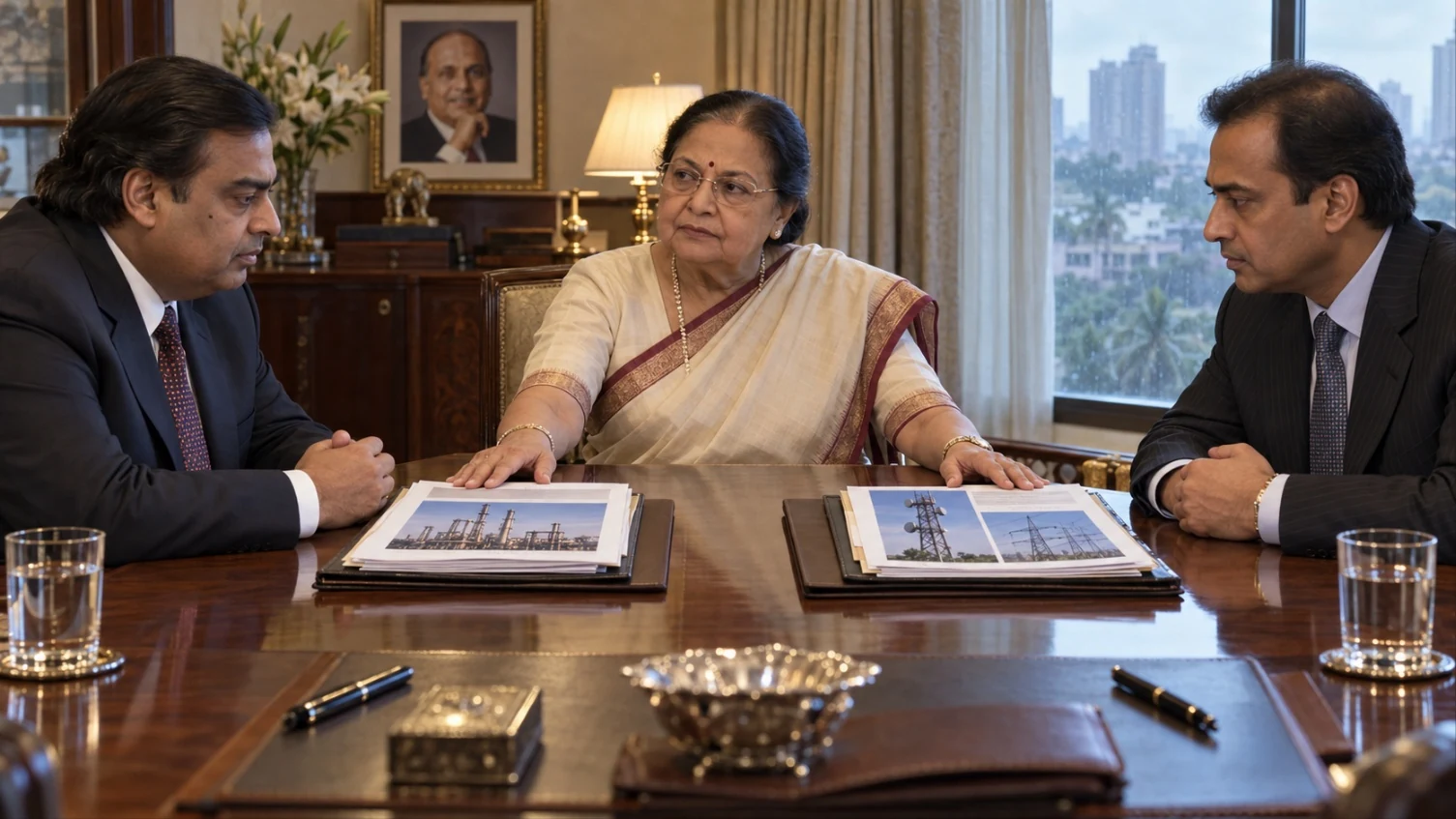 India’s Ambani brothers ended up with a group divided in two. In these Korean cases, the fight started as a contest for a single chair, though Hyundai’s ended in a split. (AI illustration)
The surprise for international readers: was “eldest son takes all” an old tradition?
Many international readers assume that in Confucian Korea the eldest son always inherited everything. The record says otherwise.
Early Joseon’s basic legal code, the Gyeongguk daejeon (經國大典), gave the heir who carried on the ancestral rites (the seungjungja, 承重子) one-fifth more than the other children. The rest was divided equally among sons and daughters. The provision appears in Volume 5, the Penal Code (Hyeongjeon), in the “Sacheon” section. If each of the other children received five shares, the ritual heir received six, and land was divided the same way. The code also sets out separate categories, such as children of concubines, so “equal” doesn’t cover every birth or status category ([Encyclopedia of Korean Culture — Hwahoe mungi]). Actual documents survive too. Lady Yi of Yongin, mother of Sin Saimdang, divided her property evenly among her five daughters. Separately, she gave a house in Seoul (in Sujinbang) and fields to her maternal grandson Hyeollyong, who was to take charge of the ancestral rites. Hyeollyong later became the scholar Yulgok Yi I. The document’s opening section is missing, so the exact year is unknown; since it names Yulgok (born 1536), it dates from 1536 or later ([Encyclopedia of Korean Culture — Lady Yi’s property-division document]).
The tilt toward the eldest son came later, from mid-Joseon onward. From then on, property went first to the son who carried on the rites, and the other children’s shares shrank sharply. The 20th-century Civil Code tilted the same way. From its entry into force in 1960 until the 1990 revision, the heir succeeding as head of household (usually the eldest son) received an extra 50 percent. Daughters’ shares also depended on whether they were still in the same family register. From 1960 to 1978, a daughter in the same register received half a son’s share, and a daughter outside it (typically a married daughter) received one-quarter. From 1979 to 1990, a daughter in the same register received the same share as a son, but the one-quarter rule for daughters outside it remained. The revised Civil Code of January 13, 1990 (Act No. 4199, in force from January 1, 1991) abolished these distinctions among children and the head-of-household bonus. Today, the default in Korean law is equal shares among children.
Founders, however, didn’t want their groups split up. Samsung’s inheritance lawsuit shows the gap. In 2012, the eldest son, Lee Maeng-hee, sued the third son, Lee Kun-hee, asking for a share of stock that their father, Lee Byung-chul, had held under other people’s names. In February 2014, the appeals court sided with Lee Kun-hee. According to press reports, the court noted that the late chairman had named his successor early and established a principle of not dividing the property “for everyone to share,” and that the other siblings had accepted this. It also rejected the claim on some shares it did recognize as inherited property, because the ten-year limitation period had passed (News Tomato). We haven’t checked the judgment itself, and reports differ on which ground they emphasize. On the 26th of that month, Lee Maeng-hee’s side gave up a further appeal (iNews24). None of this means a founder’s wishes override legal inheritance shares as a general rule.
So the legal default is equal shares, yet, according to press reports, the appeals court cited the founder’s wishes among its grounds. At Hyundai, both sides held up the same father’s signature. At Lotte, the press couldn’t even establish whom the father really favored. In our reading, Korean chaebol had no set rule for choosing the successor among kin; the founder’s wishes stood in for one, and the princes’ fights broke out when those wishes became unclear or contested.
The drama vs. the historical record
- Who decides: In the drama, the keys to the succession are the grandmother-chairwoman’s wishes, the arranged marriage, and Ho-rang’s health. The succession is shown as something to be announced at the company’s founding-anniversary event. That’s based on the Episode 1 and 5 transcripts, Netflix’s official Episode 8 synopsis and OSEN’s casting report. In several real cases (Lotte 2015, Hanjin 2020, Hyundai Elevator 2004), the decisive moments came in boards and shareholders’ meetings; in Samsung’s inheritance dispute, in court.
- The books: The drama’s forged-ledger plot is fiction. In the real Doosan case, actual slush funds and accounting fraud came to light.
- The ending: In Episode 9, Ho-rang collapses and is away. The unofficial transcript suggests a change in the designated heir: an order is given to tell the press the next morning that Choi Do-yoon is TS’s official heir, but who gives it, and through what corporate procedure, remains unverified. Do-yoon is then introduced as TS Resort’s new senior managing director. In Episode 10, Do-yoon is arrested after being reported to the police for kidnapping and spiking a drink, with drunk driving and assaulting a police officer added. The nameplate is then changed back, apparently on Ho-rang’s instruction. The transcripts have no speaker labels, so we inferred the speakers from context. Neither the Episode 9 nor the Episode 10 transcript mentions a shareholders’ meeting, a board or a vote. We haven’t watched the episodes or checked the Korean dialogue, so we can’t say the series as a whole has no such scene.
Other family dynasties: how did they settle succession fights?
(These cases were chosen so they don’t repeat the Rockefeller, Walton, Rothschild and zaibatsu comparisons in our Queen of Tears piece, or the Ottoman, Mughal and European primogeniture comparisons in our Taejong piece.)
India’s Ambani family. A similar case: a mother divides the group in two. After Reliance founder Dhirubhai Ambani died in 2002, his sons Mukesh and Anil ran the group together. When the struggle over control dragged on, their mother, Kokilaben, stepped in in 2005 and divided the assets. Mukesh took oil and petrochemicals; Anil took telecoms, power and financial services (Britannica — Mukesh Ambani; Anil Ambani). It’s the closest parallel to Hyundai, since a brothers’ fight ended with the group split. The difference is the mediator. In India, the mother settled the matter. At Hyundai, the two sides split even the father’s signature between them.
Japanese family firms. A clear contrast: bringing in a successor from outside the bloodline. Japanese family firms sometimes adopted a capable adult as successor even when there were biological sons. One study of postwar Japanese listed companies argues that adopting adult heirs, even when the family had sons of its own, made Japanese family firms more competitive. It finds that firms run by adopted heirs outperformed those run by blood heirs (Mehrotra et al., 2013, NBER summary). The study’s main comparison group of non-blood heirs includes adopted sons, sons-in-law and adopted sons-in-law, and it also reports a separate analysis that distinguishes adopted heirs from sons-in-law who weren’t adopted. This is one study’s finding, not an established general rule. If the bloodline isn’t fixed, there is presumably different room for brothers to fight over who the “real” heir is (our interpretation). We found no evidence that adult-adoption succession ever became an established practice in Korean chaebol. That reflects what we found, not proof that it never happened.
Germany’s Dassler brothers. The theme in sharp relief: a feud that produced two brands. Adolf and Rudolf Dassler had run a shoe factory together until they split in 1948, as PUMA’s official timeline records. Adolf founded adidas and Rudolf founded Puma. According to a British business magazine, their hometown of Herzogenaurach divided into camps loyal to each company (Management Today). Here, too, a brothers’ feud split a business. But the Dassler feud ended from the start in two independent companies. In the Korean cases above, the fights started as a contest for control of a single group, though Hyundai’s ended in a split.
Korea. Korean chaebol looked for successors mainly within the bloodline. Within that bloodline, the law (equal shares) and the founder’s wishes (a single successor) pulled in different directions over who would take the throne. Adoption wasn’t a common way out. A mother stepping into the middle of a dispute to divide the group, as with the Ambanis, was also rare. There are cases where a mother settled her children’s shares in advance through gifts of stock, as at Shinsegae (iNews24). So in the cases above, fights that began inside the family often ended up in boards, shareholders’ meetings or courts. At Hyundai in 2000, both sides fought with the founder’s signature. At Hanjin in 2020, the vote of the shareholders, the National Pension Service among them, settled the key contest. Arranging the cases this way shows a tendency. It isn’t a measured trend. As early as March 2004, Hyundai Elevator’s “strife of the uncle” was already decided at a shareholders’ meeting.
Back to the drama
In Episode 5, Ho-rang asks Han Seol-hee, his arranged-marriage match, for three months. If he shows how he’d lead TS, he says, his grandmother might drop the subject of marriage. In the drama, succession is still a matter of winning the grandmother’s favor. In Episode 8, Ho-rang plans to announce the succession himself at the company’s founding-anniversary event (Netflix). Netflix’s synopsis describes an announcement; it doesn’t explain any underlying corporate procedure. In Episode 9, according to the unofficial transcript, the heir’s seat appears to pass to his cousin, though the transcript doesn’t show who decided it or how. In Episode 10, the grandmother says she won’t stand in the way of whatever the two of them decide, but warns that his seat at the table isn’t absolute. In context, that remark about not standing in the way is about the couple’s relationship, not approval of the management succession. Again, this rests on transcripts, not the original dialogue.
In the cases above, a founder’s or elder’s directive didn’t stay final; at Lotte in 2015 it was overturned in the board, and at Hanjin in 2020 the outcome came down to a shareholder vote. Hyundai fought in 2000 with the father’s signature on both sides. Doosan changed chairmen in July 2005 after what one side described as a family meeting decision. Lotte in 2015 and Hanjin in 2020 had their decisive moments in the board and the shareholders’ meeting.
When a chaebol drama puts its villains inside the family, it’s drawing on the record, not cutting corners. In some of these real cases, the audience the princes had to win over included the shareholders, not just the family elders.
This article was researched and written by K-Drama History. Source: Take Charge of My Heart, Explained: Korea's Chaebol Feuds and the 'Strife of Princes' — K-Drama History