Battlefield Heroes, Explained: Who Really Opened the Gates of Pyongyang in 668?
From the research behind Pause the Drama.
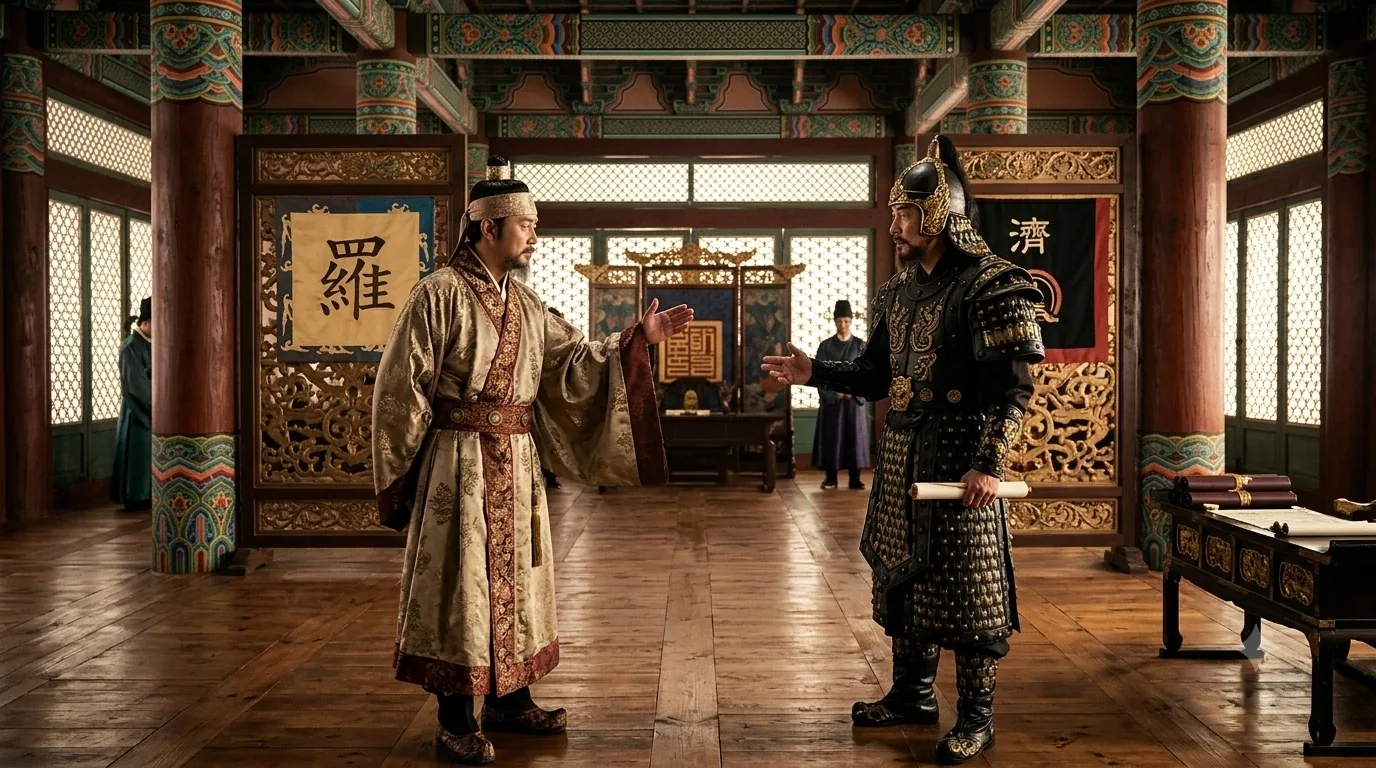
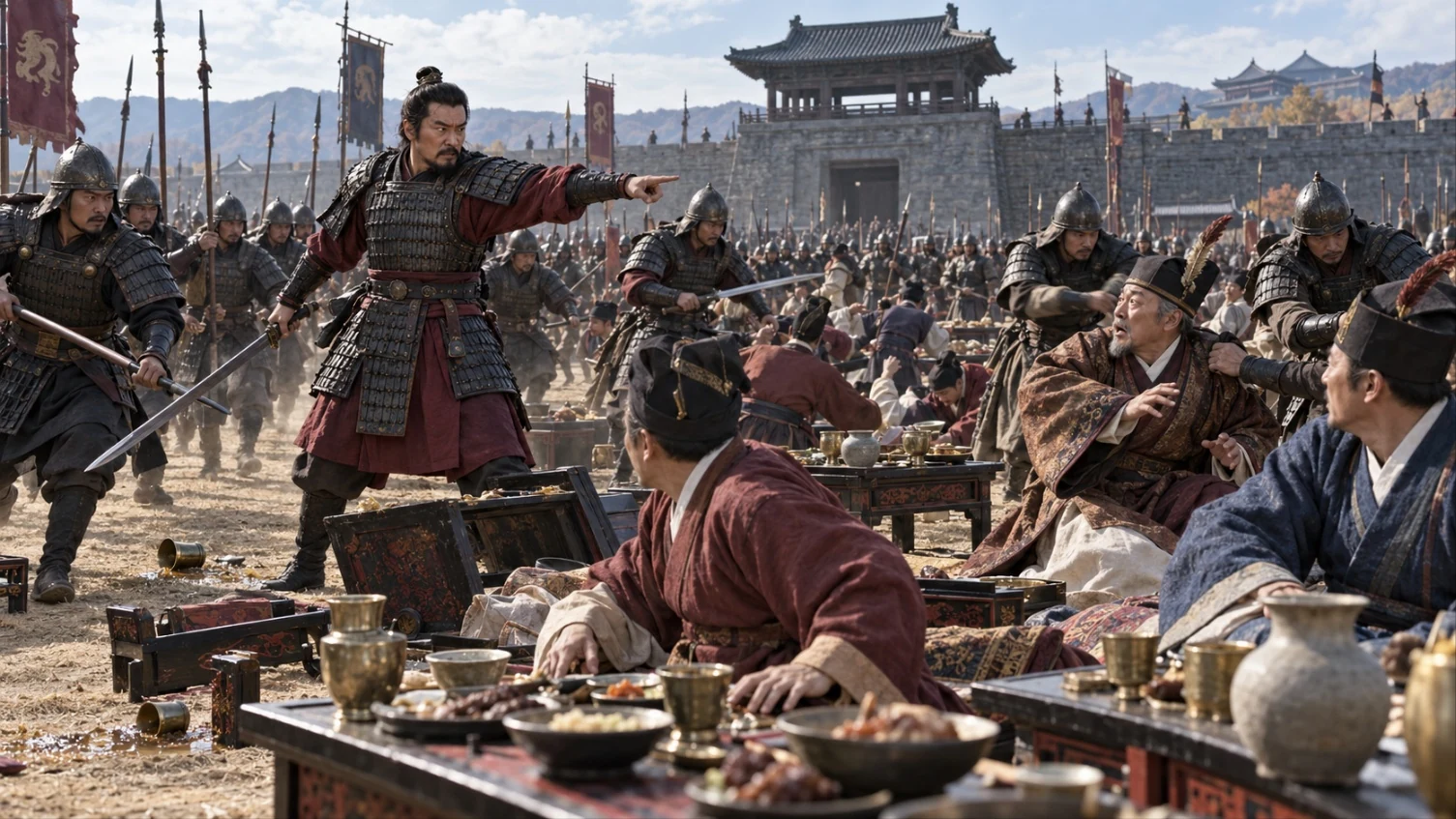
In the climax of Battlefield Heroes (평양성, 2011), director Lee Joon-ik’s sequel to his own Hwangsanbeol (2003), the man at the gate of Pyongyang is Namsan, the youngest son of the Goguryeo strongman Yeon Gaesomun. His eldest brother Namsaeng, who has already gone over to Tang China, meets him in the mountains and asks him to open the gate. Namsan agrees on one condition: the life of their middle brother Namgeon must be spared. Inside the city, Namsan points a blade at Namgeon, who refuses to give in, and demands that the gate be opened.
After the city falls, the Tang command orders the arrest of Namsaeng, who thought he had earned a reward. When he protests that this is not what was promised, the answer amounts to this: the gate was not opened in time.
All of this leads to one question. Who actually opened the gates of Pyongyang in 668? And who was Namsaeng, the man who led the Tang army to those gates?
A note on the film scenes: The descriptions of film scenes here come from the distributor’s official synopsis, interviews and reviews published at the time of release, and the scene order in unofficial English subtitles. We have not checked them against the film itself or its Korean dialogue, and we estimate that about 60% of the scene detail is covered. We do not fill gaps with invented scenes. Where the film is described as saying something, we give the gist, not exact dialogue.
Where to watch: In Korea the film streams on TVING. It is also listed on the Google Play movie store, but availability varies by country and region. We could not confirm any official international streaming release.
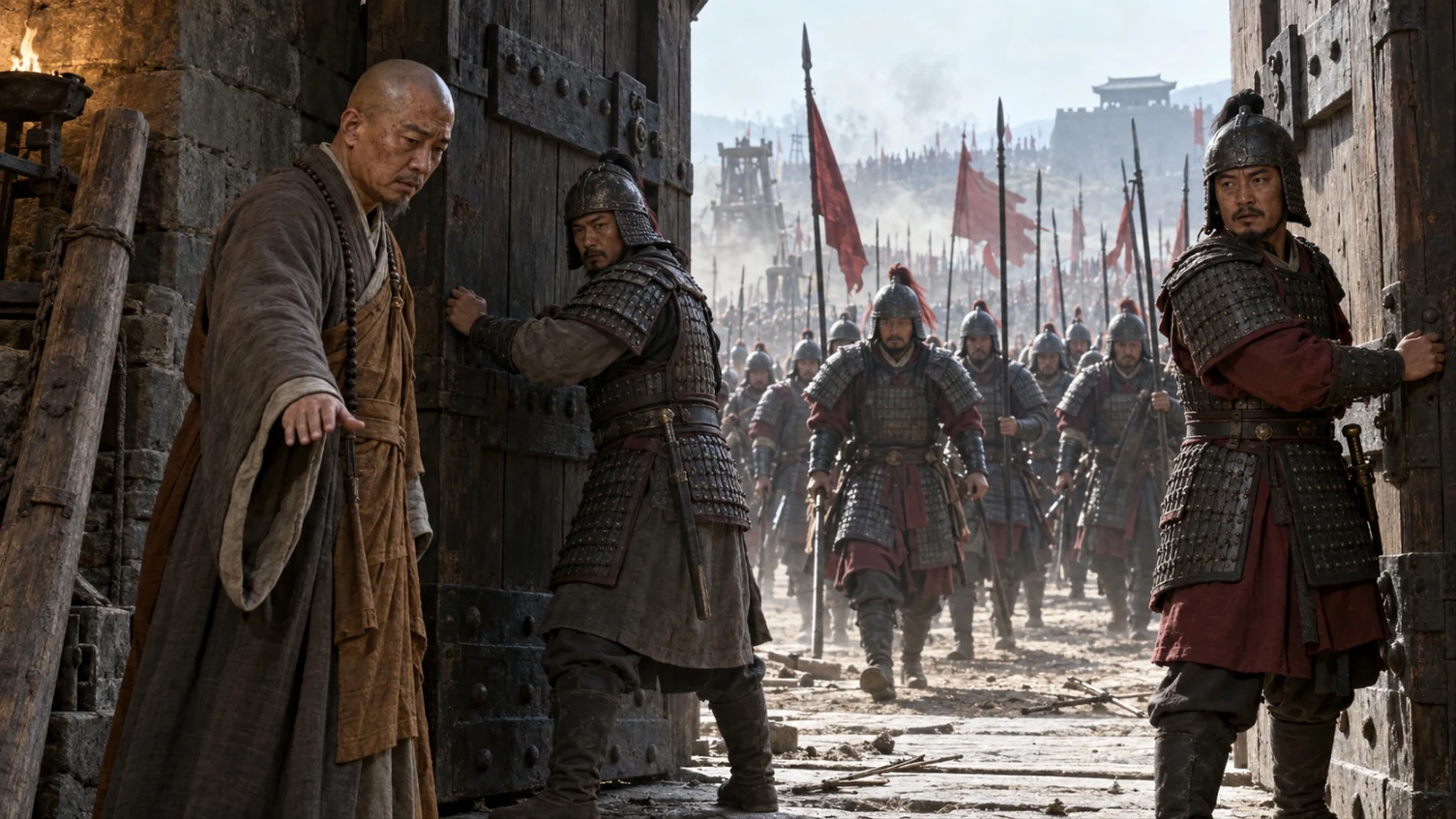 In the Samguk sagi, the man who opened the gate of Pyongyang was not a prince but a monk. (AI illustration)
Quick answer: In the Samguk sagi, the gate of Pyongyang was opened by a Buddhist monk, Sinseong (信誠), not by Namsan. Namsan had already gone out of the city and surrendered. Namsaeng did not open the gate himself either. After losing a power struggle with his brothers, he asked Tang for troops and then helped the Tang army on its way to Pyongyang. Two sources add Namsaeng to the gate story: his own epitaph says he and Sinseong worked together from outside and inside the walls, and the New Book of Tang says Namsaeng had Sinseong act from within. The Old Book of Tang agrees with the Samguk sagi that Sinseong opened the gate.
The film gives the gate to the youngest brother. The Samguk sagi gives it to the monk Sinseong. His epitaph and the New Book of Tang link Namsaeng to the inside plot.
| Question | Short answer |
|---|---|
| Who opened the gate (Samguk sagi)? | The monk Sinseong. Five days earlier, he and the junior commanders Osa and Yomyo had secretly offered to help the besiegers. |
| What did Namsan do? | Before that, he went out and surrendered on King Bojang’s orders. |
| Did Namsaeng open the gate? | No source says so. |
| What did Namsaeng do? | He asked Tang for help and went over to it, then guided the Tang advance. |
| Did Tang abandon him? | No. He died holding high Tang office. |
1. Who was Yeon Namsaeng?
Yeon Namsaeng (淵男生, 634–679) was the eldest son of Yeon Gaesomun, the man who held real power in Goguryeo in its last years. In Chinese records he appears as Cheon Namsaeng (泉男生). Tang writers replaced the character yeon (淵, “deep pool”) with cheon (泉, “spring”) to avoid writing the personal name of Li Yuan (李淵), the dynasty’s founding emperor Gaozu. This custom of avoiding characters in an emperor’s name is called naming taboo (pihwi, 避諱).
The most detailed account of his life is the epitaph (myojimyeong, 墓誌銘) made for him in Tang. An epitaph is a text carved on a stone placed inside the tomb, recording the dead person’s career and achievements. Namsaeng’s was composed in 679 by a Tang official, Wang Deok-jin in Korean reading, and written out by the calligrapher Ouyang Tong. According to the commentary on 우리역사넷, it was unearthed on January 20, 1922, in Mengjin county, north of Luoyang.
According to the epitaph, Namsaeng received official rank at the age of nine. At thirty-two he became Taemangniji (太莫離支), the top post overseeing both the military and state affairs.
But this epitaph was written to honor a Tang meritorious subject. It is valuable for checking dates and offices. Its judgments about Namsaeng’s motives and achievements cannot be taken at face value.
2. Why did the brothers turn on each other?
In the film, a dying Yeon Gaesomun divides power, giving the army to his second son Namgeon and government to his eldest, Namsaeng. We found no historical source for that split. In the records, the heir was Namsaeng.
The records say that after taking over from his father, Namsaeng left to tour the provincial fortresses and put his two younger brothers in charge of affairs in Pyongyang. While he was away, both sides were told that the other side was planning to strike first. Namgeon summoned Namsaeng in the king’s name. When Namsaeng was afraid to return, Namgeon killed Namsaeng’s son Heonchung (獻忠) (男建殺其子獻忠: Samguk sagi, vol. 49 and New Book of Tang, vol. 110).
The timing of the feud is complicated, because the sources disagree on when Yeon Gaesomun died. The Nihon shoki gives 664. A note in materials from the National Institute of Korean History gives 665. The Samguk sagi annals deal with his death in the entry for 666, and the Samguk sagi biography and the Old Book of Tang also place it in that year. We do not merge these three dates into one.
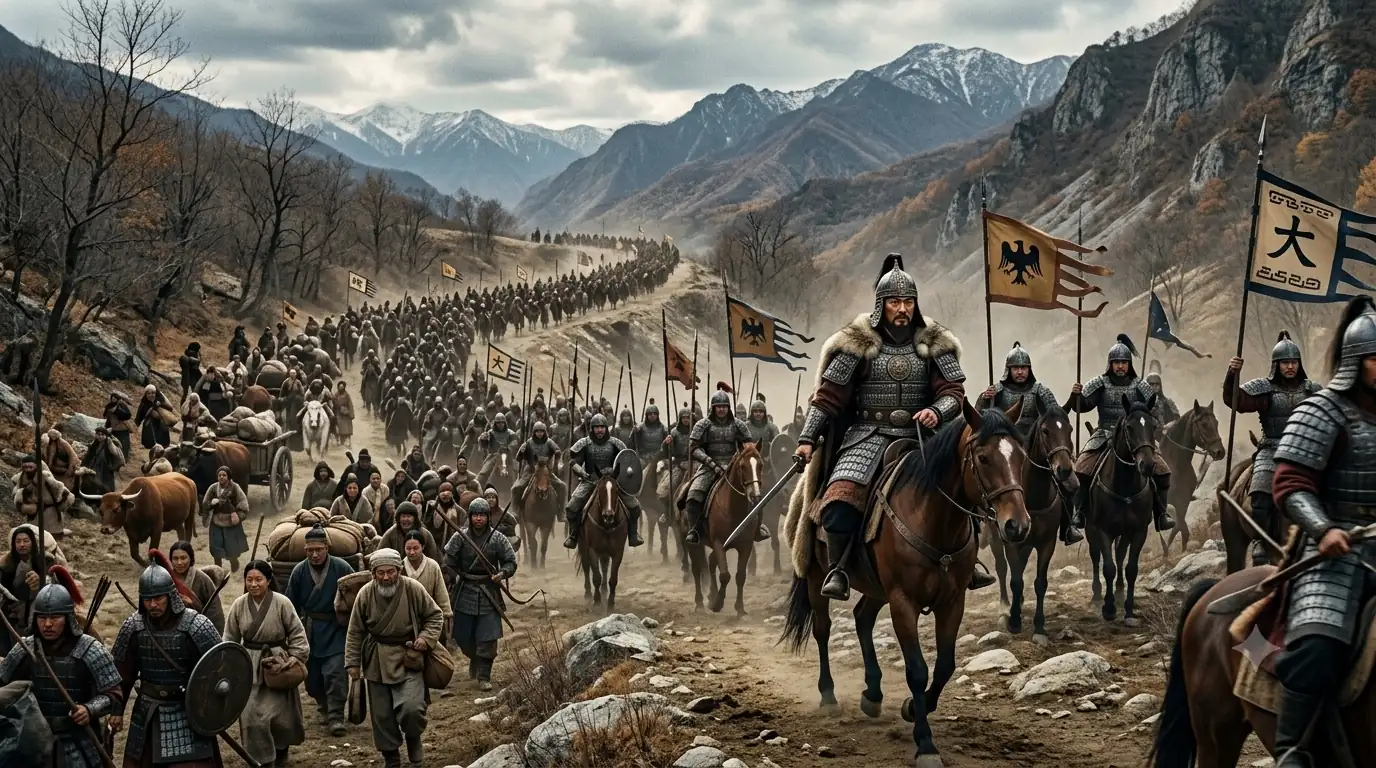
Namsaeng fell back toward Gungnae Fortress and held out there. In 666 he sent his son Heonseong (獻誠) to Tang to ask for help. Lee Mun-gi (2008) discusses how power concentrated in Yeon Gaesomun’s family and the internal conflict that followed. We checked only the bibliography and abstract of that study, not the full text, but it frames the concentration of power as background to the brothers’ feud.
3. What did Namsaeng hand over to Tang?
In the film, Namsaeng makes a deal with Tang: after the war, he will rule the land from Liaodong to the Imjin River. We found no record of any such promise.
What Namsaeng actually gave Tang was concrete: fortresses, people and knowledge. His epitaph says he brought Gungnae and five other fortresses, with registers of “over 100,000 ho,” to the Tang camp (公率國內等六城十餘万戶書籍轅門), and that three more fortresses, including Mokjeo, came over as well. We read this in the excerpt published by 우리역사넷, not in the full stone text. A ho (戶) is a household, not a soldier. And because epitaphs tend to inflate a subject’s achievements, the figure cannot be treated as a census number.
Over the previous decades, Goguryeo had repeatedly fought off huge Sui and Tang armies. This time, the man who had been its supreme commander was on the enemy’s side, and he knew how its defenses worked and what was going on inside the country. Jeong Won-ju (2023) argues that Namsaeng’s defection gave Tang a relatively safe route of advance and inside information. We checked this argument in the paper’s bibliography and abstract, not the full text.
Namsaeng did not open the gates of Pyongyang. What he opened was the road that brought the Tang army to them.
4. Who actually opened the gate of Pyongyang?
In the film, opening the gate is the youngest son Namsan’s decision. The Samguk sagi entry for the 9th month of King Bojang’s 27th year (668) tells it very differently.
After Tang forces had besieged Pyongyang for more than a month, King Bojang sent Namsan out with 98 chiefs, carrying white flags, to surrender. In this account, Namsan did not open the gate. He surrendered first. (The National Institute of Korean History’s New History of Korea gives a different order, with Bojang sending Namsan to surrender after Sinseong opened the gate. We follow the order in the Samguk sagi.)
Namgeon kept the gates shut and kept fighting. He gave military command to a monk, Sinseong. Sinseong, together with the junior commanders Osa (烏沙) and Yomyo (饒苗), secretly sent word to the Tang commander-in-chief Li Ji (李勣) offering to help from inside. Five days later, Sinseong opened the gate (後五日, 信誠開門). Namgeon tried to kill himself but failed and was captured.
According to the National Institute of Korean History’s note on this entry, most of it matches the Chinese Zizhi tongjian. The note adds that the names Osa and Yomyo come from some other source that has not been identified, perhaps a Silla tradition.
Other sources describe the scene differently.
- The Samguk sagi and the Old Book of Tang both say Sinseong opened the gate (信誠果開門 in the Old Book of Tang). In the Samguk sagi annals, the person Sinseong contacted was Li Ji, and Namsaeng does not appear in that passage.
- Namsaeng’s epitaph says Namsaeng and Sinseong and others acted together from outside and inside the city (遂與僧信誠等內外相應).
- The New Book of Tang, in its biography of Cheon Namsaeng, says Namsaeng had Sinseong act from within (使浮屠信誠內間). The Samguk sagi’s own biography of Namsaeng omits Sinseong and says only that he attacked with Li Ji and went in and seized the king (入禽王).
- The Old Book of Tang separately records Namsaeng’s service as a guide to the Tang army (男生以鄉導有功).
None of these sources can be used to claim that Namsaeng opened the gate himself. The New Book of Tang’s wording also does not prove who was actually directing whom.
An epitaph for Go Yomyo has also come to light. The National Institute of Korean History’s epigraphy notes describe him as someone who acted with Sinseong to help the besiegers. It was identified in 2007 at the Beilin Museum in Xi’an. The epitaph writes his name 高鐃苗, while the Samguk sagi writes 饒苗. The idea that they are the same man is the editors’ inference. We have not read the epitaph itself, so we cannot say how it describes the plot or the gate.
5. How does the film differ from the record?
| Scene | Battlefield Heroes | The record |
|---|---|---|
| The brothers’ powers | Yeon Gaesomun gives the army to Namgeon and government to Namsaeng | No supporting source found. The heir was Namsaeng. |
| Namsaeng’s deal | Rule from Liaodong to the Imjin River in exchange for helping Tang | No record of such a promise found |
| Who opened the gate | Namsan, the youngest brother | Opened the gate: the monk Sinseong. Earlier offer to help from inside: Sinseong, Osa, Yomyo and others. Namsan had surrendered before this. |
| Namsaeng’s fate | Tang orders his arrest right after the fall | No record of an arrest. He died holding high Tang office; the title of his epitaph includes “Specially Advanced, acting Grand General of the Right Guard, Duke of Byeon” |
The most important change is the last row. The film gives Namsaeng the ending of a collaborator who is used and then thrown away. The real Namsaeng was not thrown away.
His Tang titles have a timeline worth keeping straight. His epitaph shows he held Grand Commander-in-Chief of Liaodong, Founding Duke of Hyeondo Commandery, with a fief of 2,000 households before Pyongyang fell in 668. The later titles, Grand General of the Right Guard and Duke of Byeon, come after the fall. The Old Book of Tang lists them in its entry on the post-war rewards, and the New Book of Tang places them after his return (還,進右衛大將軍、卞國公). The two histories write the duke’s title with different characters (汴 and 卞).
6. Twists international readers may not expect
In the same year, his uncle went over to the other enemy. In the 12th month of 666, Yeon Gaesomun’s younger brother Yeon Jeongto (淵淨土) surrendered to Silla, bringing 12 fortresses, 763 households, and 3,543 people. The nephew went to Tang; the uncle went to Silla. Goguryeo’s breakup was not just a fight among brothers in Pyongyang. Silla later accepted Anseung (安勝) as leader of the movement to restore Goguryeo and made him a king. One passage of the Samguk sagi calls him Yeon Jeongto’s son, while the Zizhi tongjian calls him King Bojang’s grandson through a daughter. We leave the two accounts side by side.
The defecting heir and the last king ended up in the same territory. In 677, Tang made King Bojang, whom it had taken away as a captive, Governor-General of Liaodong, named him King of Joseon (“Commandery King of Joseon” in some sources), and sent him to Liaodong. A note in National Institute of Korean History materials suggests that Namsaeng was posted to the Andong Protectorate at this time to keep Bojang in check. That reading comes from the editors’ notes. The New Book of Tang says he was sent to pacify Liaodong in 677 (儀鳳二年,詔安撫遼東), but it does not say he was there to watch Bojang. If it is right, Goguryeo’s departed heir and its last king were placed in the same region, one as a king under watch and the other as the official watching him. Bojang later tried to restore Goguryeo, failed, and died in exile.
Two records give two places of death. According to his epitaph, Namsaeng died of illness on the 29th day of the first month of 679 at an official residence of the Andong Protectorate (Andong-bu), at the age of forty-six (遘疾薨於安東府之官舍). The Old Book of Tang says he died in Chang’an early in the Yifeng era (儀鳳初卒于長安). That era began in 676, so the two records may differ on the time as well as the place. “Liaodong” is not the epitaph’s own word. It comes from where the Andong Protectorate was based at the time. We do not pick one place of death over the other.
His epitaph says he saved the brother who killed his son. We know this passage only second-hand. It says that when the Tang court wanted to execute the captured Namgeon, Namsaeng pleaded for his life, and the sentence was reduced to exile. The published excerpt we read omits it, so we have not checked it against the epitaph’s text. The Old Book of Tang does record Namgeon’s exile (男建配流黔州). It echoes the condition Namsan sets in the film, that Namgeon’s life be spared, but there is no evidence the filmmakers drew on the epitaph. And the only source for the story is Namsaeng’s own epitaph, which was written to praise him.
7. One man, two verdicts
The Tang epitaph presents Namsaeng as a righteous elder brother driven out by violent younger brothers, and as a meritorious subject who helped bring the war to an end.
The Samguk sagi, compiled in Goryeo, takes a different view. In his assessment (saron), the compiler writes that although Namsaeng and Heonseong became famous in Tang, from the point of view of their own country they cannot escape being called traitors (未免為叛人者矣).
The Tang epitaph records him as a meritorious subject. The Goryeo history records him as a traitor.
What the sources do establish is this: after losing a power struggle, Namsaeng asked Tang to intervene militarily, and he gave Tang’s war of conquest the fortresses, people, and knowledge of Goguryeo that he had. That does not make him solely responsible for Goguryeo’s fall. Long years of war, the lack of a clear center of power after Yeon Gaesomun, and the Silla–Tang alliance all played a part.
8. Record and legend: a father’s last words, and a man born from water
Volume 27 of the Japanese chronicle Nihon shoki records what Yeon Gaesomun is said to have told his sons before he died: live in harmony like water and fish, and do not fight over office. We are quoting this second-hand. Given what happened next, it is almost too dramatic. Because it comes from a chronicle across the sea in Japan, we cannot be sure he really said it. The passage does not mention arrows.
The New Book of Tang says Yeon Gaesomun claimed he had been born in water and used this to impress people (自云生水中以惑衆). Namsaeng’s epitaph also connects the family’s distant origins to a “spring” (本出於泉). How this spring story relates to the taboo-driven surname Cheon (泉, “spring”) is hard to say.
This is only our own guess, and no source says so: Yeon Gaesomun’s death and his sons’ quick fall may have shocked people at the time, and that may be why these last words and birth stories were passed down in such dramatic form.
9. Insiders who joined forces with outside powers: how did they end up?
Insiders who brought in an outside power appear elsewhere in history, and their stories ended very differently. The three short cases below rest on encyclopedia and National Park Service entries, not on primary sources.
China — Wu Sangui (吳三桂). In 1644, after Li Zicheng’s rebels took Beijing, the Ming general Wu Sangui turned to the Manchus, and a combined force drove Li out. The Manchus then set up the Qing dynasty in Beijing. Unlike Namsaeng, Wu acted after the capital had already fallen. He rebelled against the Qing in 1673.
Bengal, India — Mir Jafar. At Plassey in 1757, much of the army under Mir Jafar, a general of the ruler of Bengal, stayed out of the battle, and the British installed him as the new ruler. They removed him in 1760 and put him back in 1763. Of these cases, his is the closest to the ending the film gives Namsaeng.
 After his West Point plot failed, Benedict Arnold attacked Virginia in 1781 as a British general. (AI illustration)
United States — Benedict Arnold. In 1780 General Benedict Arnold offered to surrender the fortress at West Point to the British. When the plot unraveled he escaped to the British side, became a British brigadier general and led raids in Virginia. He never delivered the fortress, and he died in London in 1801.
Korea — Yeon Namsaeng. Namsaeng neither turned on his new empire nor was thrown away by it. Tang treated him as a meritorious subject, sent him back to Liaodong after Goguryeo’s fall to help govern its former lands, and he died still holding high Tang office. What split in two was how he was remembered. The stone in his tomb remembers him as a meritorious subject; the Goryeo history remembers him as a traitor.
Back at the gate of Pyongyang
The film brings all three brothers together around one gate: the eldest who asks, the middle one who holds out, the youngest who opens it. As drama, it is the clearest possible setup.
The gate in the records is more complicated. The youngest brother had already surrendered. The monk Sinseong opened the gate after secretly arranging it with junior commanders. The eldest was with the Tang army. His epitaph and the New Book of Tang link him to the inside plot.
Namsaeng did not open the gates of Pyongyang. What he opened was the road that brought the Tang army to them.
This article was researched and written by K-Drama History. Source: Battlefield Heroes, Explained: Who Really Opened the Gates of Pyongyang in 668? — K-Drama History